A premium grill deserves more than a stand and a side table. The best modular grill station features turn outdoor cooking into a composed, high-performance experience: every tool in reach, every surface purposeful, and every detail designed to look exceptional from the terrace as well as the grill.
For homeowners and hospitality buyers, the difference is felt long after the first cookout. A well-specified modular station creates a more enjoyable workflow, protects the investment in your grill, and gives an outdoor space the polish of a professionally designed kitchen without months of construction disruption.
Start With a Grill Module Built Around Your Cooking Style
The grill is the centerpiece, but the best station does not treat it as a generic cutout. It is engineered for the exact appliance, its ventilation requirements, lid clearance, control placement, and service access. A module designed around a high-performance gas grill, charcoal ceramic cooker, or hybrid system will look integrated rather than improvised.
Compatibility matters because grill dimensions and operating needs differ substantially. Napoleon and Broil King built-in grills call for a precise enclosure and heat-aware surrounding materials. A Big Green Egg needs a secure, correctly sized nest area that makes opening the dome comfortable and safe. The right modular system accommodates these details before delivery, rather than asking an installer to solve them on site.
Consider how you actually cook. A wide grill with multiple zones benefits from generous landing space on both sides. A ceramic cooker may need more preparation room, heat-resistant worktops, and storage for charcoal, accessories, and ash tools. If your outdoor menu includes rotisserie poultry, pizza, smoked brisket, or large-format entertaining, choose a station that gives those rituals proper room.
The Best Modular Grill Station Features Create Better Flow
Outdoor kitchens work best when they follow the natural sequence of cooking: prep, cook, plate, serve, and clean. This sounds obvious, yet many stations are designed around appliance dimensions alone. The result is a beautiful grill with nowhere to set a tray, season food, or place a hot skillet.
A substantial countertop on at least one side of the grill is essential. It should be large enough for real preparation, not merely decorative. Space beside the grill also gives the cook a safe landing zone for utensils and cooked food, keeping traffic away from the hottest area.
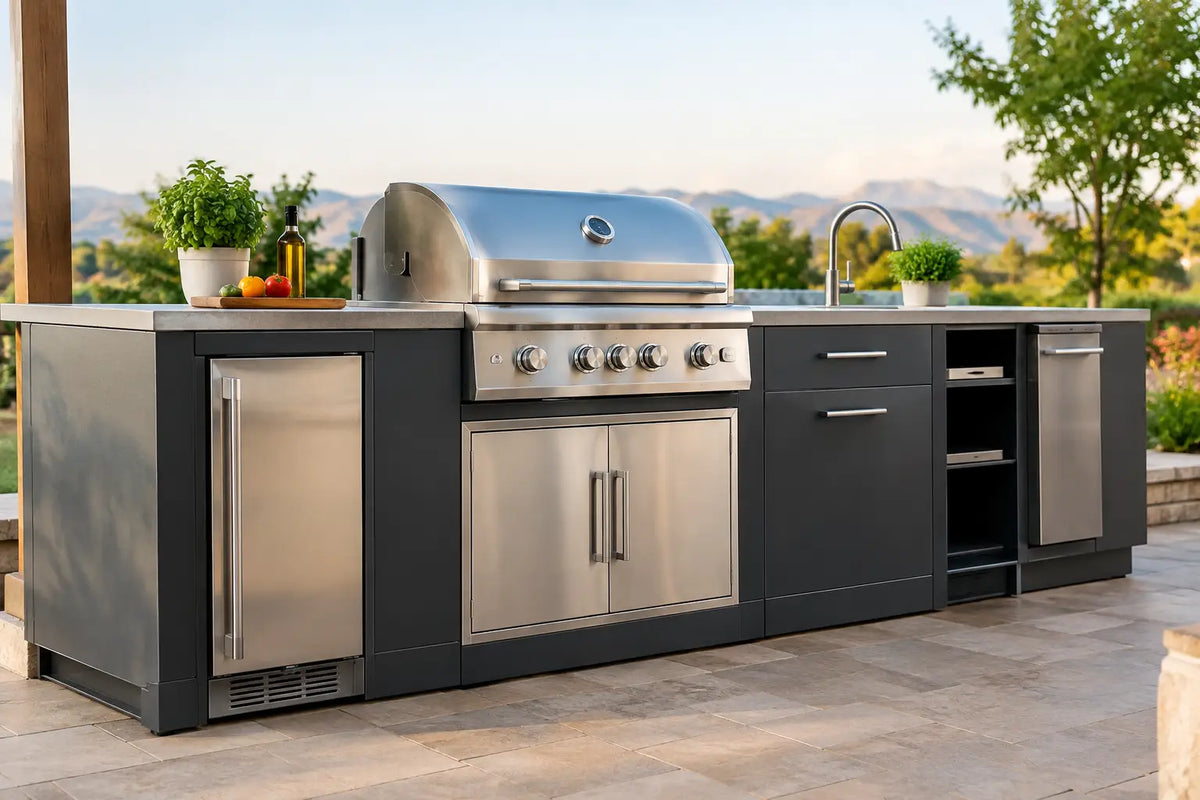
For larger layouts, separate the prep and grill zones rather than crowding everything into one short run. A refrigerator module positioned near the preparation surface reduces unnecessary steps. A sink module, where plumbing is practical, brings restaurant-level convenience to rinsing produce, washing hands, and managing cleanup. In compact terraces, a linear configuration can still perform beautifully when each module has a clear job.
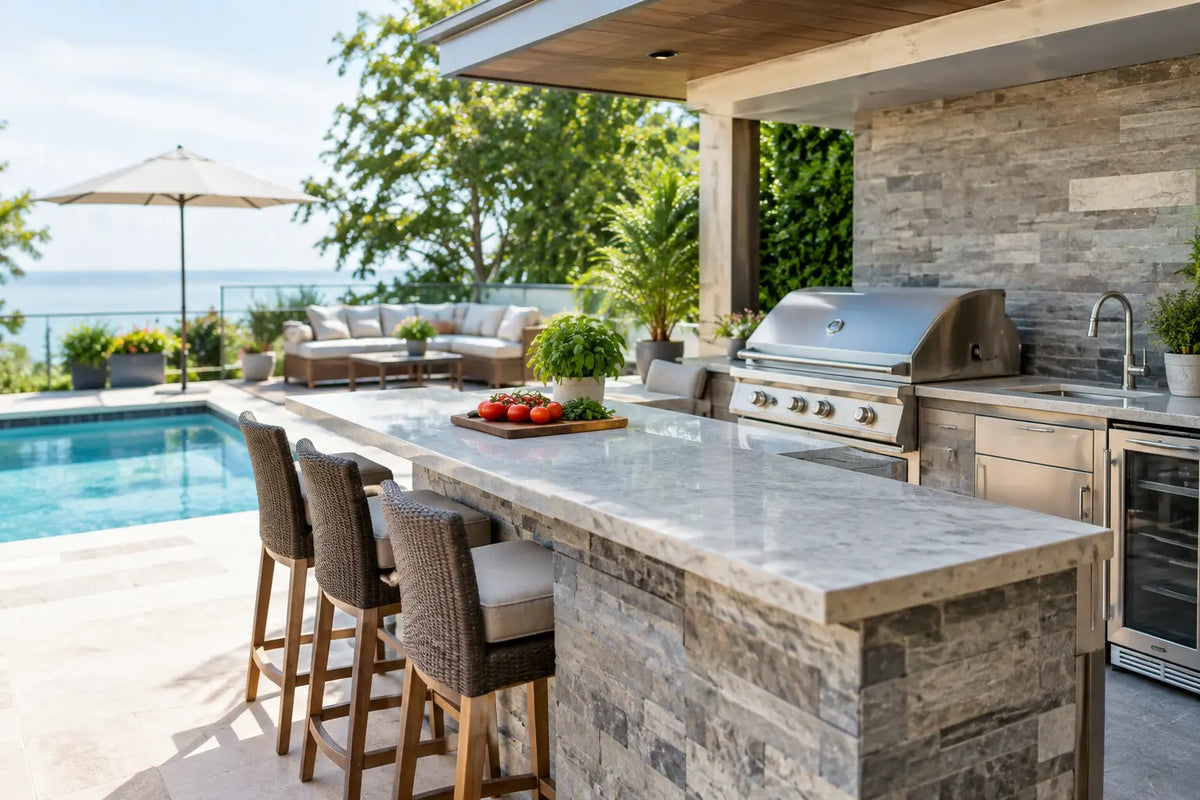
The serving side deserves equal attention. Bar-height seating may suit a sociable poolside setting, while a lower counter or adjacent dining table is often more practical for family meals. The correct choice depends on whether the outdoor kitchen is primarily a chef's station, an entertaining hub, or both.
Weather-Ready Materials Are Not Optional
Luxury outdoors means more than a refined facade. A grill station must handle sun, rain, temperature swings, grease, humidity, and repeated use without becoming a maintenance project. Material selection is one of the clearest markers of a system built for years rather than seasons.
Look for exterior-grade cabinet construction, corrosion-resistant hardware, and worktops selected for outdoor exposure. Powder-coated metal, quality stainless steel, sintered stone, and other nonporous surfaces can offer excellent durability when specified correctly. The finish should be easy to wipe down after cooking and remain visually consistent across panels, doors, and side pieces.
Not every material performs the same way in every climate. Dark surfaces can become very hot in intense sun. Some natural stones require more care around oils, wine, and acidic foods. Stainless steel is practical and timeless, but lower-grade steel may show corrosion in coastal areas. A premium supplier should explain the material choice clearly, including what it is designed to resist and what routine care it requires.
Pay close attention to the less visible components as well. Hinges, drawer runners, adjustable feet, handles, ventilation panels, and cabinet interiors determine how the station feels after hundreds of openings and closings. Architectural quality is built from these details.
Storage Should Make Cooking Easier, Not Just Hide Clutter
The most useful storage is positioned where it supports the task at hand. A deep drawer near the grill can hold grilling tools, thermometers, gloves, and cleaning brushes. A cabinet beneath a side counter can store platters, cookware, and bulk supplies. For gas grills, the cylinder compartment must provide appropriate access and ventilation while keeping the overall composition clean.
Drawers are often more functional than deep cabinets because they reveal their contents at a glance. However, cabinets can be the better choice for oversized pots, charcoal bags, or outdoor tableware. The ideal configuration usually combines both, with storage tailored to the equipment and entertaining habits of the owner.
A refrigeration module adds another level of comfort. It keeps proteins, chilled drinks, marinades, and garnishes close to the action, so the host is not moving constantly between the house and the patio. For a vacation property or hospitality venue, it also helps staff maintain a more organized service area during busy periods.
Plug-and-Play Delivery Protects Your Time and Your Design
Modularity should not mean a collection of boxes that becomes someone else's problem at installation. The most compelling systems arrive fully pre-assembled, carefully finished, and ready to position, connect, and enjoy. That removes a major source of uncertainty from an outdoor kitchen project.
Traditional masonry builds can require multiple trades, extended site work, dust, delays, and decisions made under pressure. A pre-assembled modular station offers a more controlled route. It is especially valuable for completed landscapes, rooftop terraces, second homes, and hospitality projects where downtime is costly.
That does not eliminate planning. Gas, electrical, water, drainage, and site access still need proper professional consideration. A serious supplier will help buyers understand what must be prepared before delivery, including clearances, utility locations, load-bearing requirements, and the route from curb to final placement. The goal is not to make the project feel complicated. It is to prevent last-minute compromises.
Customization Must Preserve a Cohesive Look
A modular kitchen should adapt to the property without looking assembled from unrelated parts. Cabinet color, countertop finish, handle style, grill brand, appliance selection, and module order should work as one considered design.
This is where a premium system earns its place. A compact city terrace may call for a refined two- or three-module layout in a lighter finish that keeps the space open. A villa patio may support an extended cooking line with refrigeration, a sink, and a dedicated bar. A boutique hotel might require repeated configurations that deliver a consistent guest experience across several suites.
Customization has limits, and that is often a good thing. Fully bespoke construction can produce limitless options, but it may also introduce higher cost, longer lead times, and unpredictable installation quality. A well-designed modular range offers meaningful freedom within proven dimensions and construction methods. That balance is what delivers a tailored result without the usual friction.
Choose Features That Support Entertaining After Dark
Outdoor kitchens are judged as much by the atmosphere around them as by the meal itself. Integrated task lighting can make evening cooking safer and more precise, while softer ambient lighting adds warmth around the cabinetry and dining area. Electrical planning should also account for outlets, refrigeration, and any accessories that will live outdoors.
If the station sits near a pool, lounge area, or outdoor bar, consider how guests will move around it. The cook needs enough clearance to open drawers and the grill lid without becoming a bottleneck. Guests need a natural place to gather that does not place them directly in the heat and smoke zone. Good design creates proximity without crowding.
ELEEXA approaches these decisions as part of the complete outdoor living environment, not as an afterthought to a grill purchase. The strongest layouts make cooking feel effortless while giving the entire space a more composed, elevated presence.
Before selecting finishes or accessories, picture a real evening at home: where the food is prepared, where cold drinks are kept, where guests stand, and where the cook places a hot serving platter. The right modular grill station will answer each of those moments with quiet confidence.