A beautiful outdoor kitchen can fail for one simple reason: it looked right in a rendering, but it did not match the way people actually cook, host, and move through the space. That is why knowing how to choose outdoor kitchen modules starts with behavior before it starts with finishes. The best modular kitchen is not just visually impressive. It feels intuitive on a busy summer evening, works under real weather conditions, and adds value without adding construction drama.
For luxury homeowners, architects, and hospitality buyers, the decision is rarely about whether to build an outdoor kitchen. It is about whether the result will feel custom, effortless, and lasting. Modular systems have changed that equation. They offer design precision, faster delivery, and far less site disruption than traditional builds. But the quality of the outcome still depends on choosing the right modules in the right order.
Start with how the kitchen will actually be used
Before selecting a grill cabinet, sink unit, or refrigeration module, define the role of the kitchen. A family that grills twice a week needs a different setup than a rooftop host who serves cocktails for 20 guests or a boutique hotel furnishing multiple guest areas.
If cooking is the main event, the grill and prep zone should dominate the composition. If entertaining matters more, refrigeration, storage, serving surfaces, and social flow deserve equal weight. Many buyers overinvest in cooking power and underinvest in prep space. That usually becomes obvious the first time trays, cutting boards, plates, and bottles all compete for one small countertop.
This is where modular planning becomes valuable. Instead of treating the kitchen as a fixed block, think in functional zones. Cooking, prepping, washing, cooling, and storing should each have a purpose. Not every outdoor kitchen needs every zone, but every successful one reflects the routines behind it.
How to choose outdoor kitchen modules for your layout
The layout should support both movement and sightlines. Outdoor kitchens live inside broader environments that may include a pool, dining area, lounge, garden, or terrace edge. Modules need to work with that architecture, not interrupt it.
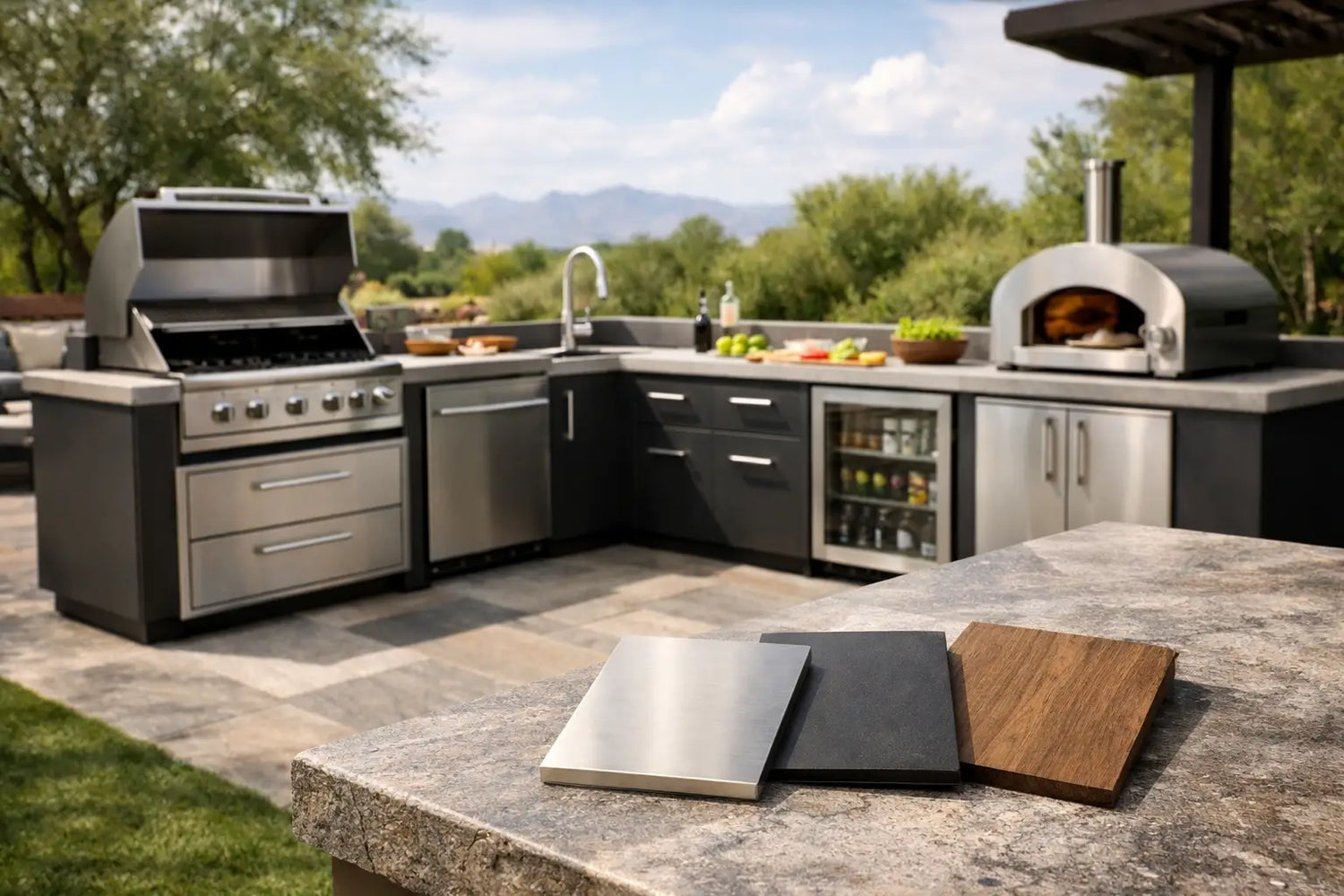
A straight linear layout is often the cleanest choice for patios, courtyards, and hospitality terraces. It delivers a refined architectural look and fits well against a wall or boundary. An L-shape adds more prep area and can define the entertaining zone more clearly. Island-style arrangements create a stronger social presence, but they require generous circulation space and careful utility planning.
The mistake to avoid is choosing modules one by one without considering total footprint. A grill cabinet may fit. Add refrigeration, storage, side shelves, and clearances, and suddenly doors clash, walkways tighten, or visual balance disappears.
Measure for more than width alone. Account for door swings, lid openings, service access, traffic around seating, and safe spacing near heat sources. In compact spaces, a smaller number of better-chosen modules usually feels more premium than a crowded setup with every possible feature.
Let the grill dictate the core configuration
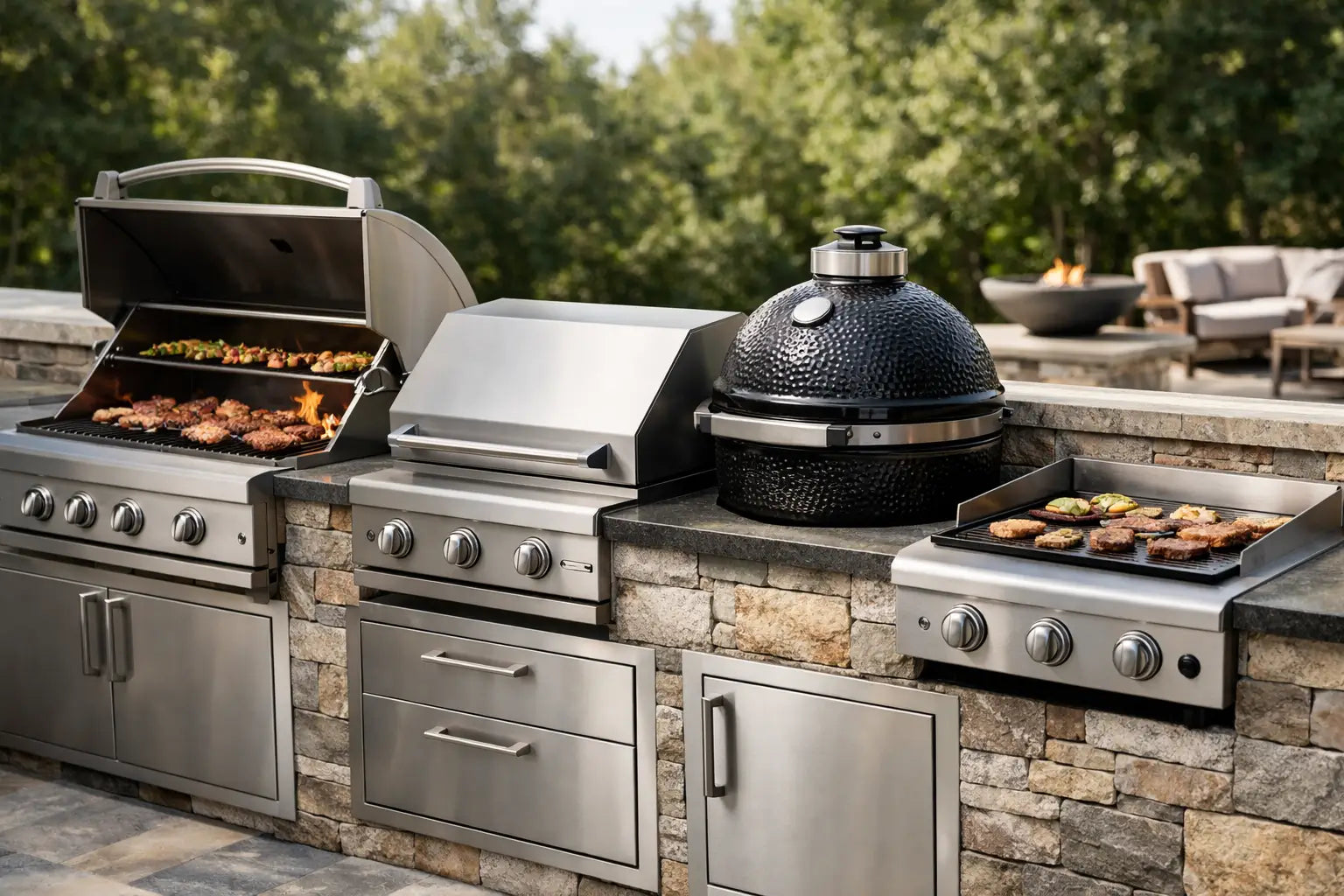
In most projects, the grill is the anchor. Whether you prefer a built-in gas grill, charcoal unit, or ceramic cooker such as a Big Green Egg, the surrounding modules should support that appliance rather than compete with it.
A grill module should be paired with landing space on at least one side, ideally both. Hot trays, tools, and ingredients need immediate placement. If you skip this, your kitchen may still look polished, but it will never feel truly resolved in use.
Compatibility matters too. Not all modules accommodate all appliance brands equally well. Premium modular systems are designed around precise integrations for leading grill ecosystems, which protects the visual result and avoids the improvised look that often comes from retrofitted cabinetry.
Prioritize materials that can handle real exposure
Outdoor kitchens are judged in sunlight, rain, wind, salt air, and winter storage conditions. Materials are not a detail. They are the difference between a luxury installation and an expensive future replacement.
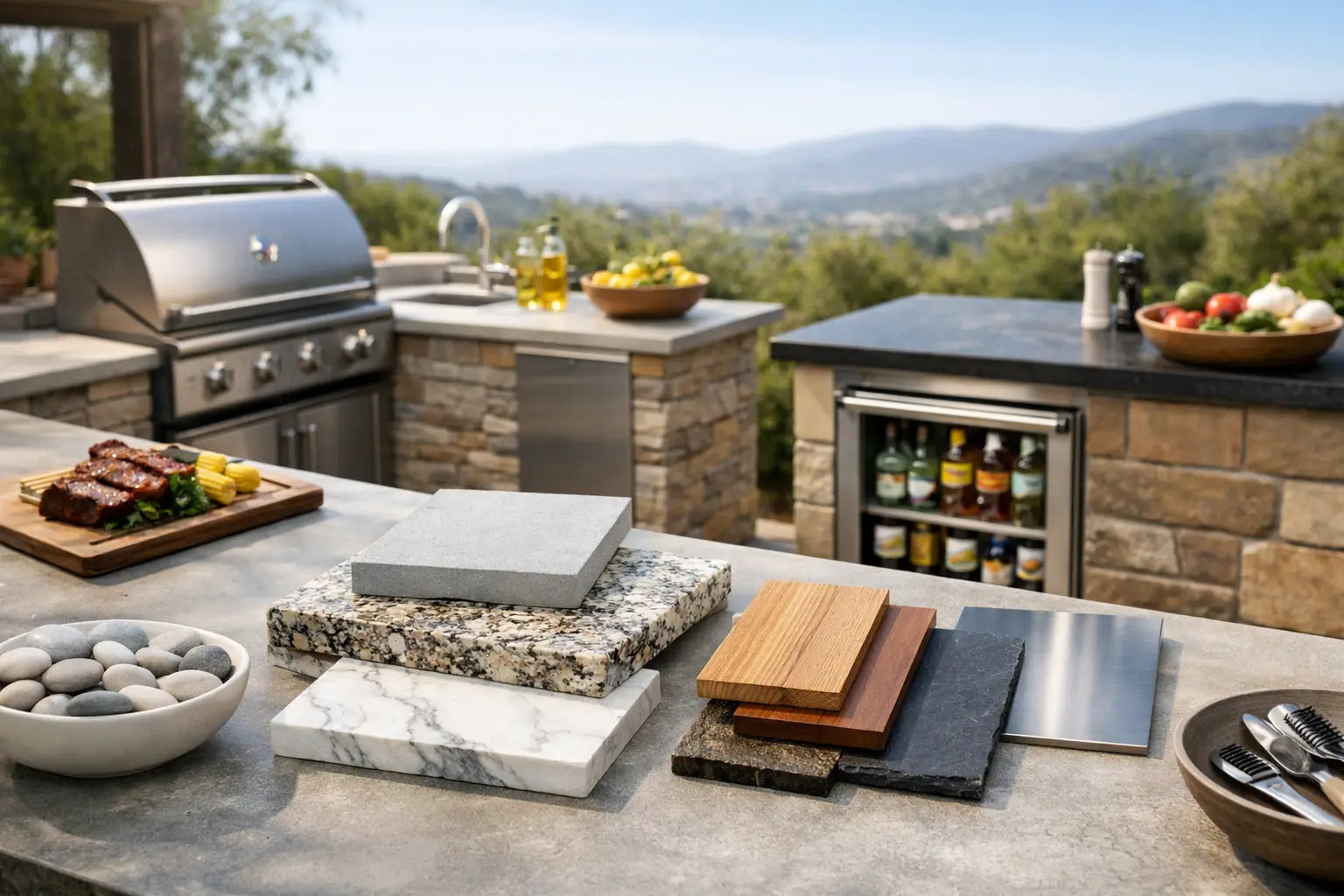
Powder-coated aluminum, high-grade stainless steel, and weather-resistant architectural surfaces are often the strongest choices for premium modular kitchens. They offer structural stability, corrosion resistance, and a cleaner long-term appearance than many site-built alternatives. In contrast, materials that perform beautifully indoors can degrade quickly outside, especially around heat, grease, moisture, and freeze-thaw cycles.
Local climate should guide decisions. Coastal properties need stronger corrosion resistance. Mountain homes may need better tolerance for temperature swings. Hospitality projects need finishes that remain consistent under heavier use and more frequent cleaning.
A good rule is simple: choose materials that are engineered for permanence, not merely marketed as outdoor-friendly. Luxury buyers should expect surfaces that maintain color, alignment, and finish quality well beyond the first season.
Storage is where premium design proves itself
Storage rarely gets top billing during the buying process, but it has an outsized effect on daily satisfaction. The right storage modules keep tools protected, fuel organized, and countertops clear. The wrong storage strategy forces owners back into the indoor kitchen every few minutes.
Think about what needs to live outside full time. Grill tools, serving pieces, cleaning items, charcoal, wood chips, covers, and glassware all require different storage conditions. Deep drawers are ideal for larger accessories. Enclosed cabinets can conceal bulkier items. Trash and utility pull-outs make cleanup much easier and keep the entire area feeling composed.
For hospitality settings, storage also supports service efficiency. Staff should be able to access supplies quickly without disrupting guests or exposing clutter. In high-end residential spaces, concealed organization helps preserve the calm, architectural look buyers expect.
Refrigeration and sinks are worth adding selectively
Not every outdoor kitchen needs a sink or beverage fridge, but when they fit the use case, they transform convenience. Refrigeration is especially valuable if the kitchen sits far from the house or is used frequently for entertaining. A sink becomes more compelling when prep, cleanup, and handwashing all happen outdoors.
That said, these modules add complexity through plumbing, drainage, and power. If your goal is speed and simplicity, it may be smarter to focus on a high-performance grill, generous prep space, and refined storage first. The best modular kitchen is not the one with the most features. It is the one with the right features.
Choose a visual language, not just separate pieces
Design-conscious buyers should think beyond utility. Outdoor kitchen modules need to read as one coherent composition. Proportions, finishes, handle design, countertop thickness, and appliance integration all affect the final impression.
This is where premium modular systems outperform pieced-together solutions. A well-designed collection feels architectural from the start. The lines are consistent. The materials speak the same language. The kitchen looks intentional, not assembled over time from unrelated components.
Consider the surroundings. A contemporary villa may suit sleek dark finishes and monolithic forms. A warmer residential setting may call for softer textures and more natural visual contrast. For rooftops and compact terraces, restraint usually creates a stronger luxury effect than visual noise.
Think carefully about installation burden
One of the biggest advantages of modular outdoor kitchens is speed. But not all modular systems deliver the same level of ease. Some still require extensive on-site assembly, multiple trades, or adjustment work that chips away at the convenience buyers expect.
If time, finish quality, and predictability matter, look closely at how the modules arrive and what installation actually involves. Fully pre-assembled, plug-and-play systems offer a far more controlled path than traditional custom builds or flat-pack alternatives. They reduce on-site risk, shorten project timelines, and limit the chances of workmanship inconsistencies.
For homeowners, that means fewer surprises. For developers and hospitality buyers, it means faster project turnover and a cleaner coordination process. ELEEXA has built its position around that exact advantage: luxury outdoor kitchens designed to arrive with the engineering already solved.
Budget for value, not just price
The cheapest path is rarely the least expensive over time. Outdoor kitchens sit at the intersection of design, weather exposure, appliances, and construction. Lower upfront pricing can quickly lose appeal if installation drags on, components fail early, or the final result looks compromised.
A better way to evaluate value is to weigh longevity, installation efficiency, finish quality, customization, and appliance compatibility together. Premium modules often cost more because they eliminate hidden costs elsewhere - contractor delays, fit issues, rework, and premature replacement.
For high-end properties, there is also a broader return. A well-executed outdoor kitchen elevates how the home or hospitality space is used and perceived. It becomes part of the property’s identity, not just an added feature.
The strongest choice is usually the one that gives you confidence before installation even begins. When the modules suit the space, support the way you live, and arrive engineered for the outdoors, the decision stops feeling complicated. It starts feeling like the natural next step toward a better outdoor experience.