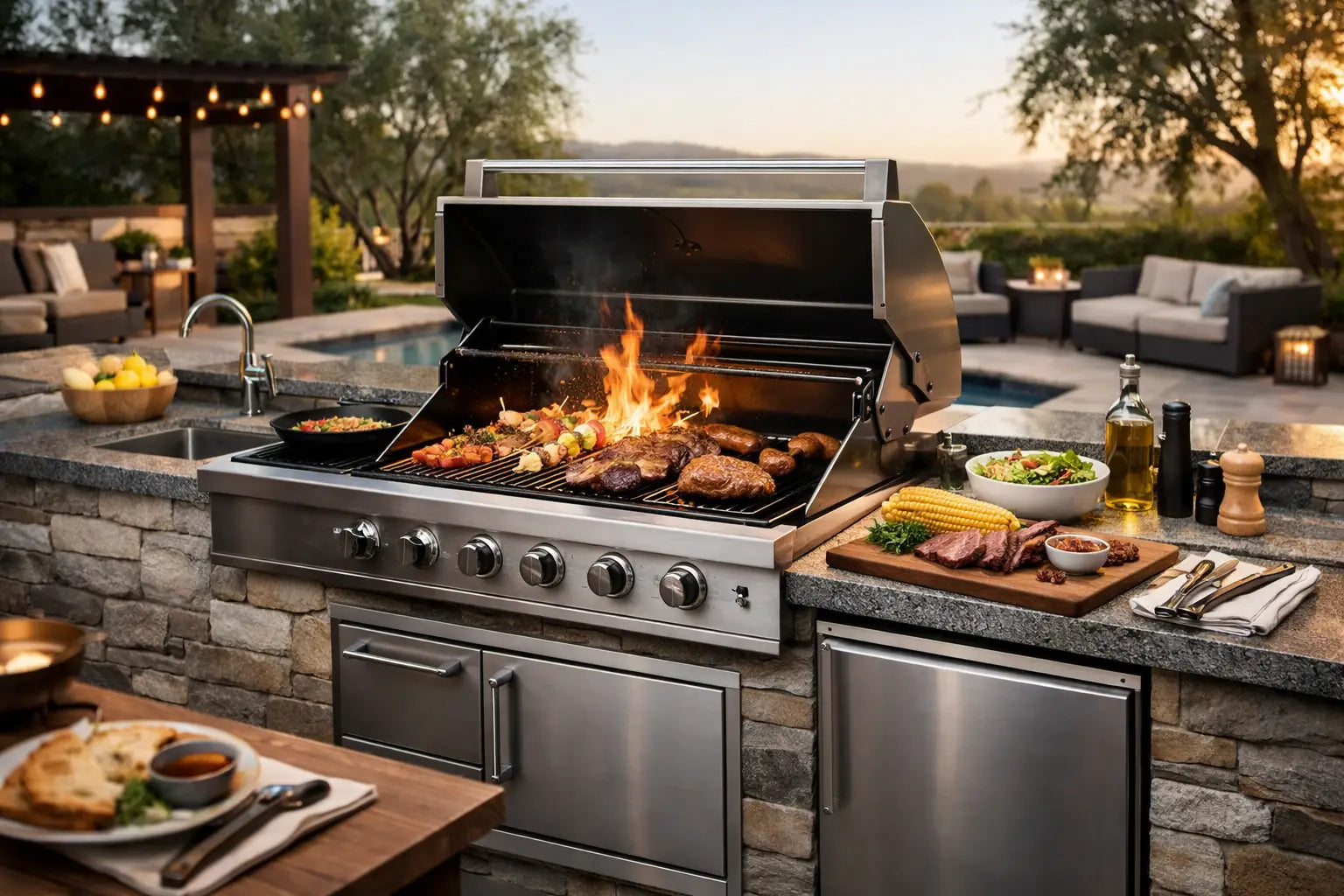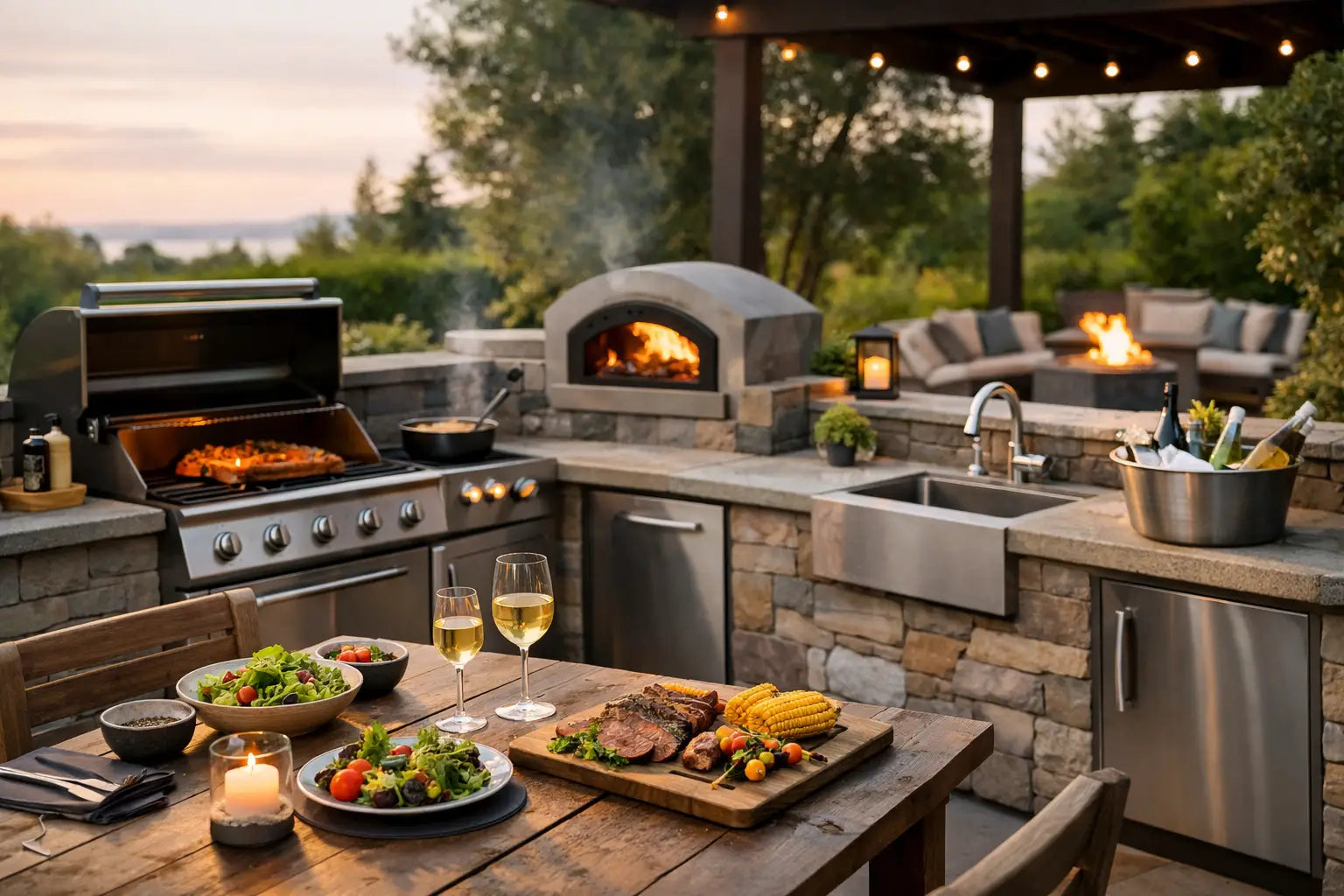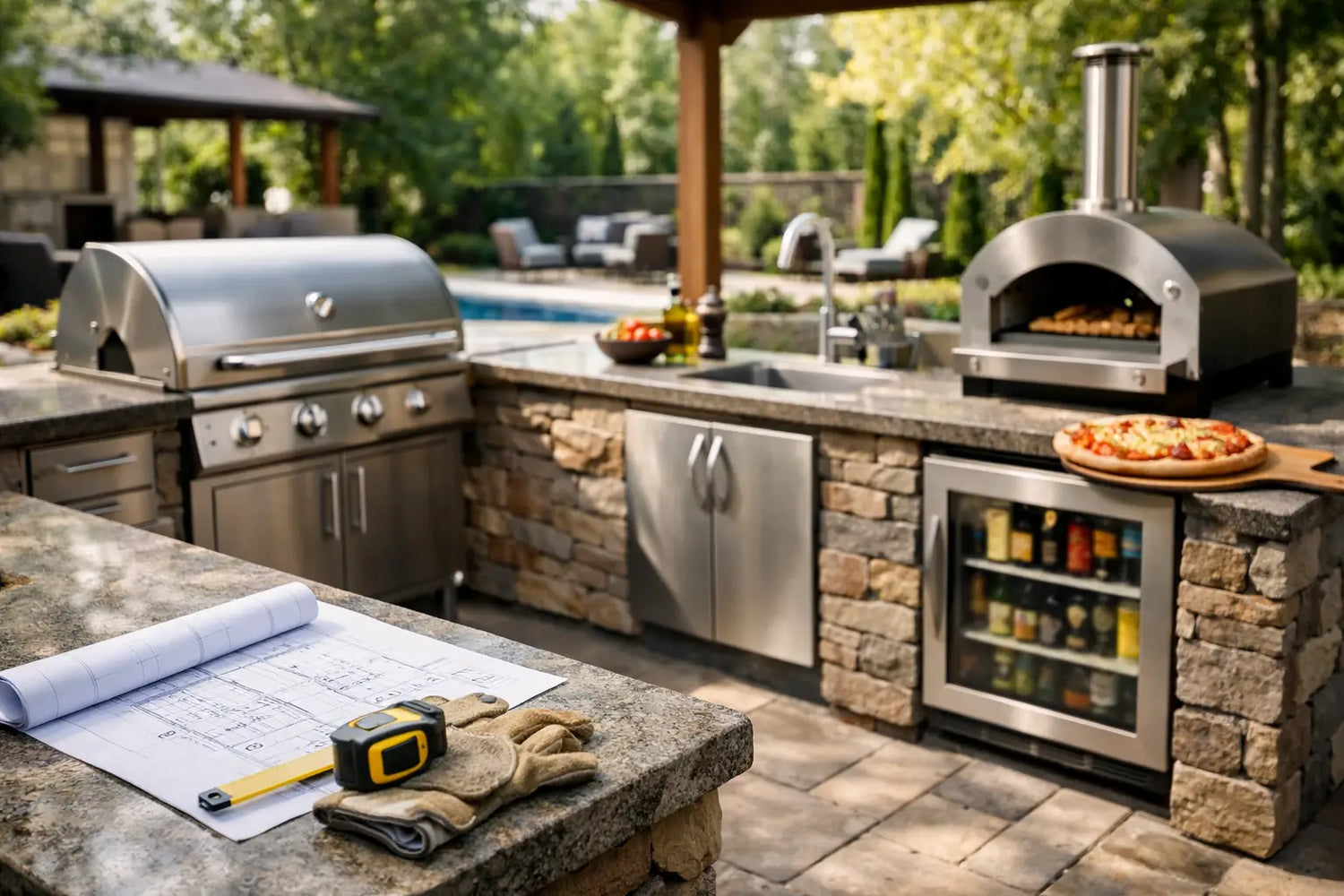
The difference between a beautiful outdoor kitchen and a costly backyard project usually comes down to installation. A strong outdoor kitchen installation guide does more than tell you where to place a grill - it helps you avoid utility conflicts, drainage mistakes, clearance issues, and the kind of site decisions that slow a project for weeks.
For design-conscious homeowners and hospitality buyers, installation is where luxury either feels effortless or painfully improvised. The best result is not simply a kitchen that looks impressive on delivery day. It is one that fits the space precisely, performs reliably, and integrates cleanly with the way people cook, host, and move through the property.
What an outdoor kitchen installation guide should actually solve
Most buyers assume installation starts when the kitchen arrives. In reality, the real installation phase begins much earlier, with planning around the site, utilities, access, and appliance compatibility. If those pieces are handled correctly, the final setup feels fast and controlled. If they are ignored, even premium products can become complicated.
A serious installation guide should answer five questions. First, where will the kitchen sit in relation to dining, lounging, and circulation? Second, what does the surface need to support in terms of weight, drainage, and level? Third, which utilities are required for your chosen configuration? Fourth, can the modules be delivered into position without site damage or last-minute improvisation? Fifth, how will the finished layout perform in weather, not just in perfect conditions?
That is why modular systems have changed the category. Traditional site-built outdoor kitchens often rely on several trades, multiple handoffs, and too much interpretation. Pre-assembled systems reduce that uncertainty because much of the complexity is resolved before the kitchen reaches your home or project site.
Start with the site, not the appliances
A common mistake is choosing grills, sinks, fridges, and storage first, then trying to force them into a space that was never properly assessed. The better approach is to read the site before finalizing the configuration.
Look at sunlight, wind exposure, proximity to the house, privacy, and how guests naturally gather. A kitchen that sits too far from the indoor prep zone may become inconvenient for daily use. One that is placed too close to a seating area can feel hot, smoky, or crowded. For hospitality settings, access for staff, cleaning, and service speed matters just as much as visual impact.
Surface condition is equally important. Outdoor kitchens need a stable, level base capable of supporting substantial weight over time. Concrete is often the simplest and most reliable foundation, but high-quality pavers can also work if the substrate is correctly built and remains even. Wood decking may be possible in some cases, though load, heat protection, and local code requirements need closer review. This is one of those areas where it depends on the specific structure, not just the finish material.
Planning utilities before delivery
The cleanest installations are planned around utilities early. Gas, electricity, and water should never be treated as details to solve after the layout is finalized.
If your kitchen includes a built-in gas grill, side burner, sink, refrigerator, lighting, or powered accessories, utility routes need to be aligned with the module positions. That means understanding where connections enter the space, how they will be protected, and whether shutoffs are accessible. If you are deciding between propane and natural gas, installation complexity may influence the choice as much as cooking preference. Natural gas can be convenient long term, but it usually requires more site preparation. Propane is often more flexible, though storage and concealment need to be handled elegantly.
Electrical planning deserves the same attention. Refrigeration, lighting, ignition systems, and convenience outlets all require safe, code-compliant power. In premium projects, the visual standard is high. Buyers do not want visible conduit, awkward extension solutions, or access panels that disrupt the design.
Water and drainage can be the most underestimated part of the project. A sink adds convenience, but it also introduces supply and waste considerations that vary by property and climate. In some installations, a simple cold-water setup is enough. In others, drainage strategy, winterization, and service access need a more technical approach.
Outdoor kitchen installation guide for layout and clearances
Once the site and utilities are understood, layout becomes more precise. This is where luxury planning earns its value. A kitchen can have premium finishes and still feel wrong if the proportions or spacing are off.
Keep prep, cooking, and serving functions close enough to feel intuitive. You want movement to be efficient, not cramped. Door swings, grill lid clearance, drawer access, and standing room all matter. A compact terrace may benefit from a refined linear layout. A larger patio or pool house can support longer runs, an L-shape, or a social island arrangement if circulation remains comfortable.
Clearance around heat-producing appliances is not negotiable. Grill manufacturers specify safe distances from adjacent materials, and those requirements should be respected from the start rather than patched in later. Ventilation is also critical, especially for integrated grill setups. A polished result is not just about appearance - it is about engineering that performs safely under real use.
Weather exposure should also shape the layout. If your site gets strong prevailing wind, burner performance and smoke direction may influence where the grill belongs. If the kitchen sits in full sun for most of the day, refrigeration performance and user comfort may benefit from shade structures or strategic placement.
Delivery access can make or break the project
This is the part buyers often overlook until the truck arrives. A premium outdoor kitchen may be beautifully designed and largely pre-assembled, but it still has to reach its final location.
Measure every access point in advance. Gates, side passages, steps, ramps, elevators, rooftop entries, and surface transitions all matter. For urban homes, penthouses, courtyards, and hospitality properties, access planning can be more complex than the kitchen design itself. If cranes, lifts, or special handling are required, that should be identified early so the installation day stays controlled.
This is one reason pre-assembled modular systems are so attractive at the high end. They compress build time and reduce on-site mess, but they also demand disciplined planning. When the dimensions, access route, and placement strategy are coordinated in advance, installation becomes dramatically cleaner and faster.
Why modular changes the installation equation
A traditional custom build often means framing, cladding, appliance fitting, countertop templating, and multiple site visits. It can produce a beautiful outcome, but it also creates more room for delay, inconsistency, and contractor interpretation.
Modular luxury systems take a different path. Much of the design, fabrication, and fitment happens before delivery. That means better finish control, more predictable lead times, and a far shorter on-site process. For buyers who want architectural impact without months of disruption, this is a significant advantage.
ELEEXA is built around that logic. Pre-assembled, plug-and-play modules remove a remarkable amount of installation friction while preserving the customization and premium detailing buyers expect in a luxury outdoor kitchen.
That does not mean every site is identical or every installation is effortless. It means the complicated parts are reduced, centralized, and engineered upfront. For homeowners, that translates into less risk. For developers and hospitality buyers, it means better control over timeline and finish quality.
Final checks before installation day
Before the kitchen arrives, confirm the base is complete, level, and cured if concrete work was recently done. Verify utility rough-ins are in the correct locations and tested where appropriate. Recheck appliance selections, especially if integrating a specific grill brand or specialty cooker. Small specification mismatches create unnecessary delays.
It also helps to decide how the surrounding environment will be finished. Lighting, pergolas, bar seating, flooring transitions, and nearby dining furniture influence how the kitchen reads once in place. The installation may be focused on the cabinetry and appliances, but the experience is shaped by the entire setting.
A premium result is planned, not improvised
The best outdoor kitchens feel inevitable, as if they were always meant to be part of the property. That only happens when installation is treated as a design discipline, not a delivery detail. If you plan the site, utilities, layout, and access with the same care you give materials and aesthetics, the result is faster, cleaner, and far more satisfying to live with. Build it that way, and your outdoor kitchen will not just photograph well - it will perform beautifully every time the doors open.