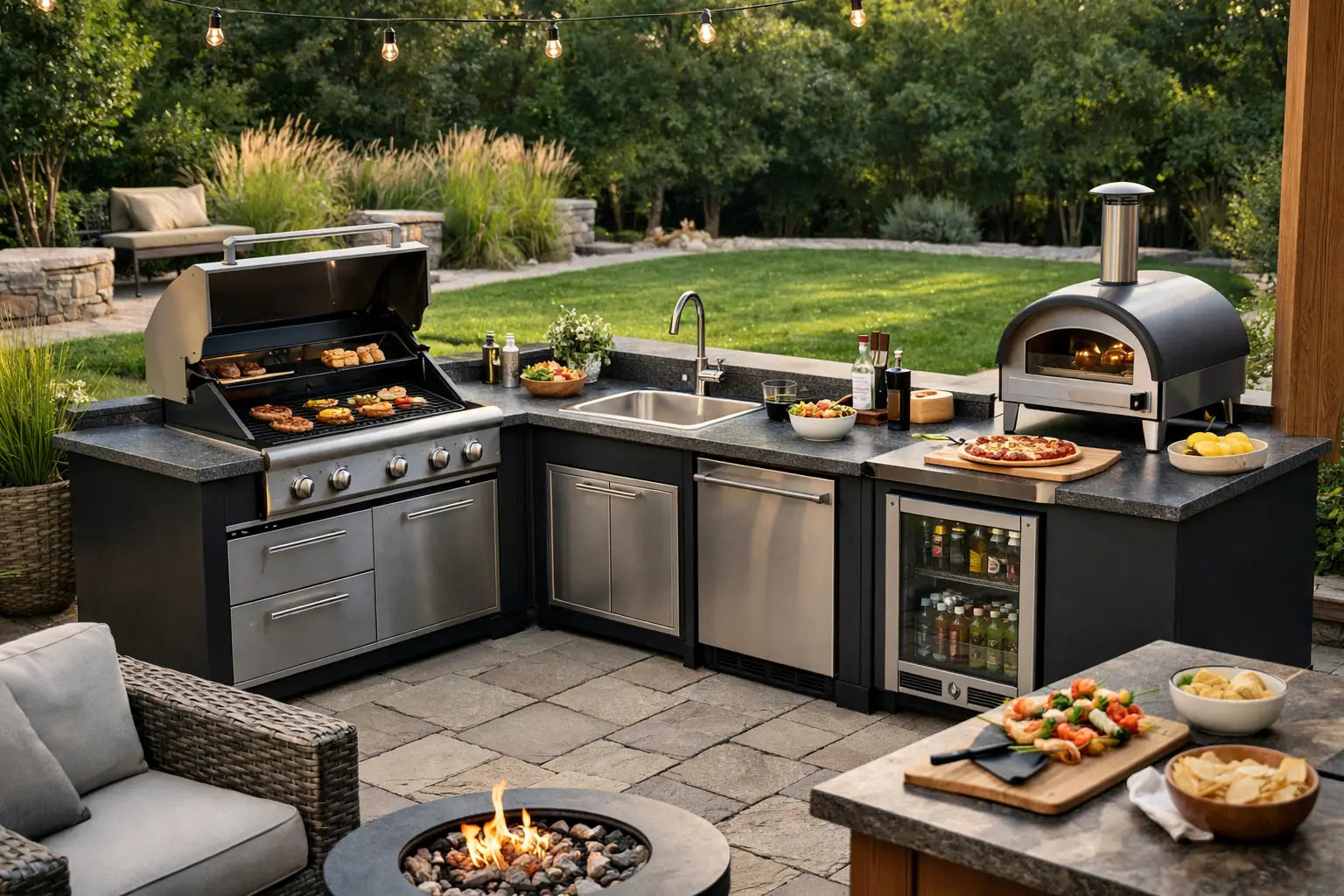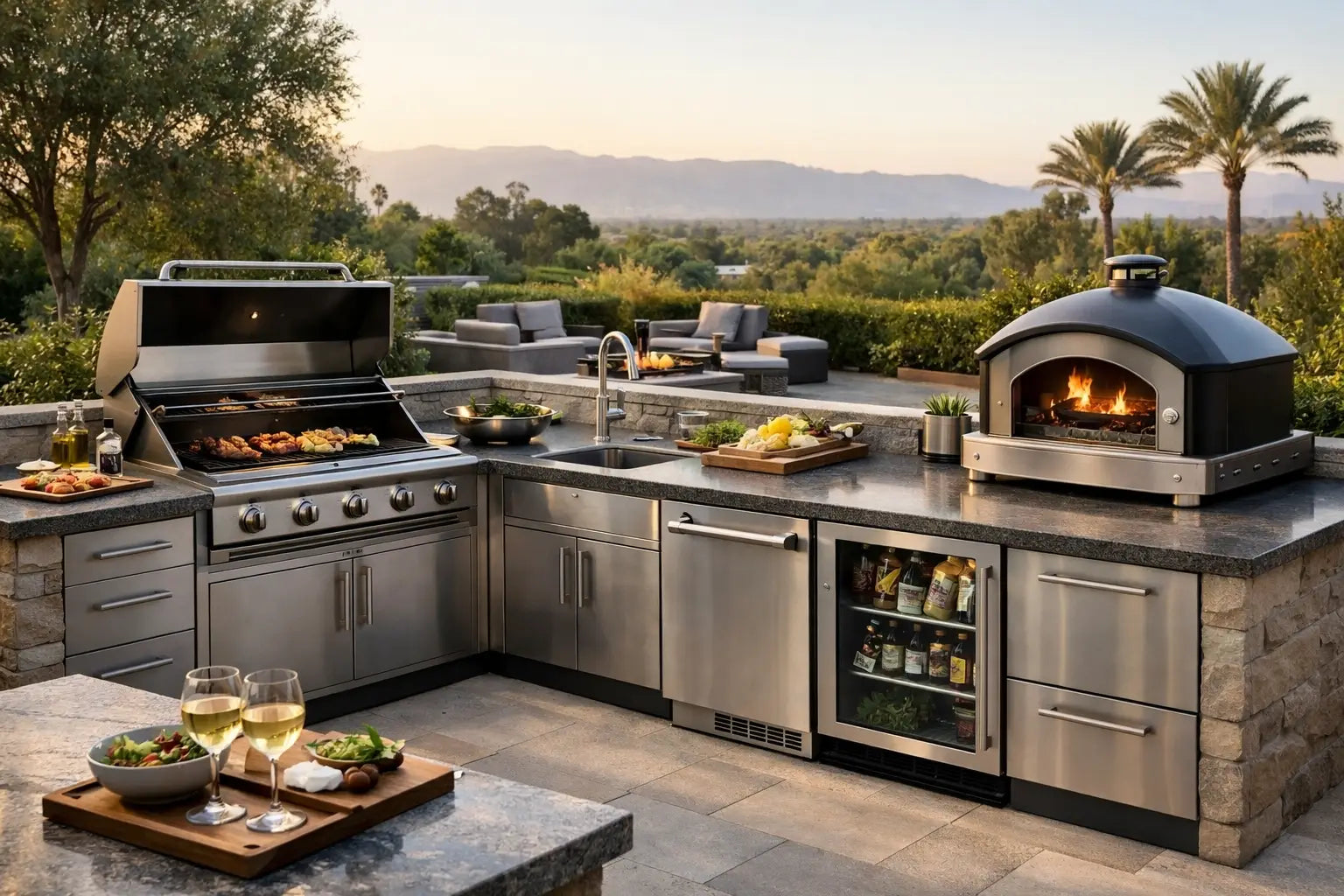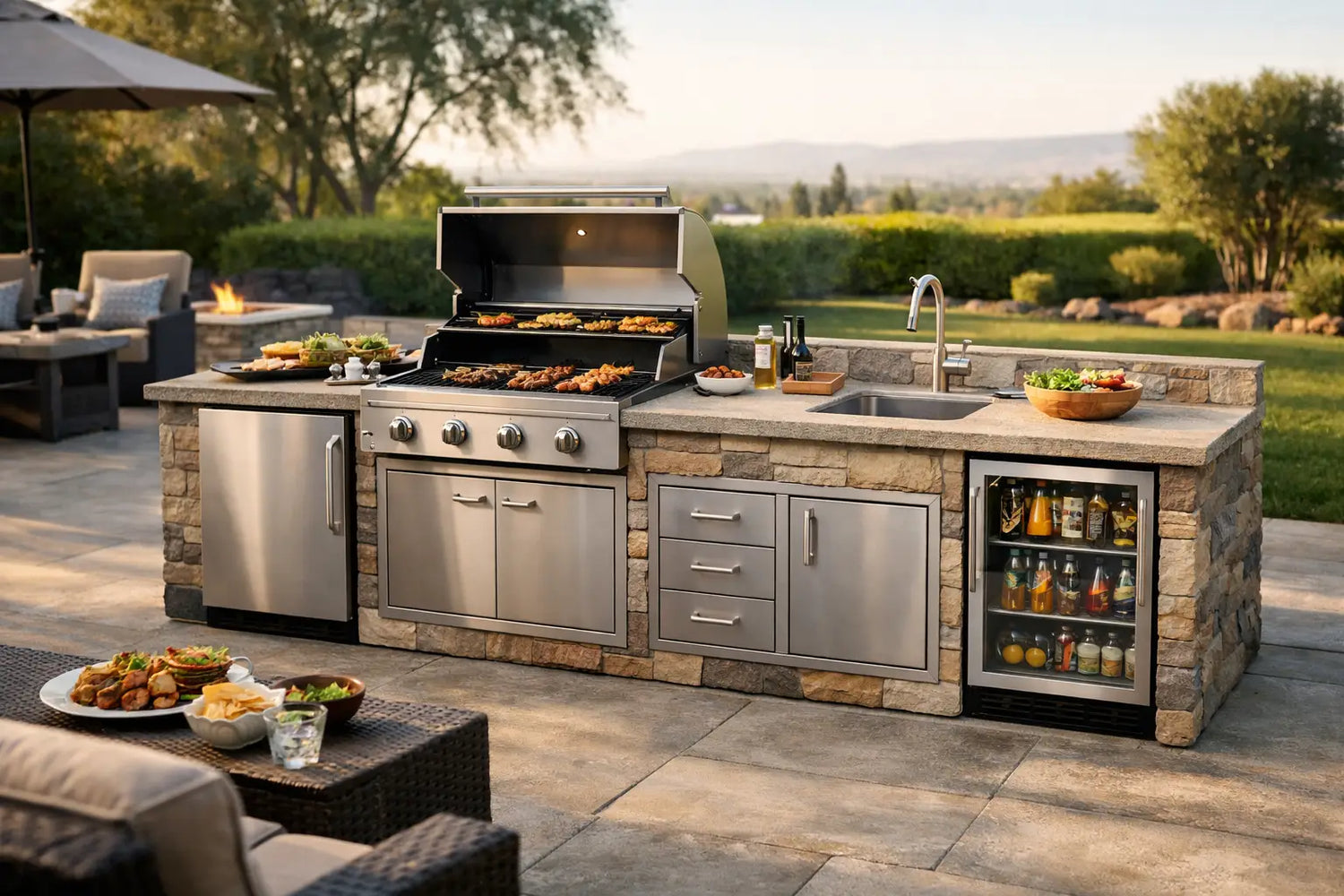
The moment an outdoor kitchen project turns into months of contractor calls, site delays, and design revisions, the appeal starts to fade. A pre assembled outdoor kitchen solves that problem at the source. Instead of building everything piece by piece on-site, it arrives as engineered modules designed to fit, perform, and elevate the space without the usual construction burden.
For homeowners creating a high-end backyard, rooftop, or terrace, that difference is not minor. It changes the entire buying experience. You spend less time coordinating trades, less time managing mistakes, and more time focusing on layout, finish, appliance integration, and how the kitchen will actually live in your space.
What a pre assembled outdoor kitchen actually means
The term gets used loosely, so it helps to be precise. A true pre assembled outdoor kitchen is manufactured off-site as finished or near-finished modules. Cabinetry, structure, and often appliance cutouts or integrated components are prepared in advance, then delivered ready for placement and connection.
That is very different from a flat-pack system or a partially assembled island that still requires extensive installation work. In a premium category, pre-assembled should mean the difficult work has already been handled - structural engineering, weather-ready construction, alignment, finish quality, and compatibility planning.
This is why the format is gaining traction among design-conscious buyers. It offers the visual authority of a custom outdoor kitchen with a far more controlled path from purchase to use.
Why affluent buyers are shifting away from traditional custom builds
Custom construction still has a place. If you are designing around unusual architecture, complex hardscaping, or a fully bespoke built-in environment, site-built work may be the right move. But for many luxury residential and hospitality projects, custom has become synonymous with uncertainty.
Timelines stretch. Costs drift. Quality varies depending on the installer, fabricator, and subcontractor chain. Even a beautiful final result can come with avoidable friction.
A pre assembled outdoor kitchen reduces that variability. The product is designed as a complete system, not improvised in stages by multiple parties. That matters when finish consistency, appliance fit, and weather resistance are all part of the value equation.
For a homeowner, the gain is clarity. For an architect or developer, it is control. For hospitality buyers, it is repeatability across projects, which is often just as important as visual impact.
The biggest advantages of a pre assembled outdoor kitchen
The first advantage is speed, but speed alone is not the full story. Fast delivery only matters if the result still feels premium. The better systems do both. They shorten the path to installation while maintaining the level of finish buyers expect in a luxury environment.
The second advantage is installation simplicity. A modular system can dramatically reduce labor complexity on site. Instead of fabricating structure, cladding, storage, and appliance housing from scratch, installers are working with completed sections built to work together. That usually means fewer errors and less disruption.
The third advantage is design confidence. Premium modular kitchens are not generic boxes. The best are architecturally styled, proportioned for modern outdoor spaces, and available in finish combinations that feel considered rather than utilitarian. You keep the visual standard high without starting from a blank page.
There is also a durability benefit. Outdoor kitchens fail when materials are chosen for appearance alone or when site assembly leaves too many weak points. A factory-built product has the advantage of repeatable manufacturing standards. When weather-resistant metals, durable surfaces, and appliance-compatible configurations are engineered together, long-term performance is simply easier to control.
Where pre assembled systems outperform DIY and entry-level modular options
Not all modular kitchens belong in the same conversation. There is a major difference between a luxury pre assembled system and a low-cost unit marketed as easy to assemble.
DIY solutions often look attractive at first because the initial price appears lower. But once you add shipping, installation labor, utility connections, site preparation, and the cost of correcting fit or finish issues, the gap can narrow quickly. More importantly, the end result often lacks the polish buyers want when the outdoor kitchen is meant to anchor a premium entertaining space.
Entry-level modular systems can also feel limited. Appliance compatibility may be narrow. Finishes may be basic. Storage may be shallow or poorly sealed. And what looks good in a product photo may not hold its presence beside a luxury pool, contemporary terrace, or architect-designed garden.
A well-executed pre assembled outdoor kitchen is different because it is built as a design object and a performance product. It is meant to enhance property value, not just add a grill station.
What to compare before you buy
Materials and weather performance
This is one of the fastest ways to separate premium products from ordinary ones. Outdoor environments are harsh. Rain, heat, UV exposure, humidity, salt air, and freeze-thaw cycles all test the kitchen over time.
Look closely at the cabinet structure, finish coatings, hardware, and countertop options. Stainless steel quality matters. Powder-coated surfaces matter. Drainage thinking matters. So does resistance to fading, corrosion, warping, and staining. A luxury kitchen should be designed for real outdoor use, not occasional fair-weather styling.
Appliance compatibility
Buyers rarely want to be boxed into one appliance path. If you already prefer Napoleon, Broil King, or Big Green Egg, the kitchen should work with that decision, not force a compromise.
This is where engineered modular systems have a clear advantage. Purpose-built cutouts, integrated ventilation thinking, and clean alignment around major grill brands create a result that looks intentional. That level of compatibility is difficult to fake on site without adding cost and complexity.
Configuration flexibility
Some buyers need a clean linear setup. Others want refrigeration, sink modules, storage towers, corner layouts, or bar seating. The question is not whether the kitchen is modular. The question is whether the modules create a sophisticated composition rather than a patched-together collection.
Good systems offer enough flexibility to fit the space and lifestyle while preserving a unified design language. That balance is what keeps modular from feeling standard.
Delivery and installation reality
Ask what arrives assembled, what still needs professional hookup, and what site conditions are required. Even the best pre assembled kitchen does not erase the need for practical planning. Utilities, access paths, surface levels, and local code requirements still matter.
But the right product should shrink the installation burden dramatically. The process should feel more like placement and connection than construction.
When custom may still be the better choice
There are cases where fully custom construction is justified. If your project includes unusual masonry integration, highly irregular dimensions, or a one-off architectural statement that cannot be achieved through modules, bespoke fabrication may be worth the extra time.
Some buyers also enjoy the design process itself and are willing to manage a longer timeline in exchange for complete freedom. That is valid.
The key is being honest about what you are buying. Custom offers maximum originality, but it often comes with more decision fatigue, more installation risk, and more budget creep. A pre assembled outdoor kitchen offers a more disciplined luxury - refined, flexible, and far easier to execute well.
Why this category fits modern luxury living
Outdoor entertaining has changed. Buyers want spaces that work as extensions of the home, not afterthoughts tucked beside a grill. They want clean lines, integrated appliances, practical storage, and materials that still look composed after years outside.
They also want convenience without compromise. That is the real reason this category is growing. The appeal is not just faster installation. It is the ability to achieve a premium result with less friction.
That is exactly where brands like ELEEXA have raised the standard. By combining fully pre-assembled modules, design-led finishes, and appliance-ready configurations, the outdoor kitchen becomes easier to specify and far more rewarding to own.
A great outdoor kitchen should feel effortless once it is in place. The smartest path is usually the one that removes complexity before it reaches your backyard.