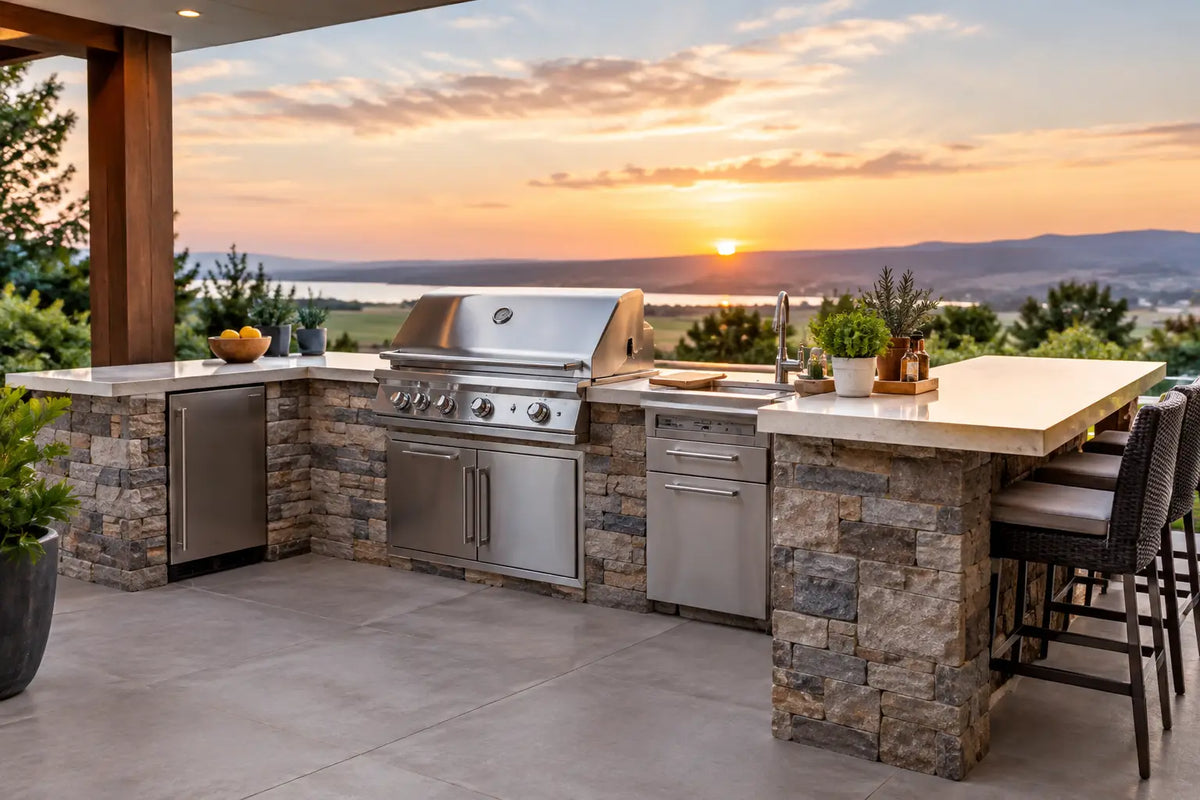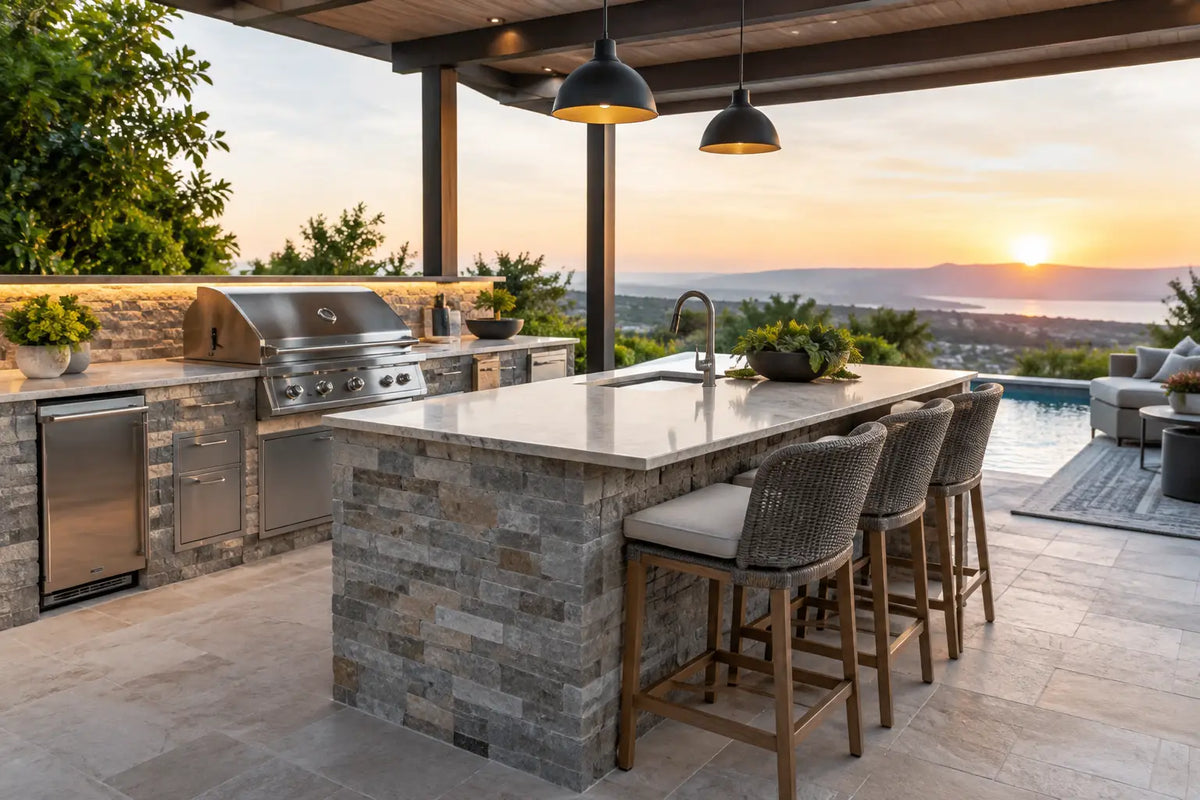
A serious outdoor kitchen should do more than place a grill beside a patio. The top luxury backyard kitchen features create a composed entertaining environment: one that performs under pressure, looks exceptional from inside the home, and is ready when guests arrive. For discerning homeowners, the difference lies in materials, planning, appliance integration, and how effortlessly every element works together.
A luxury result is not defined by adding every possible accessory. It is defined by choosing the right features for how the space will actually be used, then specifying them at a standard worthy of the property.
Start With a Kitchen That Is Built to Live Outdoors
The foundation matters more than the accessory list. A backyard kitchen faces sun, rain, temperature swings, moisture, grease, and frequent cleaning. Indoor-grade cabinetry or improvised construction can look convincing at first, then rapidly lose its finish, alignment, and appeal.
Premium weather-resistant cabinetry is the essential starting point. Look for engineered aluminum or other corrosion-resistant structures, durable powder-coated finishes, UV-stable surfaces, and hardware designed to resist the elements. These materials keep doors operating cleanly and maintain a refined appearance through changing seasons.
A modular system adds another advantage: precision without a drawn-out construction project. Rather than coordinating multiple trades and waiting through weeks of onsite work, pre-assembled modules arrive as a finished architectural solution. This is particularly valuable for rooftop terraces, vacation properties, hospitality settings, and residences where disruption is not acceptable.
ELEEXA applies this principle with fully pre-assembled outdoor kitchen modules that deliver a polished, plug-and-play installation experience without sacrificing the tailored feel of a high-end design.
A Professional-Grade Grill Is the Centerpiece
For most owners, the grill remains the heart of the outdoor kitchen. But “high-end” should mean more than an oversized hood. The right grill should match the cooking style, the number of guests, available fuel source, and how frequently the kitchen will be used.
A premium built-in gas grill offers reliable heat control, generous cooking area, and the speed needed for entertaining. Models with independent burners create distinct heat zones, allowing a host to sear steaks, roast vegetables, and keep finished food warm at the same time. Infrared burners, rotisserie capability, illuminated controls, and integrated temperature monitoring can further elevate the experience.
There is also a strong case for ceramic cooking systems such as Big Green Egg. Their heat retention and versatility appeal to owners who want to smoke, bake, roast, and grill in one appliance. The trade-off is a slower warm-up and a more hands-on cooking rhythm. For some households, the ideal setup combines a gas grill for fast weeknight cooking with a ceramic cooker for weekend menus and low-and-slow entertaining.
The key is proper integration. The grill should sit within cabinetry engineered for its dimensions, ventilation requirements, clearances, and service access. A beautiful outdoor kitchen that makes appliance maintenance difficult is not truly luxurious.
Top Luxury Backyard Kitchen Features for Entertaining
The best outdoor kitchens are designed around the full hosting sequence, not only the moment food hits the grill. Guests gather, drinks are poured, ingredients are prepared, dishes are cleared, and the host needs to stay part of the conversation. Each zone should support that flow.
Generous Counter Space
Countertop area is one of the most underestimated luxuries. A narrow landing surface beside the grill may work for casual cooking, but it fails when platters, utensils, drinks, and serving boards begin competing for space.
Create clear zones for preparation, plating, and guest interaction. A long counter or peninsula can turn the kitchen into a natural social anchor, especially when paired with bar seating. For material selection, look for outdoor-rated surfaces that resist staining, heat, fading, and routine cleaning. The right finish should feel architectural rather than decorative, complementing the home while standing up to real use.
Refrigeration Where It Is Needed
An outdoor-rated refrigerator changes the rhythm of entertaining. It keeps ingredients, chilled wine, mixers, and children’s drinks close at hand, so the host is not constantly returning indoors. In a larger setup, dedicated beverage refrigeration can prevent frequent access to the food refrigerator.
Do not substitute a standard indoor refrigerator in an exposed outdoor environment. Outdoor appliances are designed to operate more reliably in variable ambient temperatures and are constructed to handle the moisture and ventilation conditions of exterior use. Placement also matters: keep refrigeration away from direct heat sources and allow the airflow specified by the manufacturer.
A Sink and Practical Water Access
A sink is not mandatory for every compact terrace kitchen, but it is a defining convenience in a larger backyard installation. It allows produce to be rinsed, hands to be washed, glasses to be refreshed, and cleanup to begin immediately after service.
The practical consideration is plumbing. If water and drainage are difficult to route, a refrigerator, expanded work surface, and well-planned storage may deliver more value than forcing a sink into the design. Where utilities are available, choose a durable outdoor faucet and ensure cold-weather protection is addressed for the local climate.
Storage That Keeps the Surface Clear
Luxury looks effortless because clutter has a place to go. Deep drawers for grilling tools, enclosed cabinets for serveware, pull-out waste bins, and dedicated compartments for gas bottles or accessories keep the kitchen clean and composed.
Storage should be specified around the owner’s habits. A passionate pizzaiolo may need room for peels, wood, and baking tools. A cocktail-focused host may prioritize glassware, ice storage, and bottle organization. Small decisions such as soft-close hardware, integrated handles, and adjustable shelving create a noticeably more refined daily experience.
Lighting Extends the Value of the Space
Without thoughtful lighting, even the most impressive kitchen becomes a daytime-only amenity. Layered illumination makes outdoor cooking safer and dining more inviting after sunset.
Task lighting should clearly illuminate the grill, prep counters, and sink. Ambient lighting can define the cabinetry, nearby dining area, or pathways without flooding the yard with glare. Warm color temperatures generally create a more flattering, residential atmosphere than harsh cool-white light.
Lighting must be rated and installed for outdoor conditions. It should also be planned early, because visible conduits and afterthought fixtures can undermine a clean architectural composition. Dimmable zones offer the greatest flexibility, shifting easily from bright meal preparation to a softer evening setting.
Comfort Features Make the Kitchen Usable Longer
A luxury outdoor kitchen earns its place by extending the season, not by looking impressive for a few summer weekends. The right comfort features depend on climate, orientation, and the amount of shade already available.
In hot, exposed backyards, consider a pergola, motorized shade, or a fixed cover designed to protect both guests and cabinetry. In cooler climates, discreet radiant heaters can make evening dining viable well beyond peak summer. Ceiling fans improve air movement in covered spaces, while screens or windbreaks can make a breezy terrace far more comfortable.
Fire features deserve careful planning. A fire table or linear fireplace can create a compelling visual focal point near a lounge area, but it should not compete with the cooking zone or restrict circulation. Treat it as part of the broader outdoor living plan, rather than another appliance to fit into the kitchen line.
Design Cohesion Is a Feature, Not an Afterthought
The strongest outdoor kitchens belong to the architecture. Cabinet colors, countertop texture, appliance finishes, and proportions should relate to the home, pool area, landscaping, and outdoor furniture. A kitchen may be technically excellent, but if it looks like a collection of unrelated components, it will not deliver the impact expected of a premium investment.
This is where customization matters. A linear layout may suit a narrow terrace; an L-shaped composition can define a cooking and serving zone; a freestanding island may be the right solution for a pool house or hospitality courtyard. Consider sightlines from the home as carefully as the view from the grill. The kitchen should look as considered from a living room window as it does when guests are seated beside it.
Color is also a strategic choice. Dark cabinetry can create a bold, contemporary statement and conceal everyday marks, while lighter finishes may better suit coastal, Mediterranean, or soft modern architecture. Neither is universally superior. Direct sun, surrounding materials, and maintenance preferences should guide the decision.
Plan Utilities, Safety, and Service Access Early
The most sophisticated outdoor kitchen is still a working environment with fuel, electricity, water, heat, and ventilation requirements. Planning these technical details early protects the design and prevents expensive compromises later.
Confirm the fuel type and supply capacity for the grill. Establish electrical needs for refrigeration, lighting, outlets, and optional equipment. Ensure drainage, GFCI-protected outlets, local codes, and appliance clearance requirements are considered before finalizing the layout. If the kitchen will sit under a roof or enclosure, ventilation becomes especially critical.
Service access is another mark of intelligent design. Appliances will eventually need cleaning, inspection, or replacement. Modular construction can make this considerably easier than a permanently built masonry installation, provided access panels and clearances are planned correctly.
A luxury backyard kitchen should make entertaining feel more spontaneous, not more complicated. Choose features that support the way you cook, host, and relax, then invest in a system engineered to look exceptional long after the first celebration has ended.