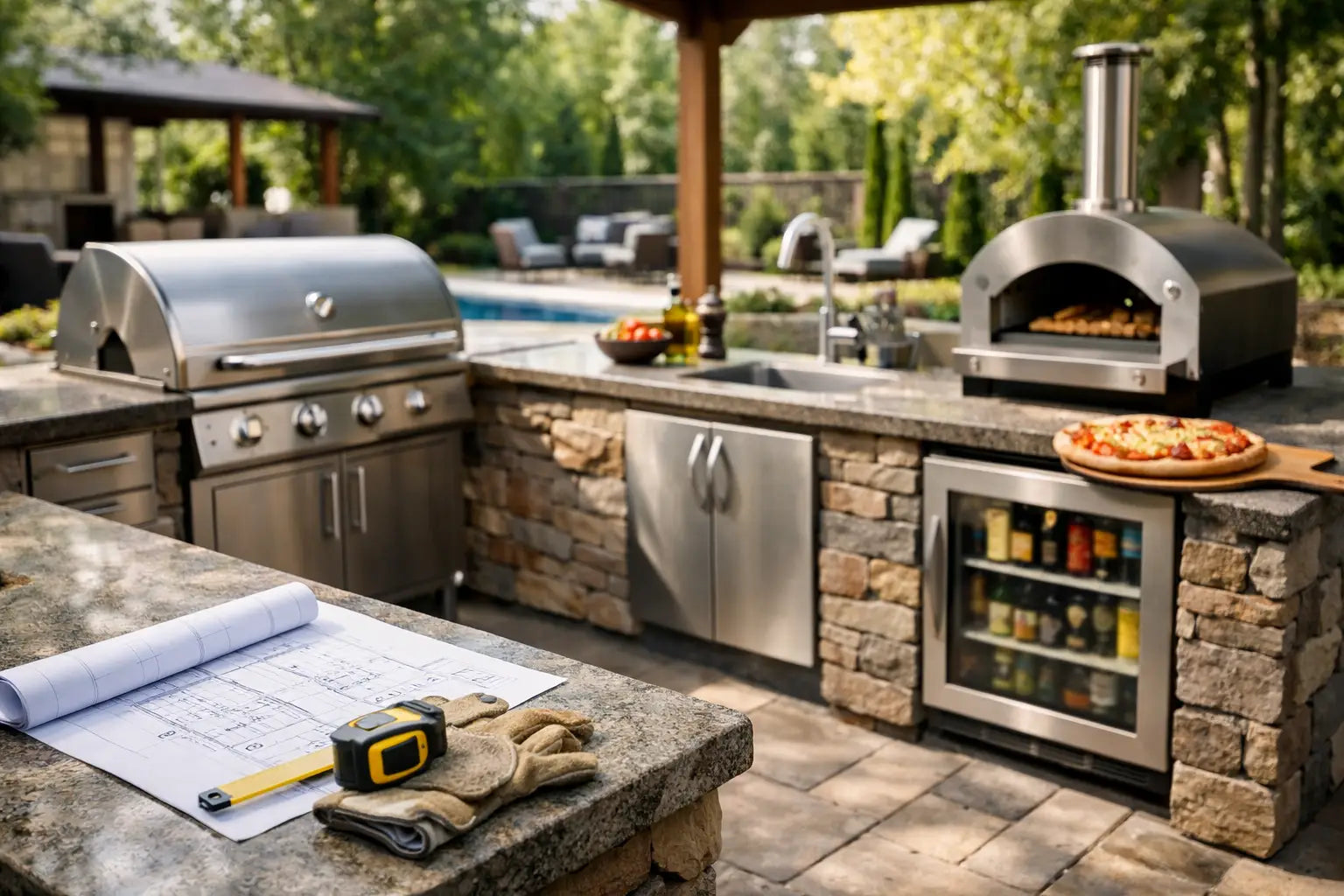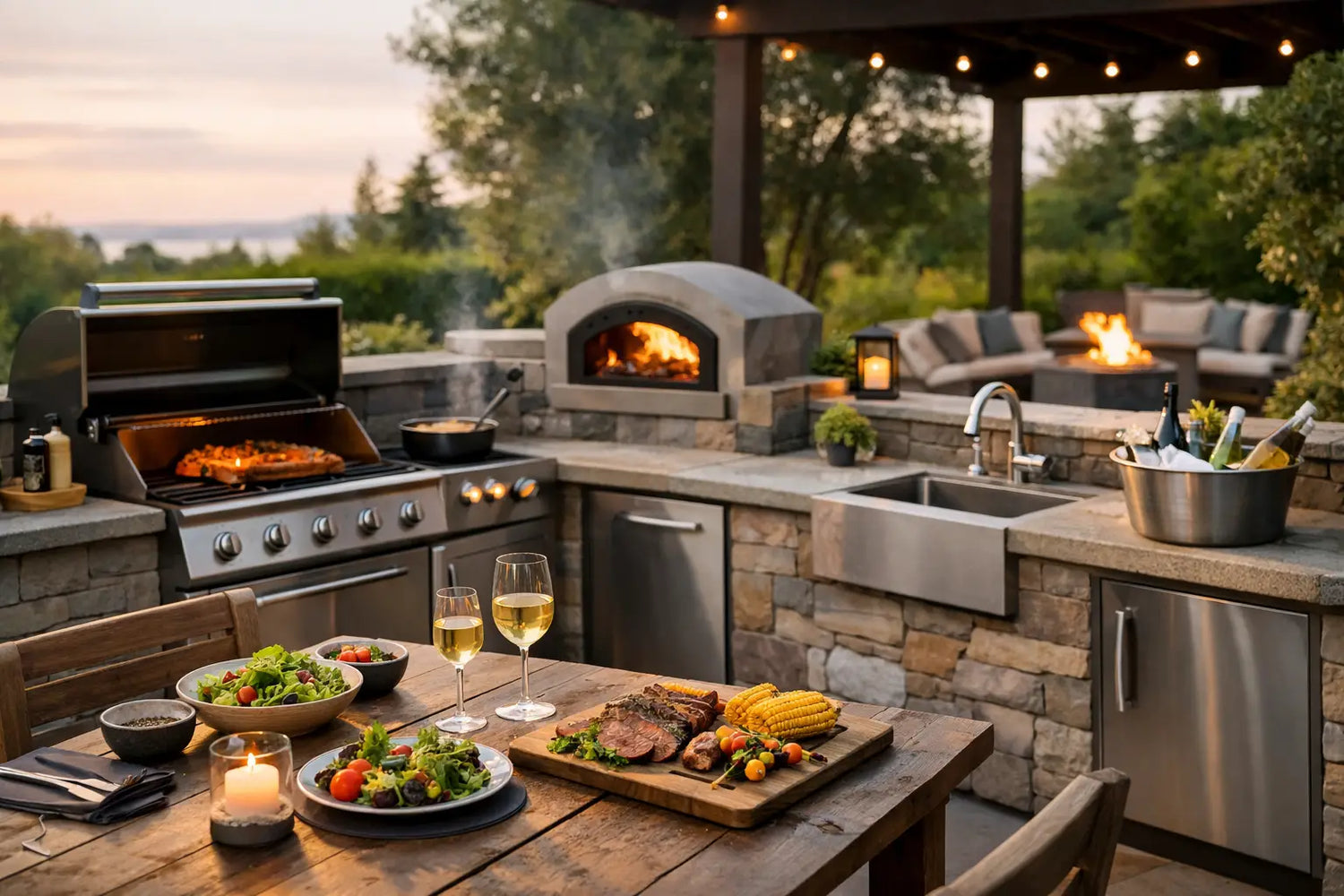
A beautiful grill on a patio is not the same thing as an outdoor kitchen. The difference shows up the first time you host six people, carry platters back and forth, or realize your prep surface is too small for anything beyond burgers. If you are figuring out how to design outdoor cooking space, the real goal is not simply adding appliances outside. It is creating a space that cooks well, entertains effortlessly, and still looks exceptional years from now.
For high-end homes, rooftops, terraces, and hospitality settings, the best outdoor cooking spaces feel deliberate. They move well, resist weather, and support the way people actually live. Great design is not about adding more components. It is about placing the right ones in the right order, with the right materials and proportions.
Start with how the space will be used
Before choosing a grill brand or countertop finish, decide what the space needs to do. A family that grills twice a week and hosts occasional weekend dinners needs a different setup than a vacation property designed for long, social evenings. A boutique hotel terrace has another set of priorities entirely, often centered on durability, service access, and repeatable guest use.
This first decision shapes everything else. If cooking is the focus, the layout should prioritize prep room, refrigeration, and easy access to tools and ingredients. If entertaining matters just as much, the kitchen needs to connect naturally to seating, dining, and circulation. If the setting is compact, every module must work harder.
The most expensive mistake in outdoor kitchen design is building around aspiration alone. Pizza ovens, side burners, sink modules, beverage coolers, and bar seating all sound appealing. But if they create a crowded plan or push the kitchen too far from the main entertaining zone, they reduce performance rather than elevate it.
How to design outdoor cooking space around movement
The best layouts feel effortless because movement has been considered in advance. You should be able to store, prep, cook, plate, and serve without doubling back or crossing paths with guests.
At a minimum, think in five zones: cold storage, dry storage, prep space, cooking equipment, and serving space. These zones do not need to be large, but they should be arranged logically. Refrigeration and storage should sit close to prep areas. Prep surfaces should sit next to the grill, not several feet away. Serving space should be positioned so finished food can move directly toward the dining area.
Linear kitchens work extremely well in many residential settings because they keep everything in one elegant run and fit neatly against a wall, privacy screen, or terrace edge. L-shaped and U-shaped arrangements create more dedicated work areas, but they also require more footprint and more discipline. If the available space is not generous, these layouts can start to feel heavy.
That is where modular design has a clear advantage. Instead of committing to a labor-intensive built-in structure that is difficult to adjust, a modular system allows a more refined balance between function, proportion, and installation speed. For design-conscious buyers, that usually means a cleaner result with far less disruption.
Choose the location as carefully as the kitchen
Even a perfectly specified kitchen can fail if it sits in the wrong place. Proximity matters. If the outdoor cooking space is too far from the indoor kitchen, everyday use drops quickly. If it is too close to doors, smoke and heat can become annoying. If it blocks views or circulation, it will feel intrusive no matter how premium the materials are.
Start with access. The cook should be able to move between indoors and outdoors with minimal effort, especially when carrying food, glassware, or supplies. Then consider wind, sun exposure, and shelter. An exposed rooftop may need stronger wind planning than a sheltered courtyard. A south-facing patio may require shading so prep surfaces and appliance handles do not become uncomfortable in peak summer heat.
Utilities matter too, but they should not dictate the design too early. Traditional custom outdoor kitchens often become a negotiation between contractor limitations and design intent. A better approach is to choose a system that is already engineered for outdoor performance and practical integration, so the design remains in control.
Select appliances with discipline
Luxury does not mean more appliances. It means the right appliances, chosen with purpose. For most outdoor cooking spaces, the grill is the centerpiece, and everything else should support it.
Start by identifying your primary cooking style. If you want fast weekday grilling and larger weekend hosting, a built-in gas grill may be the most practical anchor. If live fire and ceramic cooking matter, integrating a Big Green Egg or similar unit can shape the entire character of the kitchen. Side burners make sense for serious outdoor cooks, but they are often underused in smaller residential setups. Beverage refrigeration is usually more valuable than buyers expect, especially if it prevents constant indoor traffic.
Storage should be treated as essential, not optional. Outdoor cooking only feels elevated when tools, platters, seasonings, covers, and accessories have a proper place. Otherwise, the kitchen looks incomplete between uses.
Compatibility is another detail that separates a polished project from an improvised one. Not every cabinet or module works cleanly with every grill system. Purpose-built solutions designed around major grill brands create a far better visual and functional result than forcing appliances into a framework that was never meant for them.
Materials decide whether the kitchen stays premium
Outdoor kitchens live hard lives. Heat, rain, freeze-thaw cycles, UV exposure, grease, and frequent cleaning all test the quality of the build. This is why material selection is not just a design choice. It is a performance decision.
Powder-coated metals, marine-grade elements, weather-resistant cabinetry, and durable countertops all have a place, but only when they are engineered as a system. A kitchen that looks impressive in a showroom but struggles through one winter is not premium. It is temporary.
Countertops should resist stains, moisture, and thermal stress. Cabinet construction should be stable and corrosion-resistant. Finishes should maintain their appearance without demanding excessive maintenance. For hospitality environments and luxury rentals, this becomes even more important because the kitchen must stay presentable under heavy use.
A refined outdoor kitchen should also age well visually. That usually means restrained palettes, strong architectural lines, and materials that complement the home rather than compete with it. Fashion fades quickly outdoors. Clean design lasts.
Design for entertaining, not just cooking
People gather around outdoor kitchens because they combine food, conversation, and atmosphere. That social role should be part of the design from the beginning.
If guests are likely to stand nearby while someone cooks, allow enough space around the grill zone so the cook is not boxed in. If outdoor dining is central to the experience, the path from grill to table should be short and clear. If the kitchen doubles as a bar or serving station, counter height and overhang become more important.
Lighting deserves more attention than it usually gets. Good task lighting over the cooking and prep areas makes the kitchen usable at night, while ambient lighting helps the entire zone feel intentional rather than improvised. The same applies to flooring. Surfaces should be slip-resistant, easy to clean, and visually consistent with the level of the kitchen itself.
Sound, shade, and privacy can elevate the experience just as much as another appliance. That is especially true in dense residential settings, luxury developments, and commercial terraces where ambiance is part of the value proposition.
Budget for the full experience
When buyers think about budget, they often focus on the grill and cabinetry first. That is understandable, but it can create imbalance. A premium outdoor cooking space succeeds when the kitchen, surrounding hardscape, utilities, lighting, and furniture all support one another.
This does not mean every project needs to be large. It means every dollar should work intelligently. In many cases, a smaller, fully resolved kitchen performs better than a larger custom build with design compromises, delays, and inconsistent execution.
That is one reason high-end modular systems have become so attractive. They reduce site complexity, compress timelines, and offer a more predictable result. For homeowners and developers who want architectural quality without a prolonged custom-build process, that is a meaningful advantage. Brands such as ELEEXA have pushed this category forward by combining pre-assembled convenience with a far more elevated design language than the market once offered.
The smartest outdoor kitchens are the easiest to live with
When thinking about how to design outdoor cooking space, the best question is not what looks impressive on day one. It is what will still feel effortless after a full season of use. A truly successful space supports real cooking, relaxed entertaining, fast cleanup, and year-round confidence in the materials.
The kitchens people love most are rarely the ones with the longest feature list. They are the ones that feel composed, durable, and easy from the start. Design for that standard, and the outdoor kitchen stops being a project. It becomes part of the way the property lives.