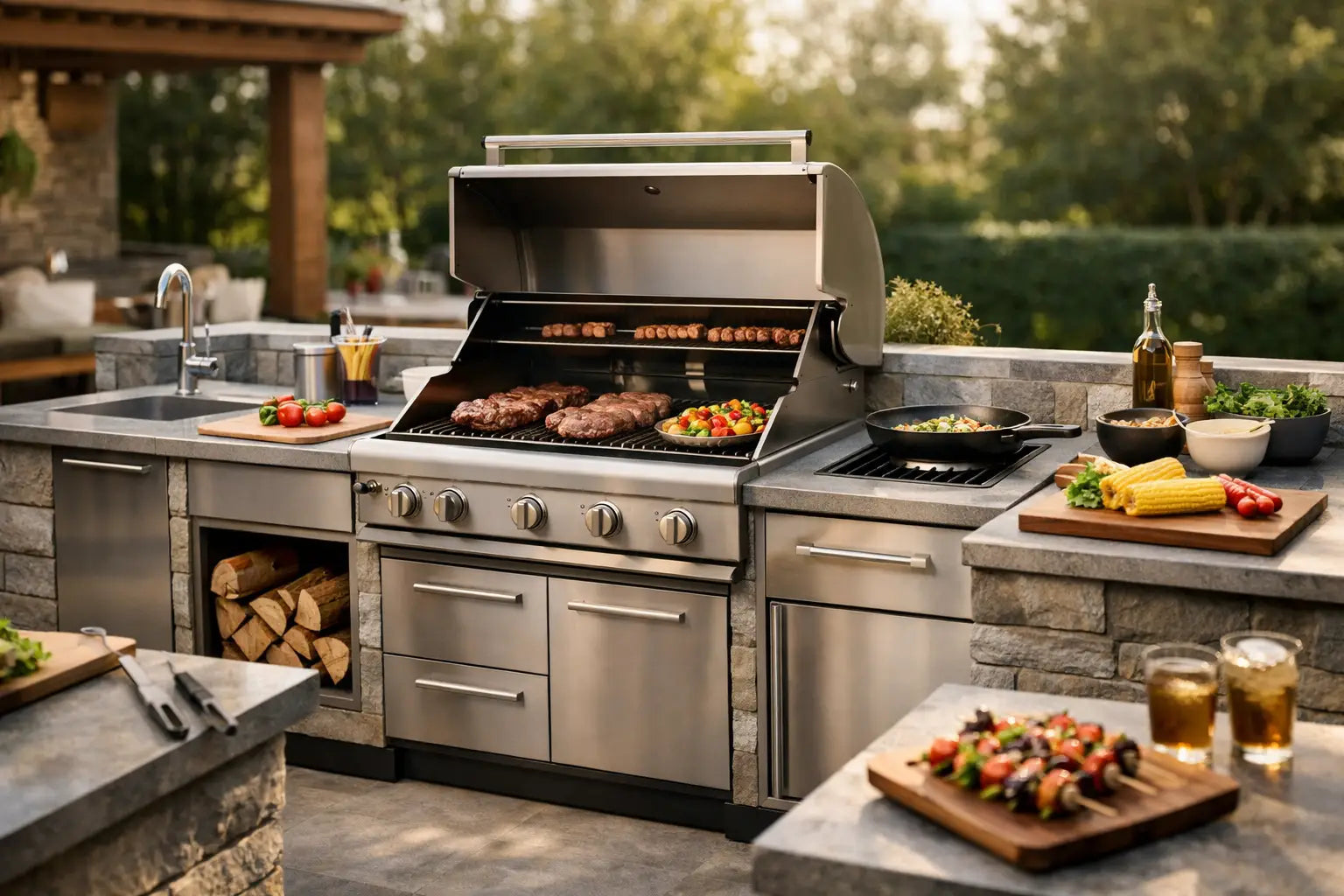
A beautiful outdoor kitchen can lose its appeal quickly when grilling tools spill from open shelves, cushions compete for space, and premium accessories have nowhere protected to live. Custom outdoor kitchen storage solutions turn the cooking zone into a composed, high-performing environment: everything has a purpose, every essential is close at hand, and the visual standard remains as refined after a busy dinner as it was before guests arrived.
For a terrace, villa garden, rooftop, or hospitality setting, storage is not an afterthought. It is the difference between an outdoor grill station and a complete luxury kitchen designed for real use.
Storage Should Follow How You Entertain
The right configuration begins with behavior, not a cabinet count. Consider what happens on a typical evening. A host needs tongs, gloves, thermometer, seasonings, plates, and cleaning supplies without repeatedly walking indoors. A family may need room for outdoor dinnerware and poolside essentials. A resort kitchen may require dedicated zones that keep service tools organized through a full evening of guest use.
This is why a single large cabinet is rarely the most elegant answer. It offers volume, but not necessarily order. A better approach is to assign storage around the workflow: prep near the worktop, grilling tools beside the BBQ, service items near the seating-facing end, and cleaning supplies in a discreet lower compartment.
A thoughtfully configured modular kitchen achieves this without forcing an architect or contractor to build every component from scratch. Pre-assembled modules can be selected around the available footprint, then finished with a unified architectural look. The result feels tailored to the property while avoiding the delays, dust, and variable workmanship of a traditional site-built project.
The Essential Zones in Custom Outdoor Kitchen Storage Solutions
Grill-side drawers for tools and accessories
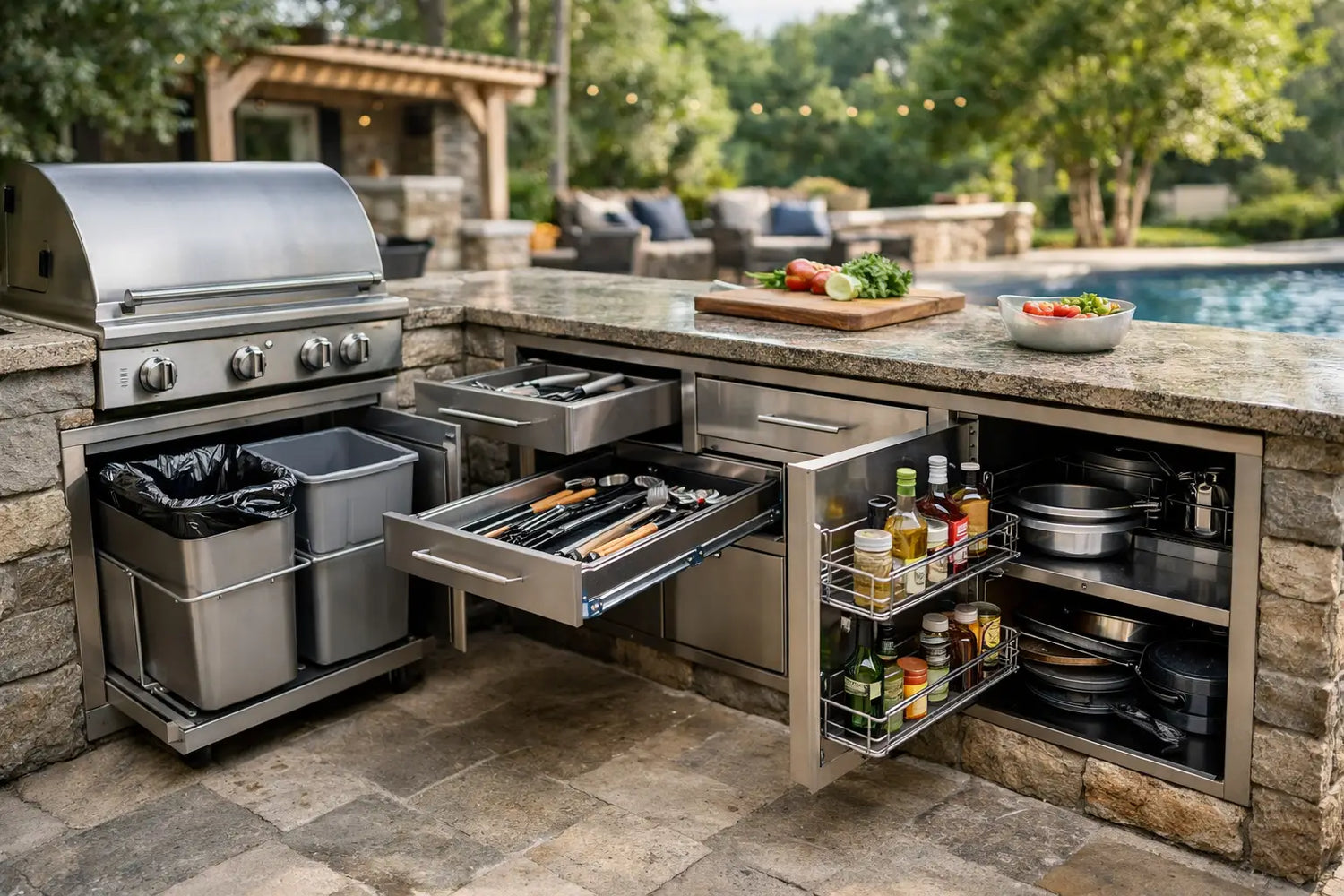
The most-used equipment deserves the shortest reach. Deep drawers beside a built-in grill are ideal for spatulas, skewers, grill brushes, wood chips, pizza tools, heat-resistant gloves, and probe thermometers. Drawer storage keeps accessories cleaner and more protected than exposed hooks, while full-extension hardware makes it easy to see what is inside.
Depth matters. Shallow drawers are excellent for smaller utensils and seasonings, but bulky grill accessories need a deeper format. If the kitchen includes a ceramic cooker or pizza oven, allow for the accessories that come with it. Deflectors, grates, ash tools, and oven trays can consume more room than homeowners expect.
Closed cabinets for larger essentials
Cabinets create the visual calm that open shelving cannot. They are the natural home for outdoor dinnerware, serving platters, cocktail equipment, paper goods, and occasional-use accessories. In a premium setting, cabinet fronts should match the kitchen's architectural finish rather than looking like a separate utility unit.
The practical trade-off is access. Drawers are better for small, frequently used items; cabinets are more efficient for tall or oversized pieces. Combining both gives the kitchen a more disciplined rhythm and prevents the common problem of cramming every item into a single oversized compartment.
Refrigerated storage that reduces indoor trips
An outdoor refrigerator is one of the most valuable storage upgrades for serious entertaining. It keeps beverages, garnishes, prepared ingredients, and chilled desserts within the cooking and serving zone. For hospitality buyers, dedicated cold storage can also support faster service and a more polished guest experience.
Placement deserves careful thought. A refrigerator should be convenient to guests without forcing the cook to cross the entire kitchen for ingredients. In many linear layouts, it works best toward one end of the composition, leaving the central work surface free for preparation and plating.
Waste and cleaning storage, kept discreet
Nothing disrupts a luxury outdoor kitchen faster than a visible trash bin or an exposed bottle collection. Integrated waste storage creates a cleaner sightline and makes cleanup more efficient. Position it close to the prep surface or sink, rather than directly beside the grill where heat and frequent movement can make access awkward.
A separate compartment for cleaning supplies is equally worthwhile. Keep approved surface cleaner, cloths, liners, and gloves contained behind a door, away from food service items. It is a small detail, but it preserves the standard of a kitchen designed for entertaining rather than improvised backyard storage.
Choose Materials That Belong Outdoors
Outdoor cabinetry is exposed to heat, moisture, grease, pollen, salt air in coastal areas, and constant temperature changes. A kitchen may look impressive on installation day, yet disappoint after a few seasons if its materials were selected for appearance alone.
Weather-resistant construction should be non-negotiable. High-quality powder-coated metal, durable outdoor-rated cabinetry, corrosion-resistant hardware, and surfaces designed for UV exposure offer the long-term confidence premium buyers expect. The exact specification depends on climate. Coastal properties require especially strong resistance to salt and corrosion, while sun-heavy locations demand finishes that maintain their color under prolonged UV exposure.
Ventilation is another consideration, particularly around built-in grills, refrigerators, and gas components. Storage modules must support the appliance requirements rather than obstruct them. This is where an integrated kitchen system has an advantage over an attractive but poorly planned collection of cabinets: the technical details are considered as part of the composition.
Design Storage Around the Kitchen's Architecture
Storage should enhance the silhouette of the kitchen, not make it look heavier. Handle-free or carefully integrated hardware, consistent panel lines, and proportional drawer widths create a more intentional result. On a compact terrace, a clean linear run with a balance of drawers and cabinets can feel generous without overwhelming the space. On a large patio, an island may add substantial storage while creating a social focal point.
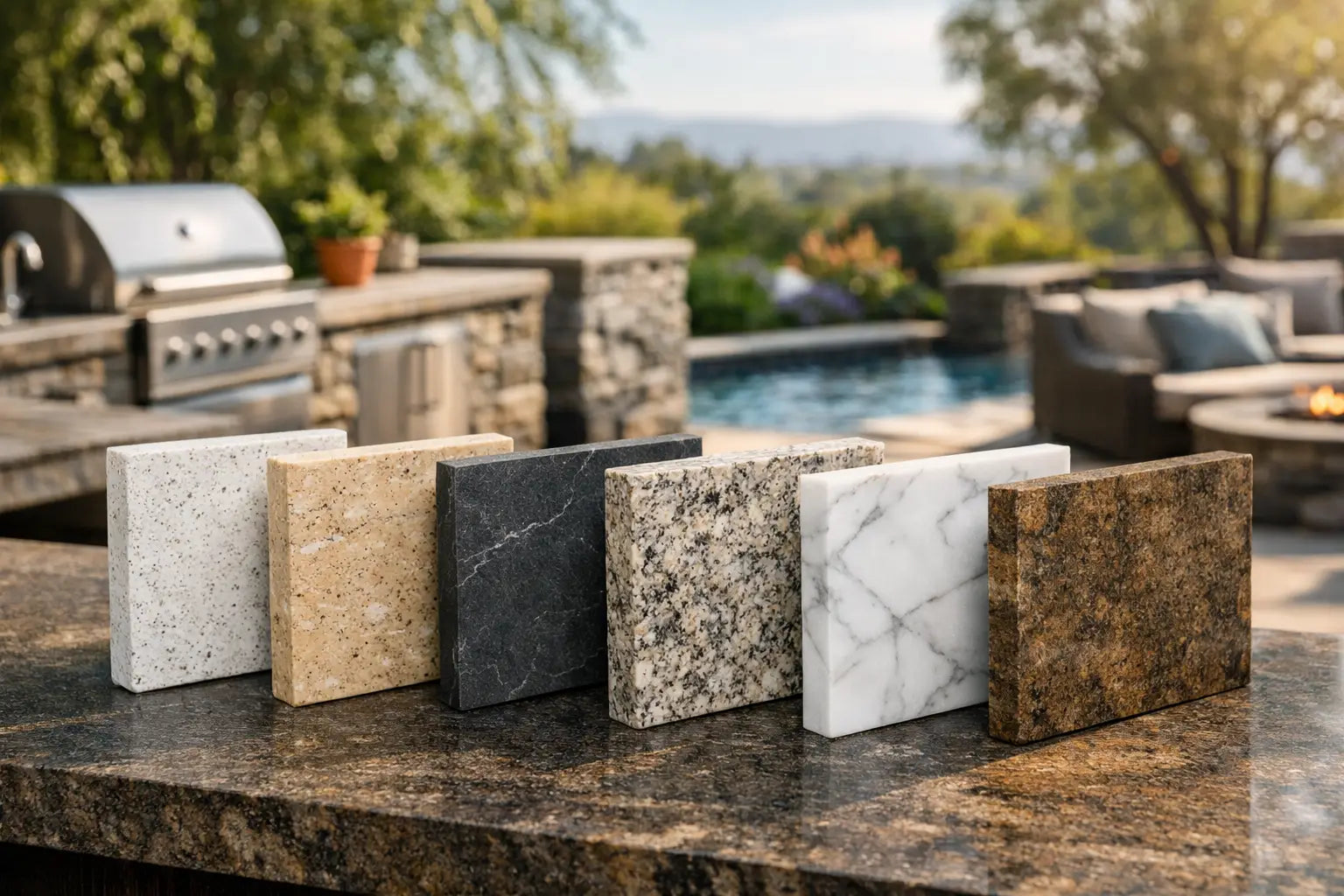
Color and finish influence the feeling as much as the layout. Dark architectural finishes can give a grill wall presence and depth, while lighter tones can keep a small roof deck open and airy. The right choice depends on the home's materials, the level of sun exposure, and whether the outdoor kitchen should blend in or become a defining feature.
Avoid designing only for the first season. Storage needs tend to grow once the kitchen becomes the preferred place to cook. Leave capacity for a new pizza accessory, bar equipment, extra serving pieces, or the tools that make the outdoor space more enjoyable over time.
Modular Does Not Mean Generic
For design-conscious buyers, “custom” should not automatically mean months of custom construction. A modular system can deliver exceptional flexibility when the modules, finishes, countertop options, and appliance integrations are designed to work together from the start.
This approach is especially valuable when a property has a fixed deadline. A newly completed pool area, a summer entertaining season, a boutique hotel opening, or a vacation home renovation does not always have room for a prolonged construction schedule. With premium pre-assembled modules, the focus shifts from managing trades to selecting the exact layout and storage mix that suits the space.
ELEEXA applies this principle to luxury outdoor kitchens designed around leading grill ecosystems, allowing cabinetry, appliances, and work surfaces to read as one considered installation. The benefit is not simply speed. It is the confidence that drawers align, appliance spaces are planned correctly, and the finished kitchen delivers the composed presence the property deserves.
A Smarter Way to Plan Your Storage Mix
Start by listing what will actually live outdoors year-round and what will only appear for larger gatherings. Then consider frequency: daily tools deserve drawers, occasional platters can sit behind cabinet doors, and beverages need refrigeration rather than counter space.
Measure more than the available wall. Account for grill lid clearance, door and drawer opening paths, circulation around an island, and access from the indoor kitchen. If guests will gather around the cooking area, avoid placing the most frequently used storage where people naturally stand.
Finally, protect the worktop. Counter space is often consumed by items that should have a dedicated home. When seasonings, tools, trays, and cleaning products disappear into properly planned storage, the kitchen feels larger, more luxurious, and far easier to use.
The finest outdoor kitchens do not ask their owners to adapt to clutter. They create a place for every ritual of cooking, serving, and gathering, so the only thing left on display is the experience.