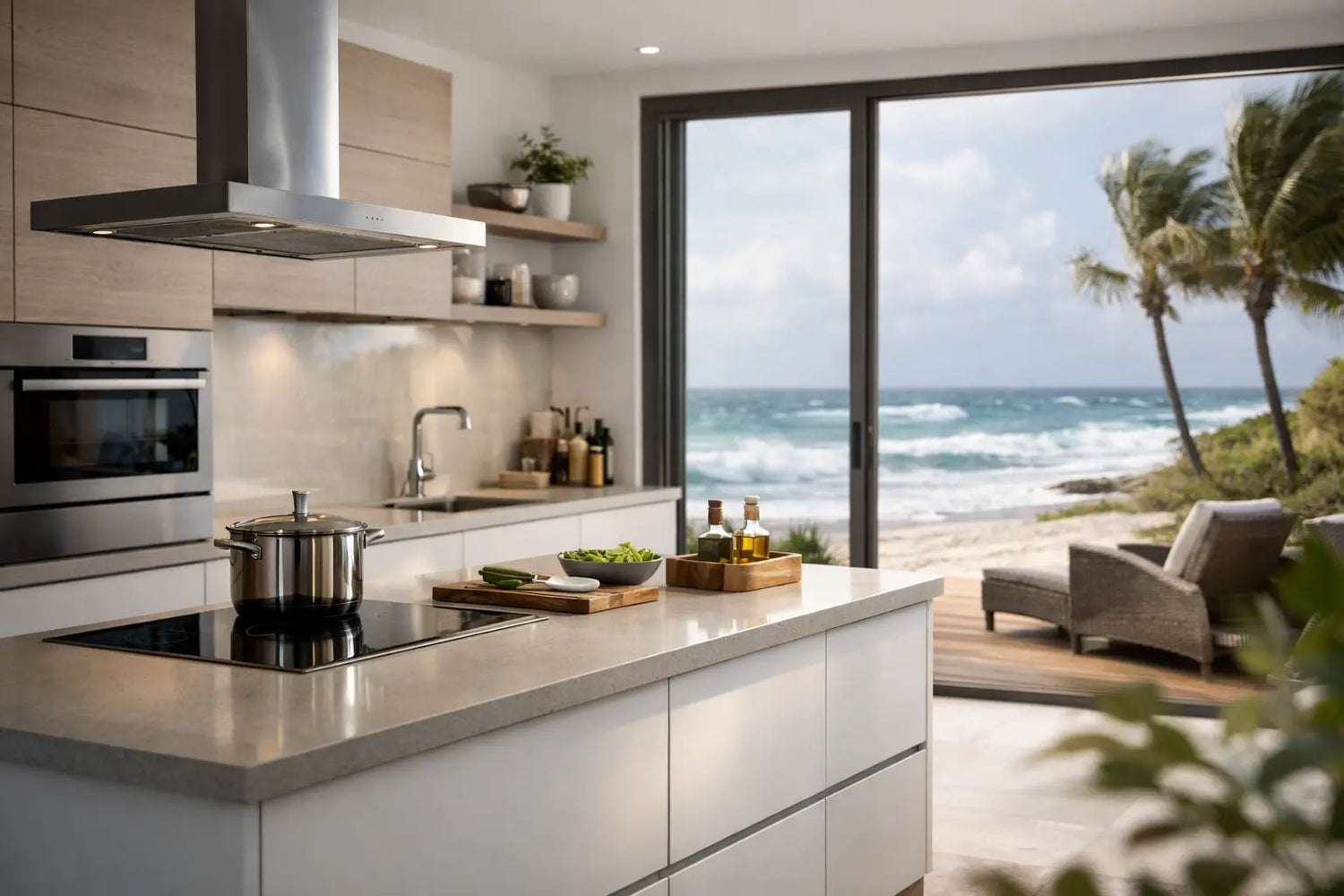
Salt mist on the terrace, humid air under the roofline, wind-driven rain after a beautiful afternoon: coastal living asks more of an outdoor kitchen than an inland backyard ever will. So, can modular kitchens handle coastal weather? Yes, but only when the kitchen has been engineered for exposure rather than simply placed outdoors.
A premium modular outdoor kitchen can be an exceptional choice for a beach house, waterfront villa, rooftop, resort, or vacation rental. Its advantage is not merely faster installation. The right modular system brings controlled manufacturing, purpose-built materials, integrated drainage, and fewer site-made compromises to an environment where corrosion and moisture quickly expose weak decisions.
The distinction matters. A kitchen that is merely labeled “outdoor” may look impressive on installation day. A coastal-ready kitchen is designed to retain its finish, function, and architectural presence after repeated seasons of salt, sun, rain, and temperature change.
Can Modular Kitchens Handle Coastal Weather? It Depends on the Build
Coastal weather is not one condition. It is a combination of airborne salt, high humidity, UV exposure, rain, wind, sand, and often sharp shifts between daytime heat and cool evenings. Near the shoreline, salt particles settle on every exposed surface. When moisture returns, those particles create a conductive film that accelerates corrosion, particularly around joints, fasteners, cut edges, handles, hinges, and appliance openings.
That is why a modular kitchen’s material specification matters more than its silhouette. Powder-coated steel of uncertain quality, untreated hardware, wood-based cabinet cores, and unsealed seams can all become liabilities near the water. By contrast, a properly specified aluminum structure, high-grade stainless steel where required, UV-stable surfaces, and corrosion-conscious hardware give a modular kitchen a far stronger foundation.
Distance from the sea also changes the answer. A covered kitchen several blocks inland faces a different level of risk than a fully exposed installation directly above the shoreline. An oceanfront property needs the most conservative material choices and a more disciplined cleaning routine. In protected coastal locations, a premium outdoor kitchen can perform beautifully with less intervention.
The Materials That Earn Their Place by the Water
A luxury coastal kitchen should be specified as a complete system. A durable cabinet facade is not enough if the frame, fasteners, drawer runners, appliance cutout, or countertop support is vulnerable.
Aluminum Cabinet Construction
Aluminum is a compelling choice for outdoor cabinetry because it does not rust like conventional steel. It is lightweight, dimensionally stable, and well suited to precise modular fabrication. The quality of the coating remains essential: a premium powder-coat finish provides the color, surface protection, and refined appearance expected in a design-led outdoor setting.
No finish is invincible. Abrasion from sand, damage from harsh scrubbers, and untreated chips can reduce protection over time. But a properly coated aluminum module gives coastal buyers a far more dependable starting point than generic painted metal cabinetry or moisture-sensitive board construction.
Stainless Steel, Chosen Carefully
Stainless steel is often associated with professional outdoor kitchens, and for good reason. It is hygienic, elegant, heat-tolerant, and easy to wipe down. Yet “stainless” is not a single coastal-performance standard. Lower grades can stain or develop surface corrosion in salt-heavy locations, especially if deposits are allowed to remain.
For oceanfront use, marine-grade stainless steel components are the preferred specification where stainless is exposed. This is especially relevant for hardware, screws, grill surrounds, sink areas, and accessories. Even marine-grade steel benefits from regular fresh-water rinsing. The goal is not to make maintenance disappear; it is to make routine care simple and effective.
Countertops and Surface Finishes
A coastal countertop must withstand more than a spilled glass of wine. It should tolerate UV, moisture, temperature variation, and the practical reality of outdoor entertaining. Sintered stone and premium porcelain-style surfaces are strong candidates because they offer a sophisticated architectural look with excellent resistance to weathering and staining.
Natural stone can be beautiful, but it requires a realistic commitment to sealing and care. Some stones are more porous than buyers expect, and salt air can make neglected surfaces look tired quickly. For hospitality settings and high-use vacation homes, a low-porosity engineered surface is usually the more practical luxury choice.
Hardware, Seals, and the Details Most Buyers Miss
The smallest components often determine the long-term experience. Soft-close runners, hinges, adjustable feet, cabinet vents, and fasteners should all be selected for exterior use. Doors need consistent alignment as the structure experiences heat and humidity. Seals and gaskets should direct water away rather than trapping it inside a cabinet.
These details are where a professionally engineered modular system separates itself from an assembled collection of outdoor-looking parts. ELEEXA kitchens are designed around pre-assembled modules, allowing these critical interfaces to be resolved in controlled production rather than improvised during a long on-site build.
Drainage and Airflow Are Coastal Performance Features
Water management is not glamorous, but it is central to a kitchen’s lifespan. Rain can enter from the front, sides, underside, and appliance openings. Humid air can condense inside cabinets. Wind can push water into places that seem protected in calm weather.
A well-designed modular kitchen should avoid horizontal ledges where water pools, provide drainage paths where they are needed, and allow air to circulate around the cabinetry. Cabinets should sit on a stable, level base that prevents standing water below. If a kitchen includes a sink, the plumbing layout should be protected from freezing where relevant, while still leaving service access for future maintenance.
Placement is equally important. A pergola, canopy, or roof extension can substantially reduce direct rain and UV exposure without sacrificing the open-air experience. It is not mandatory for every installation, but for a highly exposed coast, cover is one of the smartest upgrades available. It protects the kitchen, improves guest comfort, and makes the space more usable through changing weather.
Grill Integration Needs a Coastal Plan Too
A premium grill may be the centerpiece of the kitchen, but it should not be treated as separate from the cabinet system. Built-in grill cutouts require correct clearances, ventilation, and heat management. Gas connections, electrical outlets, and refrigeration all need to be planned for the site and installed to local code by qualified professionals.
Salt air is demanding on grills as well. A quality cover helps when the kitchen is not in use, but it should not trap moisture against hot metal for extended periods. Choose a breathable, correctly fitted cover where possible, and clean the grill exterior with fresh water and a soft cloth after periods of heavy salt exposure. Check burner components, ignition systems, and connections at regular intervals.
For properties exposed to storms, anchoring deserves attention. Modular does not mean temporary. A kitchen should be securely positioned on a suitable finished surface, particularly on rooftops, waterfront terraces, and wind-prone locations. A professional site assessment can account for drainage, weight distribution, service access, and local wind conditions before delivery.
A Simple Coastal Care Routine Protects the Investment
The best coastal kitchen is not maintenance-free. It is maintenance-light, with surfaces and components that respond well to sensible care. For most homeowners, a regular freshwater rinse and gentle wipe-down are enough to prevent salt buildup from becoming a larger issue.
Use mild soap, clean water, and soft microfiber cloths. Avoid abrasive pads, chlorine-based products, and aggressive cleaners that can dull coatings or leave damaging residues. After storms or extended windy periods, inspect the kitchen more closely, including hinges, handles, countertop edges, grill components, and drainage areas.
For a second home or hospitality property, assign this care routine to the property manager rather than leaving it to chance. A short scheduled inspection is far less costly than restoring neglected finishes after several seasons.
When a Modular Kitchen Is the Smarter Coastal Choice
Custom masonry kitchens can work near the coast, but they often involve multiple trades, extended construction timelines, and more exposed junctions created on site. Those variables make quality control difficult. Modular kitchens reduce that friction by arriving as complete, pre-engineered units with a defined configuration and a cleaner installation path.
This does not mean every modular kitchen is equally suited to coastal weather. Buyers should ask direct questions about cabinet construction, coating specification, stainless-steel grade, hardware, drainage, countertop performance, and warranty conditions for marine environments. A supplier that answers vaguely is asking you to take the risk.
For design-conscious homeowners and hospitality teams, the right system delivers something more valuable than outdoor storage and a grill surround. It creates a polished entertaining destination that feels permanent, intentional, and worthy of the view. Specify for the coast from the first conversation, care for it with consistency, and your outdoor kitchen can remain one of the most compelling spaces on the property long after the salt air has done its work elsewhere.