A luxury outdoor kitchen should not begin with months of dust, trades, delays, and on-site improvisation. The seamless outdoor kitchen installation process matters because the install phase shapes everything that follows - how quickly the space becomes usable, how cleanly the design translates from plan to reality, and how confidently the investment performs over time.
For homeowners, architects, and hospitality buyers, installation is often where a beautiful concept starts to lose momentum. Traditional builds can involve multiple contractors, masonry coordination, utility adjustments, finish discrepancies, and weather-related slowdowns. A more refined approach removes that friction. It turns outdoor kitchen delivery into a controlled, design-led process rather than an open-ended construction project.
What a seamless outdoor kitchen installation process really means
A smooth installation is not just fast. Speed helps, but true installation quality comes from predictability. The dimensions need to be right before the kitchen arrives. The materials need to be engineered for exterior use. The modules need to fit the site, the appliances, and the utility plan without forcing last-minute workarounds.
That is the difference between a product designed for outdoor living and a kitchen assembled on site from mixed components. In a premium modular system, the design, manufacturing, compatibility, transport, and placement strategy are resolved before delivery day. What appears effortless at installation is usually the result of disciplined planning upstream.
This is why affluent buyers increasingly favor pre-assembled outdoor kitchen systems over fully custom masonry builds. The appeal is not only convenience. It is control. You know what will be delivered, how it will look, how it will fit, and what the install team needs in order to place it correctly.
Why traditional installs become expensive and unpredictable
Conventional outdoor kitchen projects often start with freedom and end with compromise. A site-built approach can seem attractive because it promises unlimited customization, but every additional trade introduces another dependency. If the concrete pad is slightly off, cabinetry may need adjustment. If utilities are not where they were expected, timelines shift. If weather interrupts the sequence, exposed materials can sit on site longer than planned.
There is also the finish problem. Luxury buyers expect alignment, material consistency, and crisp detailing. On-site construction can deliver that result, but it depends heavily on craftsmanship, supervision, and favorable site conditions. Even skilled contractors are working with variables that factory production avoids.
This is where modular installation has a clear advantage. Factory-built units are produced under controlled conditions, then delivered ready for placement. The reduction in site labor is not a minor convenience. It changes the risk profile of the entire project.
The stages of a seamless outdoor kitchen installation process
The strongest installations begin long before delivery. First comes layout planning. This includes the kitchen footprint, circulation, access routes, and the relationship between cooking, prep, serving, and seating zones. A premium outdoor kitchen should feel integrated with the architecture, not dropped into the yard as an afterthought.
The next stage is appliance and module selection. Grill compatibility, refrigeration, storage, sink placement, and specialty cooking options all need to be resolved early. If the kitchen is built around major grill brands or custom appliance openings, those details must be engineered with precision. This is where a product-led system is especially valuable. Compatibility is designed in, rather than solved later.
Then comes utility preparation. Gas, electric, and water connections should be clearly specified before the kitchen is shipped. In the best-case scenario, the site only needs final hookups and positioning when the modules arrive. That is a far cleaner process than building cabinetry around utilities after the fact.
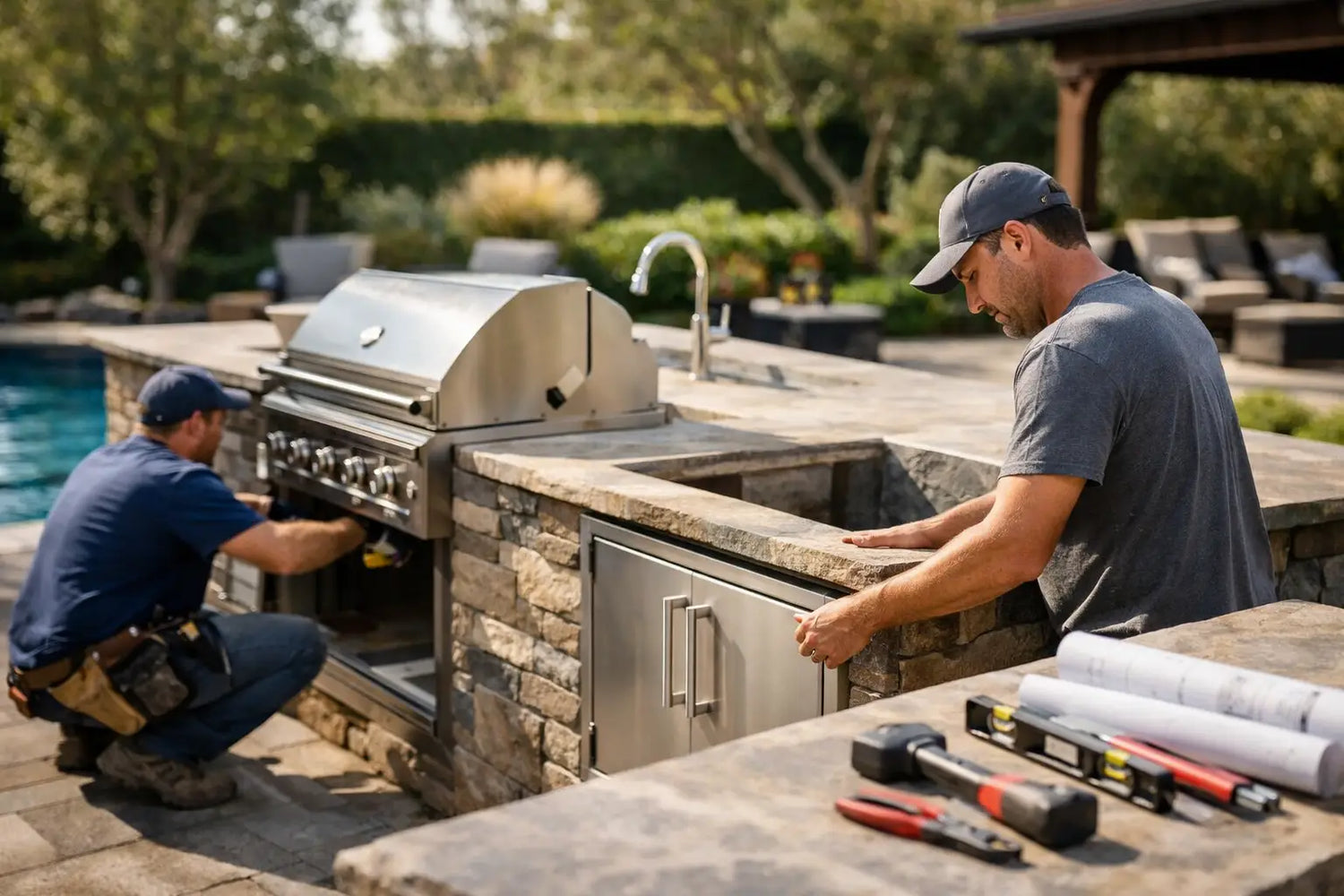
Delivery and placement follow. For a pre-assembled system, this is the moment the earlier planning pays off. Modules are positioned, leveled, connected, and aligned according to the approved layout. The visual impact is immediate because the kitchen arrives as a finished architectural product rather than a collection of unfinished parts.
Final commissioning comes last. Appliances are checked, doors and drawers are verified, services are tested, and any finish details are reviewed. For the buyer, the experience should feel close to furnishing a premium outdoor space, not managing a construction site.
Design decisions that make installation easier
Not all modular kitchens deliver the same result. Some are only modular in theory and still require extensive assembly or adaptation on site. The best systems are engineered to reduce install complexity at every point.
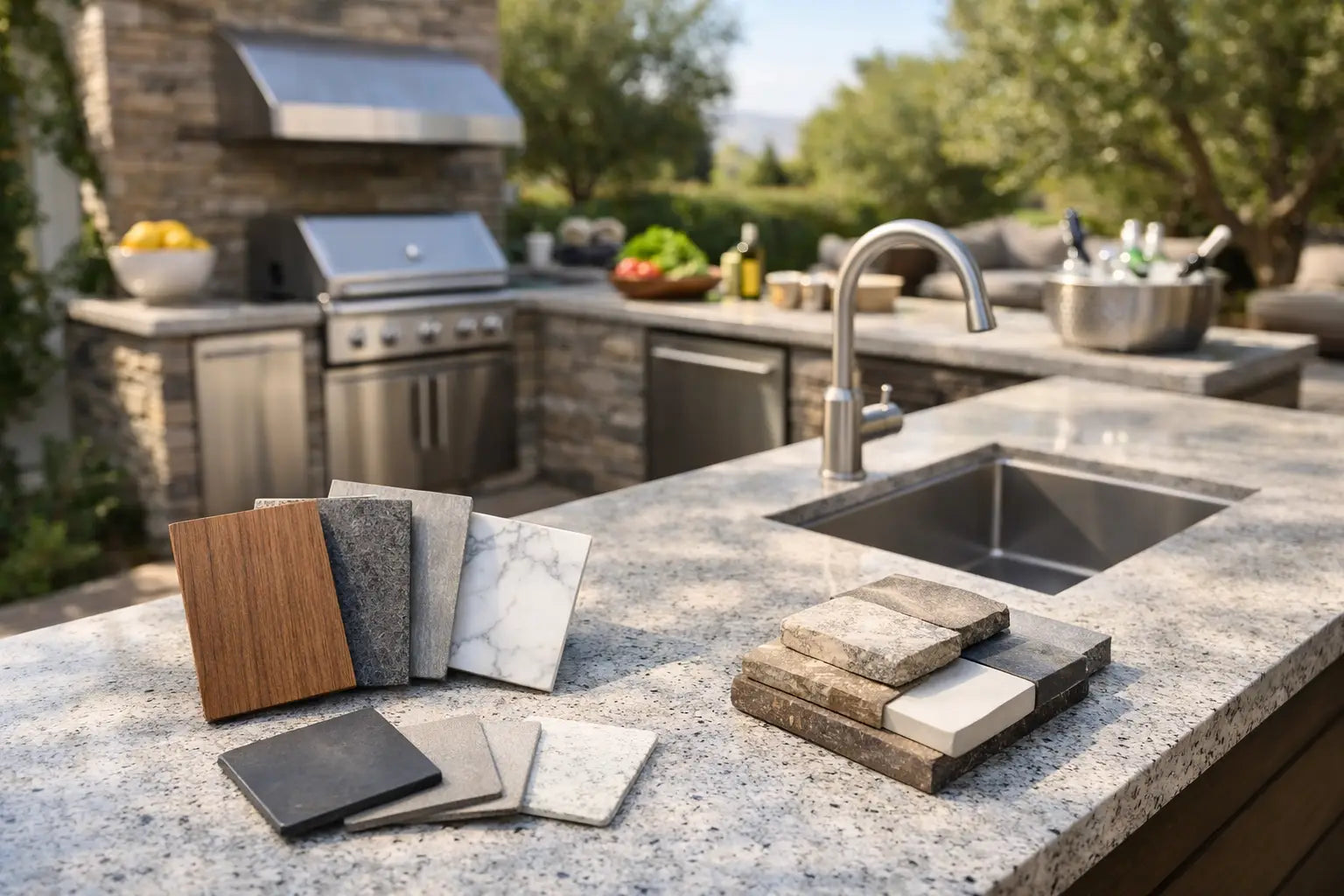
Pre-assembled cabinetry is one of the most important advantages. It protects finish quality, shortens installation time, and avoids the uneven results that can come from assembling luxury components outdoors. Structural stability matters too. Outdoor kitchens face sun, rain, humidity, and temperature shifts, so materials must be chosen for long-term exposure, not just showroom appeal.
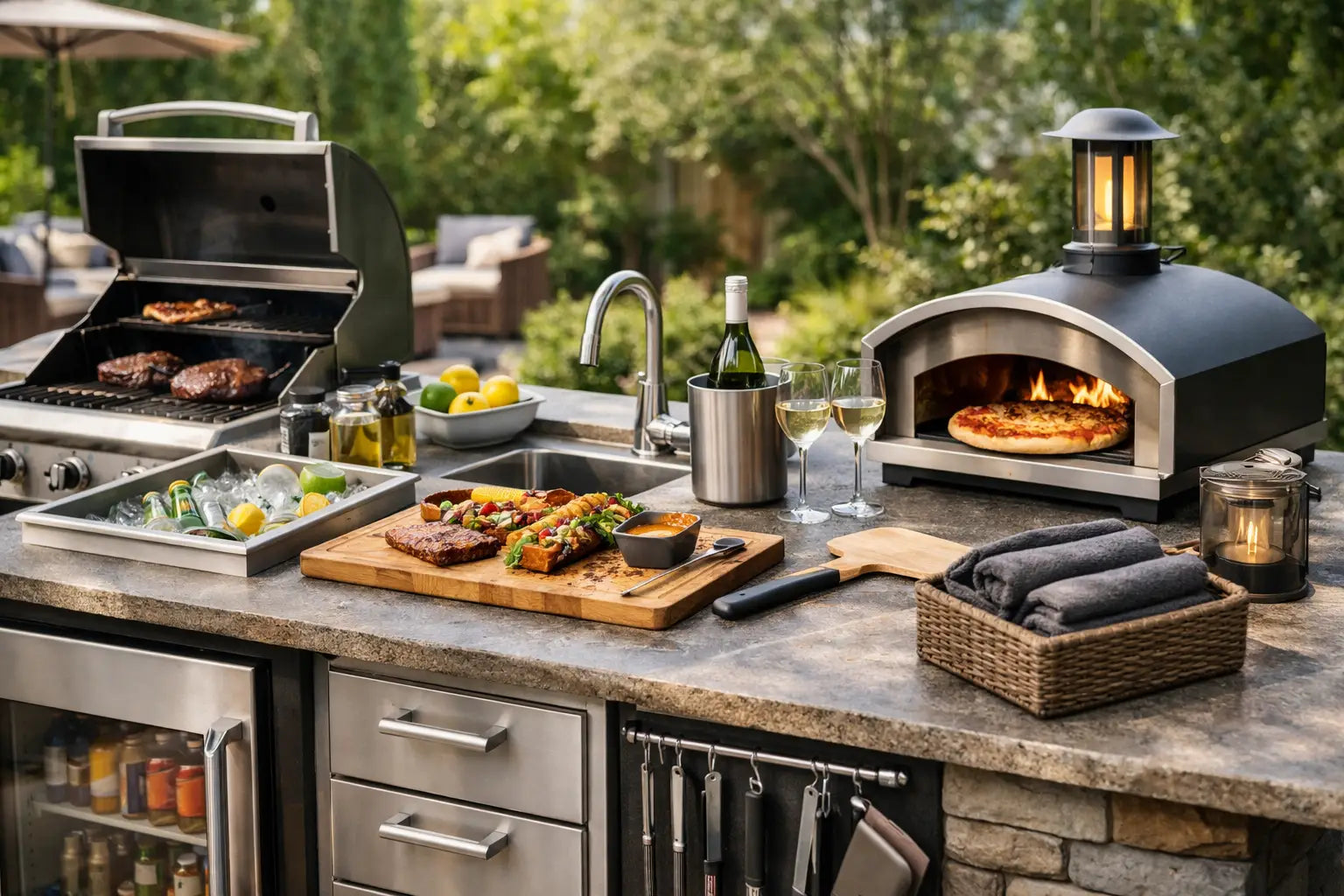
Another critical factor is appliance integration. Buyers investing at the premium end do not want generic cutouts and uncertain fit tolerances. They want purpose-built modules that accommodate leading grill systems cleanly and confidently. Good integration improves both appearance and installation speed.
The same applies to leveling and site adaptability. Few exterior surfaces are perfectly forgiving. A well-designed outdoor kitchen system accounts for that reality without asking installers to improvise.
Where the process can still go wrong
Even the most advanced system depends on site readiness. If access is too tight for delivery, if utility rough-ins are incomplete, or if the surface is unstable, installation can still stall. A seamless result is never accidental. It comes from aligning the product with the site conditions.
This is also where buyer expectations need nuance. A plug-and-play outdoor kitchen dramatically reduces on-site work, but it does not eliminate planning. Large modules still need a clear path for transport and placement. Utility connections still need professional oversight. For hospitality projects, local code requirements may add another layer of coordination.
In other words, the process becomes simpler, not careless. Premium installation is about removing unnecessary friction while preserving technical discipline.
Who benefits most from this installation model
Homeowners with high design standards benefit because the finished space looks more resolved and arrives faster. There is less disruption to the property and less dependence on a chain of local trades. That matters when the outdoor kitchen is part of a larger landscaping, pool, or terrace project with tight timing.
Architects and developers benefit because modular systems bring specification clarity. Dimensions, finishes, appliance compatibility, and installation requirements are established earlier, which supports more accurate project planning. That can be especially valuable on rooftop terraces, vacation homes, and premium multi-unit developments where time on site is expensive.
Hospitality buyers benefit because operational downtime matters. A resort, boutique hotel, or luxury rental property often needs an outdoor cooking and entertaining area installed on a predictable schedule. Extended construction periods affect guest experience and revenue potential. A more controlled installation model supports a faster route from specification to use.
The premium standard buyers should expect
A high-end outdoor kitchen should arrive with the same confidence as any other luxury architectural element. Buyers should expect clear planning support, exact module specifications, durable exterior-grade materials, appliance-ready compatibility, and an installation path that feels organized from start to finish.
They should also expect aesthetic discipline. Premium outdoor living is not only about function. The kitchen has to elevate the space visually, with proportions, materials, and detailing that hold up against the home itself. Fast installation is valuable, but only if the result looks intentional and performs like a long-term investment.
That is why brands such as ELEEXA have gained traction with buyers who want luxury without construction fatigue. The real value is not simply that a kitchen arrives faster. It is that the experience feels resolved before the truck reaches the property.
Choosing the right path for your project
If your priority is a one-off built structure created entirely from scratch, a traditional custom build may still make sense. It offers maximum freedom, but it usually asks for more time, more site coordination, and a higher tolerance for variables. For some properties, that trade-off is acceptable.
If your priority is speed, finish quality, architectural consistency, and a cleaner buying experience, a modular pre-assembled system is often the better choice. It delivers a more controlled path to an outdoor kitchen that looks bespoke without inheriting the full burden of custom construction.
The smartest projects are not the ones with the most moving parts. They are the ones where design, engineering, and installation work together so well that the complexity disappears. That is what buyers should demand from a modern outdoor kitchen - not more process, just better process.