A luxury patio is not defined by a larger footprint or a more expensive paver. The top features for luxury patios create a space that feels composed, comfortable, and ready to perform the moment guests arrive. Every surface, appliance, and sightline should support a better outdoor life - one with less setup, fewer compromises, and more time spent entertaining.
For a private villa, rooftop terrace, poolside retreat, or premium hospitality setting, the goal is the same: create an exterior environment that carries the same design confidence as the interior. That requires more than adding a grill and a dining table. It requires a clear plan for cooking, gathering, comfort, and all-season durability.
Start With Defined Outdoor Living Zones
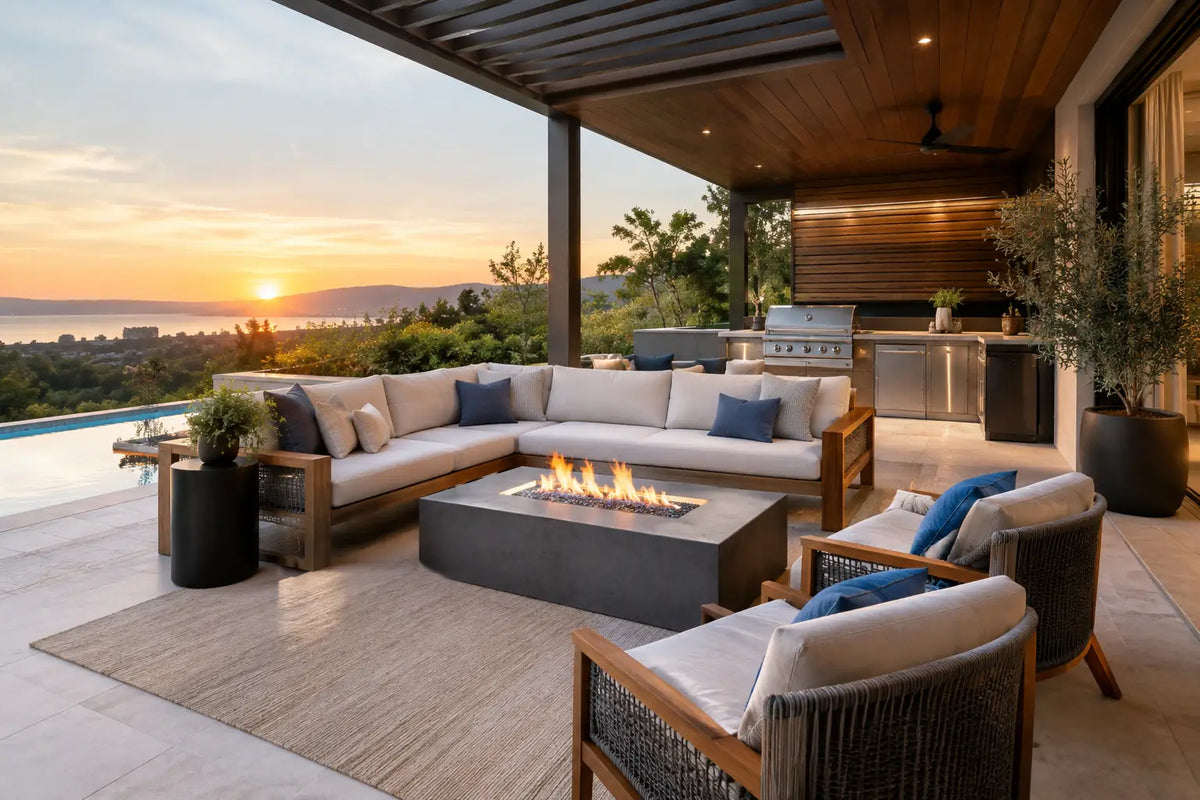
The most successful luxury patios make generous space feel intentional. Rather than treating the patio as one open slab, establish zones that serve distinct moments of the day: cooking, dining, lounging, and conversation. These areas do not need walls between them. Changes in flooring direction, furniture placement, planters, lighting, or a covered structure can define each zone without disrupting the open-air feeling.
The cooking zone should be close enough to the dining area that hosting remains social. At the same time, it needs enough working clearance for the cook, open appliance doors, and guests moving through the space. A lounge zone benefits from a slightly quieter position, perhaps oriented toward a garden, water view, fire feature, or sunset.
This planning matters because luxury is often felt through ease. When circulation is natural, drinks have a dedicated surface, and guests know where to gather without being directed, the patio works beautifully even when it is full.
A Fully Equipped Outdoor Kitchen
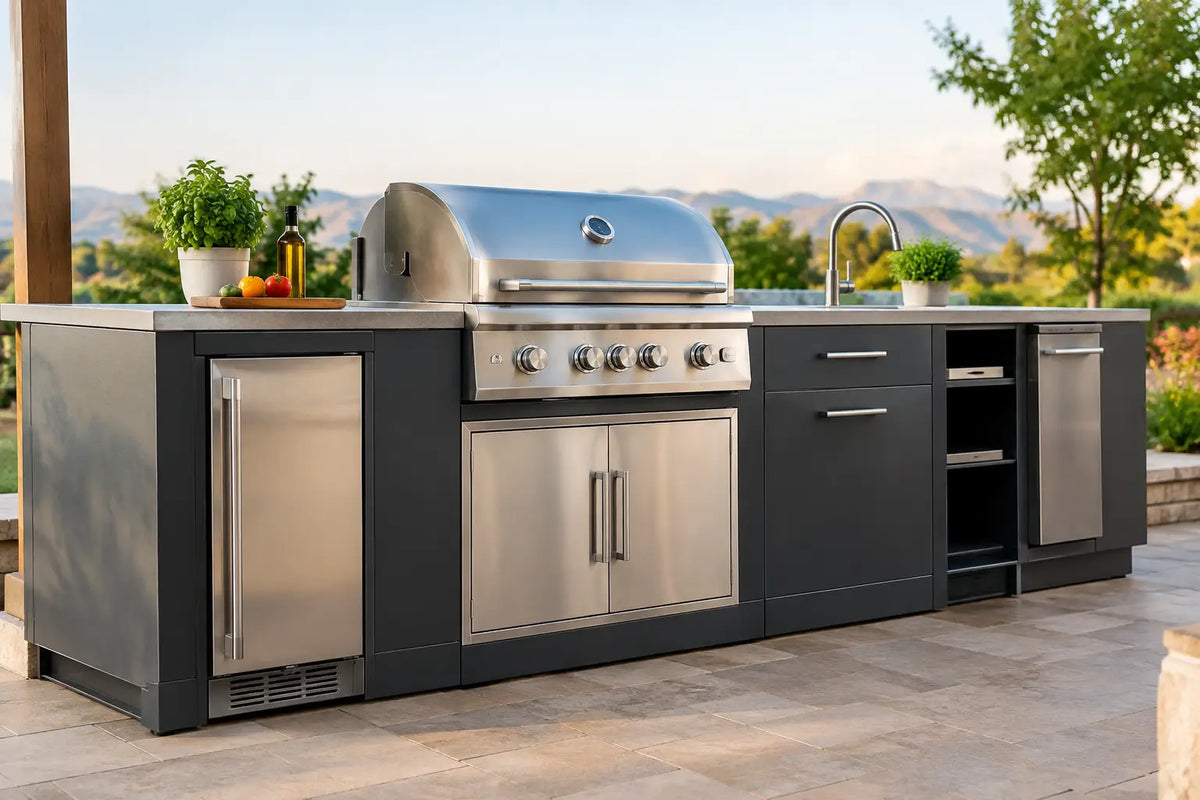
An outdoor kitchen is often the feature that turns a patio into a true entertaining destination. A freestanding grill can cook dinner, but a complete kitchen supports the entire occasion. It provides preparation space, cold storage, cleanup capability, organized tools, and a refined architectural focal point.
For high-end patios, look beyond the grill itself. Continuous countertops allow a host to prep, plate, and serve without repeated trips indoors. Weather-resistant cabinetry keeps essentials protected and removes visual clutter. An integrated refrigerator keeps wine, mixers, and ingredients within reach, while a sink creates a more practical setup for rinsing produce and clearing glasses.
Appliance compatibility also deserves careful attention. Many homeowners already have a preferred grill ecosystem, whether that means a gas grill, ceramic smoker, or specialty appliance. A kitchen should be designed around the appliance dimensions, ventilation requirements, and working habits of its owner - not force the owner to adapt to a fixed layout.
Traditional masonry kitchens can be impressive, but they often introduce contractor coordination, longer timelines, and greater uncertainty around finishing quality. Pre-assembled modular systems offer a more controlled alternative. ELEEXA outdoor kitchen modules, for example, are designed to arrive prepared for placement rather than becoming another extended construction project. For design-led properties, that is a meaningful advantage: premium results without turning the patio into a job site for months.
Materials That Look Better After Real Weather
Outdoor luxury should never be fragile. The patio will face UV exposure, rain, temperature swings, grease, chlorine near pools, and frequent cleaning. Select materials for their long-term appearance, not simply for how they photograph on installation day.
Porcelain paving is a strong choice for contemporary patios because it offers a refined, low-porosity surface with dependable performance in changing weather. Natural stone brings character and depth, though it may require more maintenance depending on the variety and finish. Slip resistance is essential around pools, outdoor bars, and entry points, where a glossy surface can quickly become impractical.
For cabinetry, counters, and appliances, prioritize outdoor-rated construction. Powder-coated aluminum, stainless steel, compact laminate, sintered stone, and properly specified engineered surfaces each have a role to play. The right selection depends on climate, exposure, and desired aesthetic. A shaded covered terrace has different demands than an uncovered coastal patio exposed to salt air and driving rain.
The best material palette has discipline. Limit the number of competing finishes, then repeat key tones across the kitchen, furniture, planters, and architectural details. A calm composition feels more expensive than a patio trying to display every available material at once.
Layered Lighting That Extends the Evening
Lighting is one of the highest-impact top features for luxury patios because it changes how the space functions after sunset. One bright floodlight may provide visibility, but it does not create atmosphere. A layered scheme does both.
Begin with practical task lighting at the outdoor kitchen, grill, steps, and pathways. These areas need clear, reliable illumination for cooking and safe movement. Then add ambient light through wall sconces, discreet downlights, pergola fixtures, or indirect lighting beneath seating and counters. Finally, use accent lighting to reveal texture in a stone wall, a mature tree, architectural planting, or a water feature.
Warm color temperatures generally make entertaining spaces feel more inviting than cool white light. Dimming is equally valuable. A brighter setting may suit food preparation and arrival, while a softer level creates a more relaxed mood once dinner begins.
Avoid placing every fixture at eye level or aiming lights directly toward seating. The goal is to illuminate surfaces and pathways, not create glare. A well-lit patio should feel effortless, not overproduced.
Shade, Shelter, and Climate Control
A beautiful patio that only works on mild days is not a complete luxury space. Shade and shelter make the investment usable through more of the year while protecting furniture, finishes, and guests.
A permanent roof structure delivers the greatest weather protection, but it can make sense only where the architecture and local regulations allow it. Motorized louvered pergolas offer flexibility, allowing homeowners to shift from open sky to sun control and light rain coverage. Retractable awnings can be effective for smaller terraces or homes where a lighter visual footprint is preferred.
The climate should guide the specification. In sunny regions, prioritize UV protection and airflow. In cooler locations, infrared heaters, wind screening, and a fire feature can extend the season considerably. Ceiling fans are particularly effective in humid climates, where moving air can improve comfort without enclosing the patio.
Fire pits and fireplaces add visual drama, but they should not be selected only for appearance. Consider smoke direction, fuel type, clearances, seating distance, and local safety rules. A gas fire table offers clean operation and straightforward control, while a wood-burning fireplace creates a stronger sensory experience but requires more maintenance and planning.
Seating That Invites People to Stay
Luxury patio furniture needs to deliver real comfort, not just a sculptural silhouette. Deep lounge seating, supportive dining chairs, and generous cushions encourage guests to settle in after a meal. The difference is noticeable when a gathering moves from an hour to an entire evening without anyone searching for a more comfortable seat indoors.
Scale is critical. Oversized furniture can make a compact terrace feel crowded, while undersized pieces can disappear on a large estate patio. Leave enough room for people to pass behind chairs and around dining tables without interrupting conversations. Outdoor rugs can anchor a lounge area and soften hardscape, provided they are made for moisture, sun exposure, and easy cleaning.
Choose performance fabrics with fade resistance and removable or cleanable covers. Light upholstery can look exceptional in a covered setting, but exposed patios may benefit from mid-tone fabrics that better disguise daily use. Luxury should be enjoyed, not preserved like a showroom.
Privacy and Planting With Architectural Purpose
Planting adds softness, movement, and a sense of escape. It also solves practical design challenges. Tall evergreen screening can create privacy from neighboring properties, while layered planters can guide circulation or conceal service areas without making the patio feel enclosed.
Use fewer plant varieties in larger, repeated groups for a more architectural result. Ornamental grasses, sculptural evergreens, flowering shrubs, and container trees can provide seasonal interest while maintaining order. Integrated irrigation is worthwhile for larger properties and hospitality patios, where hand watering can quickly become inconsistent.
Consider the maintenance reality before committing to a lush planting scheme. A restrained landscape that remains healthy and immaculate will always feel more premium than an ambitious design that becomes overgrown or uneven.
The Details That Remove Friction
The finest patios anticipate small needs before they become interruptions. Concealed storage prevents cushions, tools, and serving pieces from migrating indoors. Outdoor-rated power outlets support music, task lighting, and occasional workdays outside. A discreet waste and recycling solution keeps the kitchen area polished during entertaining.
Smart controls can bring lighting, heating, and audio into one simple routine, but technology should remain secondary to the experience. Complex systems that require constant troubleshooting diminish the convenience they are meant to provide. Specify controls that household members and property staff can use confidently.
Most importantly, make decisions early about utilities, drainage, and service access. Gas lines, electrical capacity, water supply, ventilation, and drainage should be resolved before finishes are installed. This invisible infrastructure is what allows a luxury patio to operate with the quiet reliability its design promises.
A remarkable patio does not ask its owner to work around it. It gives every gathering a stronger setting, every meal a better stage, and every open evening a reason to stay outside a little longer.