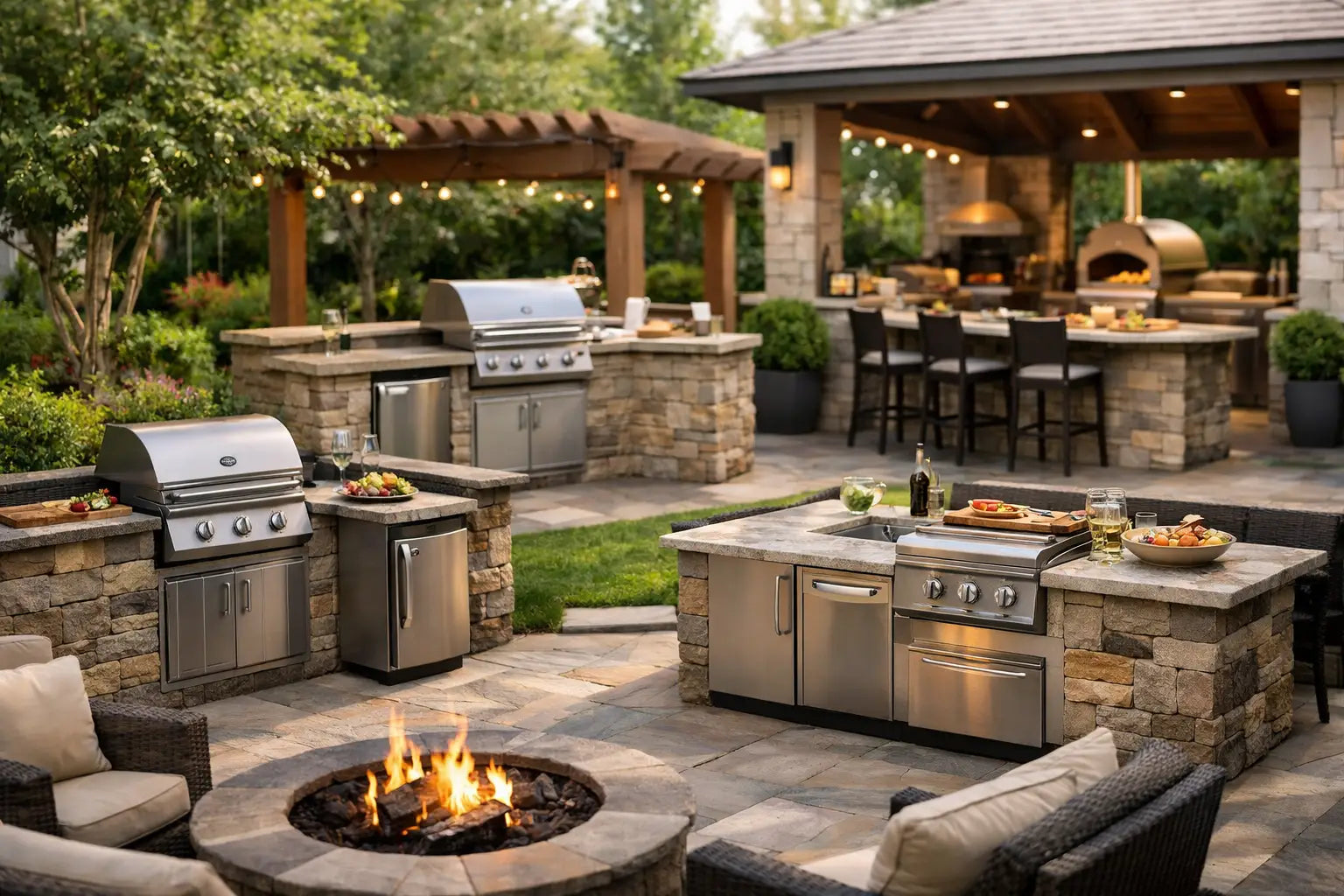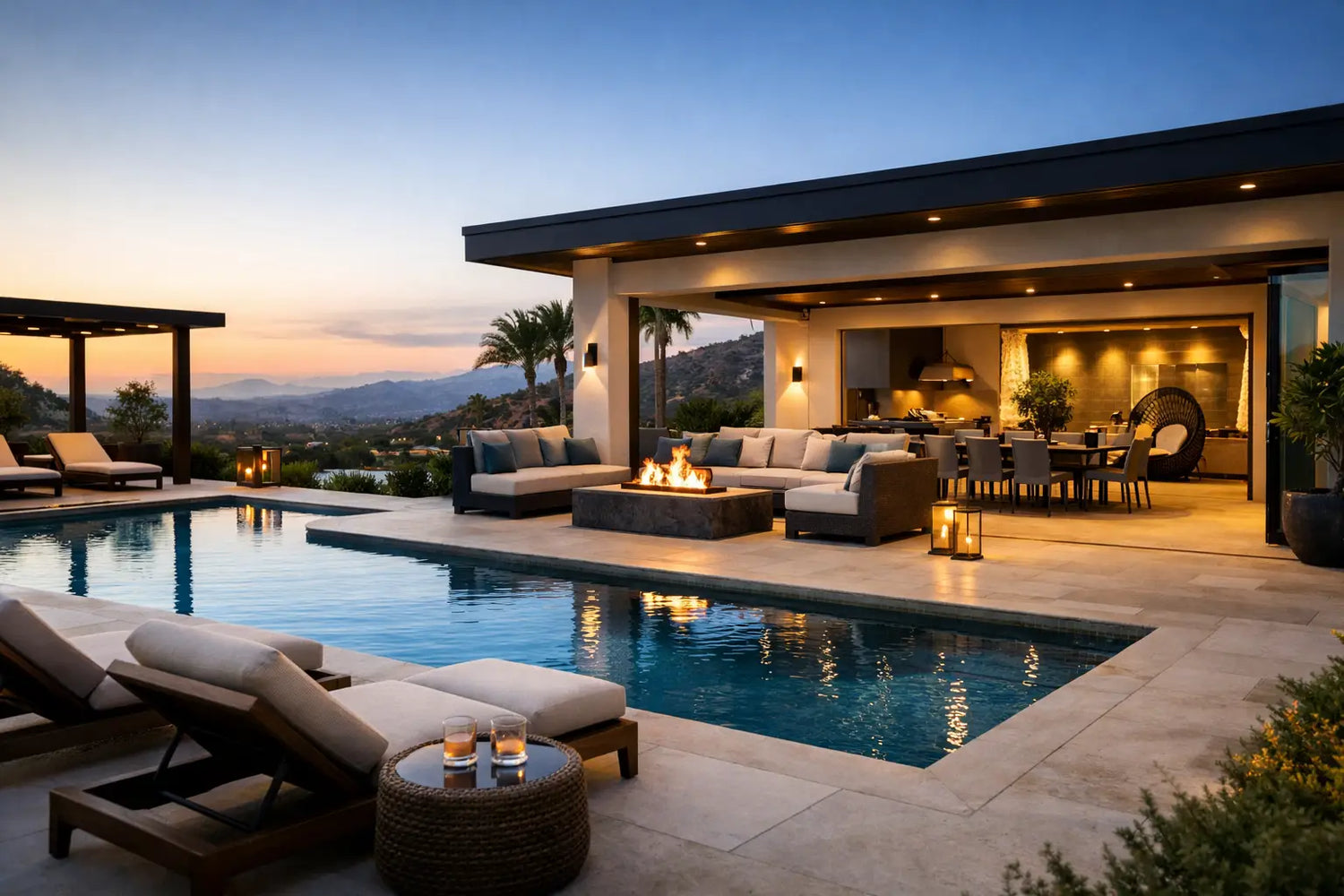
A terrace can have a view worth framing, a pool worth lingering beside, and furniture worth looking at - yet still feel unfinished when cooking, serving, and gathering happen in separate corners. This luxury outdoor living design guide starts where exceptional projects do: with how the space will actually be used. The goal is not to fill a patio with expensive objects. It is to create an outdoor environment that makes hosting feel natural, polished, and effortless.
Design Around the Moment, Not the Product
Luxury outdoor living earns its place when it supports a particular rhythm of life. A family that cooks outside three nights a week needs a different layout from a vacation-home owner who hosts twelve guests at sunset, or a boutique hotel creating a memorable poolside dining experience.
Begin by defining the primary moment. Is it a chef-led dinner, relaxed weekend grilling, cocktail service, or a long table that keeps guests outdoors after dark? This decision determines the scale of the kitchen, the amount of counter space, and the relationship between cooking, dining, and lounging.
A common mistake is placing the grill at the edge of the patio simply because that is where a gas line or wall happens to be. That choice can isolate the cook and turn every meal into a series of trips indoors. A better plan keeps the chef connected to guests while maintaining sensible clearance from seating, doors, and circulation paths.
Build the Space in Clear Outdoor Zones
The most successful layouts create distinct zones without making the outdoor area feel divided. People should be able to move from preparation to dining to conversation without crossing through the cooking zone every few minutes.
Think of the plan as four connected settings:
- The cooking zone houses the grill, refrigeration, storage, waste management, and prep surface.
- The serving zone provides generous landing space for platters, drinks, and finished food.
- The dining zone should feel close enough for easy service, but far enough from heat and smoke.
- The lounge zone gives guests somewhere to settle before and after the meal.
Plan for the Cook's Working Triangle
Outdoor kitchens benefit from the same logic as refined indoor kitchens. The grill, sink, refrigeration, and prep area should support a short, intuitive working sequence. If the cook must walk around an island to retrieve every ingredient, the layout will feel frustrating no matter how beautiful the cabinetry looks.
Allow meaningful counter space directly beside the grill. A narrow strip may look sufficient in a rendering, but it is rarely enough for trays, utensils, marinades, and finished food during a real gathering. For frequent entertaining, separate prep and serving surfaces are a valuable upgrade because they prevent guests from crowding the cook's workspace.
Choose Materials That Perform as Beautifully as They Look
Outdoor luxury is tested by sunlight, rain, salt air, temperature shifts, grease, and constant use. Materials should be selected for their long-term behavior, not just their appearance on installation day.
Powder-coated aluminum cabinetry is a strong choice for a clean architectural look and dependable weather resistance. It is lighter than masonry construction, resists corrosion, and can deliver a precise, contemporary finish. Premium exterior-grade surfaces and carefully engineered hardware also matter because doors, drawers, and worktops face far harsher conditions outside than they do in an interior kitchen.
Dark finishes can look striking against stone, greenery, and water, but they may show dust or heat up in full sun. Lighter tones are cooler and often more forgiving in exposed locations. Textured finishes bring depth and help disguise fingerprints, while smooth matte surfaces create a more minimal, gallery-like effect. The right answer depends on sun exposure, maintenance expectations, and the architecture of the home.
Do not overlook the floor beneath the kitchen. It must support the weight of cabinetry and appliances, drain properly, and remain safe when wet. Large-format porcelain, natural stone selected for exterior use, and high-quality concrete can all work beautifully. The crucial detail is slope. Water should move away from the kitchen and away from the property, rather than collecting beneath cabinets or near connections.
Treat Shade, Heat, and Light as Core Infrastructure
An outdoor kitchen without shade can become unusable during the very hours it should perform best. A fixed roof, pergola, louvered cover, or mature tree canopy changes how often the space gets used. Each option has trade-offs. A roof offers reliable protection but may require more structural planning. A louvered system provides flexibility, though it introduces mechanics and a more contemporary visual language.
Heat management requires equally careful thought. Consider prevailing wind, grill placement, nearby glazing, and the location of upholstered furniture. Open-flame cooking should never feel like an afterthought beneath a low cover or beside a frequently opened door. Local codes and appliance specifications should guide clearances and ventilation requirements.
Lighting should create layers rather than a single bright wash. Task lighting helps the cook see the grill and worktop. Warm ambient lighting makes dining inviting. Low-level path lighting improves safety without flattening the atmosphere. Avoid overly cool white light, which can make a beautiful outdoor setting feel commercial after sunset.
Make Storage and Utilities Disappear
The visual calm of a luxury outdoor kitchen depends on what is hidden. Gas cylinders, cleaning supplies, tools, extra tableware, and waste bins should have dedicated homes. When every practical item is accounted for, the setting stays composed even when the host is cooking for a crowd.
Utilities should be planned before finishes are finalized. Confirm electrical capacity for refrigeration, lighting, and any accessories. Determine whether the kitchen will use natural gas, propane, or electric cooking equipment. Decide whether a sink is genuinely useful for the way the space will be used, then account for water supply and drainage correctly.
This is where modular, pre-assembled systems offer a significant advantage over a fully site-built approach. A traditional masonry kitchen can be tailored to almost any shape, but it often depends on several trades, extended coordination, and variable on-site workmanship. A precision-built modular kitchen offers more predictable quality, faster placement, and less disruption, especially for terraces, second homes, and hospitality projects operating on tight schedules.
ELEEXA brings this approach into a high-design format, with pre-assembled outdoor kitchen modules configured around leading grill systems, storage needs, and architectural finishes. The benefit is not simply speed. It is the confidence that the kitchen arrives as a considered product rather than a construction problem waiting to be solved.
Give Appliances a Purpose
A large grill is often the centerpiece, but it should be selected according to cooking style rather than status alone. A gas grill supports fast weekday cooking and broad guest appeal. A ceramic cooker suits owners who enjoy slow cooking, smoking, and live-fire technique. Specialty equipment, such as pizza ovens or side burners, can be exceptional additions when used frequently, but they can also consume valuable counter space.
Refrigeration is one of the most practical luxuries outdoors. It keeps ingredients, drinks, and garnishes close to the action, reducing trips inside and helping the host remain present. For hospitality settings, consider how beverage access can be separated from food preparation so service remains orderly during busy periods.
Buy fewer appliances, but buy the right ones. The most elegant outdoor kitchen is one where every component earns its footprint.
Scale the Investment to the Property
A luxury outdoor environment should feel native to its setting. An oversized kitchen can overwhelm a modest patio, while a minimal grill cart may feel inadequate beside a substantial contemporary villa. Match cabinet proportions, appliance scale, and finishes to the architecture, landscape, and intended level of entertaining.
For a residence, the strongest return often comes from improving everyday use: a better family dinner, a relaxed Sunday lunch, an easy way to host friends. For premium rentals, resorts, and boutique hotels, the calculation may include guest experience, visual impact, and operational durability. In both cases, spending more on weather-ready construction, useful storage, and intelligent planning is usually wiser than spending it on decorative extras.
A well-designed outdoor kitchen changes the invitation. Instead of asking guests to step outside after dinner, it gives everyone a reason to stay there from the first drink to the final conversation.