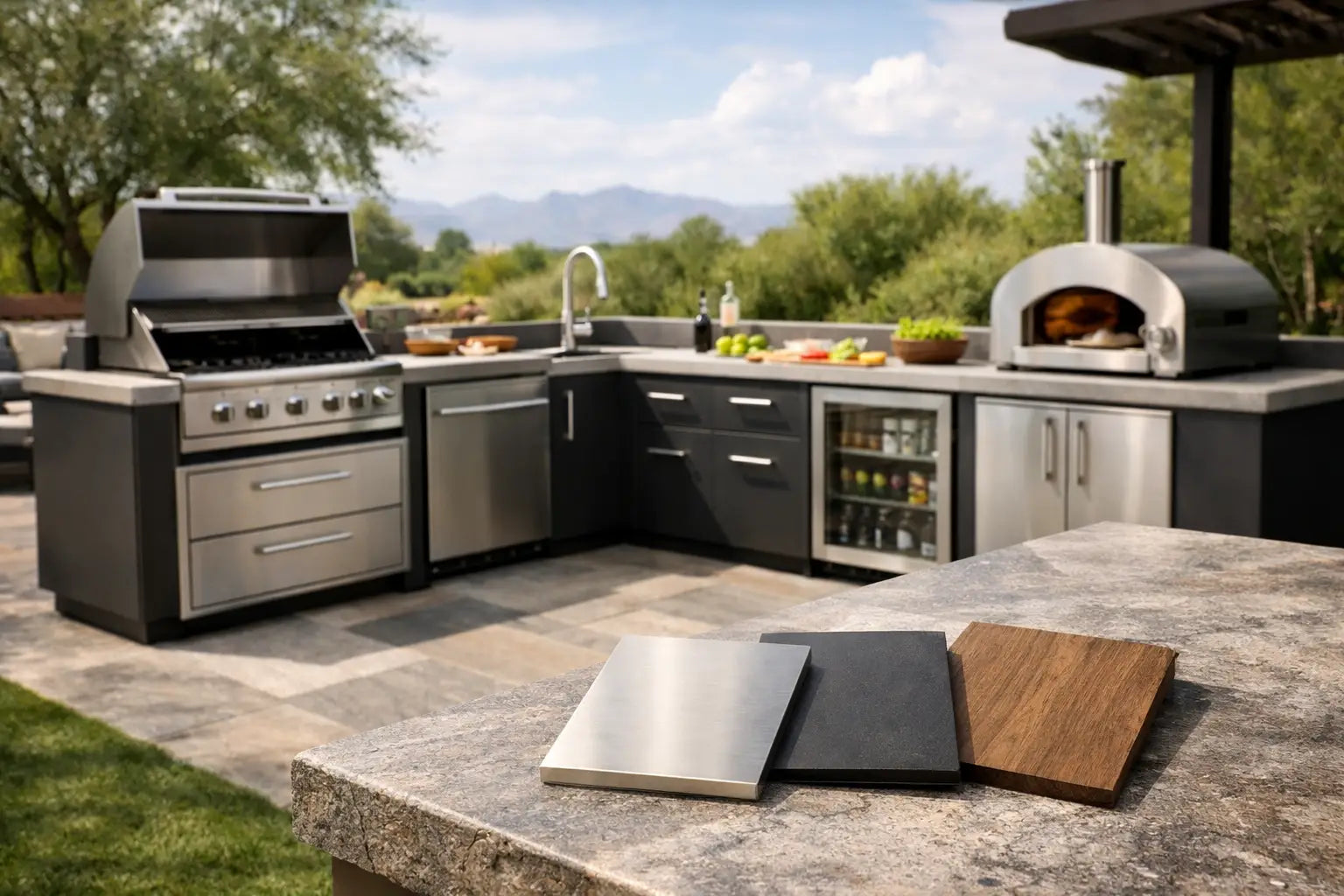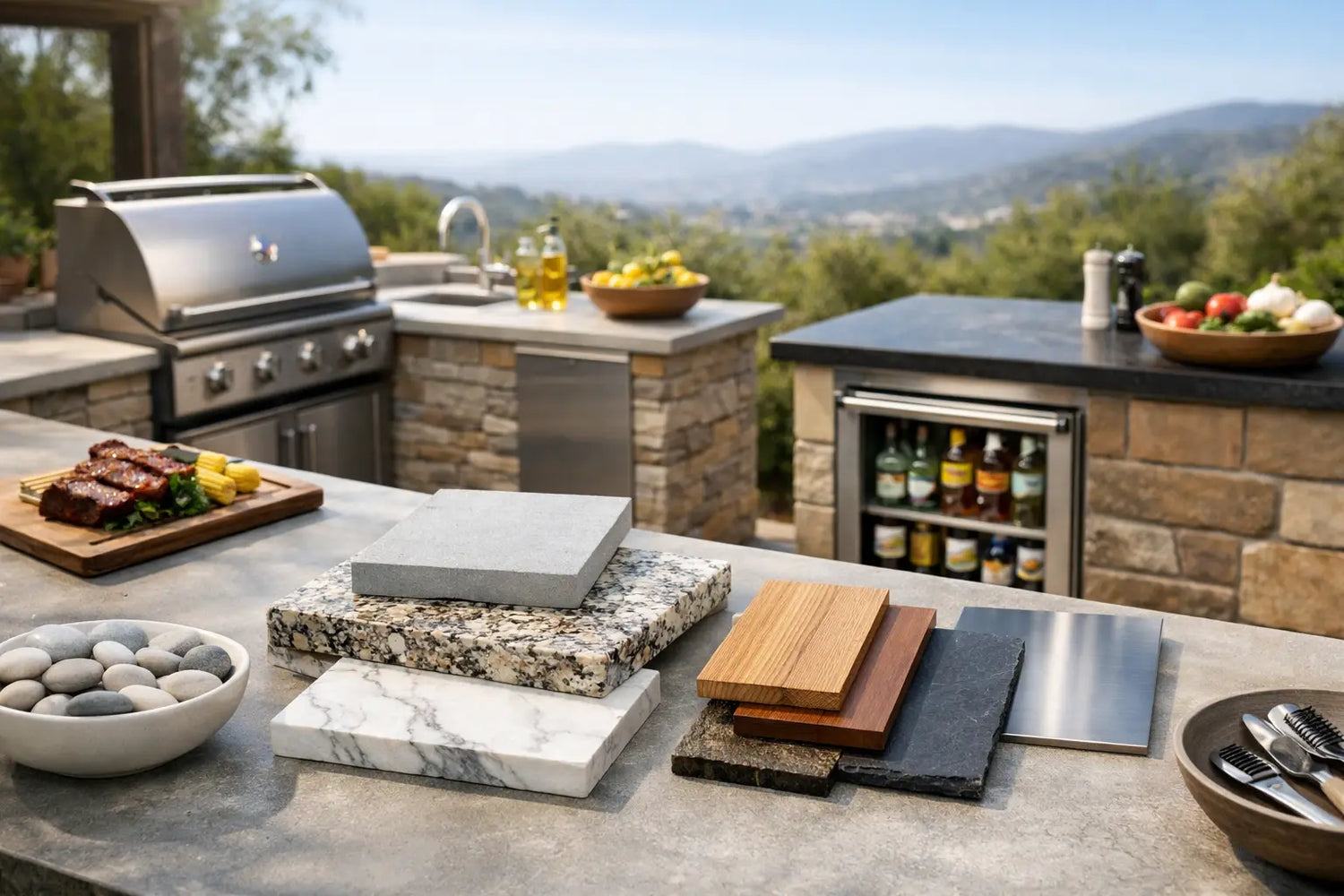
A beautiful outdoor kitchen can look flawless on delivery day and disappoint a year later. The difference is rarely the layout alone. It is almost always the material selection. That is why any best outdoor kitchen materials guide worth reading should start with a simple truth: outdoor kitchens fail where weather, heat, moisture, and poor specifications meet.
For luxury homeowners, architects, and hospitality buyers, materials are not a finishing detail. They define longevity, maintenance, visual impact, and how confidently the kitchen performs through every season. The right choice creates a refined, permanent-looking installation with less upkeep and fewer surprises. The wrong one turns a premium purchase into a recurring project.
What the best outdoor kitchen materials guide should help you decide
Most buyers compare materials as if they are choosing finishes for an indoor kitchen. That is the first mistake. Outdoor environments are harsher, less predictable, and far more punishing at the edges, seams, and hardware. UV exposure fades finishes. Salt air accelerates corrosion. Freeze-thaw cycles stress stone and grout. Grease, wine, citrus, and heat test every work surface.
So the real question is not which material looks best in a showroom. It is which material still looks sharp, works properly, and feels premium after years of sun, rain, and entertaining.
That means evaluating every material across five criteria: weather resistance, structural stability, heat performance, maintenance demands, and design value. Some materials excel in one category and disappoint in another. The smartest specification is rarely about a single miracle material. It is about combining the right materials for the right functions.
Cabinet materials: where durability starts
Cabinet construction is the backbone of an outdoor kitchen, yet it is often hidden behind styling. That makes it easy to overlook and expensive to get wrong.
Marine-grade stainless steel
Stainless steel remains one of the strongest options for outdoor kitchen cabinetry, particularly in demanding climates. It handles heat well, resists pests, and delivers the crisp, architectural look many premium projects demand. When properly specified, especially in higher grades suited to coastal environments, it offers excellent durability.
The trade-off is that not all stainless steel is equal. Lower-grade steel can show corrosion faster than buyers expect, particularly near the ocean or in humid regions. Fingerprints, smudges, and surface scratching are also part of the ownership experience. Stainless steel looks polished and professional, but it asks for regular cleaning if you want that just-installed finish.
Powder-coated aluminum
For many modern outdoor kitchens, powder-coated aluminum is one of the most intelligent cabinet choices available. It is lightweight, highly corrosion-resistant, and well-suited to modular construction. It also opens the door to richer design expression, with matte textures, darker tones, and cleaner integration into residential architecture.
Its main advantage is balance. Aluminum resists rust, keeps maintenance relatively low, and performs well in wet or variable climates. It does not carry the same industrial feel as stainless steel unless intentionally designed that way. For design-conscious buyers who want a more furniture-like outdoor kitchen, aluminum often feels more elevated.
The caveat is structural quality. Thin or poorly fabricated aluminum can feel insubstantial. Premium engineering matters here. Well-built modular systems overcome that issue with reinforced framing and precision finishing.
Masonry and concrete block bases
Traditional custom outdoor kitchens often use concrete block or masonry bases clad in stucco, stone, or tile. These structures can look substantial and integrate beautifully with the home when executed at a high level.
But they are labor-intensive, permanent, and heavily dependent on installer quality. Cracking, water intrusion, and finish failure typically come from poor site work rather than the core material itself. If you want flexibility, speed, and cleaner installation, masonry is rarely the most convenient route. It can still be the right choice for fully bespoke builds, but it introduces more variables than many buyers realize.
Countertops: the surface that gets tested every day
Countertops take the most visible abuse, so this is where aesthetics and performance need to meet without compromise.
Sintered stone and porcelain
If there is a standout in any best outdoor kitchen materials guide, it is sintered stone or premium outdoor-rated porcelain. These surfaces are exceptionally resistant to UV, staining, scratching, and heat. They also offer a refined, contemporary appearance that suits luxury terraces, rooftops, and poolside installations.
For buyers who want dramatic veining or minimalist matte finishes without the maintenance burden of natural stone, this is a compelling option. It performs beautifully, cleans easily, and keeps its color far better than many alternatives.
The only real consideration is fabrication quality. Edges, support, and installation precision matter. A great slab poorly installed will not behave like a premium surface.
Granite
Granite has long been a popular outdoor countertop material because it is natural, durable, and reasonably heat-resistant. Darker granites often perform especially well outdoors, and the material brings depth and authenticity that many homeowners still prefer over engineered looks.
That said, granite is not maintenance-free. It may need periodic sealing, and some lighter colors can stain or show weathering more readily. It is a strong contender when you want natural character, but it is less predictable than high-performance engineered alternatives.
Concrete
Concrete countertops deliver a sculptural, custom feel that can be striking in modern outdoor spaces. They can be formed to exact dimensions and finished in a wide range of textures and tones.
They also require realism. Concrete can crack, stain, and develop variation over time. Some buyers love that lived-in patina. Others see it as deterioration. If your goal is a highly controlled luxury finish with minimal maintenance, concrete may not be the most reassuring choice.
Cladding and finishing materials: beauty at the perimeter
Cladding shapes the visual identity of the kitchen, but it also carries weather exposure across broad surfaces.
Natural stone remains a premium option for timeless appeal. It works particularly well in villas, garden kitchens, and hospitality settings where the outdoor kitchen should feel rooted to the architecture. Dense stones generally outperform softer, more porous options. Still, stone introduces weight, installation complexity, and ongoing grout considerations.
Outdoor-rated ceramic or porcelain tile can be effective when specified carefully. It offers broad design freedom and can look exceptional in the right hands. The vulnerability is rarely the tile itself. It is the grout lines, substrate movement, and installation detailing. In freeze-thaw climates, that matters.
Powder-coated metal panels create a cleaner, more contemporary result. They are easier to maintain, visually sharp, and often better aligned with modular luxury systems. For buyers who prioritize precision, speed, and consistency, metal-based finishes usually outperform site-applied finishes.
Hardware, hinges, and internal components matter more than buyers expect
A premium outdoor kitchen is only as durable as its smallest exposed component. Hinges, drawer slides, handles, fasteners, and ventilation details all sit on the front line of moisture and temperature swings.
This is where many attractive kitchens reveal their true quality level. Doors begin to sag. Hardware pits. Drawers stop gliding smoothly. Protective coatings fail around edges first.
High-quality stainless hardware, sealed joins, and well-designed drainage and airflow make a major difference in daily use. If you are comparing outdoor kitchen systems, ask what happens behind the door panel, not just on the face of it.
Climate should shape your material choices
The best material package in Arizona may not be the best one in Florida. Dry heat, coastal salt, snow, and heavy rainfall each expose different weaknesses.
In coastal settings, corrosion resistance should lead the conversation. In cold climates, expansion and contraction across surfaces and substrates matters more. In intense sun, UV stability becomes critical, especially for darker finishes and polymers.
That is why one-size-fits-all material advice falls short. The smarter approach is matching the specification to the environment, then matching the design to the level of maintenance you are genuinely willing to accept.
The luxury standard: fewer materials, better ones
The most successful outdoor kitchens are rarely overloaded with material variety. They are edited. A refined cabinet material, a high-performance countertop, and carefully chosen accents usually produce the strongest result.
This is one reason premium modular systems have gained traction with discerning buyers. They remove much of the site risk from the process and allow materials to be engineered, tested, and finished under controlled conditions. For brands such as ELEEXA, that means the material conversation is not just about what looks good. It is about delivering weather-ready luxury with faster installation and far less uncertainty.
So what should you choose?
If you want the cleanest all-around answer, powder-coated aluminum cabinetry paired with a sintered stone or outdoor porcelain countertop is one of the strongest modern combinations available. It delivers excellent weather resistance, low maintenance, and design flexibility without the burden of a fully site-built system.
If you prefer a more professional or commercial aesthetic, marine-grade stainless steel remains a high-performance option, particularly when the grade and fabrication are right. If your project calls for architectural permanence and custom masonry integration, stone and block construction can still be compelling, but only when executed by experienced specialists.
The best material is not the one with the most hype. It is the one that fits your climate, your design standards, and the way you actually live outdoors. Choose materials that keep working after the first season, and your outdoor kitchen will feel just as impressive on an ordinary Tuesday as it does at a summer party.