A luxury outdoor kitchen usually goes wrong long before the grill is installed. The mistake is not choosing the wrong finish or appliance. It is treating the project like a patio upgrade instead of a fully functioning culinary space. If you are deciding how to plan luxury outdoor kitchen living the right way, start with performance, flow, and long-term durability - then let aesthetics follow.
The best outdoor kitchens feel effortless because every decision was made in the right order. Cooking zones are placed where they make sense. Storage is exactly where you reach for it. Appliances fit the way you actually entertain. And the entire installation looks architectural, not improvised. That is the difference between an expensive setup and a genuinely premium one.
Start with the way you want to live outdoors
Before comparing grills, countertops, or cabinet colors, define the role of the kitchen. A weekend grilling station for a private terrace needs a very different plan than a full entertaining space for large dinner parties, poolside hosting, or a hospitality property.
For homeowners, the real question is how the kitchen should support your lifestyle. Do you host intimate family meals, chef-led gatherings, or all-day social events where people move between dining, lounging, and cooking? For architects and developers, the question becomes how the kitchen elevates the property and how much visual impact it should carry within the overall design.
A luxury outdoor kitchen should never feel like an afterthought. It should feel integrated into the architecture of the home, rooftop, courtyard, or resort terrace. That means planning sightlines, circulation, and social interaction as carefully as the appliance package.
How to plan luxury outdoor kitchen layout without compromise
Layout is where performance and elegance meet. The right plan reduces movement, protects your cooking area, and makes the space more enjoyable for both the host and guests.
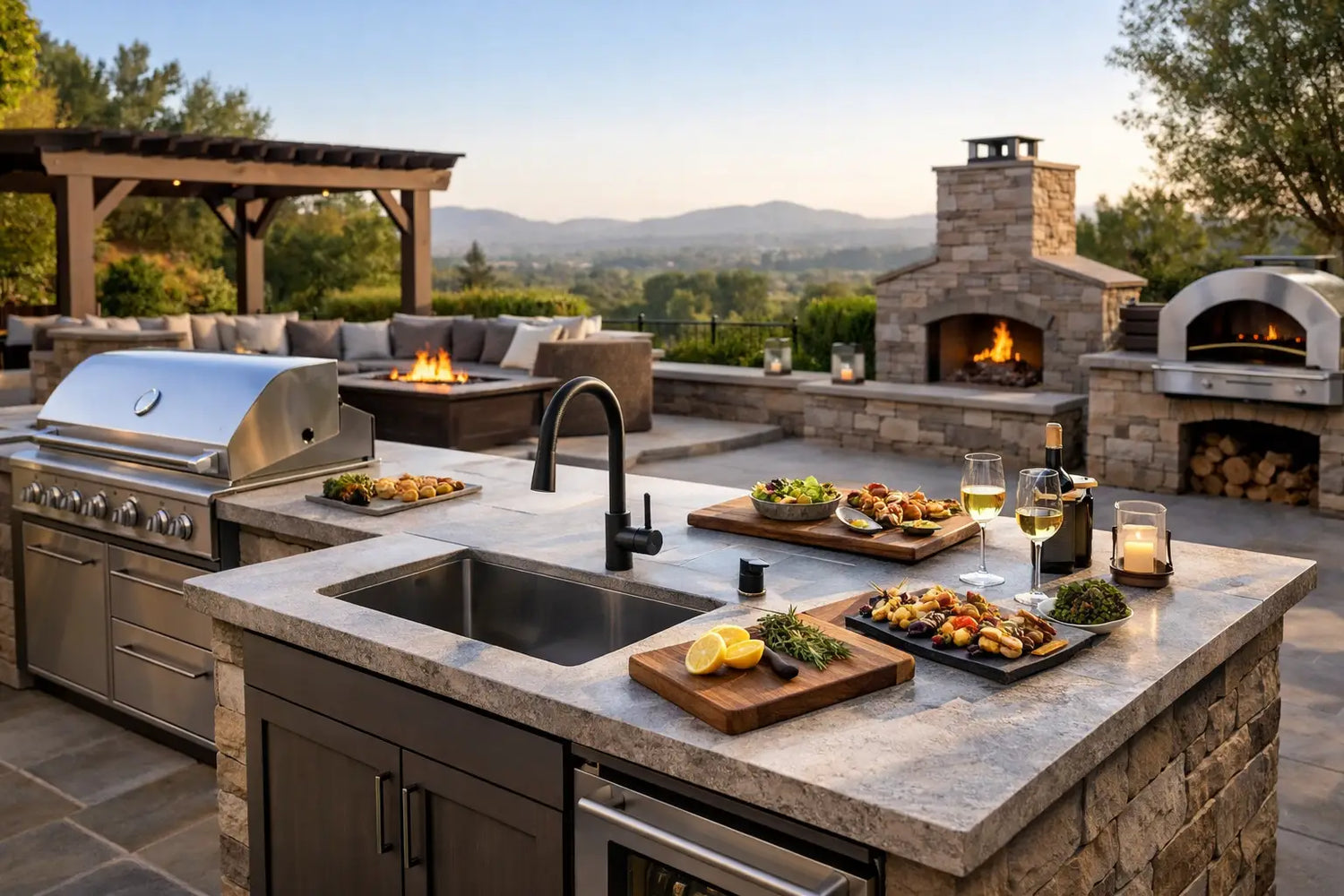
Start by defining the core functional zones. Most premium outdoor kitchens need a hot zone for grilling and cooking, a prep zone with adjacent countertop space, a cold zone for refrigeration or beverage storage, and a clean zone if you are including a sink. If these zones are too spread out, the kitchen becomes tiring to use. If they are packed too tightly, it feels crowded and visually heavy.
Linear layouts are ideal for terraces, narrower patios, and projects where a clean architectural look matters most. They are efficient, visually disciplined, and often the best fit for modular systems. L-shaped kitchens create stronger separation between prep and cooking, while U-shaped concepts suit larger properties where outdoor cooking is a primary entertaining feature.
There is also the question of guest interaction. Some buyers want the cook facing the garden or pool for a private chef atmosphere. Others prefer the grill positioned so conversation with seated guests feels natural. It depends on whether the kitchen is meant to perform as a social centerpiece or a refined service zone.
Choose appliances based on use, not aspiration
Luxury buyers often over-specify appliances and underuse them. A better approach is to choose fewer, better-integrated components that match real habits.
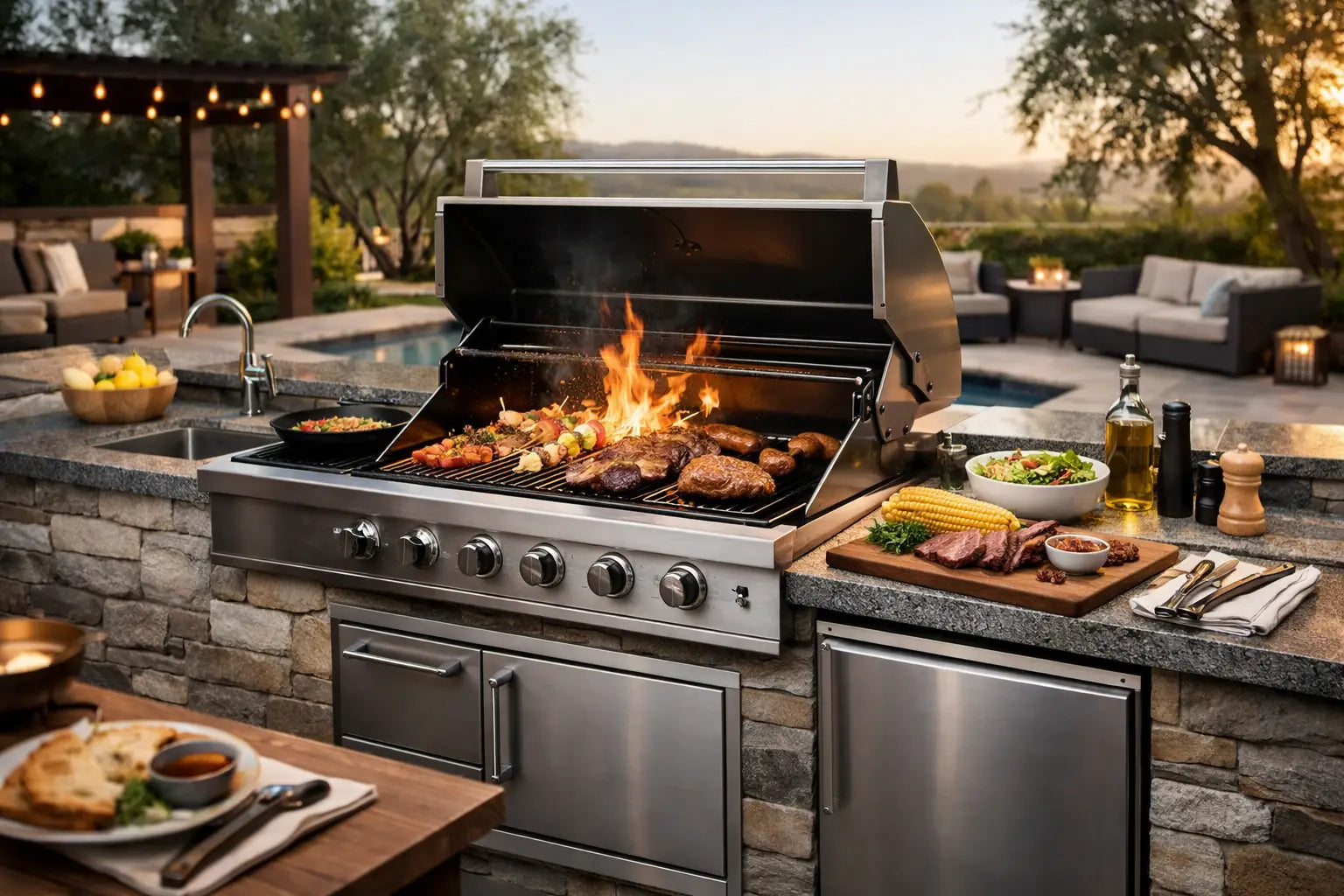
The grill is usually the anchor. Gas grills remain the most practical option for speed, control, and frequent entertaining. Charcoal and ceramic systems bring distinct flavor and theater, especially for buyers who enjoy slower cooking or live-fire aesthetics. Hybrid setups can be compelling, but only when space and workflow support them.
Beyond the grill, refrigeration is one of the most valuable upgrades. It keeps drinks, garnishes, and ingredients outdoors where they belong, which reduces trips inside and keeps hosting relaxed. Side burners, sinks, warming drawers, pizza ovens, and ice makers can all add value, but not every project needs all of them.
A luxury outdoor kitchen should look complete, not crowded. Too many appliances can dilute the design and create maintenance you did not want in the first place. Precision matters more than volume.
Materials make or break the investment
A beautiful outdoor kitchen that cannot handle heat, moisture, UV exposure, and seasonal shifts is not luxury. It is a short-lived visual statement.
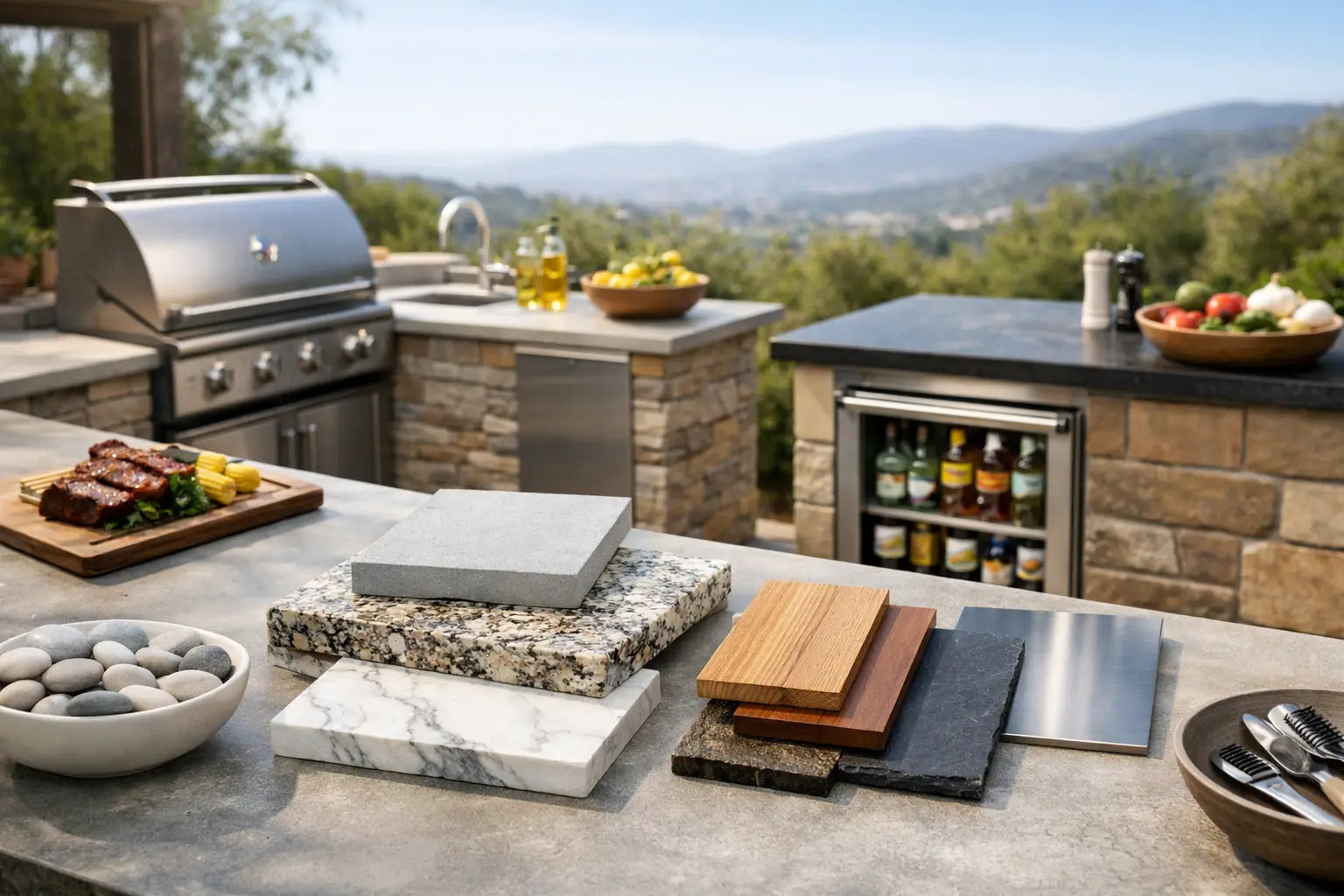
Cabinet construction, hardware, finishes, and countertops all need to be selected for true outdoor performance. Powder-coated metals, marine-grade materials, weather-resistant composite structures, and premium stainless components usually outperform decorative solutions that were adapted from indoor use. Countertops should resist staining, heat, and moisture while still delivering a refined look.
This is where many traditional custom builds fall short. They may look impressive at handover, but they rely on too many variables - contractor quality, site conditions, inconsistent material choices, and long installation windows. The result can be visually strong but technically compromised.
Pre-assembled modular systems offer a different standard. Because the engineering, fit, and finish are controlled before delivery, the final result is more consistent and significantly faster to realize. For buyers who value design without construction chaos, that is a serious advantage.
Plan utilities early, not after the design is done
One of the fastest ways to delay an outdoor kitchen project is to leave utility planning too late. Gas, power, drainage, and water access shape what is possible, where appliances can go, and how clean the final installation will look.
If you are building from scratch, coordinate utility routes at the same time as your layout. If you are retrofitting an existing patio or terrace, assess access constraints before locking in your appliance list. A luxury space should not end with exposed conduits, awkward plumbing workarounds, or compromises forced by late-stage discovery.
This is another reason modular, plug-and-play thinking is so attractive in the premium market. A well-designed system simplifies installation logic and reduces the number of variables on site. For many homeowners and commercial buyers, speed is not just convenience. It is risk reduction.
Storage is part of the luxury experience
People notice the grill first, but they feel the storage every time they use the kitchen. Good storage is what keeps the space calm, efficient, and visually sharp.
Plan for utensils, cookware, serving pieces, cleaning products, covers, and fuel or accessory items. If your kitchen includes refrigeration and prep space but no meaningful storage, the experience starts to break down quickly. You end up borrowing space from inside the house, which defeats the point of the outdoor kitchen.
Drawers usually outperform doors for accessibility. Dedicated waste storage is worth considering, especially in larger entertaining environments. Closed storage also protects the visual clarity of the design. In luxury spaces, that matters.
Design for all-season performance
The most successful outdoor kitchens are not just beautiful in perfect weather. They are designed to hold their quality through changing conditions and regular use.
Think about sun exposure, prevailing wind, overhead cover, drainage, and proximity to the house. A grill placed in a high-wind corner may look balanced on a plan but perform poorly in practice. A prep surface in constant direct sun can become uncomfortable to use during peak summer hours. Hospitality buyers should be especially disciplined here, because heavy use reveals weak planning very quickly.
Lighting also deserves early attention. Task lighting at the cooking surface is essential if the kitchen will be used in the evening, while ambient lighting helps the entire space feel elevated after dark. Done well, lighting extends usability and reinforces the architectural quality of the installation.
Custom-built versus modular luxury
If you are evaluating how to plan luxury outdoor kitchen projects at a high level, one decision affects everything else: whether to build on site from scratch or specify a modular solution.
Custom construction can work for highly unusual footprints or projects with very specific architectural requirements. But it often comes with longer timelines, greater installation complexity, and more room for inconsistency. Premium buyers do not just pay for appearance. They pay for confidence.
A modular luxury kitchen offers a more controlled route. The design language is cohesive, appliance integration is planned in advance, and installation is dramatically simpler. For design-conscious buyers who want speed, precision, and fewer moving parts, this model is increasingly the smarter one. That is exactly why brands such as ELEEXA have redefined what a premium outdoor kitchen can look and feel like.
Budget for value, not just cost
Luxury planning should be disciplined, not vague. Set a realistic budget around the elements that actually shape the experience: cabinetry quality, appliance performance, countertop durability, utility work, delivery, and installation.
The cheapest line item is often the most expensive long term if it leads to rework, corrosion, poor usability, or a dated appearance. On the other hand, not every project needs every premium add-on. The strongest kitchens are edited. They invest where performance, longevity, and visual impact are highest.
A clear specification upfront usually protects the budget better than constant customization during construction. Precision is premium.
The best outdoor kitchen is not the one with the most features. It is the one that feels beautifully resolved from the first meal onward. Plan for the way you cook, the way you entertain, and the way you want the space to age - and the result will look every bit as refined as it performs.