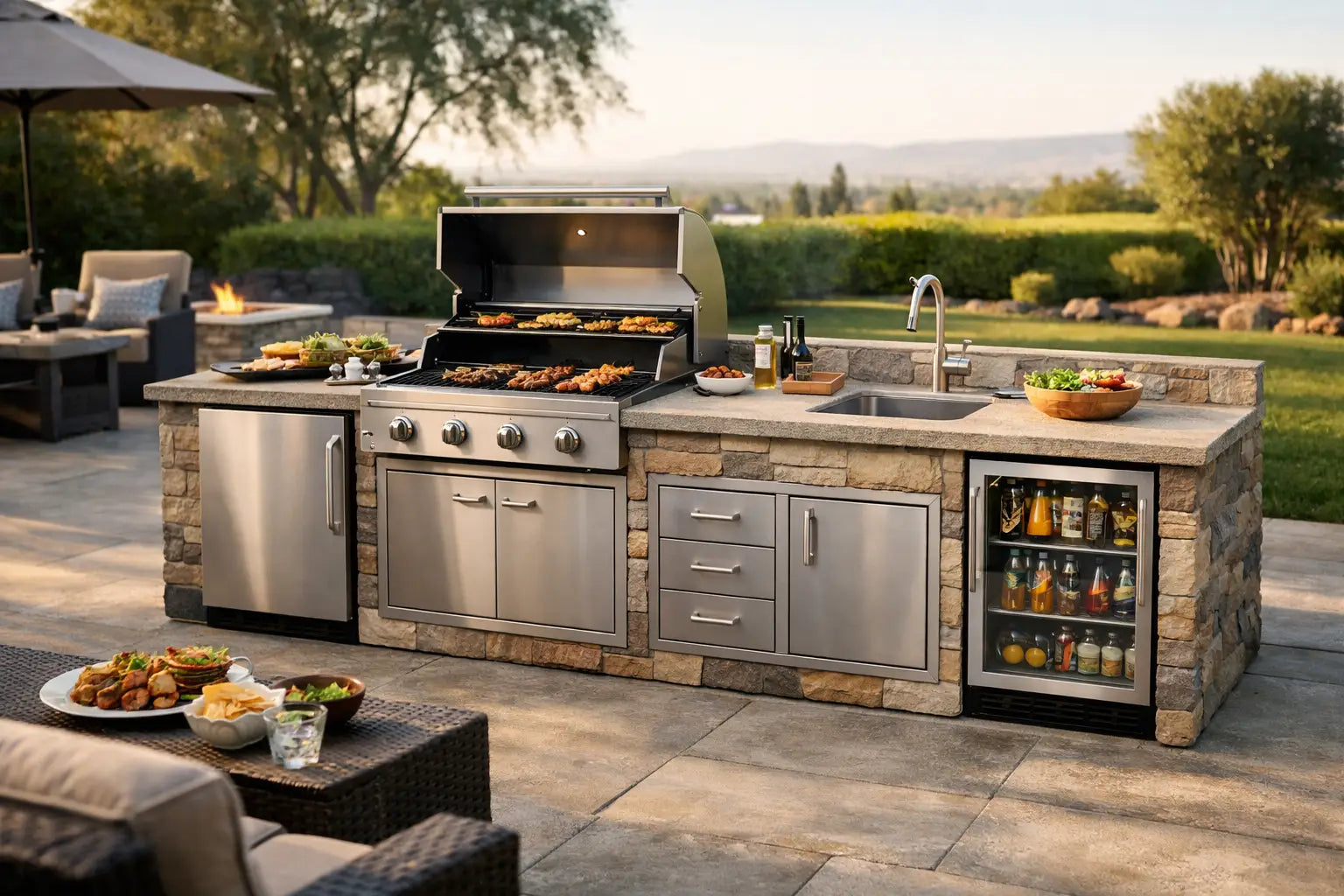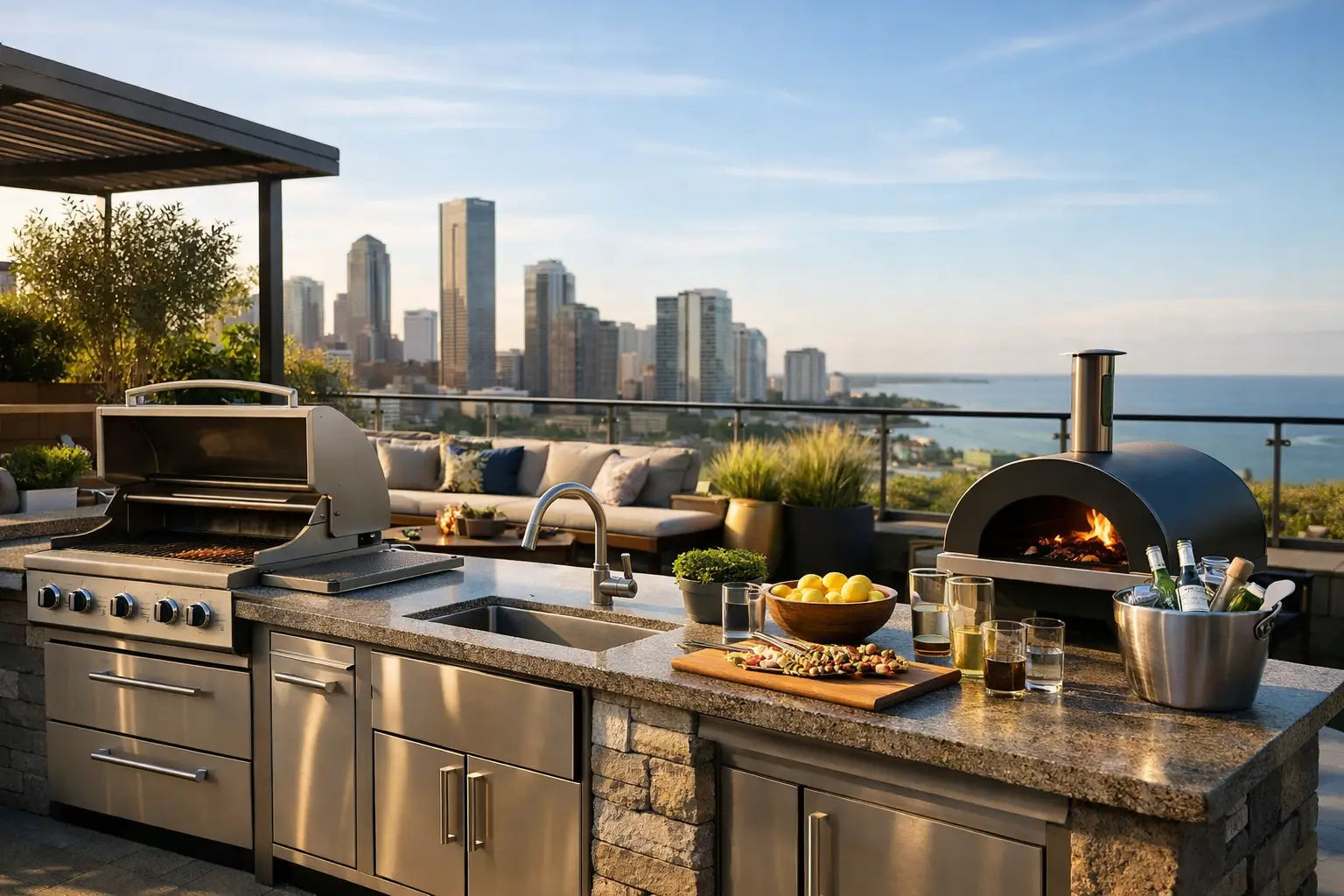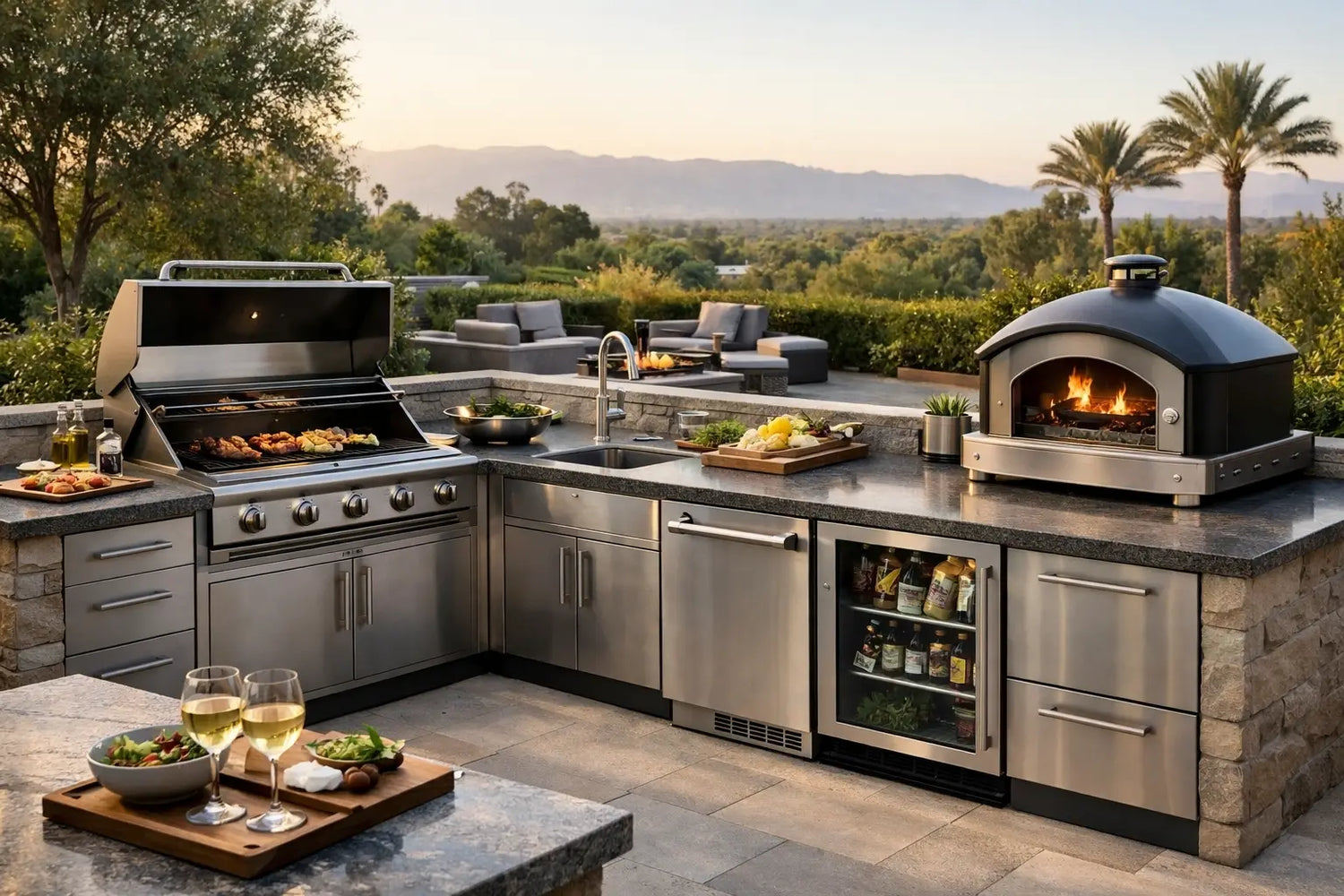
A beautiful patio can still feel unfinished if cooking outdoors means juggling a freestanding grill, a prep cart, and storage that never quite belongs. That is why luxury outdoor kitchen systems have moved from niche indulgence to serious design consideration for homeowners, architects, and hospitality buyers who expect more from an exterior space. The best systems do not simply add a grill. They create a complete outdoor destination with the visual confidence of indoor cabinetry and the durability to perform in heat, rain, wind, and heavy use.
For premium buyers, the real question is not whether an outdoor kitchen looks impressive on day one. It is whether the entire system continues to feel elegant, functional, and worth the investment after multiple seasons, frequent entertaining, and exposure to the elements. That is where the difference between a custom-looking solution and a truly engineered one becomes obvious.
What sets luxury outdoor kitchen systems apart
A luxury system earns its place through more than finishes and price. It combines architecture, materials, appliance integration, storage logic, and installation efficiency into one coherent product. In other words, it should feel designed, not assembled from mismatched parts.
Traditional outdoor kitchens often involve a drawn-out process. You choose a grill, hire a contractor, coordinate stonework, wait on fabricators, solve utility issues, and hope the final result matches the rendering. Sometimes it does. Sometimes it becomes an expensive exercise in compromise. Modules that are engineered as complete units change that equation by reducing variables without lowering the design standard.
This is why premium modular systems are gaining ground. They preserve the visual impact of a bespoke kitchen while removing much of the site complexity that slows projects down and introduces risk. For a homeowner, that means less disruption and a faster path to entertaining. For a developer or hospitality buyer, it means more predictable delivery, cleaner project management, and a more consistent result across properties.
The real value is speed without compromise
Luxury buyers rarely want shortcuts. They want fewer problems. That distinction matters.
The strongest outdoor kitchen concepts today are built around pre-assembled or plug-and-play modules because time has become part of the luxury equation. A system that arrives ready for placement and integration offers a level of convenience that custom masonry builds often cannot match. You avoid the mess of prolonged on-site construction, reduce dependence on multiple trades, and dramatically simplify the installation timeline.
That does not mean every project should avoid custom work. Some properties require a highly specific layout, unusual dimensions, or integrated architectural features that justify a fully bespoke build. But for many terraces, villas, rooftops, pool houses, and hospitality settings, a modular luxury system delivers the right balance of customization and control. It feels tailored without becoming complicated.
This is the appeal behind brands such as ELEEXA, where the promise is not just premium styling but a faster, more assured route to a finished outdoor kitchen. For buyers who value design but have little patience for drawn-out construction, that matters.
Materials decide whether the investment feels premium in three years
An outdoor kitchen lives a harder life than an indoor one. UV exposure, rain, salt air, grease, temperature swings, and frequent cleaning all test the integrity of the materials. If the surfaces fade, swell, stain, or corrode, even a strong design begins to look tired.
That is why material selection should be evaluated as seriously as layout. Powder-coated metals, marine-grade components, weather-resistant cabinetry, and countertop materials suited to exterior use are not luxury extras. They are the baseline for long-term performance. The finish should be stable, the hardware should feel substantial, and the construction should resist the kind of wear that quickly exposes weaker systems.
There is also a design trade-off here. Some natural materials offer striking visual warmth but demand more maintenance. Some ultra-durable engineered finishes may lean more contemporary. The right answer depends on the property, the climate, and how much upkeep the owner is willing to accept. A true premium system is not the one with the most dramatic brochure image. It is the one whose materials still look composed after real use.
Design matters because outdoor kitchens are now social architecture
The outdoor kitchen is no longer a side feature tucked against a wall. In high-end homes and hospitality environments, it often becomes the visual center of the exterior plan. People gather around it, photograph it, and judge the entire space by how resolved it feels.
That makes proportion, detailing, and integration essential. Good systems anchor the space. Great ones connect with the architecture of the property, the lines of the terrace, the finishes of the home, and the rhythm of how people actually move through the area. Storage should be where prep happens. Refrigeration should support serving zones. The grill should feel integrated rather than dropped in as an afterthought.
Choosing the right layout for luxury outdoor kitchen systems
The best layout is not always the biggest one. It is the one that suits the space and the way it will be used.
A linear configuration is often ideal for terraces, narrower patios, rooftops, and hospitality areas where a clean architectural line is more important than wrapping the footprint. It keeps the composition elegant and can still include serious functionality, especially when the modules are well planned.
L-shaped and larger compositions work well when entertaining is central to the property and there is room to create distinct cooking, prep, and serving zones. They can feel more immersive, but only if circulation remains easy. Oversized layouts can look impressive in renders and feel cumbersome in practice.
For developers and hotel buyers, modularity offers another advantage. A base concept can be repeated, adapted, or upgraded across multiple locations without redesigning from scratch each time. That creates brand consistency while preserving flexibility.
Appliance compatibility is a practical luxury
One of the easiest ways to weaken an outdoor kitchen project is to treat appliance compatibility as a detail to solve later. In premium systems, appliance integration should be considered from the start.
Buyers often have strong preferences for grill brands, whether that means high-performance gas BBQs, ceramic cookers, or specific built-in units. A system that is engineered to work with major grill ecosystems gives the buyer freedom without forcing custom modifications that can affect aesthetics or lead times.
This is more important than it sounds. Poor integration can create awkward gaps, ventilation issues, or a visually fragmented result. By contrast, a system designed around recognized grill formats feels deliberate and finished. That is the difference between a setup that looks expensive and one that actually looks designed.
Installation should feel professional, not painful
The luxury experience is not limited to the final photograph. It includes everything from specification to delivery to setup.
This is where pre-assembled outdoor kitchens are changing expectations. If a premium buyer is spending at the top of the market, they should not also be managing a complicated install sequence with avoidable delays and contractor guesswork. A well-engineered modular system reduces uncertainty. It arrives with clear intent, consistent quality, and a far cleaner installation path.
Of course, some projects still require utility planning, crane access, surface preparation, or coordination with landscape and pool design. Plug-and-play does not mean thought-free. It means friction is reduced where it should be reduced. The smartest systems respect both realities: they simplify the process without pretending every site is identical.
Who benefits most from this category
Affluent homeowners are the obvious audience, but they are not the only one. Architects value systems that preserve design integrity while making specification easier. Developers appreciate repeatability and timeline control. Boutique hotels, resorts, and premium rentals benefit from outdoor kitchens that elevate guest experience while standing up to high-frequency use.
In each case, the appeal is similar. Luxury outdoor kitchen systems offer a way to create a polished, high-function environment without the unpredictability that often comes with traditional site-built solutions. They support property value, daily enjoyment, and the kind of entertaining experience that feels considered from every angle.
The best time to judge a system is before you fall for the finish. Ask how it is built, how it arrives, how it handles weather, which appliances it supports, and what the installation actually involves. Luxury should never mean more hassle dressed in better materials. It should mean the opposite: sharper design, stronger engineering, and a space that is ready when you are.