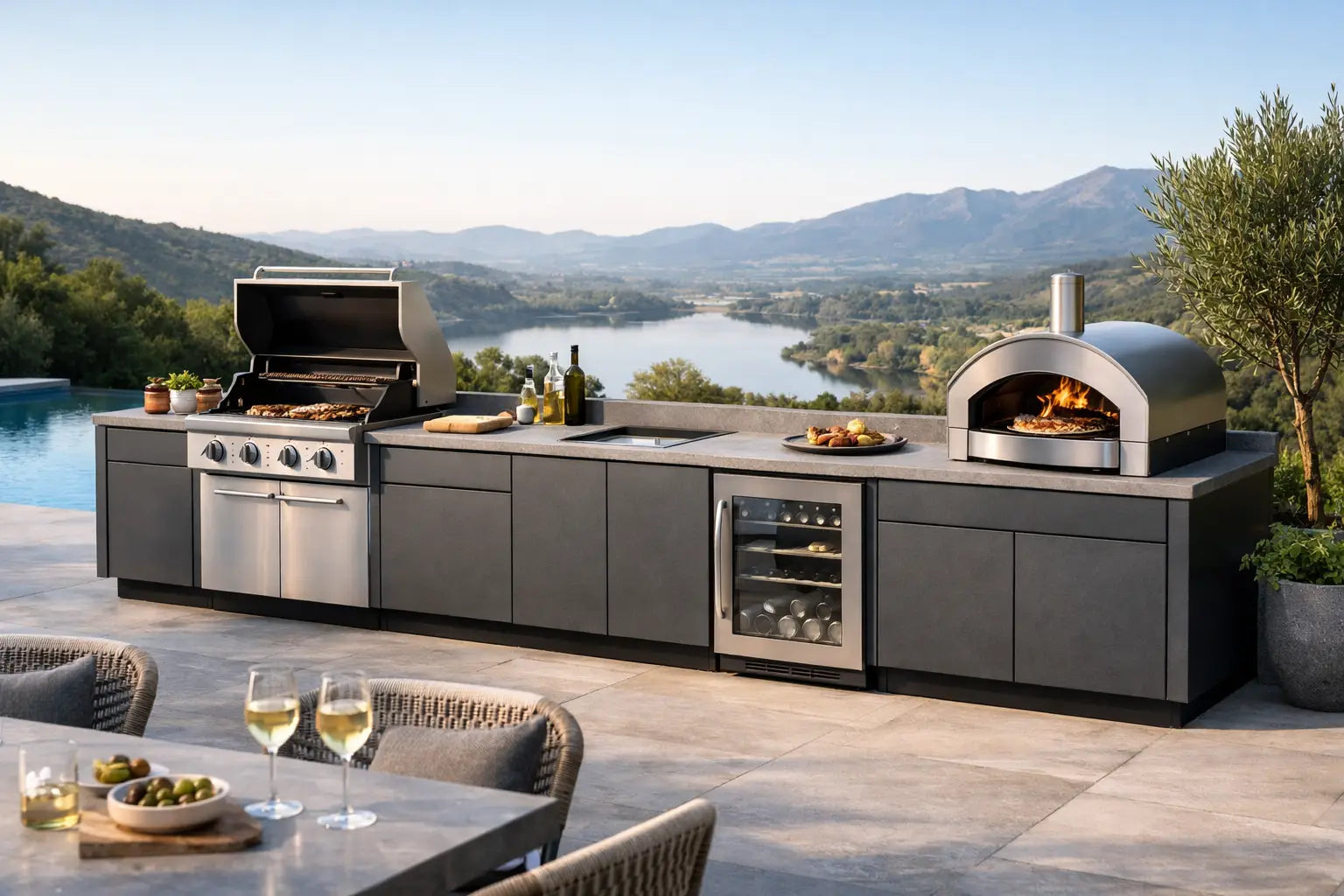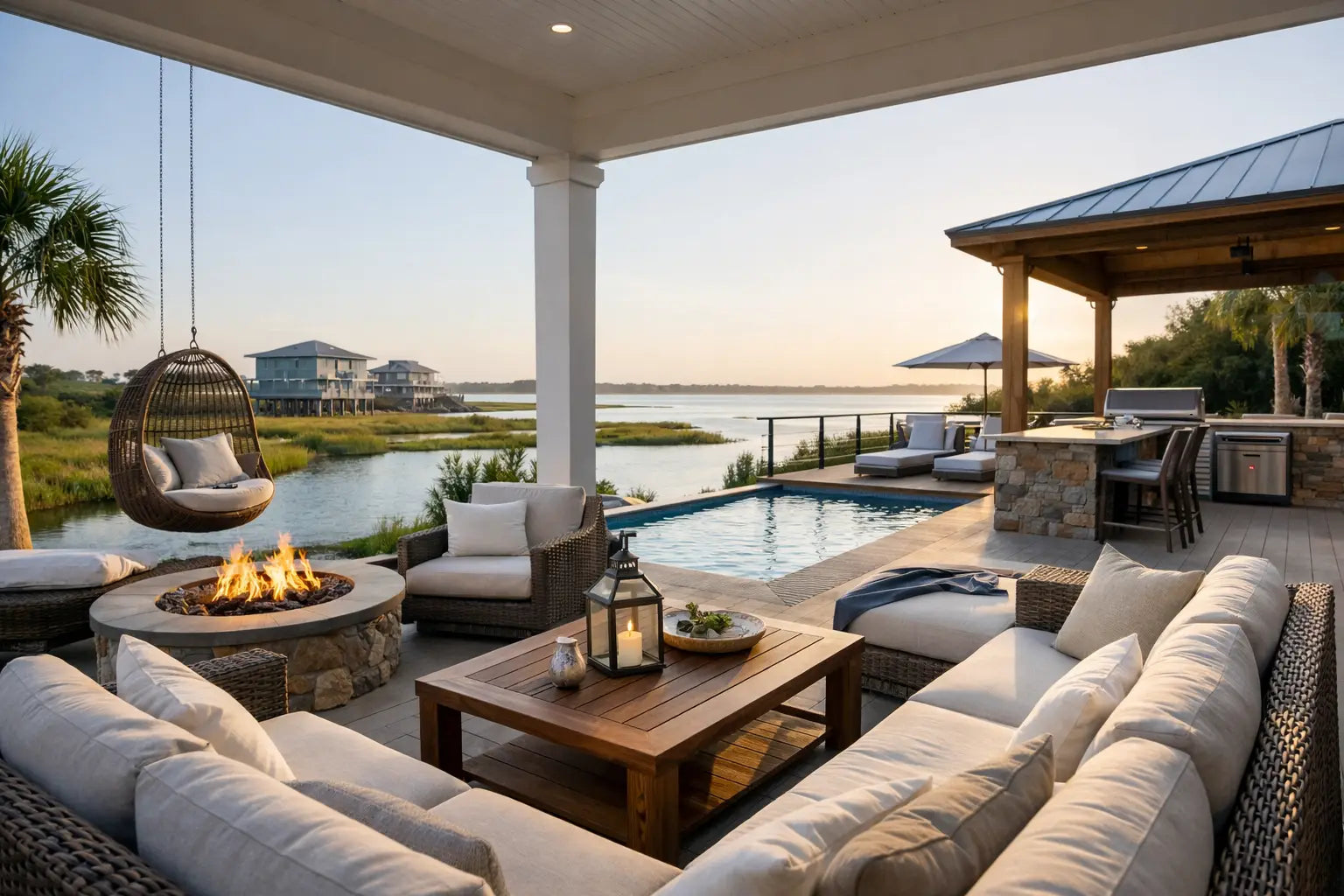
A gas grill vs kamado outdoor kitchen decision is not simply about choosing a heat source. It determines how your terrace functions on a busy Saturday, how confidently you host a dinner party, and how the kitchen looks when the cooking is finished. For a refined outdoor living space, the right answer is rarely the appliance with the longest feature list. It is the appliance that matches the way you actually entertain.
A gas grill brings instant, controlled performance. A kamado brings charcoal character, extraordinary heat retention, and a more ritualized style of cooking. Both can anchor a spectacular outdoor kitchen. The difference lies in the experience you want your guests to see, smell, and enjoy.
Gas Grill vs Kamado Outdoor Kitchen: The Real Decision
The most useful way to compare these options is to separate the grill from the kitchen around it. A premium outdoor kitchen provides the architecture: generous prep space, weather-resistant storage, a polished visual line, and a designated place for every tool. The grill defines the cooking rhythm.
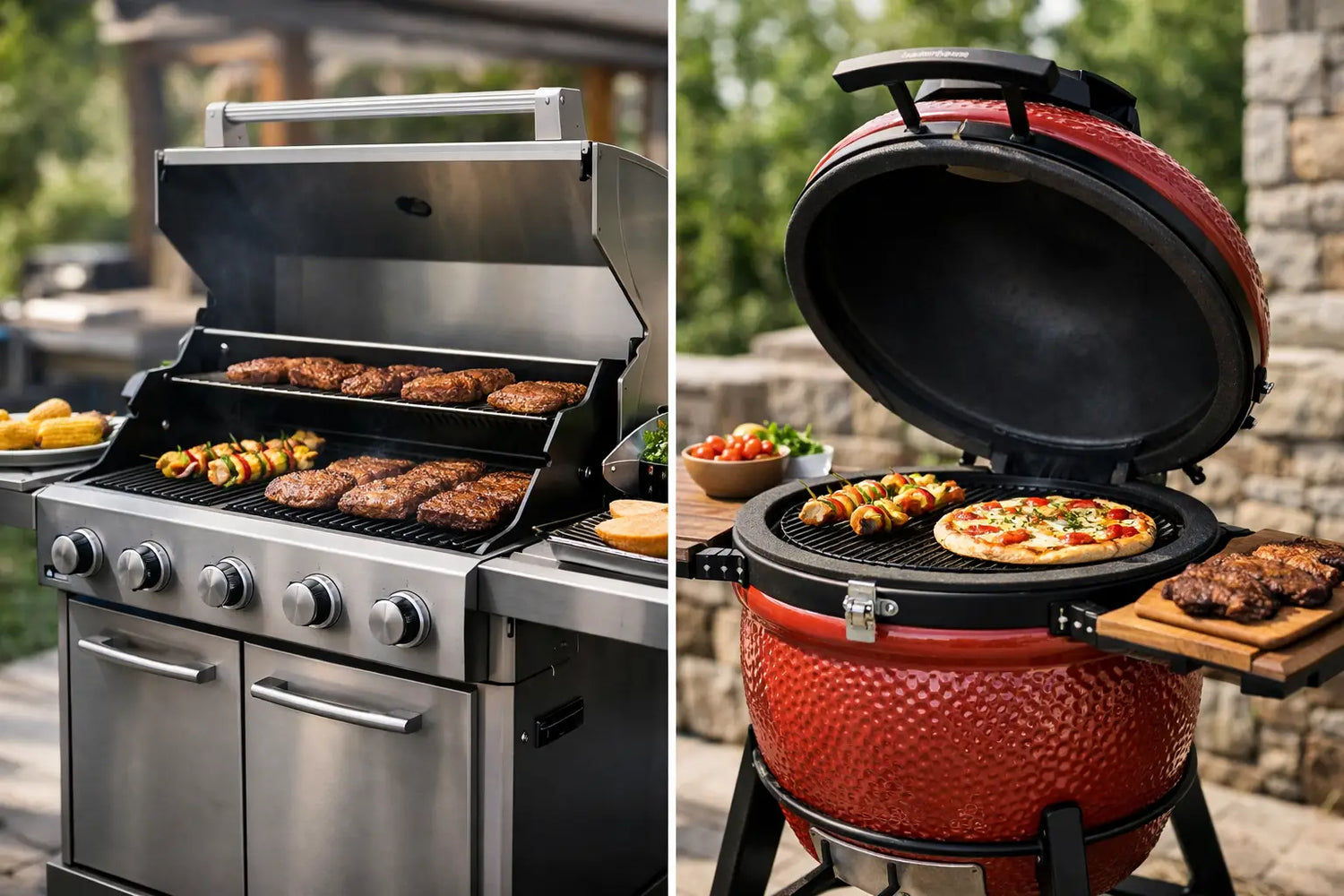
Gas is built for immediacy. Turn the knobs, preheat, and begin cooking with precise zone control. It suits homeowners who want restaurant-style flexibility without planning the evening around lighting charcoal or managing airflow. If your outdoor kitchen will be used several times a week for chicken, seafood, vegetables, burgers, and quick family meals, gas is exceptionally persuasive.
A kamado is built for range and flavor. Its ceramic body retains heat with remarkable efficiency, allowing it to hold low smoking temperatures for hours and climb high enough for crisp pizza and deeply seared steak. It rewards patience and technique. For buyers who see outdoor cooking as a centerpiece of the weekend rather than a fast extension of the indoor kitchen, that involvement is part of the appeal.
Neither choice is automatically more premium. The luxury comes from choosing deliberately, then integrating the appliance into a kitchen designed to support it properly.
Choose Gas for Effortless Entertaining
A built-in gas grill is the natural choice when convenience has to feel invisible. You can arrive home late, cook for six, and return to the table without tending a fire. Multiple burners make it easy to create separate heat zones: sear steaks over high heat, roast vegetables at medium heat, and hold food warm without crowding the grill surface.
This control is particularly valuable for larger gatherings. Hosts are often cooking different foods to different preferences, and gas makes the process more predictable. There is no charcoal bed to build, no ash to empty before the next use, and less variation from one session to another. A quality gas grill also pairs naturally with side burners, refrigeration, sinks, and substantial prep areas, creating a complete outdoor cooking station rather than a standalone barbecue.
Gas does ask for a thoughtful utility plan. A permanent natural gas connection is ideal for frequent use, while propane requires safe, discreet cylinder storage and occasional replacement. In a high-end installation, these practical details should be considered early so they do not interrupt the kitchen's clean architectural finish.
For hospitality settings, vacation properties, and households where several people may use the kitchen, gas also has a clear advantage: it is familiar. Guests and staff can operate it with minimal learning curve, which helps protect both the experience and the investment.
Choose Kamado for Fire, Smoke, and Versatility
A kamado brings a different kind of theater to the outdoor kitchen. The fragrance of hardwood charcoal, the visual presence of ceramic, and the satisfaction of managing live fire create an experience gas cannot replicate. It is especially compelling for slow-smoked ribs, brisket, whole poultry, wood-fired pizza, and steaks that benefit from intense radiant heat.
Its efficiency is a defining strength. Once a kamado reaches temperature, the insulated ceramic construction can maintain heat using relatively little charcoal. That makes long cooks practical and delivers an oven-like consistency for baking, roasting, and smoking. A well-managed kamado can perform jobs that might otherwise require a smoker, pizza oven, and conventional grill.
The trade-off is time. Lighting charcoal, stabilizing temperature, and allowing the cooker to cool are all part of ownership. Ash management is simple but unavoidable. A kamado is not difficult to use, but it is less spontaneous than gas, particularly on a weeknight when dinner needs to happen quickly.
Placement also matters more than many buyers expect. A kamado is heavy, and its exterior, venting, lid clearance, and access for ash removal must be considered in the module design. The result can be exceptionally beautiful, especially when paired with a built-in Big Green Egg or similar ceramic grill, but the cabinet must be engineered for the appliance rather than adapted as an afterthought.
Design the Kitchen Around How You Cook
The strongest outdoor kitchens do not force a choice between beautiful design and practical performance. They use proportion, materials, and appliance placement to make cooking easier while maintaining a composed, architectural appearance.
With gas, prioritize landing space on both sides of the grill. You need room for trays, utensils, and finished food, especially when cooking for a crowd. Drawers near the cooking zone keep tools organized, while a refrigerated module nearby reduces trips indoors. If the kitchen includes a sink, place it close enough to support prep but far enough away to preserve generous working space around the heat source.
With a kamado, plan for a prep surface that supports a slower, more hands-on workflow. You may need space for charcoal, heat deflectors, pizza stones, and larger serving boards. A dedicated drawer for accessories prevents the kitchen from becoming cluttered with specialty equipment. The grill should sit at a comfortable working height, with enough clearance to open the lid fully and enough surrounding material to frame the ceramic cooker safely and elegantly.
For either appliance, avoid treating storage as an optional extra. A luxury outdoor kitchen feels calm because tools, covers, seasonings, and serving pieces have a place to go. Weather-resistant cabinetry and durable countertops matter just as much as the grill itself. They are what allow the kitchen to look considered between gatherings, not only during them.
Is a Hybrid Outdoor Kitchen the Better Answer?
For dedicated entertainers, the most satisfying solution may be both. A gas grill handles everyday meals and high-volume service. A kamado adds smoking, baking, and live-fire flavor when the occasion calls for it. This combination gives you broad cooking capability without asking one appliance to solve every task.
The key is scale. On a compact patio, trying to include every possible appliance can reduce the usable prep area and make the kitchen feel crowded. In that situation, choose the grill you will use most often and invest in excellent storage and counter space. A larger backyard, villa terrace, rooftop lounge, or hospitality setting can justify a dual-grill layout, particularly when entertaining is central to the property.
Modular design makes this decision more flexible. Rather than committing to a lengthy site-built project, pre-assembled kitchen modules can be configured around leading gas grills and kamado systems with a more controlled path from specification to installation. ELEEXA brings that approach to luxury outdoor living, pairing appliance compatibility with refined finishes and zero-assembly stress.
Consider Maintenance, Weather, and Long-Term Ownership
A gas grill requires routine cleaning of grates, burners, grease management components, and ignition systems. Periodic inspections of gas lines and connections are equally important. The maintenance is straightforward, and regular care protects reliable performance.
A kamado has fewer mechanical parts, but it still benefits from attention. Ash should be cleared, grates cleaned, and ceramic components protected from impact. Quality ceramic cookers are highly durable, yet they are not indestructible. In cold climates, a proper cover and careful handling help preserve both the grill and the surrounding kitchen finish.
For all-season outdoor kitchens, choose materials that can meet the climate rather than merely survive it. UV exposure, rain, freeze-thaw cycles, salt air, and humidity all influence the right cabinet construction, hardware, and countertop selection. Premium materials are not only about appearance. They preserve alignment, color, and confidence over years of use.
Your decision should ultimately reflect the life you want the space to support. Choose gas if you value speed, precision, and frequent effortless meals. Choose a kamado if flavor, versatility, and the craft of fire are central to the experience. Then give that choice the setting it deserves: an outdoor kitchen that makes every gathering feel composed before the first burner is lit or the first charcoal is sparked.