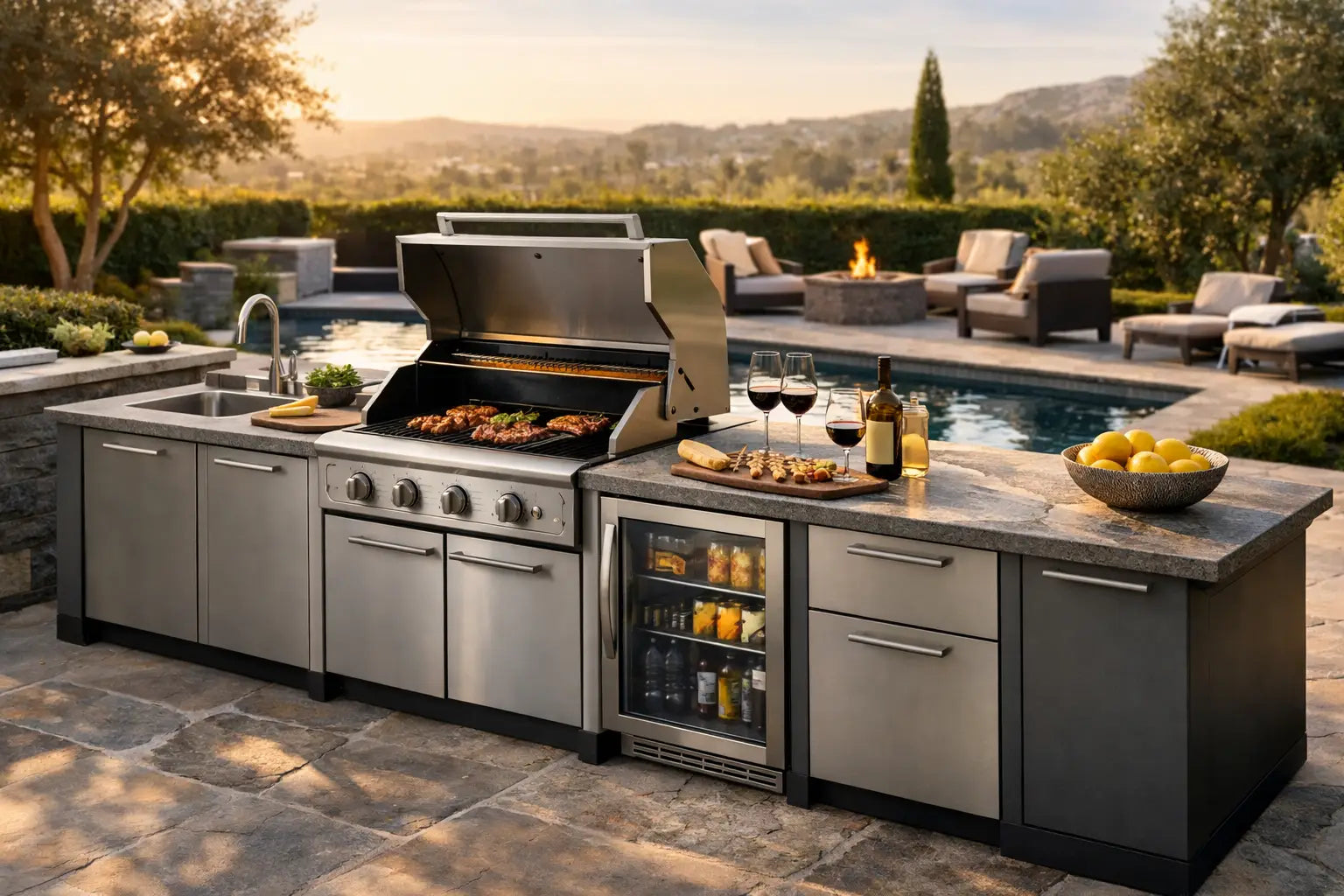
A beautiful outdoor kitchen can fail for one simple reason - the layout looks impressive on paper but works against the way people actually cook, serve, and gather. That is why outdoor kitchen islands vs linear layouts is not a styling question alone. It is a decision about movement, sightlines, entertaining, installation complexity, and how much value you want your outdoor space to deliver every day.
For some properties, an island creates the kind of social centerpiece that changes the entire backyard. For others, a linear configuration is the smarter, cleaner answer, especially when the goal is architectural simplicity, efficient use of space, and a faster path to a finished result. The right choice depends less on trends and more on how your space performs.
Outdoor kitchen islands vs linear layouts: the real difference
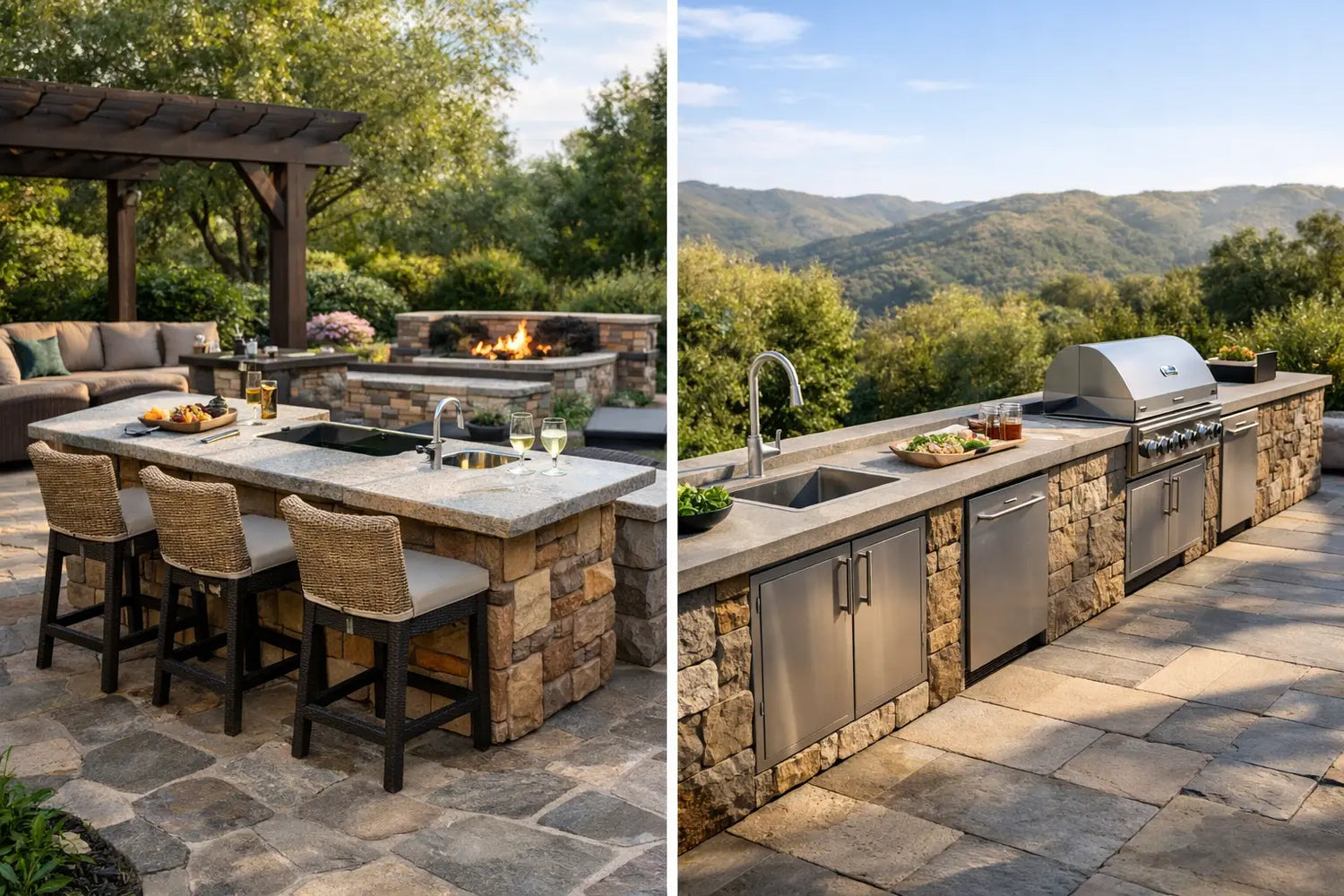
At the most basic level, a linear outdoor kitchen places functions in a single straight run, usually along a wall, fence line, terrace edge, or pool house facade. Grill, sink, refrigeration, storage, and prep space are organized in one direction. It is streamlined, visually calm, and often the easiest format to integrate into existing architecture.
An island layout introduces a central block or a freestanding secondary unit that can hold prep space, seating, appliances, storage, or serving functions. Sometimes the grill stays on the perimeter and the island becomes a social hub. In other cases, the island itself carries the main cooking zone. Either way, the layout becomes more immersive and more interactive.
This distinction matters because layout determines more than footprint. It shapes traffic patterns, guest interaction, service efficiency, and the level of construction required to make the kitchen feel intentional rather than improvised.
When a linear layout is the stronger choice
Linear outdoor kitchens are often underestimated because they look simple. In premium design, simplicity is usually a strength. A linear format can feel tailored, architectural, and highly refined, especially when the modules align with the home’s facade, material palette, and outdoor furniture plan.
For narrower patios, rooftop terraces, side courtyards, and spaces where circulation is already tight, linear layouts are usually the superior option. They preserve openness. They keep the center of the space available for dining or lounge seating. They also reduce the risk of creating a bulky mass that interrupts views or makes the terrace feel crowded.
Linear designs are also easier to service from a practical standpoint. Utility runs are more straightforward. Ventilation planning can be cleaner. Installation tends to be faster because everything is arranged in a single line rather than split across multiple zones. For buyers who want a premium outdoor kitchen without the delays and disruption of a complex site build, this format often delivers the best balance of elegance and efficiency.
There is also a visual discipline to linear kitchens that appeals to architects and design-conscious homeowners. When executed well, the result feels integrated with the building, not added onto it. That distinction is especially valuable in modern homes where proportion and restraint matter.
When an outdoor kitchen island earns its footprint
An island can be extraordinary when the space is generous enough to support it. In a large backyard, open terrace, or hospitality setting, an island creates presence. It turns the outdoor kitchen into a destination rather than a supporting feature.
That changes how people use the space. Guests naturally gather around an island. The cook faces outward instead of standing with their back to everyone. Serving becomes easier because there is a dedicated center for drinks, appetizers, plating, or casual dining. In entertainment-focused homes, that social advantage is often the deciding factor.
An island also expands functional zoning. You can separate hot cooking from cold prep. You can add bar seating without pushing stools against the grill wall. You can create a more professional workflow, particularly if multiple people use the kitchen at once.
Still, the island only works when clearances are respected. If there is not enough room to walk comfortably around all sides, open appliance doors, and keep seating from interfering with cooking, the layout will feel forced. In smaller spaces, an island can quickly become the obstacle everyone has to work around.
Space planning matters more than preference
Many buyers start with a personal preference. They want the drama of an island or the neat look of a linear kitchen. The better approach is to begin with the geometry of the site.
If your outdoor area is long and shallow, a linear layout is usually more natural. It follows the available width and leaves circulation intact. If your space is deep and open, an island may help organize it, giving the kitchen enough visual weight to anchor dining and lounge zones around it.
Sightlines matter too. A linear kitchen can disappear elegantly into the architecture, which is ideal when the priority is preserving a view of the pool, garden, or horizon. An island draws attention. That is its strength, but it should be intentional. In a luxury setting, every object in the landscape should justify its presence.
There is also a scale issue that many homeowners only notice after installation. A kitchen can be technically functional and still feel wrong if it is oversized for the terrace. Premium design is not about adding more modules. It is about giving each element enough room to breathe.
Hosting style should drive the decision
The most useful question is simple: how do you actually entertain?
If your outdoor kitchen is mainly for family grilling, streamlined weeknight use, and occasional weekend hosting, a linear layout may be the better investment. It keeps everything accessible, efficient, and visually controlled. You do not pay for footprint you rarely use.
If entertaining is central to the property, an island starts to make more sense. It supports interaction. It creates a natural point for guests to gather with a drink while food is being prepared. It feels more like an indoor luxury kitchen brought outdoors, which is exactly what many high-end buyers want.
For hospitality buyers, the answer often depends on service model. In a private villa rental or boutique hotel where the kitchen is part of the guest experience, an island can deliver stronger visual impact and better social energy. In a compact rooftop bar or pool deck where efficient circulation is critical, linear may perform better.
Budget, complexity, and installation reality
In most cases, island layouts cost more. The reason is not just the extra cabinetry. Islands often require more square footage, more finish detail, more utility coordination, and more thought around movement and access. That additional ambition can be worthwhile, but it should be deliberate.
Linear kitchens usually offer a more efficient path to premium results. They are easier to position, easier to plan, and often faster to install. For buyers who value precision and speed, modular pre-assembled systems have a clear advantage here because they remove much of the uncertainty that comes with traditional custom construction.
That matters even more outdoors, where delays, weather exposure, and site coordination can turn a simple project into a drawn-out one. A well-engineered modular linear kitchen can arrive with the sophistication of a custom solution but without the usual burden. ELEEXA has built its reputation around that exact benefit: luxury outdoor kitchens with far less friction.
Which layout looks more premium?
Either one can look exceptional. The premium result comes from proportion, material quality, and integration, not from the shape alone.
A linear kitchen often feels more architectural. It aligns beautifully with modern facades and creates a composed, understated luxury. An island feels more expressive and more social. It signals abundance and confidence, especially in larger landscapes where a single wall run would feel too slight.
The mistake is assuming that more complexity always means more luxury. It does not. In the best outdoor spaces, the layout feels inevitable, as if it could not have been designed any other way.
How to choose with confidence
If your outdoor space is compact, highly architectural, or dependent on clean circulation, choose linear. If your space is expansive and entertaining is a major part of the lifestyle, consider an island. If you want the social quality of an island but the discipline of a simpler plan, a hybrid approach can work well - a main linear run paired with a smaller prep or seating module.
That middle ground is often the smartest answer. It gives you visual presence without overcrowding the terrace, and it keeps installation more controlled than a fully custom island composition.
The best outdoor kitchen is not the one with the most features. It is the one that makes cooking easier, hosting more natural, and the entire property feel more resolved. Choose the layout that serves the space first, and the luxury will read clearly from there.