A terrace with a grill in one corner and a dining table in another is no longer the definition of luxury outdoor living. The most compelling outdoor living design trends treat exterior space as a true extension of the home: considered, comfortable, highly functional, and ready to host at a moment’s notice. For homeowners, architects, and hospitality teams, the goal is not simply to add more furniture outdoors. It is to create an environment that performs beautifully from a quiet weekday dinner to a full evening of entertaining.
Outdoor Living Design Trends Are Becoming Architectural
The strongest shift is toward permanence. Outdoor spaces are being designed with the same visual discipline as interior kitchens and living rooms, using clear sightlines, aligned materials, intentional lighting, and purpose-built zones. A high-end terrace now needs to look complete from the house, not like a collection of products added over time.
This changes how the space is planned. Rather than beginning with a grill and finding room for everything else, designers are defining the layout first: where people arrive, where food is prepared, where guests gather, and what view the host has while cooking. The outdoor kitchen often becomes the anchor, particularly where the exterior connects directly to a main living area, pool deck, or rooftop lounge.
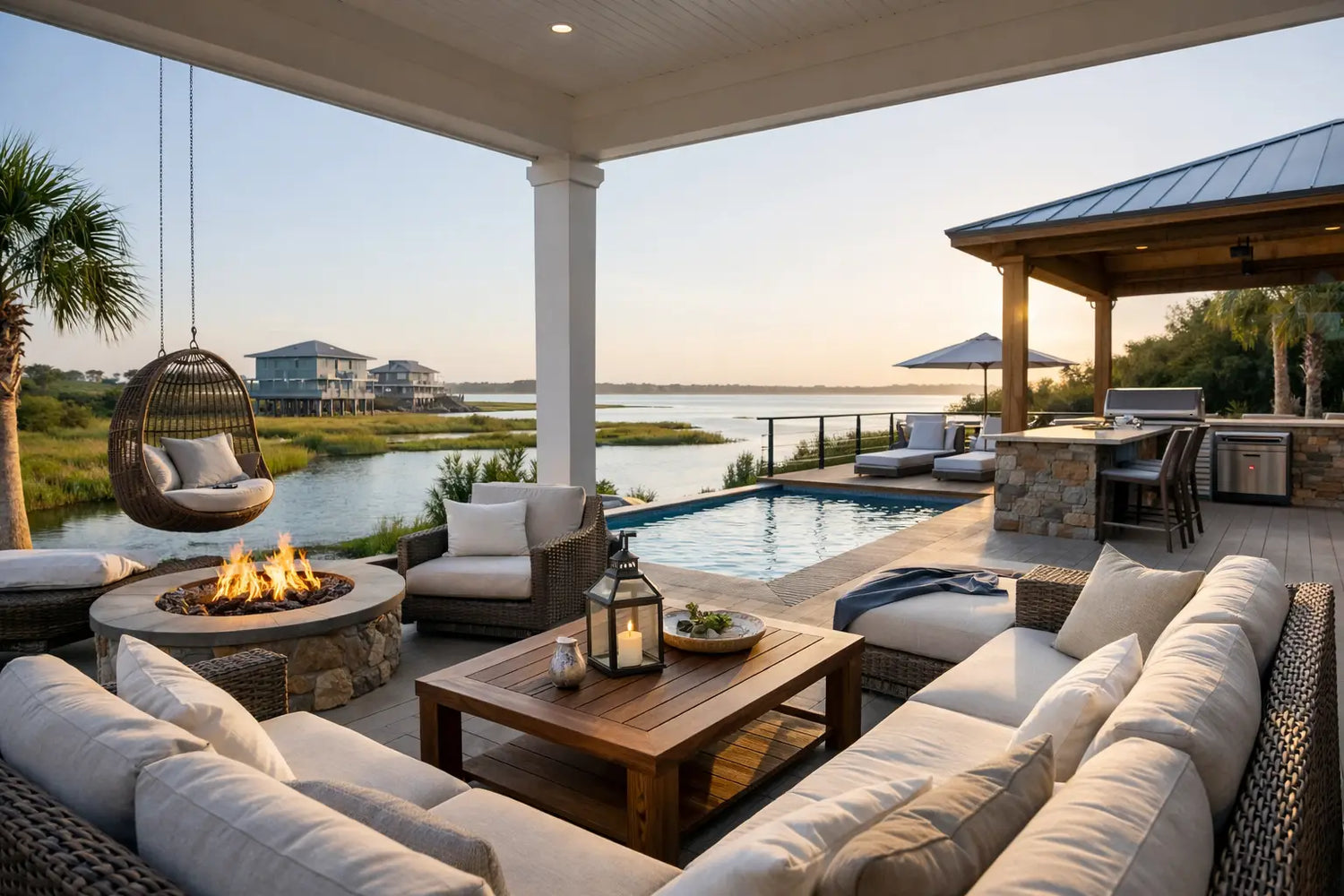
For compact city terraces, this may mean a single linear kitchen wall and a tailored dining setting. On a large villa property, it can mean a complete culinary zone paired with shaded seating, a bar, and a fire feature. Scale changes, but the principle remains the same: every element should feel designed to belong.
The Outdoor Kitchen Is Now a Social Center
Cooking outdoors has moved well beyond the standalone barbecue. Buyers increasingly expect a complete preparation and serving experience, with countertop space, closed storage, refrigeration, waste management, and integrated cooking equipment. This is one of the most practical outdoor living design trends because it eliminates the constant movement between house and patio.
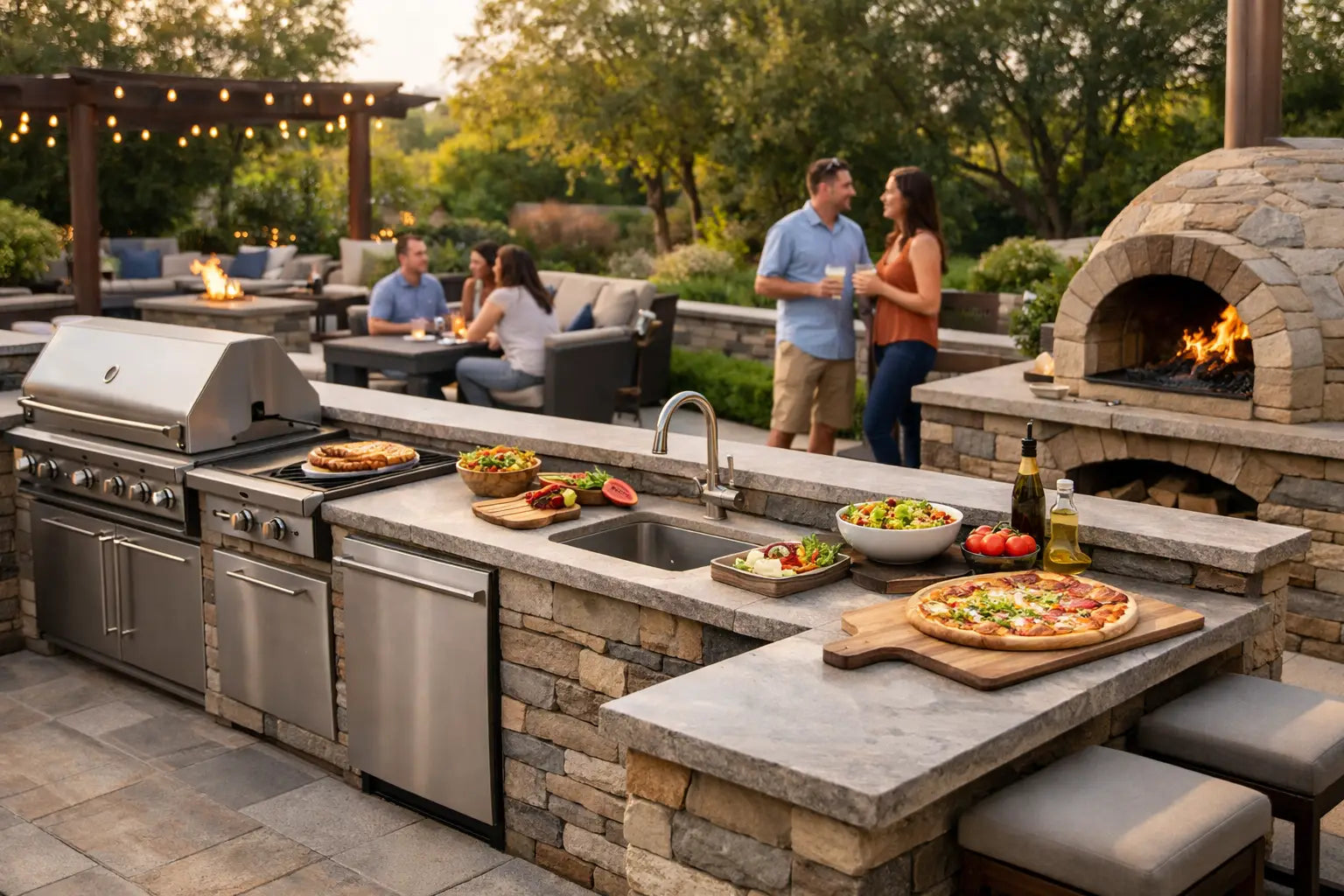
The best layouts support the way people actually entertain. The cook should not face a wall while guests gather behind them. A peninsula, an L-shaped configuration, or a linear arrangement facing the seating area can create an easy social connection. Even a smaller kitchen benefits from a generous work surface beside the grill, allowing food, glassware, and serving platters to stay exactly where they are needed.
There is a trade-off. An expansive kitchen can be visually impressive, but it should not overwhelm the terrace or compromise circulation. A refined modular composition often delivers more value than an oversized custom build because it provides the essentials in a precise footprint, with a cleaner installation process and a predictable finish.
Modular Luxury Is Replacing Construction-Heavy Projects
Traditional masonry outdoor kitchens can require multiple contractors, long lead times, weather-dependent work, and considerable coordination. That process may suit a ground-up architectural project, but it is not the only route to a premium result.
Pre-assembled modular systems are changing the expectation. They offer an architectural appearance without turning a finished garden, terrace, or hospitality property into an extended construction site. The appeal is especially clear for renovation projects, rooftop spaces, vacation homes, and properties where disruption must be kept to a minimum.
A well-engineered modular kitchen can arrive with cabinetry, countertops, and appliance provisions already resolved, then be positioned and connected with far less on-site complexity. This does not mean every project is identical. Custom dimensions, finishes, storage requirements, and grill compatibility still matter. It means customization can happen before delivery, where design decisions are easier to control and craftsmanship is more consistent.
For buyers who want luxury without contractor uncertainty, this is a decisive advantage. ELEEXA brings that promise into focus with fully pre-assembled outdoor kitchen modules designed to create a polished, plug-and-play result without assembly stress.
Performance Materials Must Look as Good as They Last
An outdoor kitchen is exposed to far more than occasional rain. It faces UV exposure, temperature swings, grease, salt air in coastal settings, and regular cleaning. Material choice is therefore one of the clearest distinctions between an outdoor kitchen that merely photographs well and one that continues to look exceptional years later.
Powder-coated metal cabinetry, weather-resistant surfaces, durable hardware, and precisely engineered drainage details are becoming baseline expectations in the premium category. Matte finishes remain popular because they reduce glare and bring a calm, architectural quality to the space. Deep charcoal, black, warm gray, and muted earth tones work particularly well against stone, timber, planting, and contemporary facades.
Natural materials still have a place, but they require honest planning. Timber introduces warmth, yet it needs maintenance and may not be the right choice for a fully exposed terrace. Natural stone can be striking, though its porosity, weight, and care requirements vary substantially. The most successful projects balance visual character with the realities of climate and use.
Shade, Heat, and Light Are Being Designed Together
A beautiful outdoor kitchen cannot carry an exterior space by itself. Comfort determines whether people use it beyond a few ideal weekends. That is why covered structures, adjustable louvers, pergolas, radiant heating, ceiling fans, and layered lighting are now part of the initial plan rather than late additions.
Shade deserves special attention. It protects both people and finishes, defines the entertaining zone, and can make an exposed patio usable through more of the day. However, a fixed cover can darken adjacent interior rooms or block a valued view. Adjustable solutions offer flexibility, while a carefully placed cantilever umbrella may be the better choice for a smaller space or a terrace with structural limitations.
Lighting should be subtle but purposeful. Task lighting around the grill and counter is essential for cooking safely after sunset. Softer ambient lighting at seating level makes the space feel inviting, while low pathway lighting improves movement without turning the garden into a stage set. The most elegant schemes are rarely the brightest ones.
Softer Living Rooms Meet Professional-Grade Cooking
Exterior styling is becoming more relaxed, but not less refined. Deep lounge seating, textured outdoor rugs, upholstered dining chairs, and sculptural side tables are giving patios the comfort of an interior living room. This softness creates an appealing contrast with the precision of a professional-grade grill and kitchen module.
The result works best when there is a visual thread between zones. Cabinet color might echo window frames. A countertop may pick up tones from the pool surround or interior island. Planters can repeat the geometry of the kitchen. These decisions create cohesion without making every surface match.
Hospitality projects are pushing this trend further. Guests want intimate, photogenic spaces that still withstand frequent use. Durable hospitality-grade materials, concealed storage, and a layout that allows staff to serve efficiently are as important as the atmosphere. Residential buyers are adopting the same thinking: design for the experience, then ensure the infrastructure can support it.
Smarter Storage Makes Entertaining Feel Effortless
Luxury is often felt in the moments no guest notices. It is the ability to find grilling tools without searching, clear a counter quickly, keep serving pieces protected, and store essentials close to the cooking zone. Integrated drawers and enclosed cabinets reduce visual clutter and help an outdoor kitchen retain its composed appearance between gatherings.
Storage requirements depend on how the space will be used. A weekend grilling station needs a different configuration than a poolside kitchen used throughout summer or a rental property hosting new guests every week. Consider the equipment that must live outside, not just the appliances on display. Covers, cleaning supplies, trays, fuel accessories, and tableware all require a deliberate home.
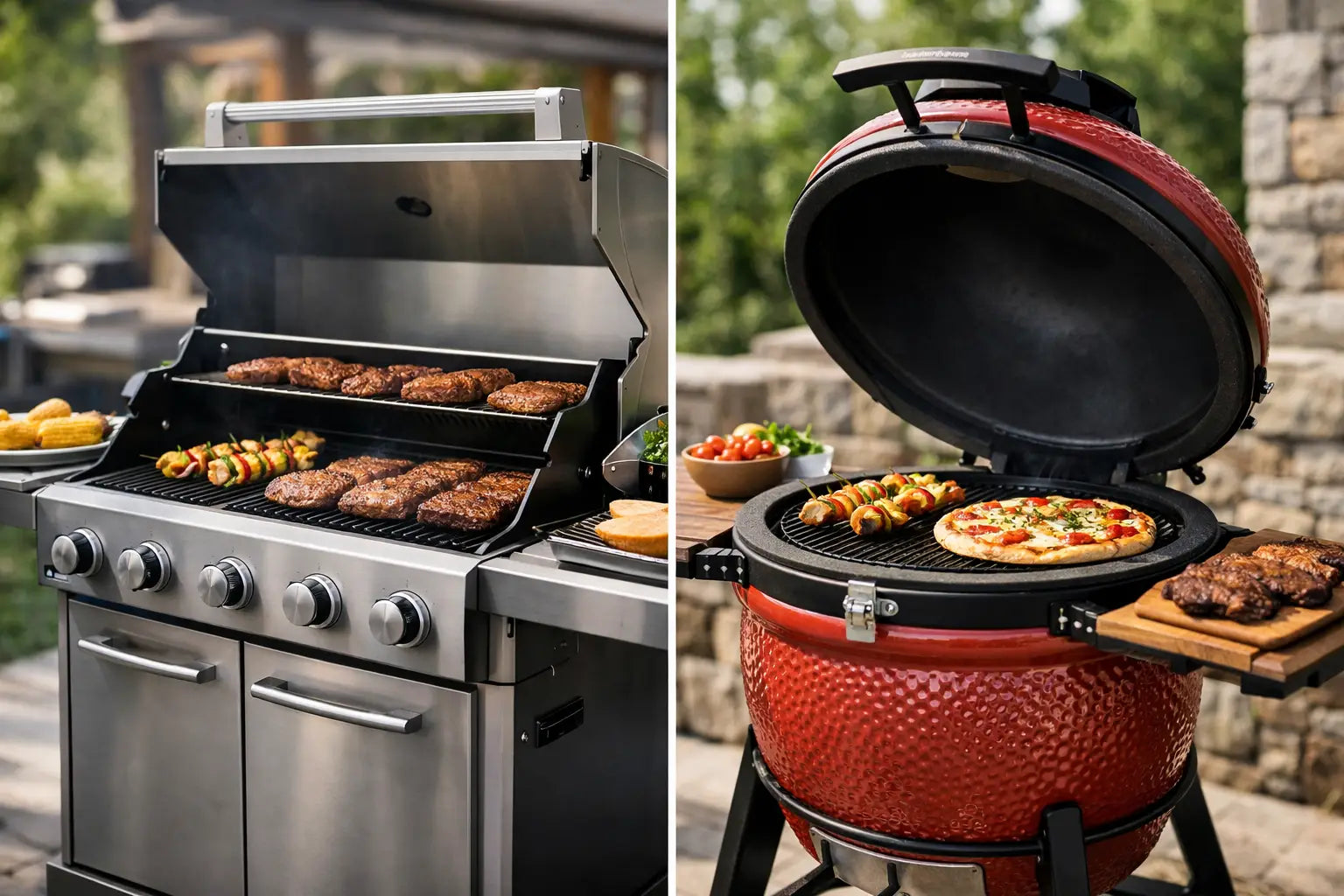
This is also where appliance selection becomes strategic. Compatibility with leading grill systems allows homeowners to choose the cooking experience they prefer, whether that means high-heat gas grilling, charcoal cooking, or ceramic grilling. The kitchen should be engineered around the appliance, not awkwardly adapted after purchase.
Designing for Longevity, Not a Single Season
The most valuable outdoor spaces are designed to mature well. They have enough flexibility for changing family routines, enough durability for real weather, and a style that will not feel dated when the next color trend arrives. That generally favors strong proportions, restrained finishes, and features that solve genuine problems.
Before selecting a kitchen, map the space at full scale and test the circulation. Open the imagined cabinet doors. Allow room for someone to stand at the grill while guests pass behind them. Check sun direction at the hours you expect to entertain. These practical decisions protect the investment far more effectively than any decorative accessory.
The opportunity is simple: create an exterior setting that feels as resolved as the rooms inside, yet performs with greater freedom. When the kitchen, comfort features, and materials are planned as one composition, stepping outdoors stops feeling like a compromise. It becomes the most desirable room on the property.