A beautiful grill island in the wrong spot becomes an expensive obstacle fast. If you are figuring out how to customize outdoor kitchen layout plans for a terrace, backyard, rooftop, or hospitality setting, the real goal is not simply fitting appliances outdoors. It is creating a space that cooks well, entertains effortlessly, and looks fully resolved from every angle.
The best layouts feel inevitable. Traffic flows naturally. Prep space sits where you need it. Heat, storage, serving, and seating all support one another without crowding the space. That level of refinement does not come from adding more modules at random. It comes from making a few smart decisions in the right order.
Start with how the space will actually be used
Before choosing shapes, finishes, or appliance placements, decide what the kitchen needs to do on a normal Saturday. A compact family cooking zone has very different requirements than a poolside entertainment setup or a hotel terrace serving guests all day.
That is where many projects go off course. People start with the grill, then add a sink, a fridge, some storage, maybe a bar, and hope it all works together. Premium outdoor design works the other way around. You define the experience first, then build the layout around it.
If the kitchen is mostly for casual weeknight grilling, a clean linear run may be the strongest solution. If you host often and want the cook to stay part of the conversation, an L-shape or island-led plan usually performs better. If your outdoor area has multiple activity zones, such as dining, lounging, and pool circulation, the kitchen should support them rather than compete with them.
How to customize outdoor kitchen layout by zone
The most effective layouts are organized by function. Think in zones instead of individual products. That approach creates a kitchen that feels composed rather than pieced together.
The hot zone
This is the performance core of the kitchen, anchored by the grill, smoker, pizza oven, or cooktop. It needs landing space on both sides, enough clearance for lids and doors, and safe distance from heavy foot traffic. If you place the grill where guests constantly pass behind the cook, the kitchen will feel awkward no matter how premium the materials are.
The prep zone
Prep space is often underestimated, yet it is what makes the kitchen enjoyable. You need a real countertop area near the grill, with storage below for utensils, seasonings, and tools. If you use fresh ingredients often, adding a sink close to prep improves the entire workflow.
The cold zone
Outdoor refrigeration belongs where drinks, garnishes, and ingredients can be accessed without interrupting the cook. In larger entertainment layouts, separating beverage access from the main cooking area is a smart move. It keeps guests engaged without turning the chef's zone into a bottleneck.
The social zone
This is where luxury outdoor kitchens distinguish themselves. Seating, serving surfaces, and visual orientation matter just as much as appliance count. If the best view is toward the pool, landscape, or sunset, the layout should frame that experience. A kitchen that turns its back on the setting misses part of the investment.
Match the layout shape to the property
There is no universally best shape. The right answer depends on the footprint, architecture, and how much performance you want from the space.
A straight layout is ideal when the footprint is narrow, the design language is minimalist, or the kitchen sits along a wall or boundary edge. It is also one of the cleanest choices for plug-and-play modular systems because it preserves simplicity without feeling basic.
An L-shaped layout adds more countertop continuity and creates natural separation between cooking and serving. It works especially well in corners, covered patios, and medium-size entertaining spaces where one run can handle production while the other supports drinks or plating.
A U-shaped layout increases storage and work surface dramatically, but it needs enough room to avoid feeling enclosed. In residential settings, it makes sense when outdoor cooking is a serious part of the lifestyle. In hospitality settings, it can create a high-function service zone, though circulation must be handled carefully.
Island and peninsula configurations are strong when entertaining is the priority. They create presence and social gravity. They also demand disciplined planning. An island should never be added simply because there is space. It should improve interaction, not block movement.
Respect circulation or the whole kitchen feels wrong
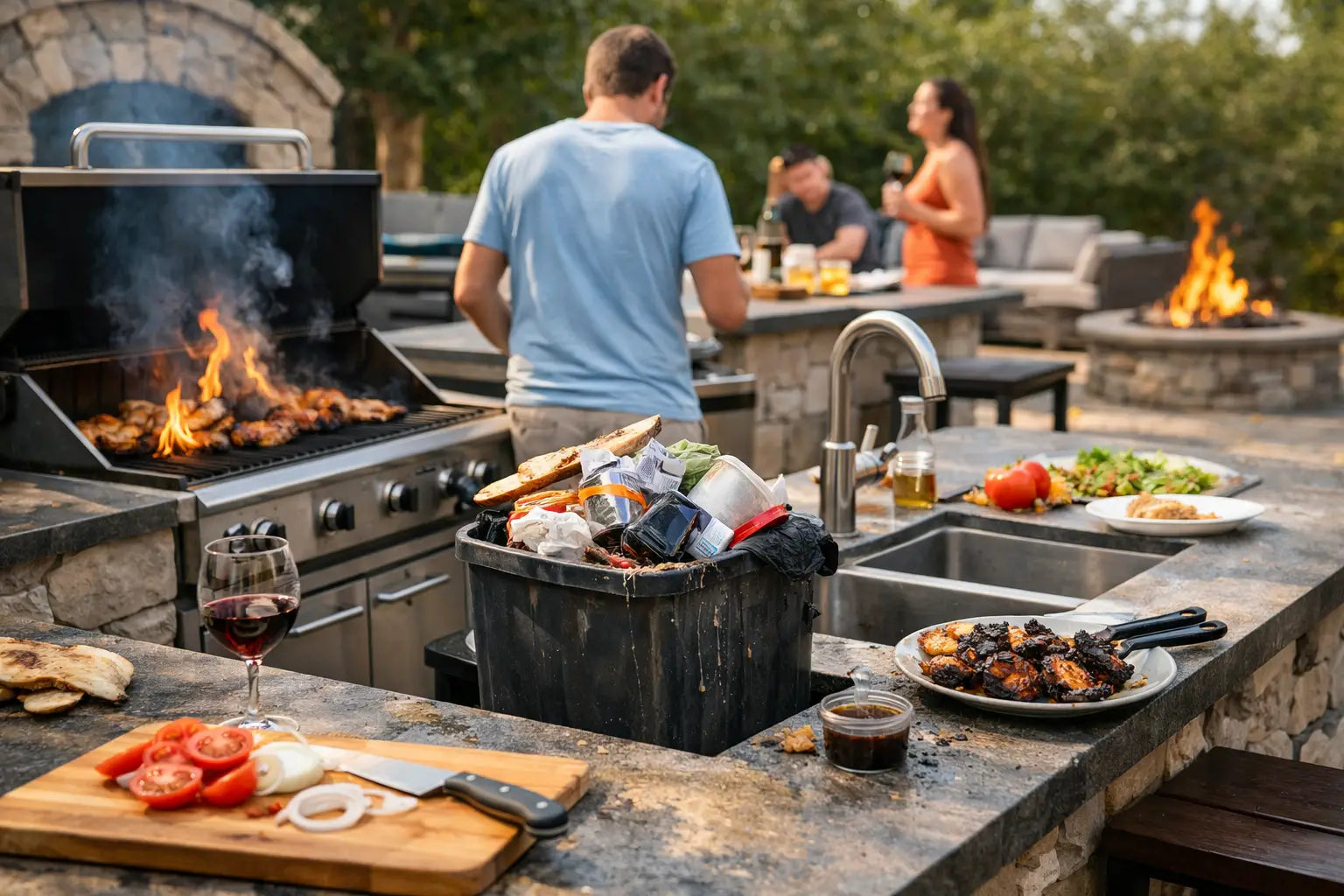
One of the clearest signs of an inexperienced layout is poor circulation. Doors collide. Guests collect around the grill. Dining chairs back into appliance access. Even premium kitchens lose their impact when movement feels cramped.
To customize the layout properly, map out who moves through the space and when. Consider the cook carrying trays, guests reaching for drinks, servers in a hospitality setting, and family members passing through to other areas. The kitchen needs comfortable operating space in front of every active component, especially grills, refrigeration, and storage drawers.
This is also where modular pre-assembled systems have an edge. Because dimensions are known upfront, it is easier to configure a layout with confidence rather than improvising on-site with custom construction variables.
Appliances should support the layout, not dominate it
Many buyers choose appliances first because they are exciting. But if you want a kitchen that feels architectural, the layout should lead and the appliances should fit that logic.
Start with the primary cooking appliance. Then decide what truly earns its place. A sink is valuable, but not every outdoor kitchen needs one. A beverage cooler may add more day-to-day convenience than a second cooking appliance. Ice storage, trash integration, side burners, and kamado cutouts can all be excellent additions, but only if they reflect actual use.
Compatibility matters as well. If you already favor a premium grill brand, your layout should be built around proper fit, ventilation, access, and countertop balance. High-end modular systems make this easier by integrating with established grill ecosystems instead of forcing compromises.
Size for comfort, not maximum capacity
A larger outdoor kitchen is not automatically a better one. Oversizing is common, especially on large patios where empty square footage creates pressure to fill space. But a kitchen that is too long, too deep, or overloaded with modules can become less functional and less elegant.
The stronger move is to size around behavior. How many people cook at once? Do you host standing cocktail gatherings or seated dinners? Will the kitchen be used year-round or mostly in warm weather? These answers should influence module count, counter length, and seating integration.
For luxury homes and hospitality properties, restraint often reads more premium than excess. A sharply edited layout with the right features in the right places tends to outperform a sprawling build that tries to do everything.
Materials and orientation affect layout decisions
Layout is not just a floor plan issue. Sun exposure, prevailing wind, nearby doors, overhead structures, and service access all affect where the kitchen should go.
A west-facing kitchen may need strategic orientation to manage heat and glare during evening entertaining. A rooftop installation may require extra attention to weight distribution, access, and wind. A poolside setup benefits from surfaces and appliance placement that can handle wet traffic without making the chef's area chaotic.
This is why premium outdoor kitchens are as much about engineering as aesthetics. Weather-resistant finishes, durable cabinetry, and pre-assembled construction reduce friction later, but they also open up more confidence at the planning stage. You are not just styling a space. You are specifying a performance environment.
How to customize outdoor kitchen layout without creating installation headaches
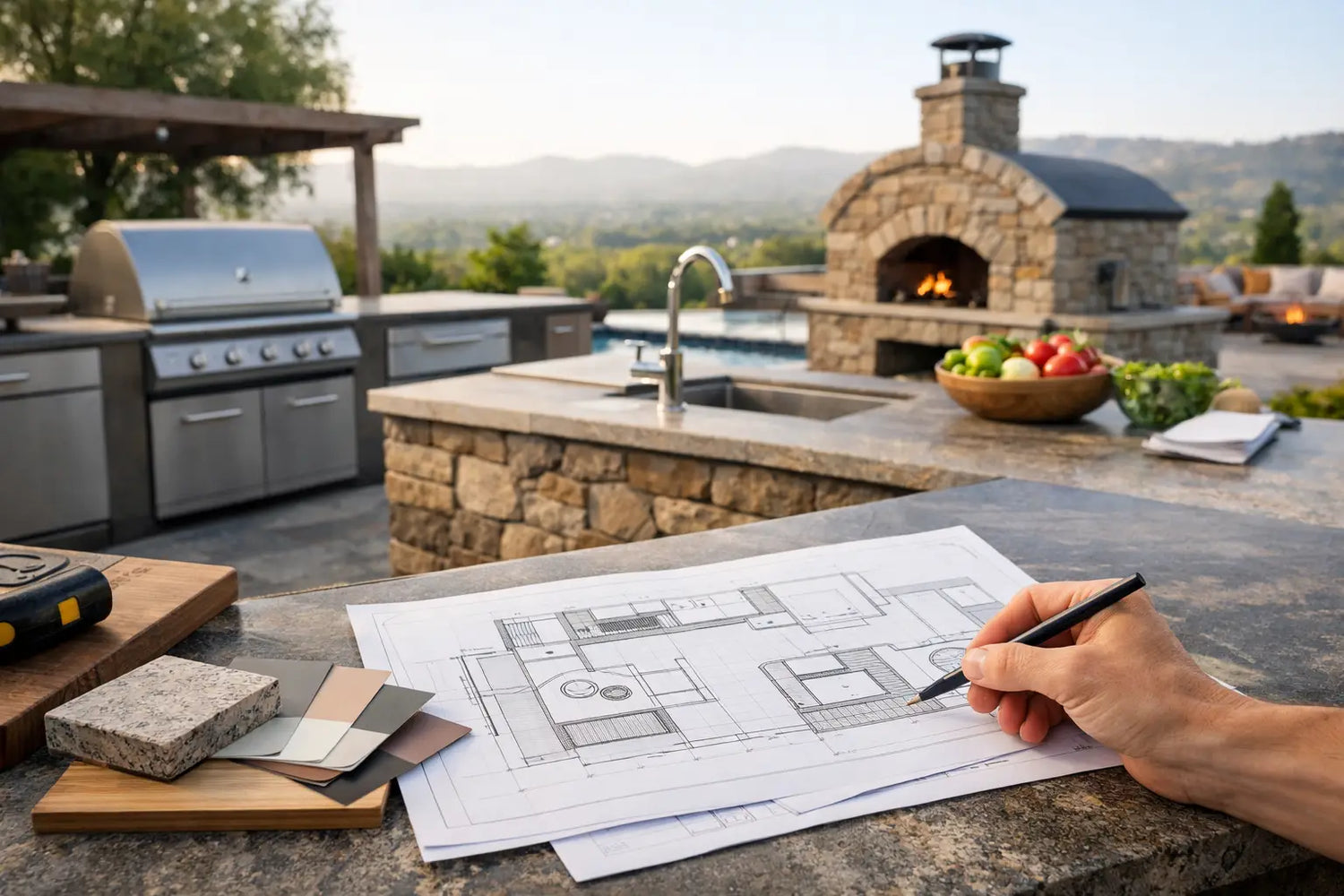
This is where smart buyers separate image from execution. A layout can look impressive on paper and still become a drawn-out construction problem once trades, tolerances, and utility coordination enter the picture.
If speed, precision, and finish quality matter, modular luxury systems are often the more intelligent route. They let you customize configuration, appliance integration, storage, and appearance without starting from scratch. That means fewer site variables, cleaner installation, and a far more predictable result.
For homeowners and developers who want a premium look without contractor roulette, that matters. Brands such as ELEEXA have pushed this category forward by offering pre-assembled outdoor kitchen modules that deliver custom-level presence with far less complexity. The advantage is not only convenience. It is control.
The best layouts look effortless because the planning was not
When an outdoor kitchen feels right, people notice the finish, the proportions, and the atmosphere. What they do not notice is the planning discipline behind it. They do not see the decision to keep beverage traffic away from the grill, to place prep where light is better, or to choose a layout shape that fits the property instead of fighting it.
That is the standard worth aiming for. Customize the layout around the way the space will live, not just the way it will photograph. If you get that part right, the kitchen will do more than complete the patio. It will elevate the entire property every time it is used.