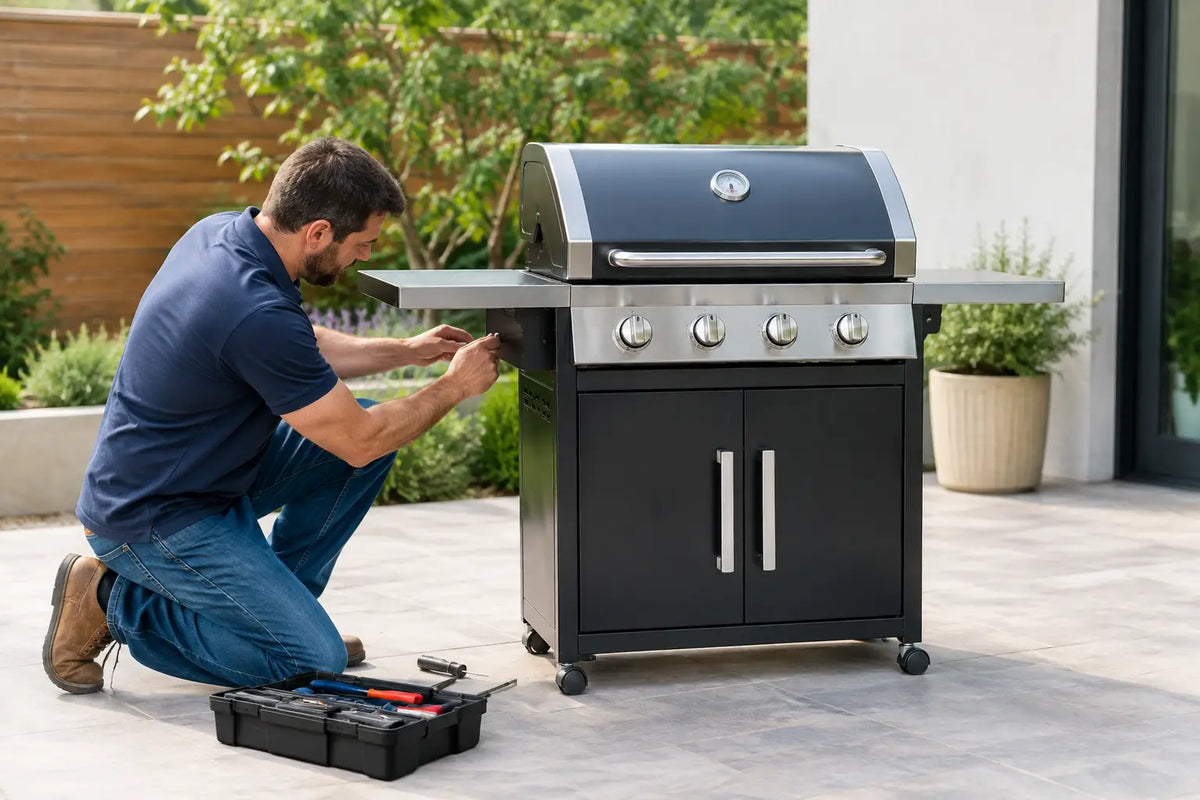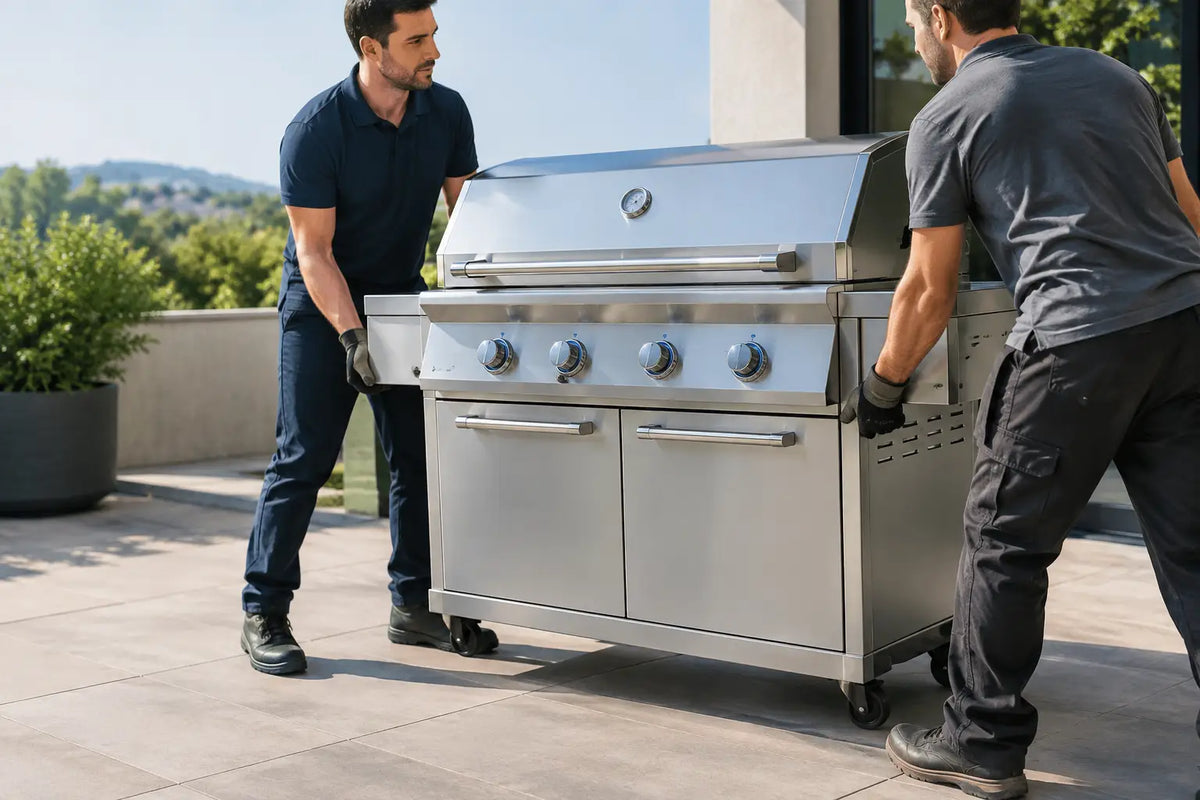
A terrace that felt perfect when you first furnished it can look very different after a pool installation, landscaping project, or major renovation. So, can grill modules be relocated? In many cases, yes. A properly designed freestanding outdoor kitchen can move with far less disruption than a masonry or permanently built-in installation - but the answer depends on the module construction, appliance type, utility connections, access route, and new site conditions.
For homeowners and hospitality properties, this flexibility is one of the strongest arguments for modular outdoor kitchens. Rather than demolishing counters, rebuilding finishes, and coordinating multiple trades, you can preserve a premium cooking environment while adapting the layout to how the property is actually used.
Can Grill Modules Be Relocated Without Damage?
Freestanding grill modules are specifically better suited to relocation than custom-built outdoor kitchens. Their cabinets are manufactured as independent structural units, not assembled permanently into a patio or outdoor wall. That distinction matters when a backyard is reimagined, a villa changes hands, or a rooftop entertainment zone needs a new configuration.
Still, relocatable does not mean lift-and-go in every situation. A luxury grill module can be substantial, particularly when fitted with a built-in grill, stone or sintered-stone countertop, refrigeration, storage drawers, and accessories. Moving it correctly protects the cabinetry, countertop, appliance connections, and surrounding surfaces.
A module is most straightforward to relocate when it uses a self-contained propane supply and a standard electrical connection for lighting, ignition, or refrigeration. Modules connected to natural gas, hardwired electricity, water, drainage, or structural anchoring require qualified professionals to disconnect and recommission those services.
The quality of the cabinet construction also changes the equation. Lightweight units may be easy to move but can flex under load. Premium, weather-resistant modules are engineered for long-term stability, which means they should be handled with appropriate equipment and a clear relocation plan.
What Determines Whether a Grill Module Can Move?
Before setting a new location, assess the complete outdoor kitchen rather than the grill cabinet alone. The appliance is only one part of a system that may include utility runs, ventilation clearances, countertop overhangs, refrigeration, and adjoining modules.
The Grill Fuel Type
Propane-powered grills offer the greatest freedom. Once the cylinder is removed and the appliance is fully cooled, the module can generally be moved without altering a fixed gas line. The propane tank should always travel separately, upright, secured, and in accordance with local safety requirements.
Natural gas grills require more preparation. A licensed gas professional should shut off, cap, test, and later reconnect the line. Do not treat a natural gas quick-connect as a reason to relocate a loaded module without professional oversight. The new position may also require a new gas run, which can affect both cost and timing.
Electrical, Water, and Drainage Connections
An outdoor refrigerator, ice maker, task lighting, or powered accessories may need electricity. If the module plugs into a weather-rated exterior outlet, relocation can be relatively simple, provided the outlet at the new location is properly protected and suitably located. Hardwired connections should be handled by a licensed electrician.
Sink modules introduce additional considerations. Water supply and drainage must be disconnected, winterized where applicable, and tested again after installation. In a luxury outdoor kitchen, the objective is not merely to make the unit function. It is to retain the clean, intentional finish that makes the space feel designed rather than improvised.
Weight, Access, and Surface Conditions
A grill module can be moved only as easily as the route allows. Narrow side gates, stairs, soft lawn, loose gravel, sharp turns, and rooftop access can turn a simple repositioning into a specialist job. Measure the full path, including height clearance, before arranging labor or equipment.
The destination matters just as much. A stable, level patio or engineered deck is essential. Adjustable feet can accommodate minor variation, but they cannot correct a severely sloped or unstable surface. A module that is not level can affect drawer alignment, door operation, drainage, and grill performance.
Layout and Safety Clearances
A new location must preserve the grill manufacturer's requirements for clearance from combustible materials, overhead structures, windows, and ventilation-sensitive areas. This is especially relevant when moving a grill closer to a pergola, exterior wall, or covered terrace.
Think beyond minimum safety distances. The best outdoor kitchen layouts also protect the host's workflow. Keep preparation space close to the grill, allow room for doors and drawers to open, and avoid placing the cooking zone directly in the main traffic path between the house, pool, and seating area.
Relocating Grill Modules the Right Way
The most successful move begins with a site plan. Photograph the existing arrangement, note each connection point, and measure the module dimensions, access route, and intended destination. If several cabinets form one linear kitchen, label their order before separating them. This makes reassembly cleaner and avoids unnecessary adjustments to countertop joints and alignment.
Start by emptying every cabinet, drawer, and refrigerator. Remove propane cylinders, grates, loose accessories, and any detachable shelves. Allow the grill to cool completely and clean away grease before transport. Beyond basic safety, this reduces odors, residue, and avoidable movement inside the unit.
Next, disconnect utilities through the appropriate professional. Gas, electrical, plumbing, and drainage work should never be rushed to save time. It is a small investment compared with the risk of a leak, damaged appliance, or incomplete installation.
For the physical move, use trained installers and equipment sized for the module weight and route. Protect corners, doors, finished panels, and countertop edges. Do not drag a cabinet across pavers, decking, or porcelain tile. Even a durable outdoor kitchen deserves careful handling, especially when premium finishes and integrated appliances are involved.
Once positioned, level each module before joining cabinets or reinstalling countertops. Reconnect services, verify appliance operation, check door and drawer alignment, and inspect every gas and water connection. The final step should be a design check: does the kitchen still create the same confident focal point, or has the new setting created an opportunity for a stronger arrangement?
When Relocation Is Not the Best Choice
Some kitchens are technically movable but not economically sensible to move. A heavily customized installation with continuous countertops, extensive masonry surrounds, buried gas lines, and integrated drainage may cost nearly as much to alter as it would to create a refined new configuration.
The same is true when the new site cannot support the existing footprint. A compact balcony, smaller patio, or rooftop with access restrictions may call for fewer modules or a different appliance mix. Relocation should improve the outdoor living experience, not force an oversized kitchen into a compromised location.
There is also a strategic alternative: retain the grill module and reconfigure the supporting pieces. A long entertaining run can become an L-shaped cooking and serving zone. A side burner cabinet may move closer to the dining area. Refrigeration can shift toward the lounge, making drinks accessible without interrupting the cook. Modular design gives owners the freedom to respond to changing habits without abandoning the investment they have made.
Why Modular Design Protects Long-Term Value
Traditional built-in outdoor kitchens can be beautiful, but their permanence often becomes a limitation. They are closely tied to one patio shape, one service location, and one vision of how the property will be used. Changes usually mean demolition, dust, contractor coordination, and weeks of disruption.
Pre-assembled modular systems offer a more intelligent ownership model. They arrive as finished architectural components, allowing homeowners to achieve a tailored, high-end result without committing every decision permanently to the original site. ELEEXA modules are designed around this principle: premium outdoor kitchen design with the practical confidence to adapt as your space evolves.
That adaptability matters for property owners who renovate in phases, hosts who discover a better entertaining flow after a season, and hospitality teams that need to refresh guest-facing areas with minimal downtime. A grill module that can be professionally repositioned is not simply convenient. It is a more durable investment in outdoor living.
Before moving anything, let the new space dictate the plan. The right location will give the grill room to perform, guests room to gather, and the entire kitchen the presence it was designed to command.