A premium outdoor kitchen should arrive as the beginning of better evenings, not a construction project that occupies your patio for weeks. The choice between dealer installed vs factory assembled kitchens shapes far more than delivery day. It affects design control, installation risk, project timing, final finish, and how confidently you can plan the first gathering around your new outdoor living space.
For homeowners, architects, and hospitality buyers, neither route is automatically wrong. A dealer-installed kitchen can suit a highly site-specific build. A factory-assembled modular kitchen, however, brings a level of precision and predictability that is difficult to recreate in the field. The right decision comes down to where complexity belongs: on your property or inside a controlled manufacturing environment.
Dealer Installed vs Factory Assembled Kitchens: The Core Difference
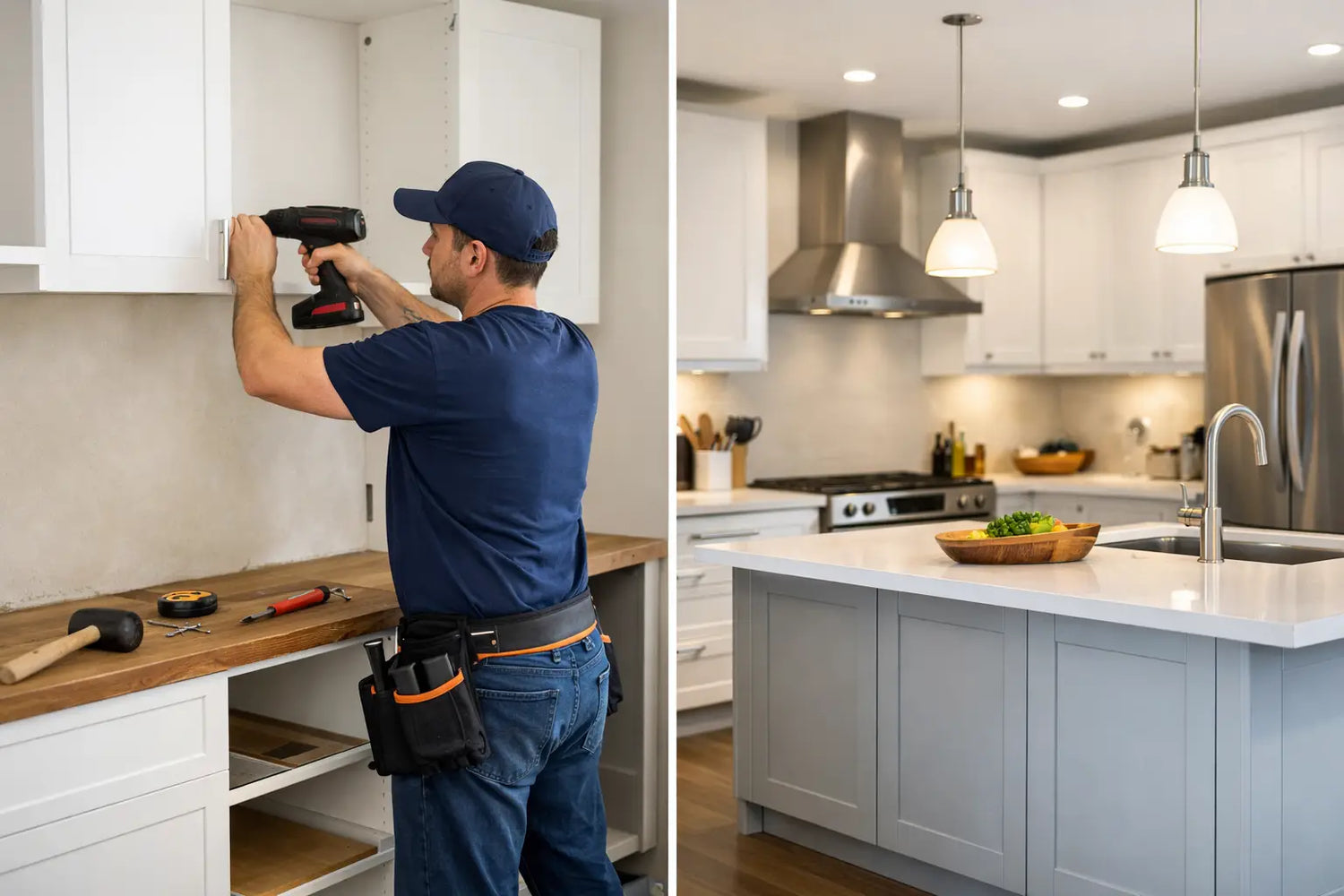
A dealer-installed outdoor kitchen is typically delivered as separate cabinets, panels, appliances, countertops, and hardware. A dealer, contractor, or installation team assembles the system on site, aligns components, completes utility connections, and finishes the details around the kitchen. This approach may also involve masonry, framing, custom cladding, countertop fabrication, or adjustments to accommodate the conditions of the space.
A factory-assembled kitchen is built, aligned, and quality-checked before it leaves the manufacturer. In a true plug-and-play model, the principal modules arrive fully assembled, with cabinetry, doors, drawers, worktops, and selected appliances already integrated. Delivery placement, leveling, and final gas, electrical, or water connections may still require qualified local professionals, but the kitchen itself is not constructed piece by piece in your backyard.
That distinction changes the entire customer experience. One model asks the site team to turn a collection of components into a finished kitchen. The other asks the site team to position a finished kitchen with care.
Why Factory Assembly Delivers a More Controlled Result
Outdoor kitchens demand exacting tolerances. Doors need to sit evenly. Drawers must operate cleanly. Countertop joints need to look intentional. Appliance cutouts must match the grill selected, while cabinet ventilation and service access must remain correct. These are not minor details in a luxury setting. They are the difference between a kitchen that looks installed and one that looks engineered.
Factory assembly puts those details under controlled conditions, with specialist tooling and repeatable quality checks. Modules are built on level surfaces, by teams familiar with the product system, rather than adjusted around changing weather, uneven ground, delayed materials, or the working habits of a particular contractor.
For design-conscious buyers, this consistency matters. Architectural outdoor spaces depend on crisp lines, stable proportions, and material continuity. A pre-assembled kitchen protects the visual language specified at the beginning of the project, whether it is installed beside a pool, on a rooftop terrace, or within a refined hospitality courtyard.
Less Site Work, Less Disruption
Dealer installation can be a sensible option when the project already includes extensive landscape construction. Yet it also creates more moving parts: delivery coordination for individual components, storage on site, assembly time, possible return visits, and a greater chance that a missing part or late trade delays completion.
Factory-assembled modules reduce the amount of work performed at the property. That means fewer days of noise, less packaging and material handling, and a faster route from delivery to entertaining. For a vacation home, a busy family residence, or a hotel preparing for a seasonal opening, this can be a decisive advantage.
The benefit is not simply speed. It is certainty. When the majority of the build is completed before delivery, the project is less exposed to the small on-site problems that can turn a straightforward installation into a drawn-out process.
Where Dealer Installation Still Makes Sense
The strongest case for dealer installation is a project that is genuinely custom-built around the architecture. Perhaps the kitchen must wrap around existing stonework, follow an unusual radius, integrate with a custom pergola, or connect to a larger construction scope involving plumbing, drainage, and structural work. In these settings, a skilled dealer and experienced contractor can create something highly tailored.
It may also be appropriate where access is extremely limited. A compact rooftop elevator, narrow passage, or property with difficult terrain may prevent large completed modules from reaching the final location. Modular systems can often be planned around access restrictions, but this needs to be resolved early, not discovered on delivery day.
The trade-off is accountability. With a dealer-installed build, the final result depends on several parties: the kitchen supplier, installer, countertop fabricator, appliance technician, electrician, plumber, and sometimes a landscape contractor. Clear scopes of work and a single project lead become essential. Without them, the homeowner may be left coordinating the gap between what was supplied and what was installed.
Cost Is About More Than the Initial Quote
A dealer-installed kitchen can appear less expensive at first because the product price does not always include the full labor and completion cost. But on-site assembly, travel, utility work, site adjustments, countertop templating, material waste, and repeat visits can materially change the final investment.
Factory assembly often concentrates more value into the product itself. That may make the initial figure look higher, particularly beside a basic cabinet package. Yet the comparison should include the cost of time, installation labor, project management, potential rework, and the disruption of a longer build.
For premium properties, there is another consideration: the cost of compromise. A misaligned drawer front, a poorly finished joint, or a delayed opening can be more expensive than the line item suggests. Buyers investing in luxury outdoor living are not only purchasing cabinets and a grill. They are purchasing confidence in the finished environment.
Utility Connections Still Require Planning
“Pre-assembled” does not mean “ignore the site.” Every outdoor kitchen needs proper preparation. The installation area should be stable, level, and sized for the configuration. Local requirements for gas, electric, water, drainage, ventilation, and appliance clearances must be addressed by qualified professionals.
A high-quality factory-assembled system makes this process easier because key dimensions and appliance requirements are known in advance. Your electrician or gas professional can prepare connection points before delivery, rather than improvising around a kitchen still being assembled.
This is especially valuable when integrating premium grills from brands such as Napoleon, Broil King, or Big Green Egg. The appliance should feel native to the kitchen, with appropriate clearances, access, and visual balance. It should never appear as an afterthought forced into a cabinet opening.
The Better Choice for Most Luxury Outdoor Projects
For most homeowners and hospitality buyers, factory-assembled kitchens offer the more refined path. They combine the customization expected in a premium project with the discipline of industrial manufacturing. You can select layouts, finishes, storage, appliances, and accessories while avoiding the uncertainty of a ground-up on-site build.
This is the principle behind ELEEXA: sophisticated modular outdoor kitchens engineered to arrive prepared for the space they were designed to elevate. The goal is not to remove professional planning where it is needed. It is to remove unnecessary assembly, risk, and delay from the purchase.
Dealer-installed solutions remain valuable for one-off architectural builds with unusual site conditions. But if your priority is a polished result, faster completion, and a kitchen that performs as beautifully as it presents, factory assembly is usually the stronger investment.
Before committing, ask one practical question: when the delivery team leaves, how much of your outdoor kitchen is truly finished? The closer the answer is “ready to enjoy,” the closer you are to the outdoor lifestyle you intended to create.