A bigger TV rarely changes a guest’s memory of a stay. A well-designed outdoor kitchen for vacation rental properties does. It turns a patio into the place where families gather, couples linger longer, and group bookings feel instantly more premium.
That matters because short-term rental guests do not just compare square footage anymore. They compare experiences. If your property competes in the upper tier - a villa, coastal home, mountain retreat, rooftop penthouse, or resort-style residence - the outdoor living area often carries as much weight as the interior kitchen. The right setup can support stronger nightly rates, better listing photos, and a more distinctive position in a crowded market. The wrong one can create maintenance headaches, safety issues, and a very expensive disappointment.
Why an outdoor kitchen for vacation rental properties performs
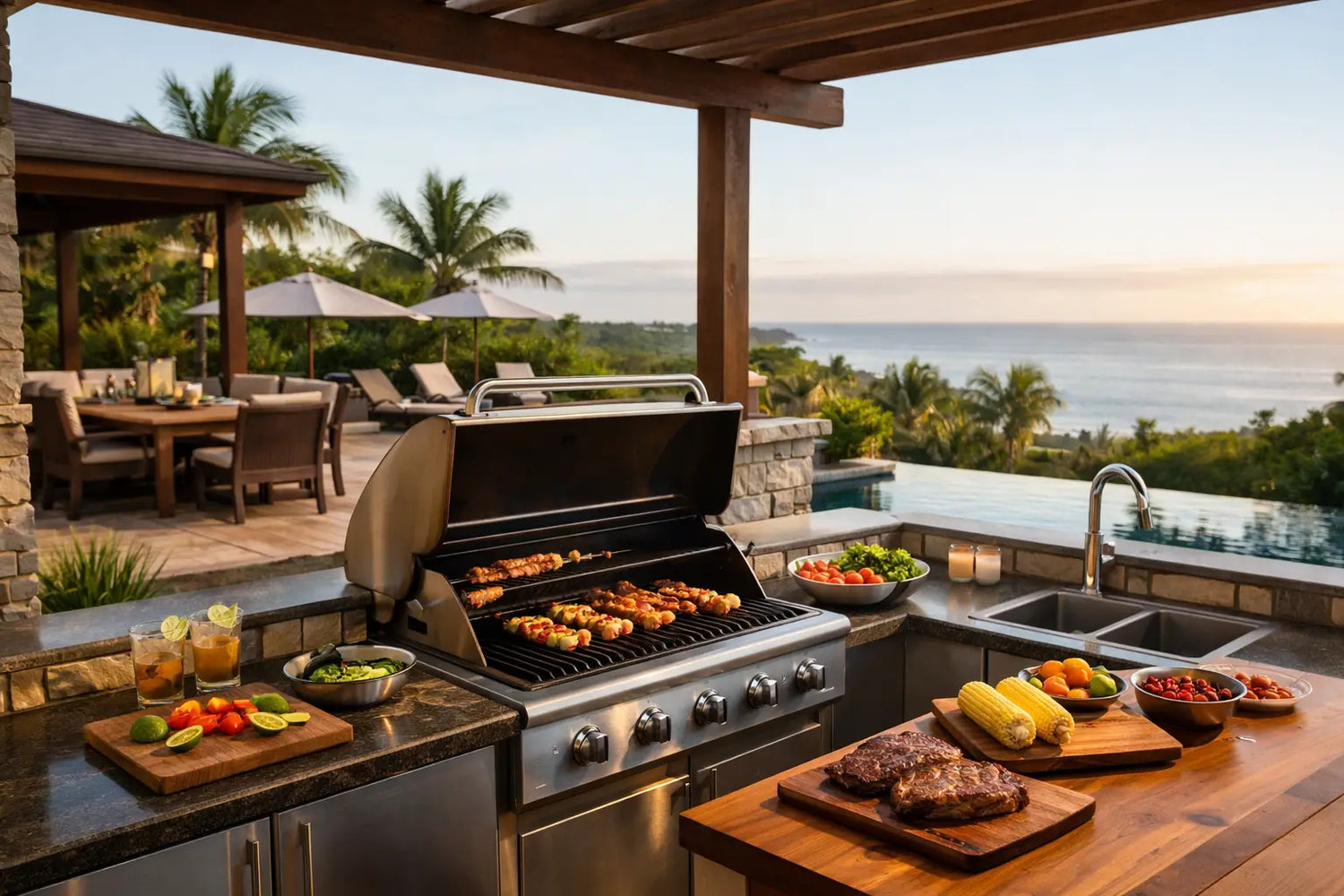
A premium rental has to earn its rate in photos first, then justify it in person. An outdoor kitchen does both. It adds visual impact to the listing, but more importantly, it expands how guests use the property. Breakfast outside, sunset grilling, poolside lunches, and late-night conversation around a bar counter all feel like value. Guests remember that they lived outdoors, not just that they slept well.
There is also a commercial advantage. Amenities that encourage guests to stay on property longer tend to improve perceived value. When a group can cook, serve, and entertain outside without running in and out of the house, the property feels more complete. For owners and hospitality operators, that can translate into better reviews, more repeat bookings, and higher appeal for multigenerational families or small groups splitting the cost of a luxury stay.
Still, not every outdoor kitchen pays off equally. The return depends on climate, guest profile, nightly rate, occupancy pattern, and how well the installation fits the property. A ski chalet may benefit from a compact grilling station with wind protection and hot storage. A Mediterranean-style villa can justify a more expansive layout with refrigeration, sink, prep surfaces, and seating. The best investment is not the biggest one. It is the one your guests will actually use.
What guests really expect from an outdoor kitchen for vacation rental use
In a private home, the owner can tolerate quirks. In a vacation rental, friction shows up in reviews. That shifts the design brief completely. Guests need immediate clarity. They should understand where to prep, where to grill, where to dispose of waste, and where to sit, without a host manual that reads like appliance training.
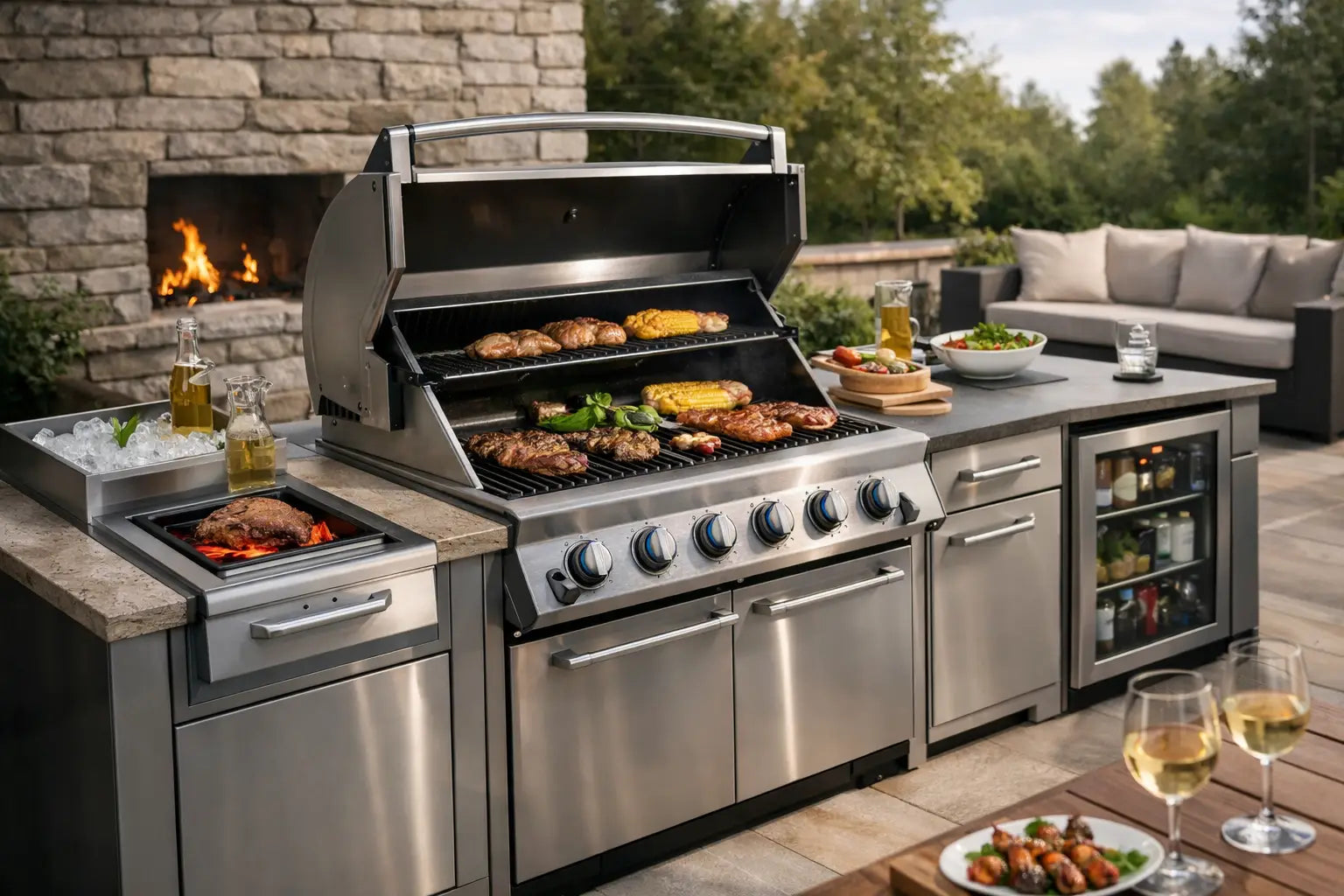
That is why simplicity matters as much as luxury. A beautiful outdoor kitchen that is difficult to operate, awkwardly placed, or visibly weathered will not feel premium. Guests expect clean surfaces, intuitive appliance layouts, and materials that look polished season after season. They also expect enough countertop space to be useful. A grill alone is not an outdoor kitchen. It is just a grill.
Storage is another point owners often underestimate. Vacation guests arrive with bags, drinks, snacks, and disposable goods. If there is nowhere to place tools, serving trays, or supplies, the area quickly looks cluttered. A proper modular system with integrated cabinetry keeps the experience elevated while reducing visual noise in listing photos and during the stay.
Design for hospitality, not just for home use
The biggest mistake in this category is treating a rental property like a personal backyard project. Residential custom builds often depend on site coordination, multiple trades, and one-off decisions that look appealing on installation day but age poorly under frequent guest turnover.
Hospitality-grade thinking is different. You want durability, speed of installation, replaceable components, and layouts that reduce misuse. That is why pre-assembled modular systems are increasingly attractive for premium rentals and boutique hospitality settings. They remove much of the construction uncertainty and create a cleaner path from design decision to operational asset.
For owners who cannot afford drawn-out site work, this matters. Every extra week of construction is potential revenue lost. Every coordination error between contractor, stonemason, fabricator, and appliance installer creates risk. A high-end modular kitchen solves a problem that many luxury property owners know too well - custom can be impressive, but it is often slow, messy, and inconsistent.
A refined plug-and-play approach offers a stronger fit for vacation rentals because it prioritizes predictability. The visual result is still architectural and premium, but the route to getting there is far more controlled.
The features worth paying for
Some upgrades earn their keep quickly. Others look impressive but add little to guest satisfaction. In most luxury rentals, the essentials are a quality grill, meaningful prep space, weather-resistant cabinetry, and refrigeration if the climate and booking profile support it. If guests are likely to host outdoor dinners or stay for several nights, a sink can also make a noticeable difference.
Counter space deserves special attention. It is one of the least glamorous line items and one of the most important. Guests need room for plates, ingredients, drinks, and serving pieces. If the space is tight, even premium appliances feel cramped.
Material quality is equally non-negotiable. Vacation rental use is demanding. Sun, rain, salt air, freeze-thaw cycles, cleaning chemicals, and heavy turnover all accelerate wear. Surfaces should resist fading, swelling, staining, and corrosion. Cheap finishes do not just deteriorate aesthetically - they communicate neglect, which is dangerous in a premium listing.
Appliance compatibility matters too. If you already prefer established grill brands, choose a kitchen system designed to integrate with them properly. The details count. Precise fit, safe ventilation, and a coherent visual finish create a far more convincing result than forcing components together from different sources.
Placement can make or break the investment
Even a world-class outdoor kitchen will underperform if it sits in the wrong location. The instinct is often to push it to the far edge of the yard to preserve views or free up terrace space. That can backfire. Guests want outdoor cooking to feel connected to the social zone, the dining area, and the interior kitchen, not detached from them.
The best placement usually balances three factors: convenience, atmosphere, and protection. It should be close enough to indoor support spaces to make restocking easy, but far enough from doors and circulation paths to keep smoke and congestion under control. It should take advantage of the property’s best views and gathering zones, while also considering sun exposure, prevailing wind, and privacy from neighbors.
For vacation rentals, shade is often more valuable than one more appliance. A beautifully equipped kitchen that is uncomfortable at midday will see less use. Likewise, partial shelter can extend the season, protect finishes, and reduce maintenance pressure.
Think beyond aesthetics to operations
Owners naturally focus on style because style sells bookings. But operations protect profit. Can housekeeping clean the surfaces quickly? Can a damaged door or appliance be replaced without rebuilding half the unit? Will the materials still look sharp after a full season of sunscreen, spilled wine, and hard water?
This is where premium manufacturing earns its value. Better-engineered modular outdoor kitchens are not just attractive. They are built to stay attractive with less drama. For luxury rental owners, that operational calm is part of the product.
A system approach also helps with standardization. If you manage multiple villas or are furnishing a hospitality portfolio, repeatable modules create consistency across properties while still allowing customization by layout, finish, and appliance choice. That is a smarter way to scale than reinventing each project from scratch.
When the numbers make sense
Not every rental needs a full outdoor kitchen. If your property has limited outdoor square footage, short average stays, or a market driven mostly by one-night bookings, a simpler grilling and bar setup may produce a better return. But if guests book for longer stays, travel in groups, or specifically seek premium indoor-outdoor living, the case becomes much stronger.
In high-value properties, the question is often not whether an outdoor kitchen adds appeal. It is whether the chosen solution reflects the level of the rental. A flimsy setup can cheapen the terrace. A properly integrated one can elevate the entire property and justify the premium story your listing is already telling.
That is why design-conscious owners increasingly favor fully pre-assembled luxury systems from specialists such as ELEEXA. They align with the expectations of upscale travelers while removing much of the usual installation friction.
The smartest move is to treat the outdoor kitchen as part of your revenue architecture, not as patio decor. When it is planned with the same rigor as the interior finishes, it becomes one of the few amenities guests will photograph, use repeatedly, and mention by name in reviews.
If your rental promises outdoor living, make sure the kitchen is more than a checkbox. Make it the reason the stay feels worth repeating.