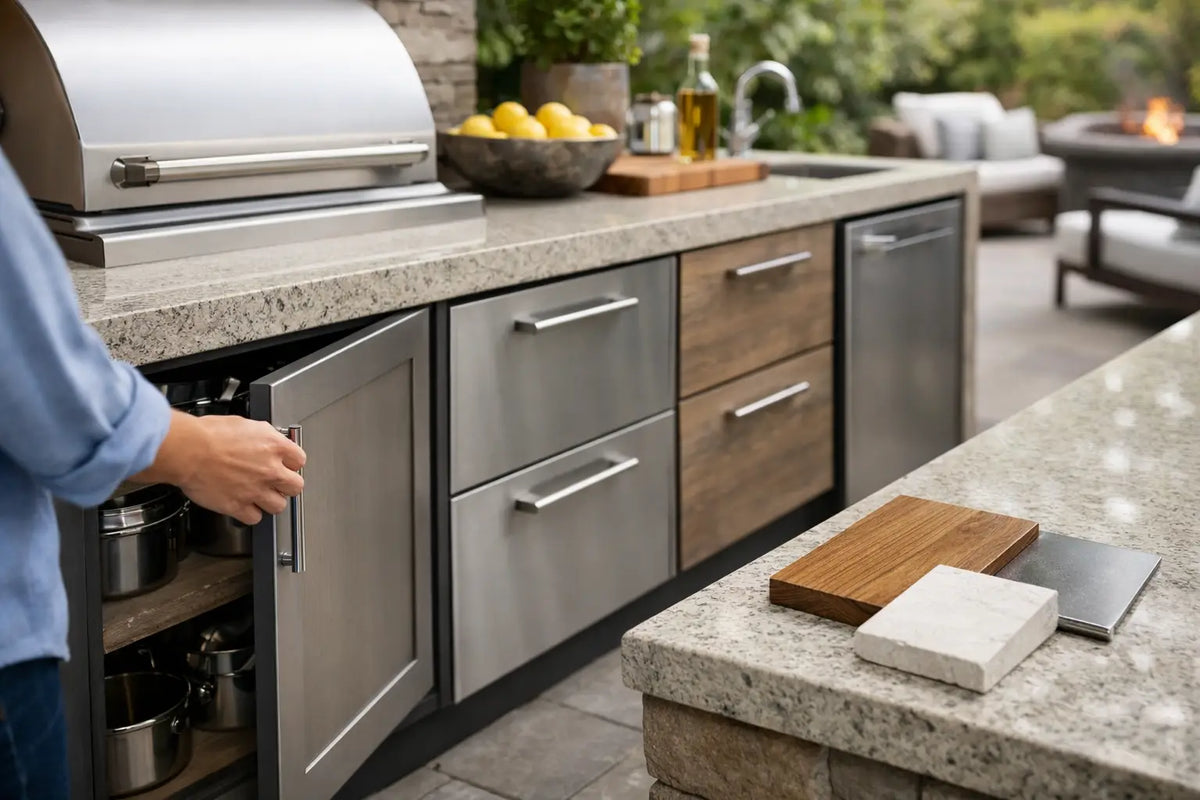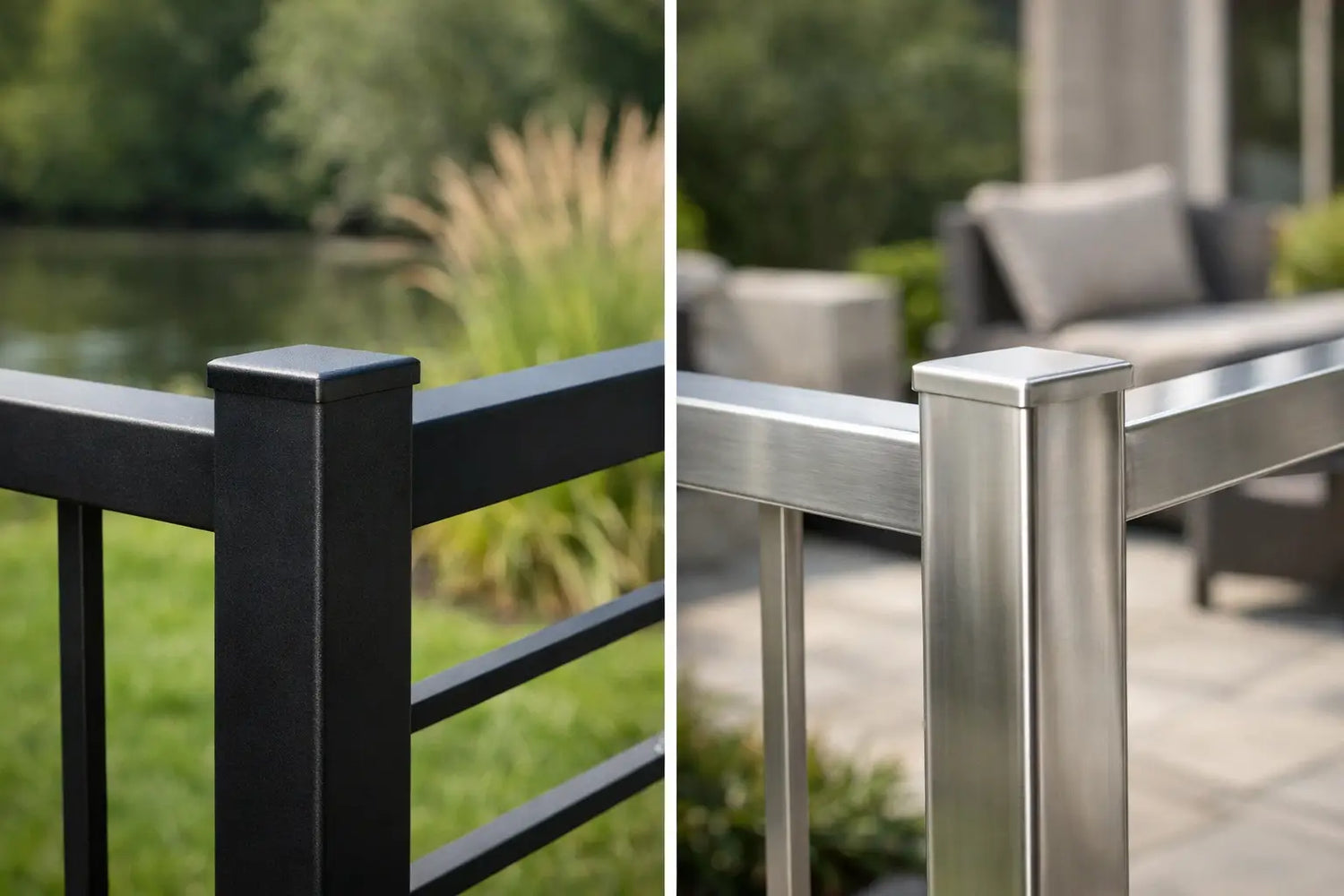
A luxury outdoor kitchen should still look considered after a summer of grilling, a wet winter, and years of daily use. That is why the powder coated steel versus stainless decision deserves more attention than a showroom comparison. Both materials can create exceptional cabinetry, but they behave very differently once exposed to sun, rain, grease, salt air, and the occasional hurried clean-up after dinner.
For homeowners, architects, and hospitality buyers, the right answer is not simply the most expensive finish. It is the material system that suits the location, visual direction, maintenance expectations, and level of exposure around the kitchen.
Powder Coated Steel Versus Stainless: The Core Difference
Stainless steel is a metal alloy with chromium that forms a protective surface layer. It is typically left visible, creating the familiar metallic finish associated with professional kitchens and high-end appliances. Powder coated steel is steel protected by a dry, colored coating that is electrostatically applied and then cured at high temperature. The resulting finish is a durable painted skin rather than exposed metal.
This distinction shapes nearly every practical consideration. Stainless steel earns its reputation through corrosion resistance in the metal itself. Powder coated steel relies on the integrity of its coating and the preparation beneath it. When specified and manufactured properly, powder coated steel delivers a refined architectural surface with outstanding everyday performance. If its coating is deeply damaged, however, the exposed steel beneath may be vulnerable to corrosion unless repaired promptly.
Neither option is universally superior. A covered city terrace has different demands from a beachfront villa. A hotel pool deck needs a different maintenance strategy from a private courtyard kitchen used on weekends.
Where Powder Coated Steel Excels
Powder coated steel is the natural choice when color and architectural integration lead the brief. It can be finished in deep matte black, warm neutral tones, crisp white, textured metallics, and custom shades that coordinate with exterior cladding, window frames, furniture, or landscape details. This allows the outdoor kitchen to read as a composed part of the architecture rather than a collection of commercial appliances.
The finish is also pleasingly practical. A quality matte or textured powder coat can conceal fingerprints and minor water marks better than brushed stainless, particularly on broad cabinet fronts. For a family entertaining space, that means less time polishing surfaces and more time enjoying them.
Powder coating is not one uniform standard. Premium performance depends on the grade of steel, corrosion treatment, coating chemistry, application consistency, cure process, and edge detailing. Outdoor cabinetry should use a coating designed for exterior UV exposure, with careful attention paid to cut edges, joints, fasteners, and drainage. A beautiful color applied over poor fabrication is not luxury durability.
When these details are engineered correctly, powder coated steel is an excellent option for patios, covered terraces, rooftop kitchens, and most residential outdoor environments. It is particularly compelling for projects that need a distinctive, non-industrial aesthetic.
The limitation to understand
The coating is a protective barrier, so sharp impact damage matters. Dragging a heavy cast-iron pan across an edge, striking a door with metal furniture, or repeatedly scraping a cabinet can create chips. Small marks are usually manageable, but they should be touched up before moisture reaches the substrate.
This is not a reason to avoid powder coating. It is a reason to choose expertly built cabinetry and treat it as premium outdoor furniture, not construction-site equipment.
When Stainless Steel Is the Better Investment
Stainless steel has a powerful advantage in high-exposure conditions. Because its corrosion resistance comes from the alloy, a superficial scratch does not expose ordinary painted steel underneath. This makes stainless especially attractive around coastal properties, pool areas, uncovered cooking zones, and hospitality settings where equipment receives harder use.
The grade matters enormously. Type 304 stainless steel is widely used and performs well in many outdoor kitchens. Type 316 contains molybdenum, which improves resistance to chlorides and is generally the more appropriate choice near saltwater or in areas with frequent salt exposure. Calling a product “stainless” without identifying its grade leaves out the detail that determines real-world performance.
Stainless also suits buyers who want a true professional-kitchen expression. It pairs naturally with premium grills, refrigeration, sinks, and pizza ovens. Brushed finishes can feel crisp, timeless, and purposeful, especially in contemporary homes with stone, concrete, or dark wood surroundings.
Yet stainless is not maintenance-free. It can show fingerprints, grease haze, water spotting, and airborne deposits more readily than a darker powder-coated surface. In coastal locations, salt residue must still be washed away. Even 316 stainless can develop surface discoloration, sometimes called tea staining, if contaminants sit on it for extended periods.
Heat and the grill zone
Both materials must be engineered intelligently near a built-in grill. Cabinet construction, ventilation, clearances, insulation, and the grill manufacturer’s installation requirements are more important than a simple material label. Stainless tolerates high-temperature environments well, while powder coated surfaces require proper separation from direct heat and exhaust.
A well-designed modular kitchen accounts for this at the engineering stage. It does not ask the owner to solve thermal issues after delivery.
Weather Exposure Should Decide More Than Appearance
A protected backyard in a dry climate gives buyers considerable freedom. In that setting, powder coated steel can offer the most visually tailored result, while stainless provides a more professional visual language. The decision can reasonably be led by design preference.
The calculation changes with exposure. Constant rain, freeze-thaw cycles, intense UV, coastal salt, pool chemicals, and heavy tree debris all increase the value of careful material selection. Near the ocean, 316 stainless is often the prudent choice for exposed components. Powder coated steel can still work beautifully in coastal projects, but it demands high-grade pretreatment, a marine-suitable coating specification, and disciplined care.
Drainage is equally important. Water should not collect inside cabinet bases, around fasteners, beneath countertops, or behind appliance panels. Corrosion often begins where water is trapped, regardless of how impressive the visible finish looks. Look for cabinetry designed with protected joints, managed water paths, and feet or plinth details that keep the structure out of standing water.
Maintenance: What Ownership Actually Feels Like
For powder coated steel, routine care is straightforward: wash with mild soap and water, rinse clean, and dry with a soft cloth. Avoid abrasive pads, strong solvents, and harsh alkaline cleaners that can dull or damage the finish. Inspect occasional chips or scratches, particularly around doors, handles, and appliance cutouts.
For stainless steel, use a soft cloth and mild cleaner, following the direction of the grain on brushed surfaces. Rinse away cleaner residue and dry the surface to reduce water spots. Do not use steel wool, which can leave particles that later rust and create the misleading impression that the stainless itself has failed.
The more honest comparison is this: powder coated steel may look cleaner between wipe-downs, while stainless can be more forgiving after an accidental scratch. The owner who wants low-visibility daily maintenance may prefer a matte powder-coated finish. The owner in a harsh environment may prioritize the inherent corrosion resistance of the right stainless grade.
Design, Cost, and Long-Term Value
Powder coated steel often creates the more custom architectural appearance, with far greater color flexibility and a softer visual connection to the home. Stainless gives a recognizable premium appliance aesthetic that many buyers associate with professional performance. The better choice depends on whether the outdoor kitchen should disappear into the architecture or stand out as a culinary centerpiece.
Cost should be evaluated beyond the initial cabinet price. A lower-grade powder-coated unit may become expensive if it requires early repair or replacement. Similarly, thin, poorly finished stainless is not equivalent to properly specified 304 or 316 cabinetry. Material thickness, weld quality, hardware, weatherproofing, panel construction, and appliance integration all affect service life.
At ELEEXA, this is why the cabinet finish is treated as part of a complete outdoor-kitchen specification rather than an isolated cosmetic choice. A pre-assembled system should arrive ready to perform as convincingly as it looks, with the grill, storage, countertop, and environment considered together.
Choose for the Site, Not the Showroom
Choose powder coated steel when you want architectural color, a low-glare finish, and premium performance in a normally exposed or protected setting. Choose quality stainless, preferably 316 where chloride exposure is high, when the kitchen faces demanding weather, salt air, poolside conditions, or intensive commercial use.
The finest outdoor kitchen is not defined by one fashionable material. It is defined by a finish that belongs to its setting, construction that anticipates the weather, and a design you will still be proud to gather around years from now.