A beautiful outdoor kitchen can be undermined by one poor material decision: a countertop that fades, stains, cracks, or becomes difficult to maintain after its first season. When clients ask which countertop works best outdoors, the answer is rarely the cheapest surface or the one that looks best in a small showroom sample. It is the material that can handle sun, rain, heat, spills, and daily entertaining while still looking exceptional beside your grill and cabinetry.
For most premium outdoor kitchens, sintered stone or outdoor-rated porcelain delivers the strongest balance of luxury appearance, weather resistance, and low-maintenance performance. But the right choice still depends on your climate, cooking style, design priorities, and the structure beneath the surface.
Which countertop works best outdoors for luxury kitchens?
Sintered stone is the leading choice for homeowners and hospitality projects that want a refined architectural finish without the care demands of natural stone. Manufactured under extreme heat and pressure, it is engineered to resist UV exposure, moisture, stains, scratches, and temperature changes. It also offers a remarkably broad range of sophisticated finishes, from quiet limestone looks to dramatic veining and contemporary concrete effects.
Outdoor-rated porcelain is similarly compelling. It is nonporous, highly resistant to fading, and easy to clean after a long evening of grilling. In a well-designed modular kitchen, porcelain creates a crisp, tailored surface that complements powder-coated aluminum cabinetry and premium built-in appliances.
Neither material is indestructible. A sharp impact on an unsupported edge can chip almost any hard surface, and thin slabs require proper support from the kitchen structure. That is why the countertop and its base should be specified as one system, not selected as separate components.
Why sintered stone leads in demanding climates
Sintered stone is particularly suited to exposed terraces, pool areas, rooftop kitchens, and vacation properties where maintenance needs to remain minimal. Its low porosity means spilled wine, cooking oil, citrus, and marinades are far less likely to leave a permanent mark. UV stability also matters more than many buyers expect. A countertop in direct sun can receive years of intense exposure, especially in coastal, desert, and high-altitude locations.
The material's visual precision is another advantage. Large-format slabs can reduce the number of joints, creating a more continuous, considered appearance across a long outdoor kitchen run. For a luxury installation, fewer visual interruptions often make the entire setting feel more architectural.
Porcelain is an elegant, practical alternative
Porcelain offers much of the same weather-ready performance, often with excellent value and a wide selection of colors. It is an especially smart choice for clean-lined, contemporary outdoor kitchens where a slim profile and restrained visual texture are part of the design brief.
The key is to use a porcelain product specified for exterior countertop use, not simply an indoor tile repurposed for a patio kitchen. Fabrication quality matters as much as the slab itself. Edges, cutouts around grills and sinks, and support spacing must be planned precisely to prevent stress points.
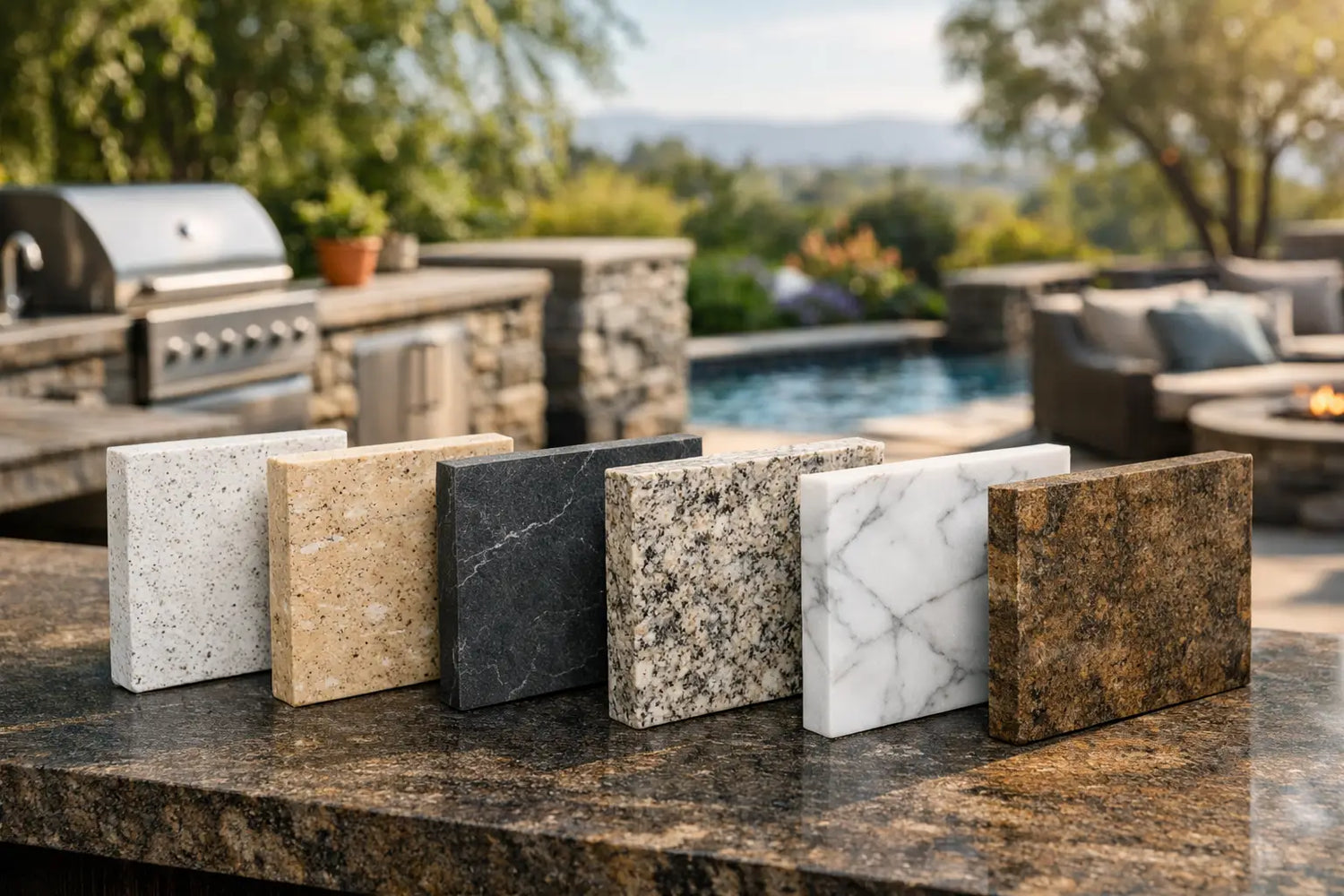
The outdoor countertop materials worth comparing
The best material is not always the same for every project. A covered entertaining pavilion in a temperate climate has different demands than a fully exposed coastal kitchen beside a pool. These are the materials that deserve serious consideration.
Granite: timeless, natural, and maintenance-dependent
Granite remains a popular outdoor countertop because it is naturally heat-resistant, strong, and visually distinctive. No two slabs are identical, which gives an outdoor kitchen an unmistakably custom character. Darker, denser granites can perform very well outside when properly sealed and maintained.
The trade-off is care. Granite is porous to varying degrees, so sealing is not optional if you want to minimize staining and moisture absorption. Some lighter stones may show oils, tannins, or water marks more readily. Natural variation is part of granite's appeal, but it also means the slab should be selected in person when exact color and movement matter.
Granite is an excellent choice for owners who value authentic stone and accept periodic maintenance as part of owning it. It is less ideal for a hands-off rental property, busy resort terrace, or second home that may sit unattended for months.
Stainless steel: the professional culinary choice
Stainless steel is the countertop of choice for a deliberately commercial, chef-led aesthetic. It is nonporous, sanitary, heat-tolerant, and unaffected by rain or UV light. For hospitality kitchens, outdoor bars, and serious live-fire cooking zones, its practical strengths are undeniable.
Its limitation is visual softness. Stainless steel scratches, shows fingerprints, and can develop a patina that some owners appreciate and others do not. It can also feel visually cold when used across an entire kitchen. A more considered approach is to use stainless steel around the grill or prep zone, then pair it with sintered stone or porcelain for the main serving and dining surface.
Concrete: sculptural, but demanding
Concrete can create a striking monolithic outdoor kitchen, particularly in modern garden architecture. It can be tinted, textured, cast to custom proportions, and shaped around unusual site conditions. Few materials offer the same sense of permanence.
However, concrete is not a carefree option. It requires sealing, can develop hairline cracks, and may stain or etch if its protective finish is neglected. Those changes can be part of its character, but they are not right for every luxury project. Specify concrete when you want an artisanal, evolving surface, not when you expect a factory-perfect appearance year after year.
Soapstone and marble: beautiful, but selective choices
Soapstone is naturally dense and heat-resistant, with a rich, understated look that suits traditional or organic modern settings. It darkens over time and can scratch, though many owners find that lived-in finish appealing. Marble is visually extraordinary but generally too vulnerable for hard-working, fully exposed outdoor counters. Acidic foods, weather, and regular entertaining can quickly reveal marks and etching.
For a protected bar or low-use serving surface, these stones can be beautiful. For the main prep counter beside a high-performance grill, they are usually a design-led compromise.
Materials to approach carefully outdoors
Quartz is a standout indoor countertop material, but it is usually not the right choice for an uncovered outdoor kitchen. Resin-bound engineered quartz can discolor or deteriorate under sustained UV exposure, and warranties frequently exclude exterior use. Even under a roof, reflected sunlight and heat near a grill can create issues.
Laminate, wood, and standard indoor tile present similar concerns. Wood requires diligent sealing and may move with changing moisture. Laminate can fade, swell, or delaminate. Grout lines in tiled counters collect grease and require more cleaning than a premium outdoor kitchen should demand.
Choose the countertop with the whole kitchen in mind
A countertop should never be selected only by color. First, consider exposure. Is the kitchen fully exposed to rain and direct sun, partially covered, or installed beneath a substantial roof? Next, consider heat. A countertop beside a grill, pizza oven, or fire feature needs proper clearances and materials suited to the appliance manufacturer's requirements.
Then consider use. A family that hosts large weekend gatherings needs a surface that tolerates spills, serving platters, and constant cleaning. A boutique hotel needs consistent performance across repeated guest use. A private rooftop may prioritize lightweight construction and wind-conscious detailing. The correct solution changes with the setting.
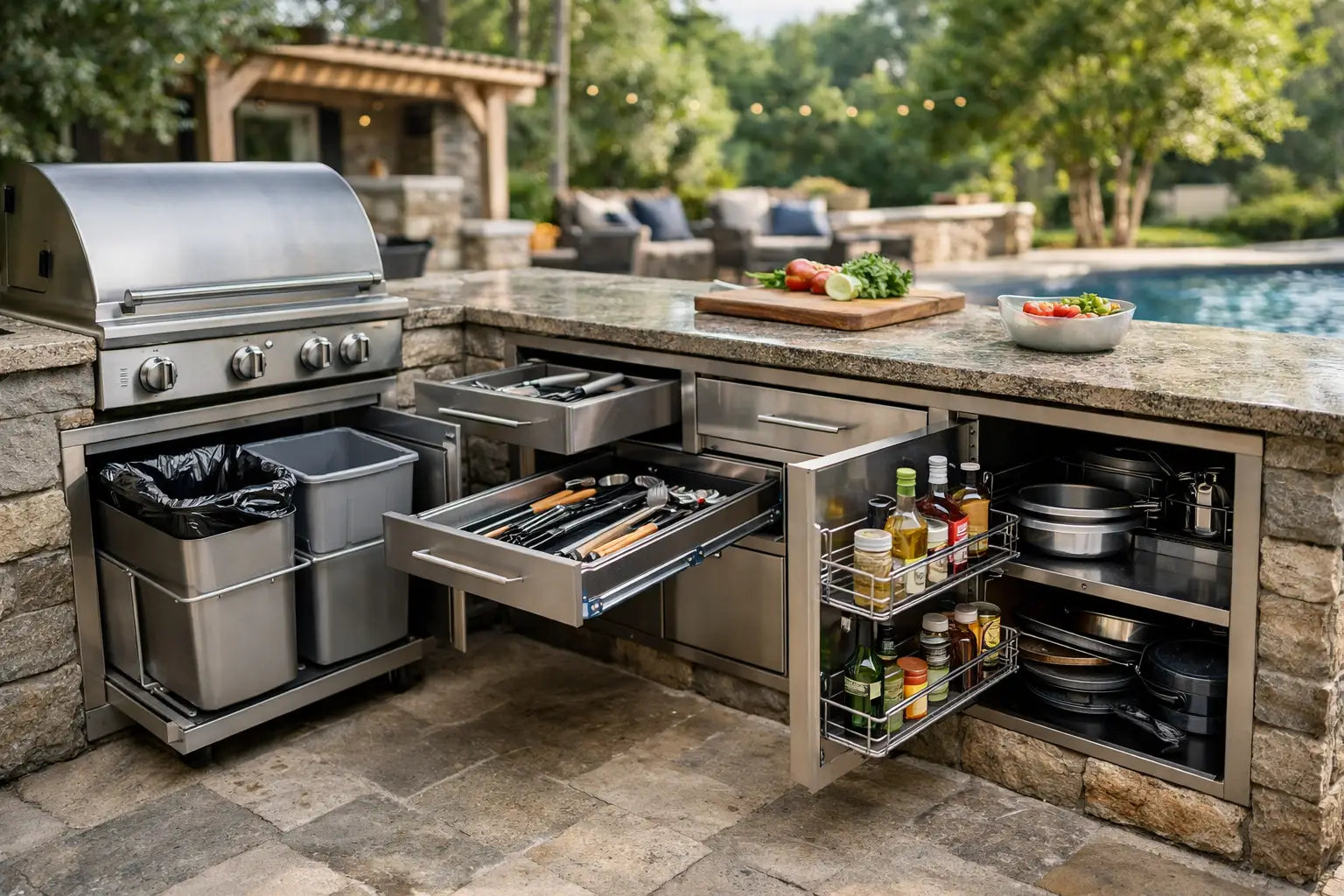
Finally, look closely at fabrication and installation. Outdoor slabs need accurately finished edges, well-supported spans, and appropriately planned joints. Drainage, access to appliance connections, and the movement of the cabinet structure through seasonal temperature changes should all be accounted for before the countertop is installed. This is where a fully engineered modular system earns its place: the cabinetry, appliance cutouts, and countertop support are designed to work together from the start.
ELEEXA outdoor kitchens pair architectural materials with pre-assembled, weather-resistant modules, removing the uncertainty of coordinating separate trades on site. The result is a more controlled path to an outdoor kitchen that looks as polished on delivery day as it does after years of use.
A finish that stays worthy of the setting
For the highest-confidence choice, select sintered stone or exterior-rated porcelain in a finish that works with your architecture, then ensure it is supported by cabinetry built for real outdoor conditions. Granite remains a compelling alternative when natural variation is central to the design and ongoing sealing is acceptable.
Choose the surface you will be happy to live with after the first spilled cocktail, the hottest afternoon, and the hundredth dinner outdoors. That is the countertop that truly belongs in a luxury outdoor kitchen.