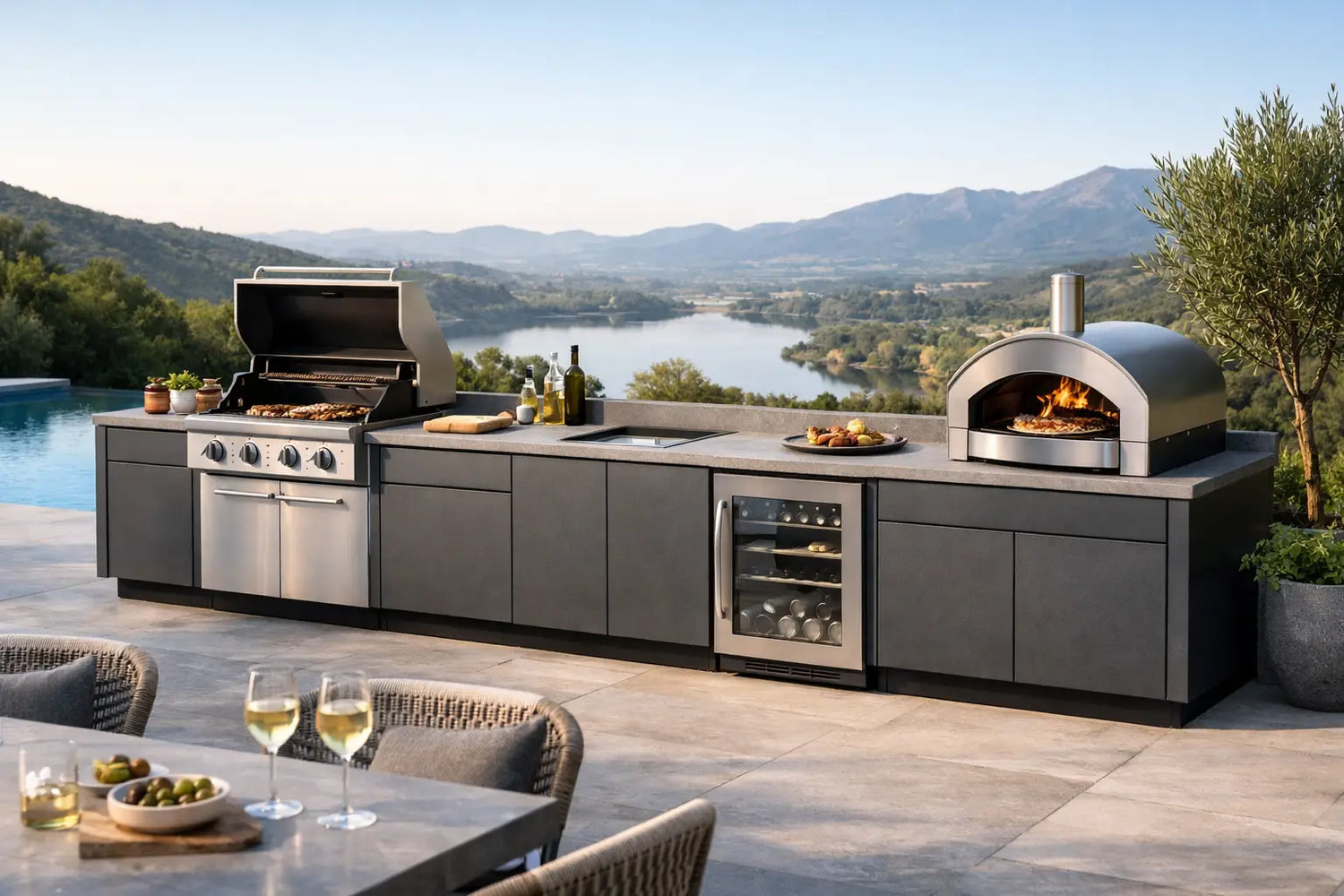
A luxury outdoor kitchen should not begin with weeks of dust, uncertain contractor schedules, and a backyard turned into a construction zone. European made outdoor kitchens offer a more considered alternative: architectural proportions, material discipline, and engineered modules designed to arrive ready for real life outdoors.
For homeowners, architects, and hospitality teams, the distinction is not simply where a product is manufactured. It is how the kitchen has been designed to perform, how confidently it can be specified, and how quickly a beautiful entertaining space can become usable. The best systems bring indoor-level refinement outside while removing much of the friction that has traditionally come with a custom outdoor build.
What Defines European Made Outdoor Kitchens
European manufacturing has long been associated with an integrated approach to design. Rather than treating cabinetry, appliances, work surfaces, and finishing details as separate decisions, premium outdoor kitchen systems are conceived as a single composition. Clean reveals, aligned doors, intentional proportions, and coordinated finishes matter because they are what make an outdoor kitchen feel like part of the architecture rather than an appliance stand placed on a patio.
This approach is especially valuable in projects where visual standards are high. A pool terrace, rooftop, coastal villa, or boutique hotel courtyard does not need more visual noise. It needs a cooking and hosting zone that holds its own beside premium landscaping and architecture.
European-made does not automatically mean superior, of course. The meaningful question is whether the manufacturer can demonstrate design control, material quality, dependable fabrication, and practical support after delivery. Origin is a useful signal. Engineering, finish quality, and installation readiness are the proof.
Design That Looks Intentional From Every Angle
A built-in outdoor kitchen can be impressive, but it often depends heavily on the skill and coordination of several trades. Masonry, cabinetry, countertops, plumbing, electrical work, and appliance installation may all be handled by different teams. The result can be excellent, but it can also be delayed, inconsistent, or difficult to revise once construction begins.
A premium modular system changes that equation. Components are designed to work together before they reach the property, allowing the final installation to feel composed rather than assembled on site. This is particularly relevant when the kitchen is visible from the home, positioned near a dining area, or expected to support a hospitality experience where every detail is part of the guest impression.
The visual advantage is in restraint. Flat planes, precise door gaps, integrated storage, and a carefully selected color palette create a kitchen that feels permanent without becoming heavy. The strongest designs avoid chasing novelty. They leave room for the grill, the food, and the people around it to be the center of attention.
Modular Does Not Mean Generic
There is an outdated assumption that modular means limited. In premium outdoor living, the opposite can be true. Well-designed modules create a disciplined foundation for personalization: choose the layout, storage configuration, worktop, finish, appliance integration, and accessories without commissioning a one-off construction project.
A linear kitchen may be ideal for a covered terrace. An L-shaped configuration can define an outdoor dining room. A compact grill and storage module may be the right answer for a city rooftop where every inch needs to earn its place. The goal is not complexity for its own sake. It is a kitchen that fits the site, the entertaining style, and the way the owner actually cooks.
Materials Must Earn Their Place Outdoors
Outdoor conditions expose weak decisions quickly. Sunlight can fade finishes, moisture can find unprotected edges, and winter temperature shifts can punish materials that look convincing only in a showroom. A premium outdoor kitchen should be specified for its climate, not merely its appearance.
Powder-coated metal cabinetry, weather-resistant structural materials, and surfaces selected for exterior use offer a strong foundation. Quality hardware matters as much as the visible finish. Hinges, drawer runners, adjustable feet, and fasteners are repeatedly tested by daily use and changing weather. A beautiful door that warps, sticks, or loses alignment is not a luxury experience.
That said, no material is entirely maintenance-free. Stainless steel can show fingerprints and water marks. Dark finishes may reveal dust or pollen more readily. Natural stone has character, but can require sealing and thoughtful care depending on the surface. The right specification depends on exposure, local weather, nearby trees, salt air, and how much maintenance the owner wants to take on.
For coastal properties, for example, the conversation should go beyond a generic claim of weather resistance. Salt-laden air, wind-driven rain, and prolonged UV exposure demand careful placement, cleaning habits, and material selection. A manufacturer that addresses these realities directly is more valuable than one that promises that every finish suits every environment.
The Installation Advantage Is More Than Convenience
The greatest luxury is often time. Traditional outdoor kitchen construction can require site measurements, design revisions, trade scheduling, surface fabrication, appliance fitting, and finish work. Even when the concept is simple, the process can become a moving target.
Pre-assembled plug-and-play modules reduce the number of variables. The cabinetry can arrive built, finished, and prepared for its intended appliance configuration, leaving the project team to focus on access, level placement, utility connections where required, and final positioning. That makes a substantial difference for private residences preparing for a season of entertaining and for commercial properties working toward an opening date.
Faster installation does not mean skipping planning. Access is still critical. Measure gates, elevators, stairways, turns, and service routes before selecting module sizes. Confirm whether the kitchen will sit under cover, on a level hard surface, or within a larger landscape scheme. For gas, water, drainage, and electrical work, use qualified local professionals and follow all applicable codes.
The advantage is control. Instead of building the kitchen piece by piece in unpredictable site conditions, buyers begin with a finished product engineered for a more precise arrival.
Appliance Compatibility Protects Your Investment
The grill is often the emotional center of an outdoor kitchen, and it should never feel like an afterthought. Premium kitchen modules should be designed around the dimensions, ventilation needs, access requirements, and weight of leading appliance ecosystems.
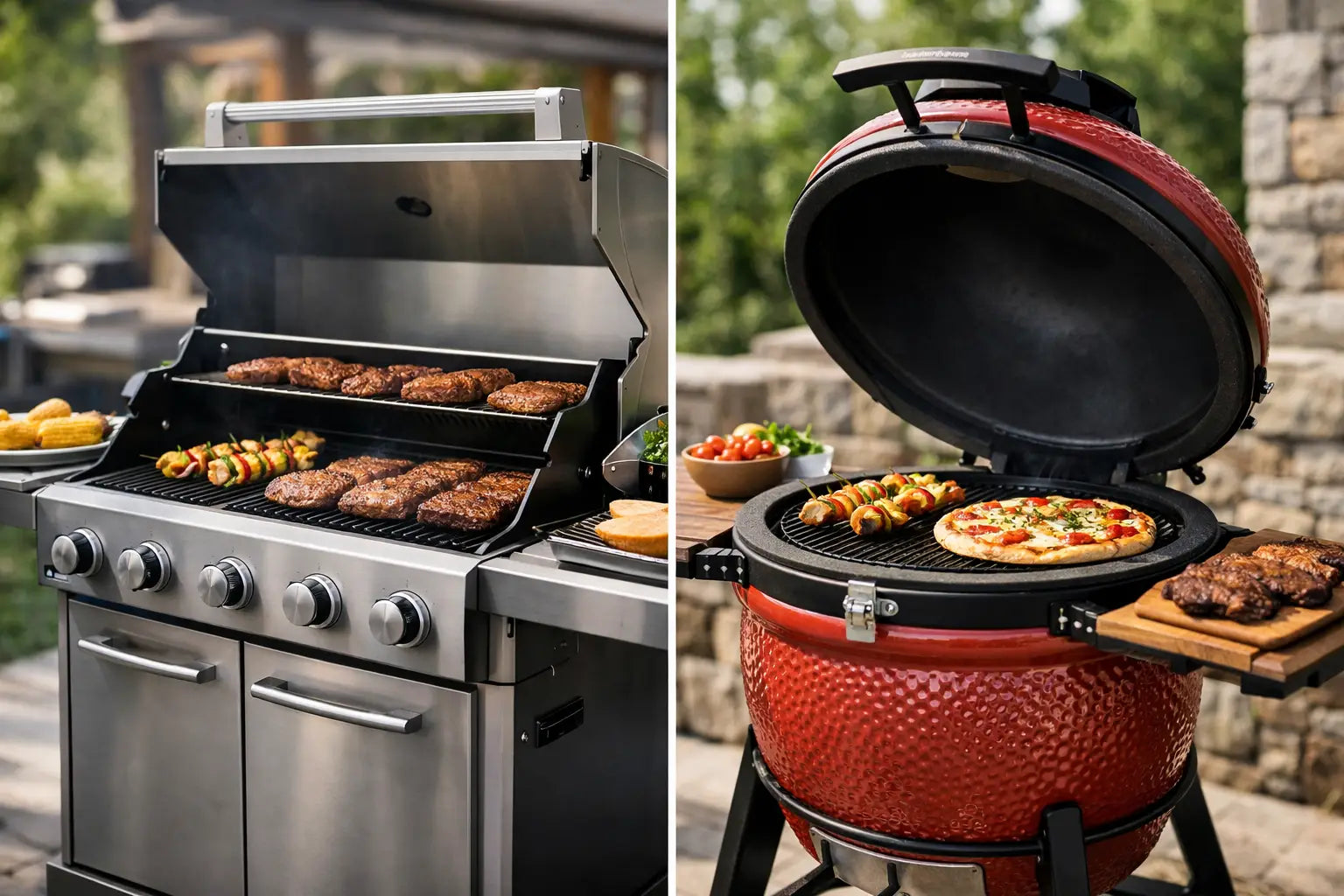
Whether the preferred cooking style centers on a high-performance gas grill, a charcoal ceramic cooker, or a built-in BBQ, the surrounding cabinetry must support it properly. Practical details matter: room for opening the lid, heat-conscious clearances, accessible gas connections, usable counter space beside the cooking zone, and storage that makes tools and fuel easy to manage.
Compatibility also gives buyers more freedom. A household loyal to Napoleon, Broil King, or Big Green Egg should not have to compromise on the appliance simply to achieve a refined outdoor layout. The best kitchen design allows the appliance choice and the architectural finish to work together.
When Custom-Built May Still Be the Right Choice
A modular European system is not the answer to every brief. A radically angled site, an unusual wall condition, or a project requiring extensive masonry, pizza ovens, bars, refrigeration banks, and concealed services may call for a fully custom architectural solution. In those cases, a bespoke build can justify its longer timeline and larger coordination burden.
But many buyers overestimate how much custom construction they need. If the priority is a highly finished, durable, design-led kitchen with predictable quality and rapid installation, modular is often the smarter premium choice. It delivers the tailored appearance people want while reducing the risk that comes with managing a small construction project in the backyard.
For hospitality buyers, repeatability can be equally compelling. A proven module system makes it easier to create consistent standards across suites, terraces, rental villas, or multiple properties while allowing each location to retain its own character.
A Better Way to Specify the Space
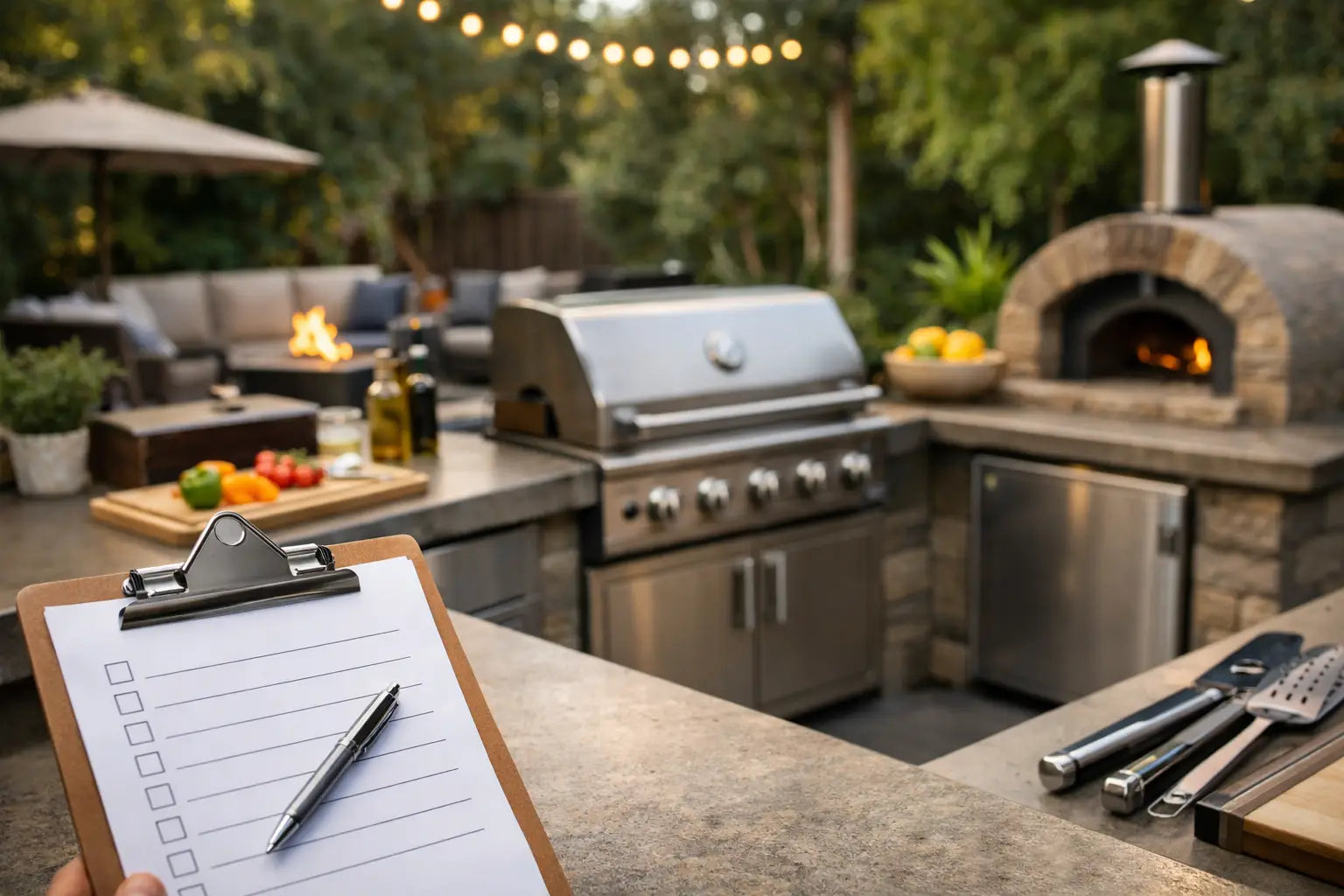
Before choosing finishes, begin with the experience. Decide how many people will gather, whether the kitchen is primarily for grilling or full outdoor prep, how close it should sit to dining, and how exposed the location will be. These answers determine layout more effectively than a product catalog ever can.
Then consider the view from inside the house. An outdoor kitchen is often seen as much as it is used. Its scale, color, and silhouette should belong to the home and landscape. ELEEXA approaches this decision through fully pre-assembled modular kitchens that bring European design discipline to the site without turning installation into an extended construction exercise.
Choose the kitchen that makes outdoor entertaining feel immediate, not postponed. When the architecture is resolved, the materials are suited to the setting, and installation is planned with precision, the first dinner outside can happen much sooner - and feel exactly as it should.