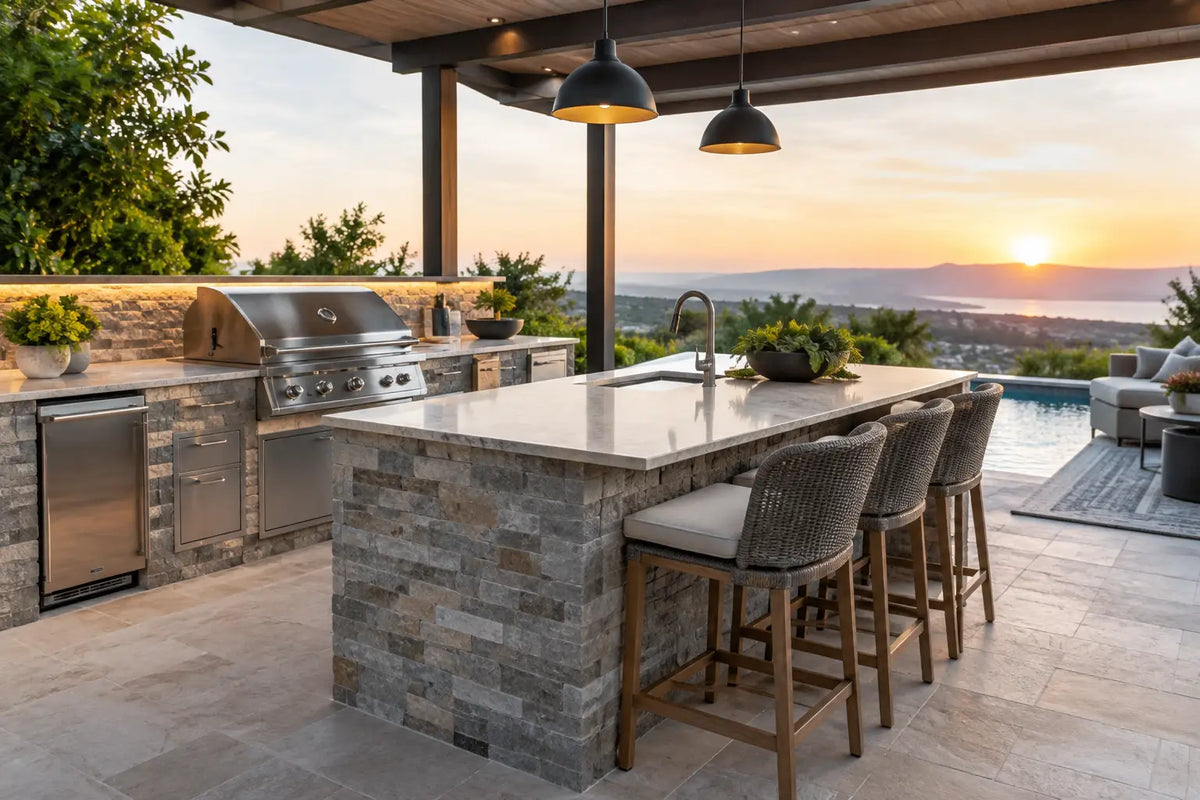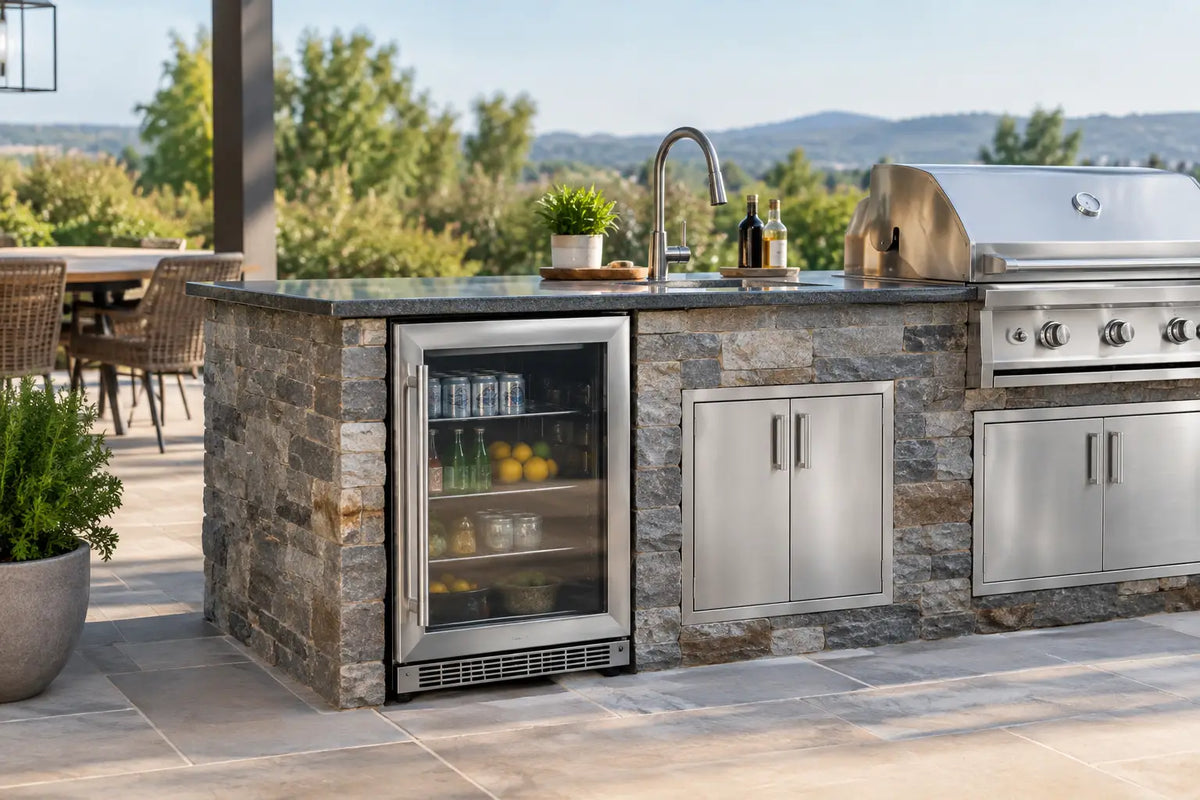
A refrigerator is rarely the visual centerpiece of an outdoor kitchen, yet it can determine whether the entire space feels effortless or poorly planned. The question of how to integrate a fridge into an outdoor kitchen is not simply about finding a gap beneath the counter. It is about creating a cold-storage zone that looks architectural, performs reliably in changing weather, and keeps drinks and ingredients exactly where entertaining demands them.
For a refined outdoor kitchen, the fridge should disappear into the composition while remaining exceptionally practical. That balance begins before the cabinet color, countertop, or grill model is chosen.
How to Integrate a Fridge Into an Outdoor Kitchen Layout
Start with the way the kitchen will be used. A fridge positioned beside the grill is ideal for marinades, proteins, and sauces during active cooking. One placed nearer the seating or bar area makes more sense when guests regularly help themselves to chilled wine, mixers, and sparkling water. In larger outdoor kitchens, separating these functions can be a considered luxury: one refrigerator for food preparation and another for entertaining.
The best location is usually within one or two steps of the primary work surface, without interrupting the cook's path between grill, sink, and prep area. Avoid placing a fridge where its open door blocks a walkway, corners a guest, or collides with a grill lid. Small clearance decisions make a substantial difference when the terrace is busy.
Think of the appliance as part of a complete run of cabinetry, not as an add-on. A correctly sized undercounter refrigerator framed by purpose-built outdoor cabinetry creates a clean, built-in look. It also prevents the common DIY result of a freestanding unit sitting awkwardly under a counter with uneven gaps on either side.
Choose the right refrigerator category
An outdoor-rated refrigerator is the correct choice for an exposed or semi-exposed kitchen. Unlike an indoor appliance, it is engineered to handle wider temperature swings, humidity, and demanding outdoor conditions. Its components, insulation, seals, and stainless-steel construction are designed for a setting where summer heat, cold nights, and moisture are part of normal operation.
An indoor refrigerator may appear to offer a lower initial cost, but it can struggle in high ambient temperatures and may not be covered by its warranty once installed outdoors. This is one of the least attractive compromises in a premium project. A beautiful outdoor kitchen should not be built around an appliance that was never intended for the environment.
Consider capacity with honest usage in mind. A compact undercounter fridge is excellent for a couple, a city terrace, or a dedicated beverage station. A wider unit offers more flexibility for weekend hosting, family meals, and hospitality settings. If the kitchen will serve as the main entertaining hub, refrigerator drawers can also be a sophisticated alternative, keeping chilled items accessible without introducing a full-height door into the cabinet line.
Plan Ventilation Before the Cabinet Is Built
Ventilation is the technical detail most likely to be overlooked and the one most likely to affect refrigerator performance. Every refrigerator releases heat as it cools. If that heat cannot escape, the compressor works harder, energy use rises, and appliance life can be reduced.
First, confirm whether the chosen refrigerator is front-venting or rear-venting. Most built-in undercounter models are front-venting, allowing heat to exit through a grille at the base of the appliance. These units are well suited to enclosed outdoor kitchen modules because they do not require an open void behind the refrigerator.
A rear-venting appliance needs a carefully planned air gap behind and above it. It should never be enclosed tightly inside cabinetry simply because the dimensions appear to fit. Follow the manufacturer's specified clearances precisely, including side, rear, and top spacing. A few hidden inches can be the difference between quiet, consistent cooling and an appliance that overheats in July.
Do not cover the toe-kick grille with decorative panels, outdoor rugs, or storage baskets. The grille may be visually discreet, but it is doing essential work. Premium design is not the absence of functional details. It is the ability to integrate them without compromising the overall composition.
Give Power and Weather Equal Attention
Your refrigerator needs a dedicated, properly protected electrical connection installed by a qualified electrician. In the United States, outdoor receptacles typically require GFCI protection, and local code requirements may influence circuit capacity, outlet location, conduit, and weatherproof covers. This is not a place for extension cords routed behind cabinetry.
The outlet should remain accessible for servicing, but it should not be placed where it is exposed to direct splash, standing water, or excessive heat from the grill. Keep the refrigerator on a circuit that can support its electrical load without sharing unnecessary high-demand appliances. An outdoor kitchen often includes lighting, a grill ignition, a sink pump, charging points, and audio equipment. Proper planning prevents nuisance trips during a dinner party.
Weather protection matters even with an outdoor-rated appliance. A covered patio, pergola, roof overhang, or protected wall improves long-term comfort and appliance performance. The goal is not to seal the refrigerator away from outdoor life, but to reduce direct exposure to driving rain, snow accumulation, and intense all-day sun.
If the kitchen is installed in a cold-weather region, check the refrigerator's operating temperature range. Some units are not designed to run below certain ambient temperatures. Seasonal shutdown may be appropriate for a vacation property or an exposed northern installation. In hot climates, shade becomes even more valuable, as direct sun can force the appliance to work harder throughout the day.
Build Around Service Access and Drainage
A refrigerator should be easy to remove, inspect, and clean without dismantling half the kitchen. Leave enough room to slide the appliance forward if service is required, and keep the power connection accessible. This is especially relevant in tightly tailored cabinetry, where a few millimeters of tolerance may look precise but make maintenance unnecessarily difficult.
The outdoor kitchen itself should sit on a level, stable surface with a deliberate drainage strategy. Water should move away from the cabinetry and appliance area, not collect beneath it. On terraces, balconies, and rooftops, this deserves early coordination with the project architect or installer. Water management protects more than the fridge. It preserves flooring, cabinetry, foundations, and the quality of the entire investment.
A raised plinth or adjustable feet can help level the refrigerator on uneven paving. Correct leveling also helps the door seal properly and allows the appliance to perform as intended. Before finalizing the installation, test that the door opens fully, closes cleanly, and clears adjacent drawers, handles, and side panels.
Match Materials, Lines, and Appliance Details
The refrigerator should feel intentional within the outdoor kitchen's material palette. Stainless steel works naturally with many grill brands and offers a professional visual language, while powder-coated cabinetry can frame the appliance in a more architectural way. The key is consistency. Match handle finishes where possible, align door lines with adjacent modules, and avoid a patchwork of unrelated metals.
Countertop overhangs require particular attention. They should protect the appliance slightly from above without blocking ventilation or making the door difficult to open. Similarly, a refrigerator placed next to a grill needs a sensible heat buffer. Do not assume a shared cabinet wall is enough if the grill manufacturer specifies clearance requirements. Heat, grease, and refrigeration are better separated by purposeful design than by hope.
With modular systems, these details are resolved before delivery rather than improvised on site. ELEEXA outdoor kitchen modules are designed around clean appliance integration, helping owners achieve a tailored built-in appearance without the delays, contractor variables, and assembly burden of a conventional custom build.
Design for the Way You Entertain
The most successful outdoor kitchen is not necessarily the largest. It is the one that anticipates the rhythm of its owners. If you host cocktail evenings, position the refrigerator close to glassware, ice storage, and a serving ledge. If your weekends center on grilling, locate it beside prep space and within easy reach of the sink. For a resort, rental property, or boutique hotel, prioritize intuitive guest access while keeping food-prep storage within the service team's working zone.
Also consider what belongs inside the refrigerator. Beverages create different storage needs than fresh ingredients. A unit used for both may benefit from adjustable shelves, door storage, and a lock if children or rental guests will use the space. A dedicated beverage refrigerator may offer better visibility and easier access, while a solid-door model can feel more discreet in a minimalist outdoor setting.
A well-integrated outdoor refrigerator is one of those quiet luxuries guests notice without having to think about it. Cold drinks are within reach, ingredients stay close to the grill, and the cabinetry retains its composed, architectural presence. Plan it with the same care as the grill and countertop, and the outdoor kitchen will feel ready for every gathering before the first bottle is opened.