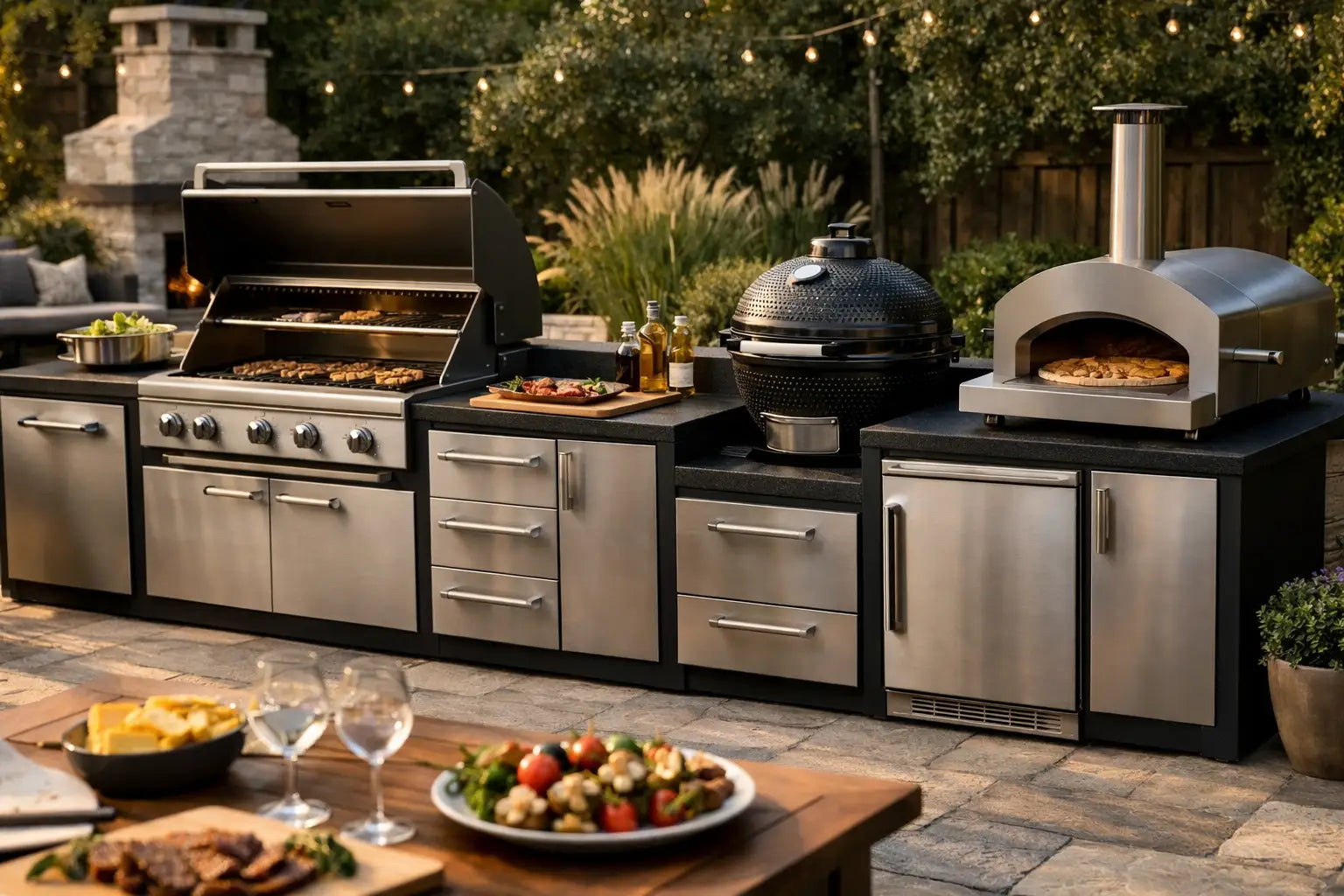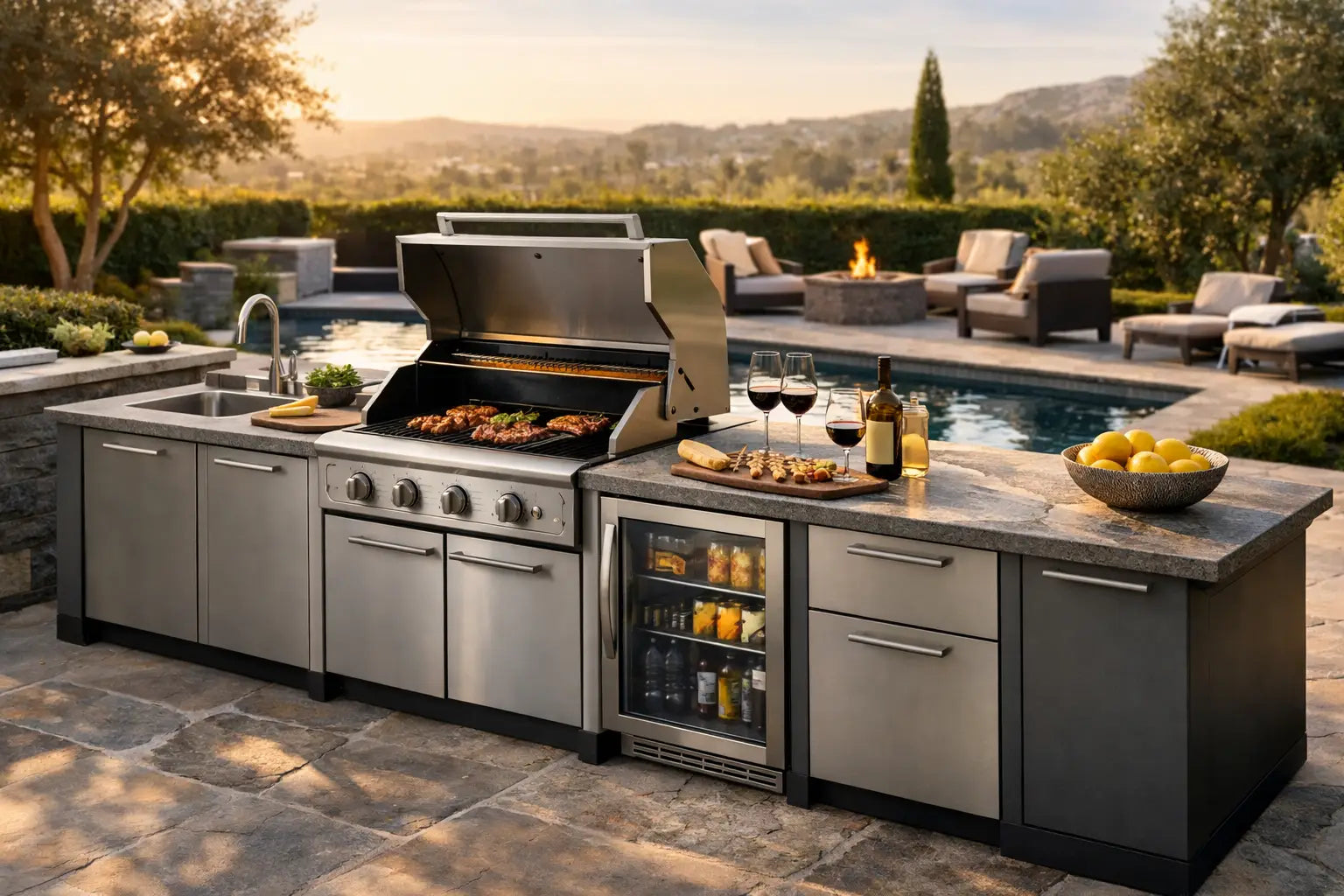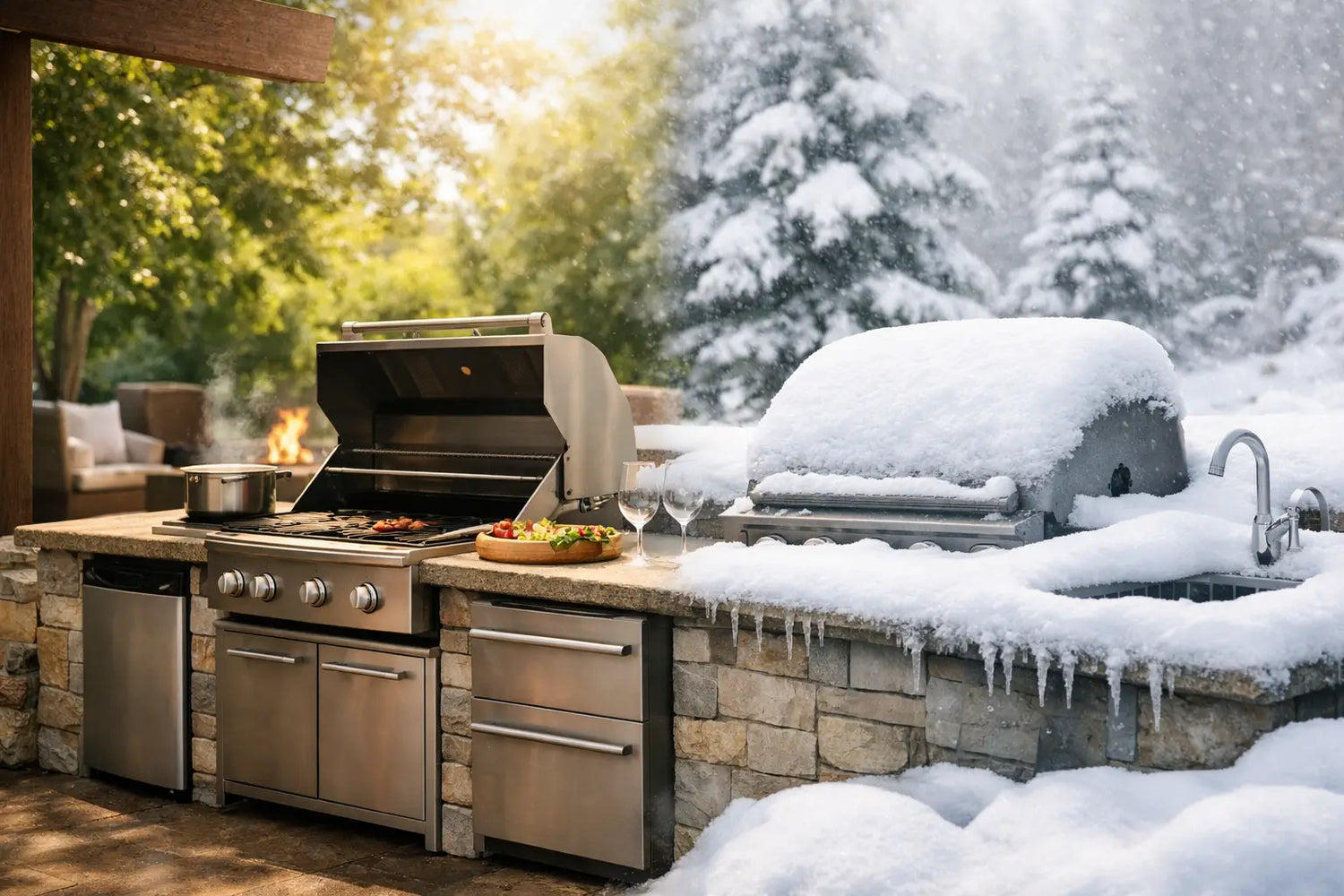
A beautiful outdoor kitchen in July is easy. The real question is what it looks like after freezing rain, blazing sun, salt air, and months of exposure. If you are asking, can outdoor kitchens stay outside year round, the honest answer is yes - but only if they are designed for permanent outdoor living from the start.
That distinction matters more than most buyers realize. Plenty of outdoor kitchens are marketed as weather-ready when they are really fair-weather furniture with a grill cutout. A true year-round outdoor kitchen is engineered as an exterior product, not an indoor cabinet system moved outside. Materials, ventilation, drainage, finishes, and appliance integration all have to work together if you expect long-term performance and a premium appearance in every season.
Can outdoor kitchens stay outside year round in every climate?
They can, but climate changes the specification.
A year-round installation in Arizona faces different threats than one on a waterfront terrace in New England or a mountain property with heavy snow loads. Dry heat can fade finishes and stress components. Freeze-thaw cycles can crack inferior surfaces and loosen joints. Coastal air speeds corrosion. High humidity can affect hinges, fasteners, and internal storage if the construction is not properly selected.
So the better question is not simply whether outdoor kitchens can stay outside year round. It is whether the kitchen you are considering was designed for your environment.
For high-end residential and hospitality buyers, that is where quality separates quickly. Premium outdoor kitchens use weather-resistant metals, stable countertop materials, and construction methods that account for expansion, moisture, and UV exposure. Lower-tier systems often rely on painted steel, moisture-sensitive substrates, or decorative finishes that look convincing in a showroom and deteriorate outdoors.
What makes an outdoor kitchen truly year-round ready?
The first requirement is material integrity. Marine-grade or high-performance stainless steel, aluminum structures, compact surfaces, porcelain, and carefully specified powder-coated elements all perform differently depending on environment. There is no single best material in every setting. There is only the right material for the conditions.
Cabinet construction is just as important as surface finish. Outdoor kitchens should resist rust, warping, swelling, and delamination. If a cabinet core can absorb moisture, it is already the wrong product for permanent exterior use. If fasteners are not corrosion-resistant, failures begin at the joints. If doors and drawers are poorly aligned, water intrusion becomes more likely over time.
Countertops also deserve more scrutiny than they usually get. Natural stone can be stunning, but some varieties require sealing and can stain or crack in freeze-prone climates. Sintered stone and porcelain often offer a more controlled performance profile. Concrete has visual appeal but needs proper fabrication and maintenance. The right countertop is not just about looks - it is about movement, weather resistance, and ease of care.
Then there is appliance integration. A grill may be built for outdoor use, but the kitchen surrounding it must still manage heat, airflow, and service access correctly. Built-in appliances installed into the wrong cabinetry can create premature wear or even safety issues. Premium systems account for clearances and compatibility rather than forcing a one-size-fits-all cutout.
Year-round durability depends on design, not just materials
Even excellent materials can fail in a poor layout. Water has to go somewhere. Heat has to dissipate. Doors and drawers should shed exposure rather than trap it. Storage should be useful without becoming a damp cavity.
A well-designed outdoor kitchen uses practical detailing that is easy to overlook until you need it. Slightly elevated bases help reduce standing water issues. Thoughtful overhangs and drainage pathways protect cabinetry. Proper ventilation around grills, refrigerators, and power components helps preserve performance. Integrated covers or fitted protective covers can extend lifespan significantly, especially in harsh climates.
This is where modular systems often outperform site-built installations. Factory-built modules are produced with consistency, tested dimensions, and engineered compatibility. On-site custom builds can be exceptional, but they can also depend heavily on local contractor skill, material substitutions, and rushed installation decisions. For buyers who want luxury without construction drama, pre-assembled outdoor kitchen modules offer a cleaner and more predictable path.
Can outdoor kitchens stay outside year round without a cover?
Sometimes, but that does not mean they should.
A permanent outdoor kitchen should be able to live outdoors full-time. That is the baseline. But exposure and protection are not the same thing. Even the best exterior materials benefit from sensible protection during storms, snow accumulation, pollen season, or long periods of non-use.
A cover is not an admission of weakness. It is simply smart ownership. Think of it the way you think about premium outdoor furniture or a luxury car. Quality products are built to last, but intelligent care preserves finish, cleanliness, and long-term visual value.
If your kitchen includes a grill, pizza oven, sink, refrigeration, or electrical components, targeted protection becomes even more worthwhile. Covers help reduce debris buildup, standing moisture, and surface wear. In exposed locations such as rooftops, coastal patios, or open gardens, they can make a visible difference over time.
What usually fails first in low-quality outdoor kitchens?
It is rarely the headline feature. It is the supporting construction.
The first signs of trouble often show up in fading finishes, rust spots around hardware, swollen panels, sticking drawers, water-marked surfaces, or unstable countertop joints. Refrigeration can also suffer when ventilation is poor or units are not rated for the environment. Over time, these issues turn a luxury feature into a maintenance project.
This is why buyers at the premium end of the market should be skeptical of kitchens that compete mainly on price. An outdoor kitchen is not a seasonal accessory. It is an architectural addition to the home or hospitality setting. If it looks tired after two winters, it undermines the entire outdoor living space.
A better investment is a kitchen designed as a long-term exterior installation, with tested materials, refined detailing, and appliance compatibility built into the concept. That approach costs more upfront, but it protects aesthetics, usability, and property value.
How to protect an outdoor kitchen through winter
Winter care does not need to be complicated, but it should be deliberate.
If you live in a freezing climate, water lines should be professionally winterized where required. Sinks, faucets, and connected plumbing need special attention before temperatures drop. Refrigeration should be maintained according to manufacturer guidance, especially if the unit will remain powered down for extended periods.
Cleaning before winter matters too. Grease, food residue, and organic debris become harder to remove after months of exposure and can affect both hygiene and surface condition. A proper seasonal clean, followed by dry storage of removable accessories and fitted covers where appropriate, keeps the kitchen ready for the next use rather than the next repair.
Snow load is another practical issue. Most outdoor kitchens can handle normal winter conditions, but heavy accumulation on countertops, covers, or adjacent structures should not simply be ignored. Removing excess snow is a basic step that helps preserve finish quality and access points.
Choosing the right year-round outdoor kitchen
If permanent outdoor performance is your goal, ask sharper questions before you buy.
Ask what the cabinet structure is made from, not just what it is finished with. Ask whether the countertops are suitable for freeze-thaw conditions in your region. Ask how water drains, how appliances are ventilated, and whether the system is truly pre-engineered for outdoor use. Ask how the modules arrive, how quickly they can be installed, and what level of site work is actually required.
For design-conscious buyers, there is also a lifestyle question. Do you want an outdoor kitchen that demands a custom build process, multiple trades, and weeks of disruption, or do you want an architectural result with far less friction? The best modern systems now deliver both luxury presence and installation simplicity, which is exactly where brands like ELEEXA have raised expectations.
A year-round outdoor kitchen should feel permanent, polished, and effortless. It should look as convincing in January as it does in June.
That is the standard worth buying to. If your outdoor kitchen is built with the right materials, designed for exposure, and matched to your climate, it can absolutely stay outside year round - and keep adding value every season you own it.