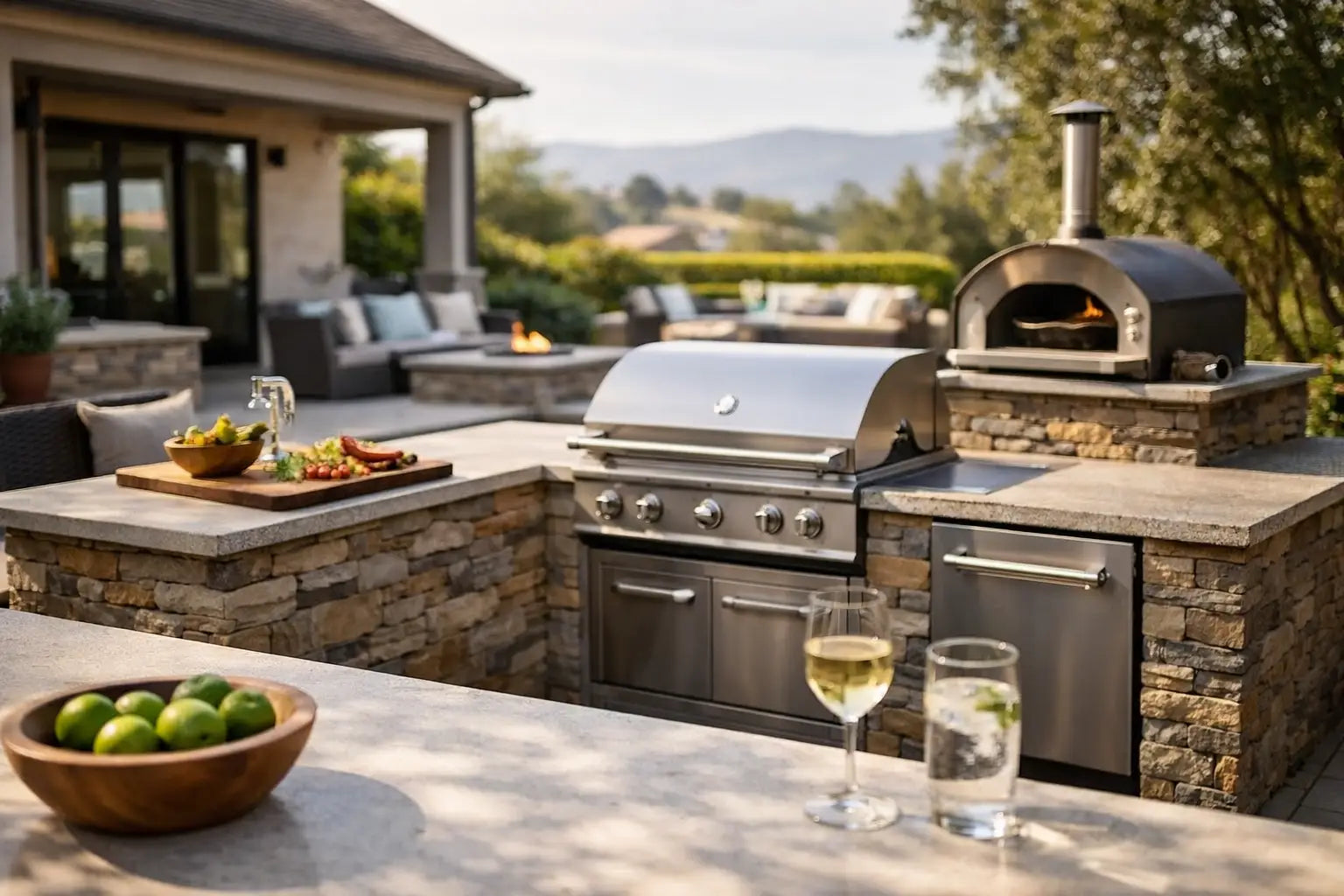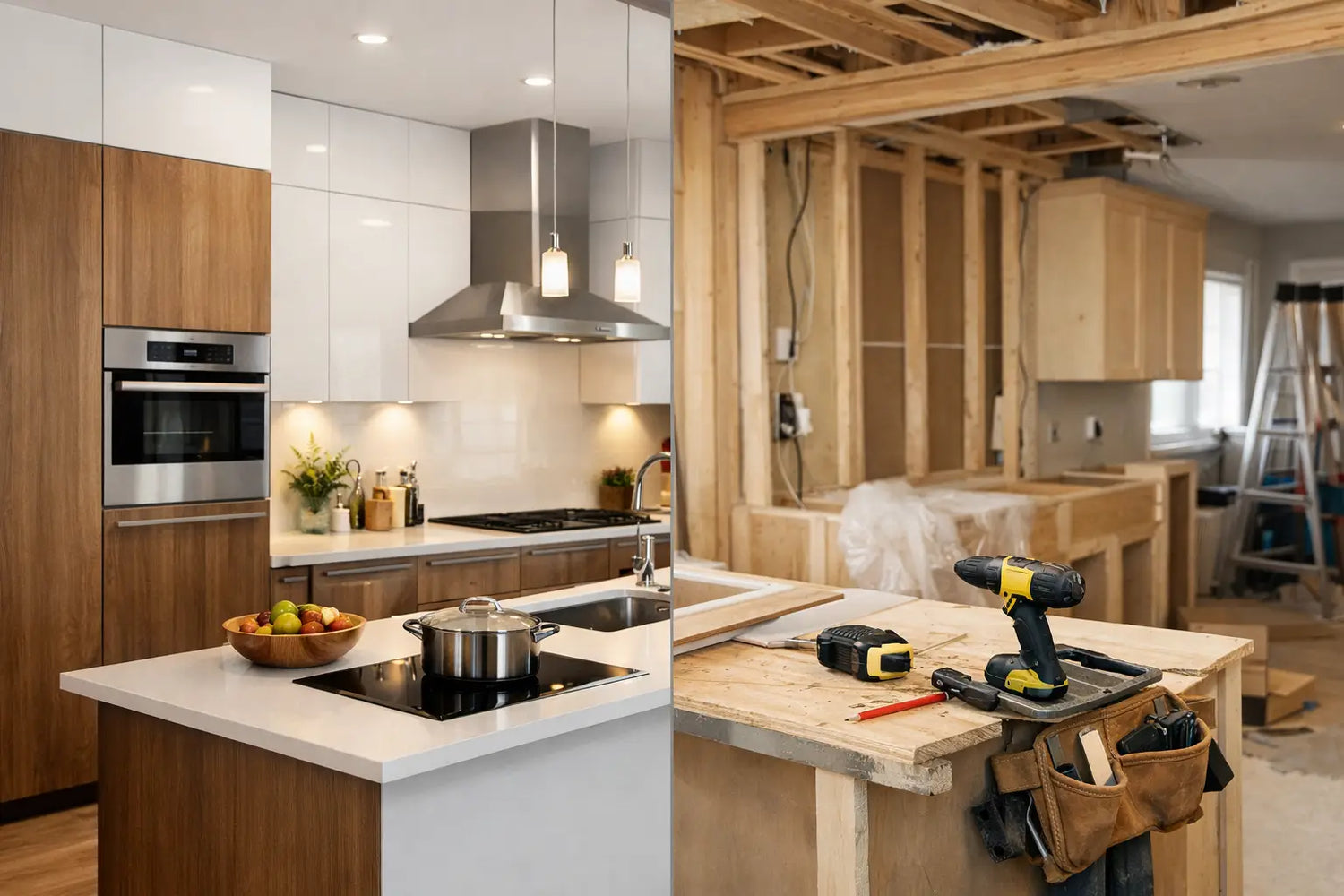
A luxury outdoor kitchen should elevate the way a property feels, not turn the backyard into an extended construction site. When weighing modular kitchens versus contractor builds, the real decision is not simply prefabricated versus custom. It is a choice between a controlled, product-engineered experience and a site-built project whose outcome depends on multiple trades, timelines, and variables.
For a refined terrace, rooftop, poolside setting, or hospitality venue, both routes can produce impressive results. The difference lies in how much uncertainty, coordination, and disruption you are willing to accept to get there.
Modular Kitchens Versus Contractor Builds: The Core Difference
A contractor-built outdoor kitchen is constructed on-site, typically around masonry, framing, cladding, countertops, appliances, utility connections, and finishes selected separately. It can be fully bespoke, but it requires design coordination, site preparation, procurement, and skilled installation at every stage.
A modular outdoor kitchen is designed as a complete system. Individual units - such as grill cabinets, storage modules, sinks, refrigeration, bar sections, and corner elements - are manufactured before they arrive at the property. Premium systems are delivered pre-assembled or nearly complete, then positioned, connected, and finished with minimal on-site work.
That distinction changes the customer experience dramatically. One model asks your property to become a job site. The other brings a finished kitchen to your property.
The Case for a Contractor Build
A traditional contractor build remains the right choice in certain conditions. If the design calls for an unusual footprint, integrated structural work, a large masonry enclosure, or materials that must continue exactly from the home into the outdoor cooking area, site-built construction offers virtually unlimited freedom.
It can also make sense when an architect is already managing a major renovation and the outdoor kitchen is one element of a broader landscape, pool, or building project. In that setting, a contractor may coordinate foundations, drainage, electrical service, gas lines, stonework, and architectural detailing under one construction plan.
The appeal is clear: a contractor can build around challenging dimensions and create a one-of-one composition. But unlimited customization does not automatically mean better design or better value. Every custom decision must be translated accurately from drawing to job site, often by several different suppliers and trades.
A contractor build is only as polished as its execution. Cabinet alignment, countertop seams, ventilation clearances, water management, appliance fitment, finish consistency, and weatherproofing all rely on field measurement and workmanship. For a homeowner, that can mean more meetings, more approvals, and more opportunities for delay.
Why Premium Modular Systems Are Changing Outdoor Living
The best modular kitchens deliver a different kind of customization: disciplined flexibility. Instead of designing every component from scratch, you configure a proven architectural system around the way you cook, entertain, and use the space.
Choose a linear kitchen for a clean terrace wall, create an L-shaped layout that frames a dining area, or build a social cooking station with a grill, sink, fridge, storage, and bar seating. The modules are designed to work together visually and technically, giving the finished space a composed look rather than an assembled-from-parts feel.
For discerning buyers, the greatest advantage is certainty. Materials are selected for outdoor exposure. Cabinet dimensions are engineered around appliances. Doors, drawers, worktops, and ventilation are designed as part of one product. Compatibility with leading grill brands can be planned before delivery, not improvised after construction starts.
ELEEXA applies this approach to create luxury outdoor kitchens that arrive as finished, design-led systems rather than a collection of construction tasks. The result is an elevated outdoor environment with far less on-site friction.
Faster installation, less disruption
Time is one of the most underestimated costs in an outdoor kitchen project. A contractor build may involve demolition, foundations, framing, masonry, templating, countertop fabrication, appliance delivery, electrical work, plumbing, finish installation, and final corrections. Weather, subcontractor schedules, material lead times, and site access can all affect the timeline.
A pre-assembled modular kitchen shortens that sequence substantially. Once the site is prepared and utilities are in the right position, the kitchen can be placed, leveled, connected, and ready for final commissioning in a fraction of the time. There is less cutting, fewer deliveries, and far less dust around a finished garden, deck, or pool.
This matters especially for vacation homes, rental properties, hospitality projects, and homeowners planning around a specific season or event. A beautiful kitchen delivered after summer is not the same as one ready for the first gathering of the year.
More predictable quality
Contractor-built kitchens are completed in changing outdoor conditions. Modular systems are manufactured in controlled facilities, where repeatable processes protect consistency in fit, finish, and assembly.
That does not mean every modular option is equal. Budget units may use light-gauge materials, limited hardware, or finishes that look convincing in a showroom but fade, corrode, or delaminate outdoors. The premium category should be judged by its weather-resistant construction, appliance integration, hardware quality, surface durability, drainage logic, and ability to withstand daily use.
A well-engineered modular kitchen is not a compromise on craftsmanship. It is craftsmanship made repeatable.
Cost: Compare the Complete Project, Not the Cabinet Price
At first glance, contractor construction can seem more flexible financially because costs are divided across labor, materials, appliances, and finishing. Yet the initial estimate is rarely the final project cost. Changes to utility routes, stone selections, site conditions, appliance dimensions, labor availability, or outdoor-rated materials can add significant expense.
Modular kitchens often have a clearer upfront price because the cabinetry, finish, and configuration are defined before production. That transparency makes planning easier, particularly when the kitchen is one investment within a larger property upgrade.
Still, modular is not always less expensive. A high-end, fully equipped system with premium surfaces, refrigeration, integrated grills, and specialty modules can represent a substantial investment. The question is whether the price includes a finished experience or merely the beginning of a construction process.
When comparing proposals, include every cost: design, delivery, site preparation, utilities, assembly, countertop work, appliance installation, waste removal, project management, and contingency. A lower cabinet quote can become expensive quickly when those items are separated.
Design Freedom Without Design Drift
The fear behind choosing modular is often that the kitchen will feel generic. That concern is reasonable if the system offers only a few fixed boxes and limited finishes. It is far less relevant with a premium manufacturer that provides multiple layouts, colors, worktop options, appliance cutouts, storage configurations, and tailored modules.
The advantage is that customization happens inside a coherent design language. Proportions remain balanced. Material transitions are intentional. Appliance openings are precise. The kitchen looks designed as a single architectural element, whether it sits against a villa wall, beneath a pergola, or at the edge of a rooftop lounge.
Contractor builds offer more freedom at the outer edges of design. If you need a curved stone island, a kitchen embedded into a retaining wall, or an exact match to rare architectural materials, bespoke construction may win. For most luxury outdoor projects, however, the goal is not unlimited options. It is a confident, enduring result with no weak detail demanding attention.
Maintenance and Long-Term Ownership
Outdoor kitchens live hard. They face heat, moisture, UV exposure, grease, windblown debris, temperature shifts, and frequent cleaning. Materials and construction methods are therefore not cosmetic decisions.
With contractor builds, long-term maintenance may involve resealing porous stone, repairing grout or stucco, addressing cracks from movement, replacing weather-damaged panels, or tracing responsibility across multiple suppliers. A modular system with outdoor-rated materials and accessible components can be simpler to clean, service, reconfigure, or replace over time.
For hospitality buyers, that serviceability is particularly valuable. A kitchen that looks exceptional on opening day must also remain practical for staff, turnover schedules, and high guest use. Modular components can offer a more manageable ownership model than a permanently built enclosure with hidden complications.
Which Choice Fits Your Property?
Choose a contractor build when the outdoor kitchen is inseparable from a major architectural construction project, demands unusual structural integration, or requires truly unrestricted form and material choices. Be prepared to invest time in coordination and to protect the budget with detailed specifications and a capable project manager.
Choose a premium modular system when you want architectural presence, tailored configuration, proven outdoor materials, and a faster route from concept to entertaining. It is especially compelling when the property is already finished, the outdoor area must remain usable during installation, or the project calls for dependable delivery without compromising the visual standard.
The most rewarding outdoor kitchens are not defined by how long they took to build. They are defined by how effortlessly they invite people to stay longer outside. Start with the experience you want to create, then choose the construction path that protects it from the first decision onward.