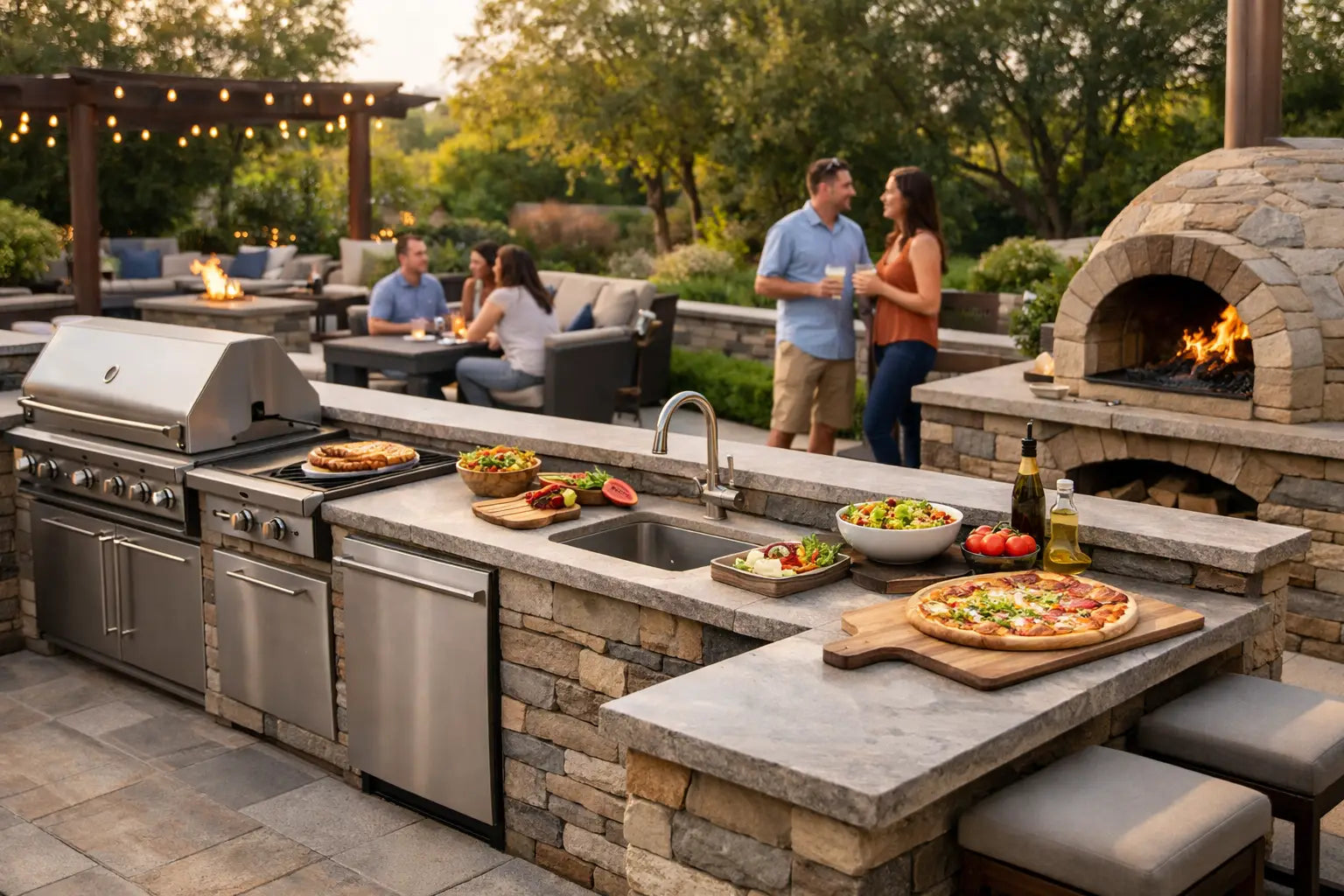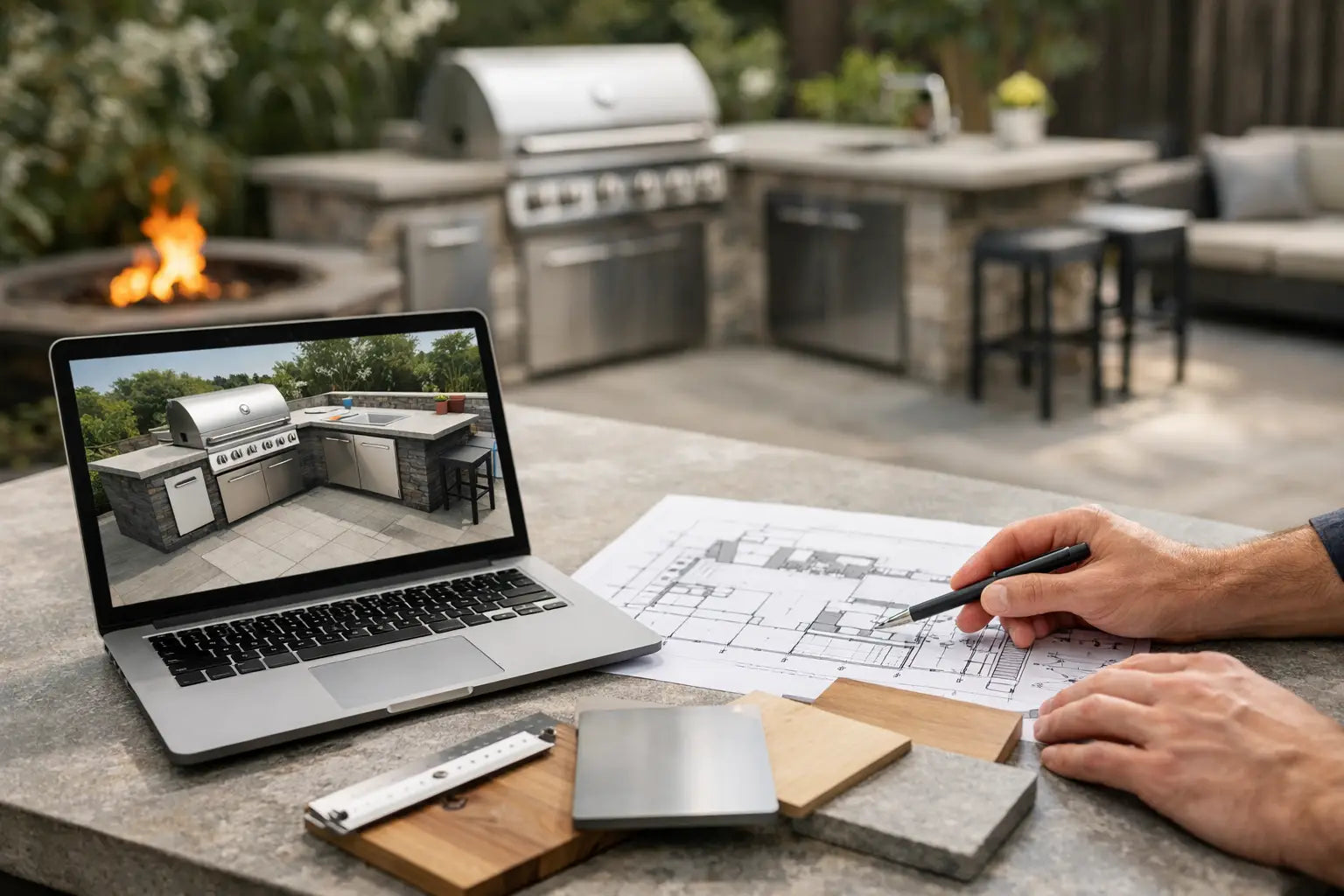
A beautiful grill alone does not create an outdoor kitchen. The cabinetry, work surfaces, storage, utilities, and installation method determine whether the space feels effortlessly considered or becomes a prolonged construction project. That is why the choice between outdoor kitchen modules vs masonry deserves more attention than the appliance itself.
For a terrace, backyard, rooftop, or hospitality setting, both approaches can produce an impressive result. The better choice depends on how quickly you want to use the space, how much site work you are prepared to accept, and whether your vision calls for adaptable precision or a fully site-built architectural statement.
Outdoor Kitchen Modules vs Masonry: The Core Difference
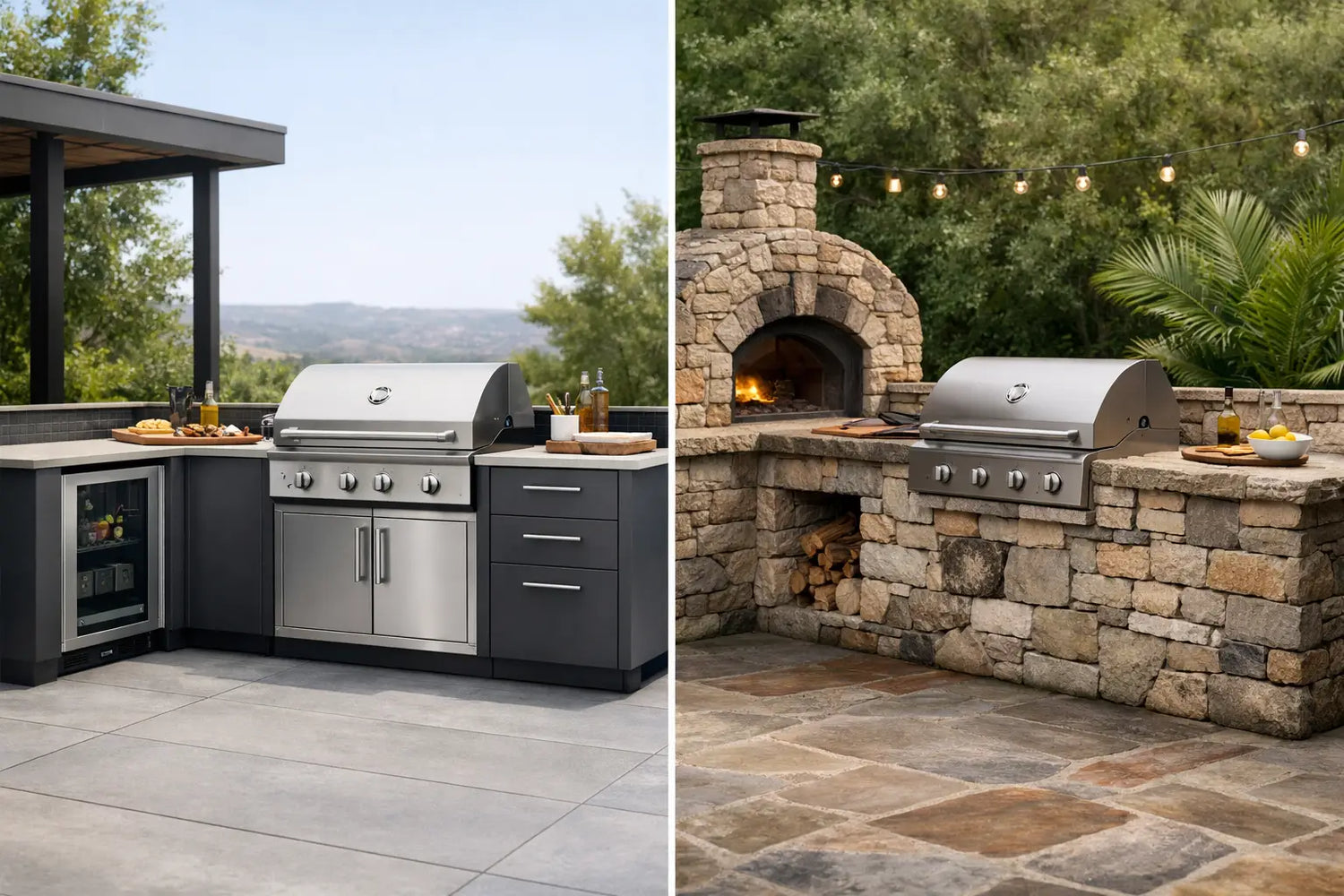
A masonry outdoor kitchen is built in place. It typically begins with a concrete block, brick, or steel-stud structure, then receives finishes such as stucco, stone veneer, tile, or porcelain. Appliances, doors, countertops, and utility connections are integrated as the build progresses. It can be highly custom, but it relies on a coordinated sequence of trades, site conditions, and workmanship.
A modular outdoor kitchen is manufactured as a series of complete, pre-engineered units. Cabinets, drawers, countertops, appliance housings, and finishes are designed to work together before they reach the property. Once delivered, the modules are positioned, leveled, connected where required, and ready for final utility hookups.
The distinction is not simply prefabricated versus custom. Premium modules can be configured around a specific grill, layout, finish palette, and entertaining style. The real difference is where complexity lives. Masonry moves complexity to the job site. Modular systems solve much of it before delivery.
Installation: Weeks of Construction or a Defined Arrival
This is often the deciding factor for homeowners and developers. A masonry kitchen may require excavation, a reinforced base, framing, masonry work, waterproofing, cladding, countertop templating, appliance installation, and coordination among contractors. Even a modest design can stretch across several weeks once weather, material lead times, and scheduling enter the picture.
That process can be worthwhile when the kitchen must merge with an unusually shaped wall, an existing stone structure, or a major landscape renovation. It also creates opportunities for truly one-off detailing. The trade-off is that the final result depends heavily on the quality and consistency of every person involved.
Pre-assembled modular kitchens offer a more controlled route. The cabinetry arrives as finished furniture rather than a collection of site-built components. Site preparation still matters, particularly for a level base and safe gas, electrical, and water connections, but the disruptive portion of the project is dramatically reduced.
For a second home, rental property, boutique hotel, or a household that does not want its outdoor season consumed by construction, that certainty has real value. The kitchen can be planned around a delivery date rather than an open-ended build schedule.
What plug-and-play does, and does not, mean
Plug-and-play does not eliminate responsible site planning. Local codes may require licensed professionals for gas, electrical, plumbing, drainage, or ventilation. A rooftop may also need structural review, and every outdoor kitchen needs a stable, appropriate surface.
What it does mean is that you are not asking a contractor to fabricate the kitchen itself from scratch. With a premium system such as ELEEXA, the cabinetry and appliance integration are resolved at the factory, helping reduce the number of decisions and variables left for the installation day.
Design Freedom Is Not a Simple Win for Masonry
Masonry has long been associated with customization because it can be formed around almost any footprint. If you need a curved island, a kitchen built into a retaining wall, or a finish that precisely continues an existing facade, it remains a strong option. In those situations, custom construction can create a level of architectural continuity that standard dimensions may not achieve.
But “custom” should not be confused with “unlimited.” Masonry projects often become constrained by on-site measurements, appliance cutout tolerances, countertop slab sizes, and a contractor's preferred materials. Changes late in the process can be expensive, messy, and slow.
High-end modules deliver a different kind of freedom: disciplined configuration. Linear runs, L-shapes, islands, grill modules, sink cabinets, refrigeration, waste storage, and bar seating can be composed into a coherent layout with known dimensions. Finishes and countertop selections can complement modern, transitional, or architectural outdoor spaces without relying on improvised site decisions.
This approach is especially compelling when design clarity matters. A refined outdoor kitchen should read as one complete piece of architecture, not as a grill surrounded by cabinets selected from different suppliers.
Materials and Weather Performance
An outdoor kitchen has to withstand more than an occasional rainstorm. It faces UV exposure, freeze-thaw cycles, moisture, heat, grease, insects, wind-driven debris, and frequent cleaning. The material strategy matters more than whether the kitchen is modular or masonry.
Masonry itself is durable, but its vulnerable points are usually the finish and the details. Porous stone, grout joints, painted stucco, poorly sealed countertop edges, and unprotected cabinet openings can age unevenly. Water that enters behind a finish may not become visible until repairs are extensive.
Quality modular systems are engineered around outdoor exposure from the start. Weather-resistant cabinet materials, corrosion-conscious hardware, stable surfaces, and protected appliance housings create a more predictable performance standard. Because components are manufactured under controlled conditions, panel alignment, drainage considerations, and finish consistency are easier to maintain across the full kitchen.
This does not mean modular kitchens are maintenance-free. Covers, regular cleaning, seasonal inspection, and proper winterization where applicable remain smart practice. Yet a kitchen built from purpose-selected outdoor materials is generally easier to care for than one assembled from materials that happen to look good on day one.
Cost: Compare the Entire Project, Not the Cabinet Price
A masonry kitchen can appear less expensive at the beginning, particularly if a builder quotes a basic block structure and simple finish. The final number often changes as the project moves through foundations, cladding, countertops, appliance cutouts, utility work, labor, delivery coordination, and design revisions.
Modular systems may carry a higher visible product price because the engineering, manufacturing, finishing, and assembly are included upfront. That pricing is often easier to understand. You are purchasing a completed kitchen solution, not merely the first stage of a construction scope.
The right comparison includes the complete installed cost, the value of your time, and the risk of delays or rework. For hospitality projects, the equation also includes downtime. A polished outdoor dining area that opens on schedule can be worth far more than a cheaper approach that holds back a launch date.
Repairs, Changes, and Future Flexibility
A masonry kitchen is permanent by nature. That permanence can suit an estate property or a long-planned landscape, but it makes later changes difficult. Replacing a discontinued grill, correcting a utility issue, or reworking a damaged finish can involve demolition and specialist labor.
Modules offer clearer service access and more flexibility. Individual elements may be easier to replace or reconfigure if your cooking habits change, you move to a new property, or an appliance eventually reaches the end of its life. That is particularly valuable for properties where outdoor spaces evolve over time.
There is a limit, of course. A modular kitchen is not infinitely movable once utilities and countertops are connected, and not every layout can be altered without planning. Still, its component-based construction provides a level of practical adaptability that masonry rarely can.
When Masonry Is the Better Choice
Choose masonry when the kitchen is one element of a large, permanent architectural build and must follow complex curves, irregular walls, or highly specific structural details. It can also make sense when you already have an exceptional contractor team managing a broader renovation and are comfortable with the associated timeline.
Choose modules when you want luxury without turning your property into a job site. They are ideal for buyers who value a precise finished look, faster completion, factory-controlled quality, compatibility with leading grill systems, and a more predictable path from design decision to first dinner outdoors.
The best outdoor kitchen is not the one that demanded the most construction. It is the one that makes hosting feel natural from the moment your guests arrive - with space to cook, serve, and stay outside a little longer.