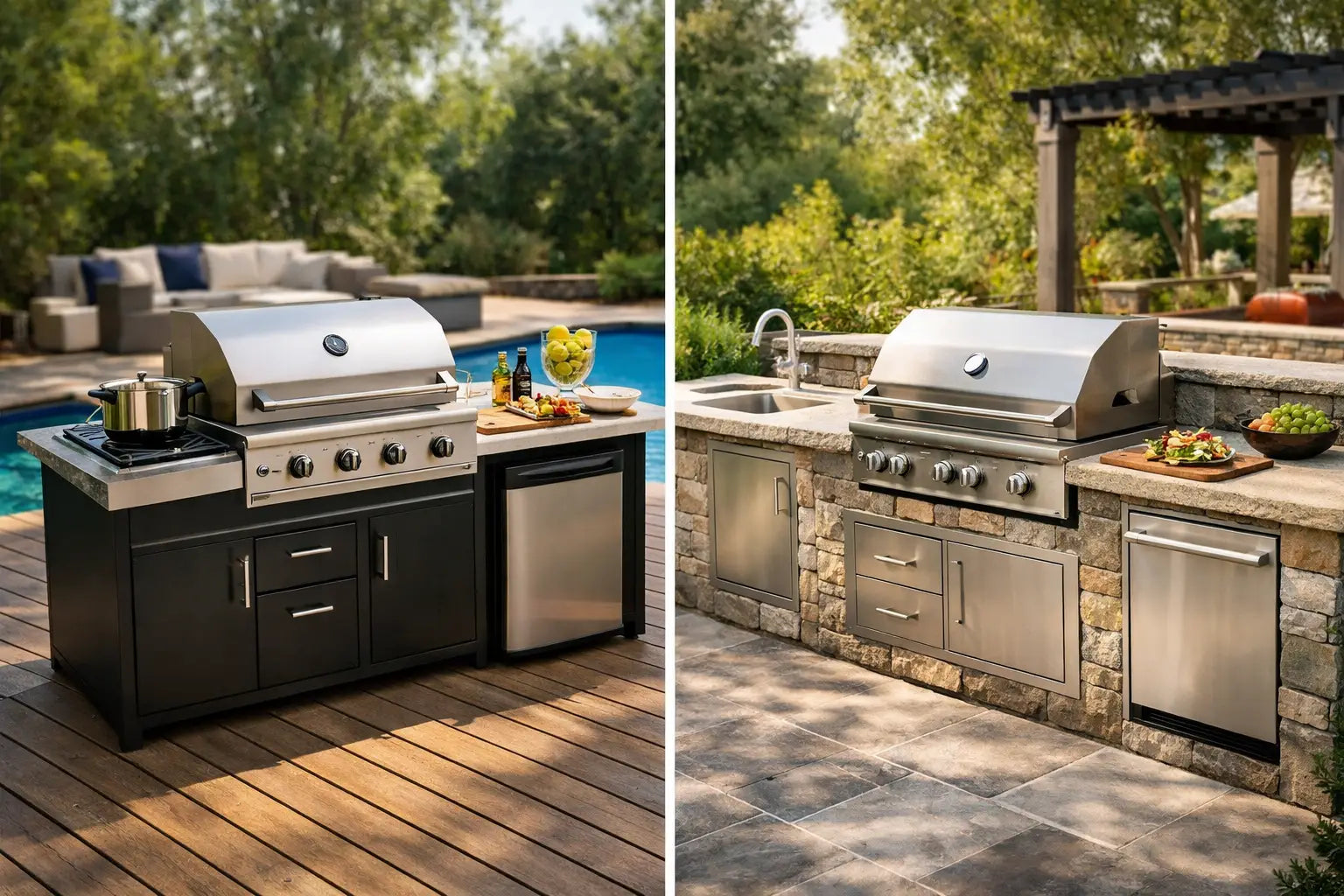
A new terrace should not sit unfinished for an entire season while multiple trades coordinate cabinetry, stonework, utilities, and appliances. Quick ship outdoor kitchen systems offer a more intelligent route to the same ambition: a polished, high-performance cooking and entertaining space that arrives substantially complete, with far less disruption at home or on site.
For homeowners, developers, and hospitality teams, speed is not about settling for a generic solution. The right system protects the details that make an outdoor kitchen feel exceptional: architectural proportion, appliance integration, useful storage, weather-ready construction, and a finish that belongs with the property. The distinction is simple. A fast-delivery kitchen should be engineered for speed from the beginning, not rushed at the end.
What Quick Ship Really Means
The term quick ship can be used loosely in the outdoor-living market. Sometimes it means that cabinets are available quickly but require assembly, custom countertops, separate appliance fitting, and contractor coordination after delivery. In other cases, it refers only to a grill or a small cart.
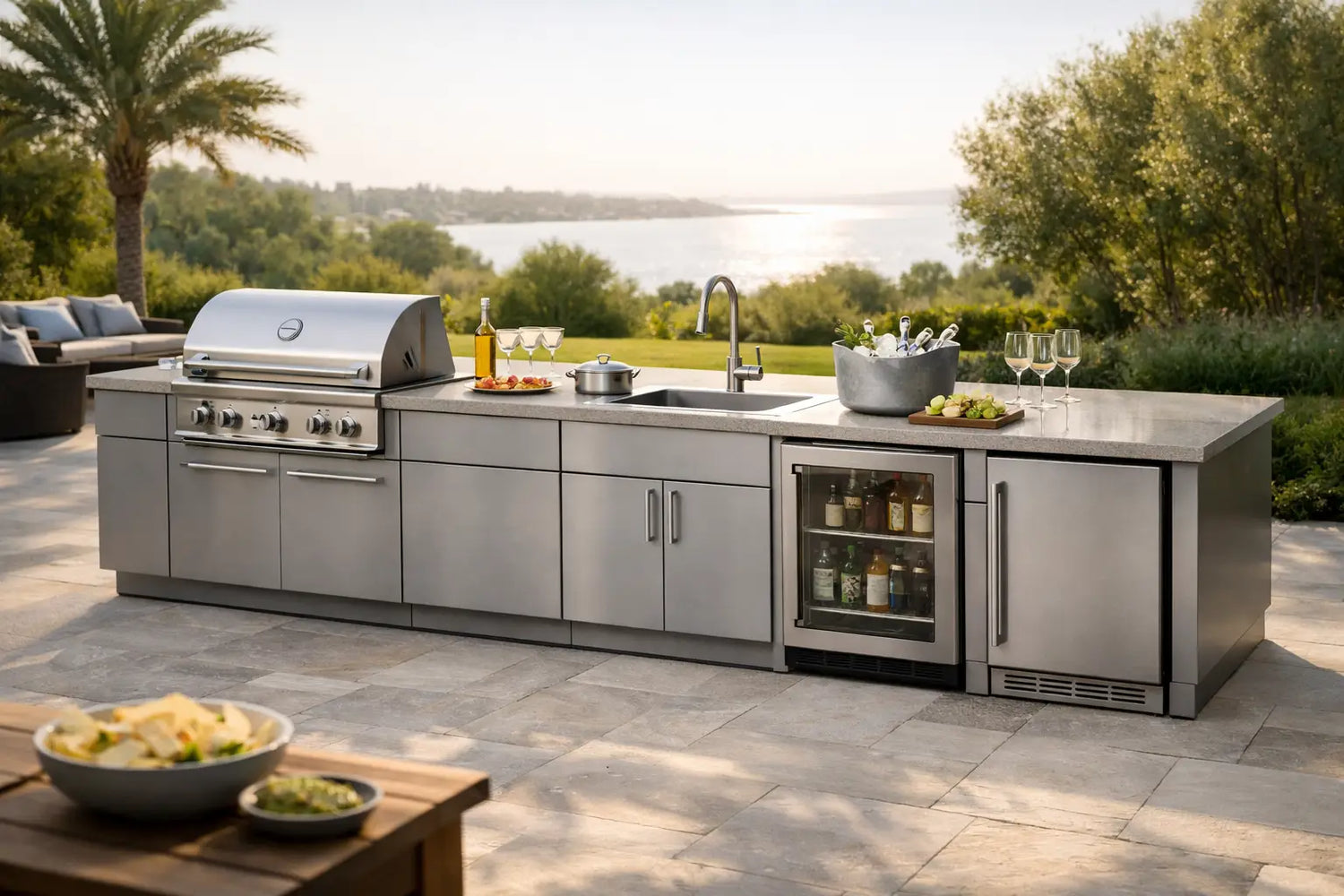
A true quick-ship outdoor kitchen system is more complete. It is built as a modular composition, preassembled in controlled conditions, checked before dispatch, and designed to be positioned and connected efficiently. That can dramatically reduce the open-ended work traditionally associated with masonry islands and fully site-built kitchens.
Delivery timelines still depend on the selected configuration, destination, access conditions, and appliance availability. A highly personalized layout with a rare finish or specialty appliance may require more lead time than a stocked linear configuration. The advantage is clarity: rather than managing a chain of separate vendors, the buyer starts with a defined system, a known specification, and a much cleaner path to completion.
Why Preassembled Modules Change the Project
Conventional outdoor kitchens often appear simple on a plan, then become complex in the field. Cabinet frames must be built or leveled, cladding installed, counters measured, cutouts coordinated, appliances fitted, and finishes corrected around real-world site conditions. Every handoff introduces time, cost exposure, and the possibility that the final composition will not match the original vision.
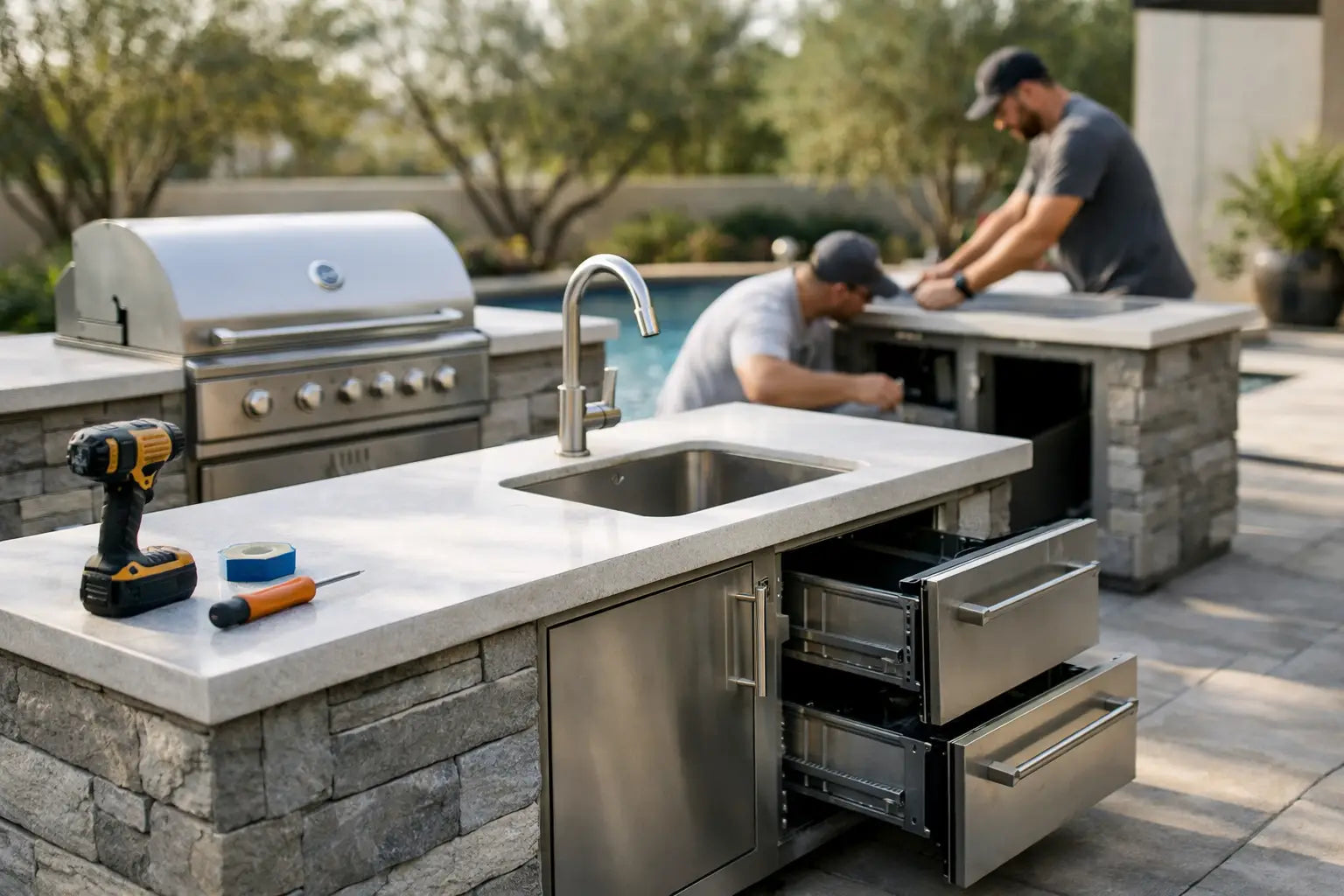
Preassembled modular systems move much of that complexity off site. Cabinets, appliance housings, drawers, doors, work surfaces, and integrated details are engineered as a single coordinated solution. The result is not merely a quicker installation. It is a more controlled result, with alignment, spacing, and finish continuity resolved before the kitchen reaches the property.
This matters especially for design-led homes. A poorly proportioned outdoor island can make even a beautiful terrace feel improvised. By contrast, a purpose-built system creates visual order: the grill sits at the proper height, storage is where it is needed, and the kitchen reads as furniture-grade architecture rather than a collection of components.
For hospitality projects, the value is even more immediate. A rooftop lounge, resort suite, or premium rental property may have a narrow installation window between construction phases or booking dates. A modular kitchen can help teams furnish the space with less on-site noise, dust, and trade congestion. It also supports repeatability when multiple properties require a consistent guest experience.
The Details That Separate Luxury From Convenience
Fast delivery alone does not make an outdoor kitchen premium. The most successful quick-ship systems combine pace with materials and engineering that can withstand the realities of outdoor use.
Start with the structure. Outdoor cabinetry must resist moisture, temperature shifts, UV exposure, and routine cleaning without warping, swelling, or losing its finish. Durable, weather-resistant materials are fundamental, particularly in coastal settings, exposed rooftops, and vacation homes that may remain unused for periods of time.
Then consider the working experience. A luxury outdoor kitchen earns its footprint through function: generous prep space, drawers that keep tools organized, storage for serving pieces, and appliance placement that allows the cook to stay part of the conversation. A grill should not dominate the composition at the expense of usable counter space. Likewise, a sink, refrigerator, or side burner should be added because it improves how the space is used, not simply because it fills a catalog checklist.
Appliance compatibility deserves close attention. Buyers often begin with a preferred cooking ecosystem, whether that means a Napoleon grill, Broil King grill, Big Green Egg, or another established brand. The cabinet and countertop solution must be engineered for that exact appliance, including ventilation, clearances, access panels, and the correct cutout dimensions. A system that looks clean in a rendering but creates service headaches later is not a luxury purchase.
Choosing the Right Layout for the Space
The best layout is determined by how the property is used, not just by the available wall length. A compact linear kitchen is often the strongest choice for a balcony, rooftop, pool deck, or smaller patio. It preserves circulation while concentrating cooking, preparation, and storage in one precise run.
Larger terraces can support an L-shaped composition or a kitchen with a social-facing island. These layouts are ideal when entertaining is central to the brief. One side can manage heat and preparation while another creates a natural place for guests to gather. The kitchen becomes part of the architecture of hosting rather than a grill placed beside it.
Do not overlook access. Measure gates, side passages, elevators, stairs, corners, and any changes in elevation before selecting a large preassembled module. A quick-ship system removes avoidable construction work, but the delivery route still needs to be planned with the same care as the kitchen itself. For difficult-access locations, modular sections that can be placed individually may be the better answer.
Utility planning also remains essential. Gas, electric, water, and drainage requirements vary by appliance and local code. The advantage of a plug-and-play approach is that the kitchen arrives ready for final connection, not that professional utility work disappears. Confirm the required services early, and use qualified local installers where necessary. This small amount of preparation prevents the frustrating scenario of a finished kitchen waiting on a missing outlet or gas line.
Where Quick Ship Is the Better Choice
A fully custom, site-built kitchen still has a place. It may be the right route for a highly irregular footprint, a historic property with exact material-matching requirements, or a design concept that calls for an unusually shaped monolithic island. Those projects benefit from the freedom of traditional fabrication, provided the client accepts a longer and more contractor-dependent process.
For most premium residential settings, however, a modular quick-ship system offers a more disciplined balance of customization and certainty. You can select the configuration, finish, countertop, storage, appliance integration, and accessories that suit the property without turning the project into an extended construction site.
This is particularly compelling when the deadline is real: a housewarming event, the beginning of pool season, a second-home handover, or a hospitality opening. The goal is not simply to receive cabinets faster. It is to begin using the outdoor space sooner, with a kitchen that already feels resolved.
A Smarter Brief Before You Order
Before committing to a configuration, define the kitchen around real habits. Consider how many people you host, whether meals are casual or chef-led, which appliances you use most, and whether the kitchen will be exposed to harsh sun, wind, salt air, or freezing conditions. A beautiful system should reduce friction on a busy Saturday afternoon, not create extra steps.
It is also worth distinguishing between visible luxury and practical luxury. Visible luxury is the finish, the silhouette, and the quality of the details. Practical luxury is opening a drawer exactly where the tools belong, having a clean prep surface beside the grill, and knowing the cabinetry will still look composed after years outdoors. The finest systems deliver both.
ELEEXA approaches this category as an engineered outdoor environment rather than a collection of cabinets. Preassembled modules, design-led finishes, and integration with leading grill brands allow buyers to create a tailored result while avoiding the usual assembly burden.
A well-chosen outdoor kitchen should make the property feel more complete from the first gathering, not become another project waiting for trades to finish. Choose the system that gives your space the presence it deserves and your time back to enjoy it.