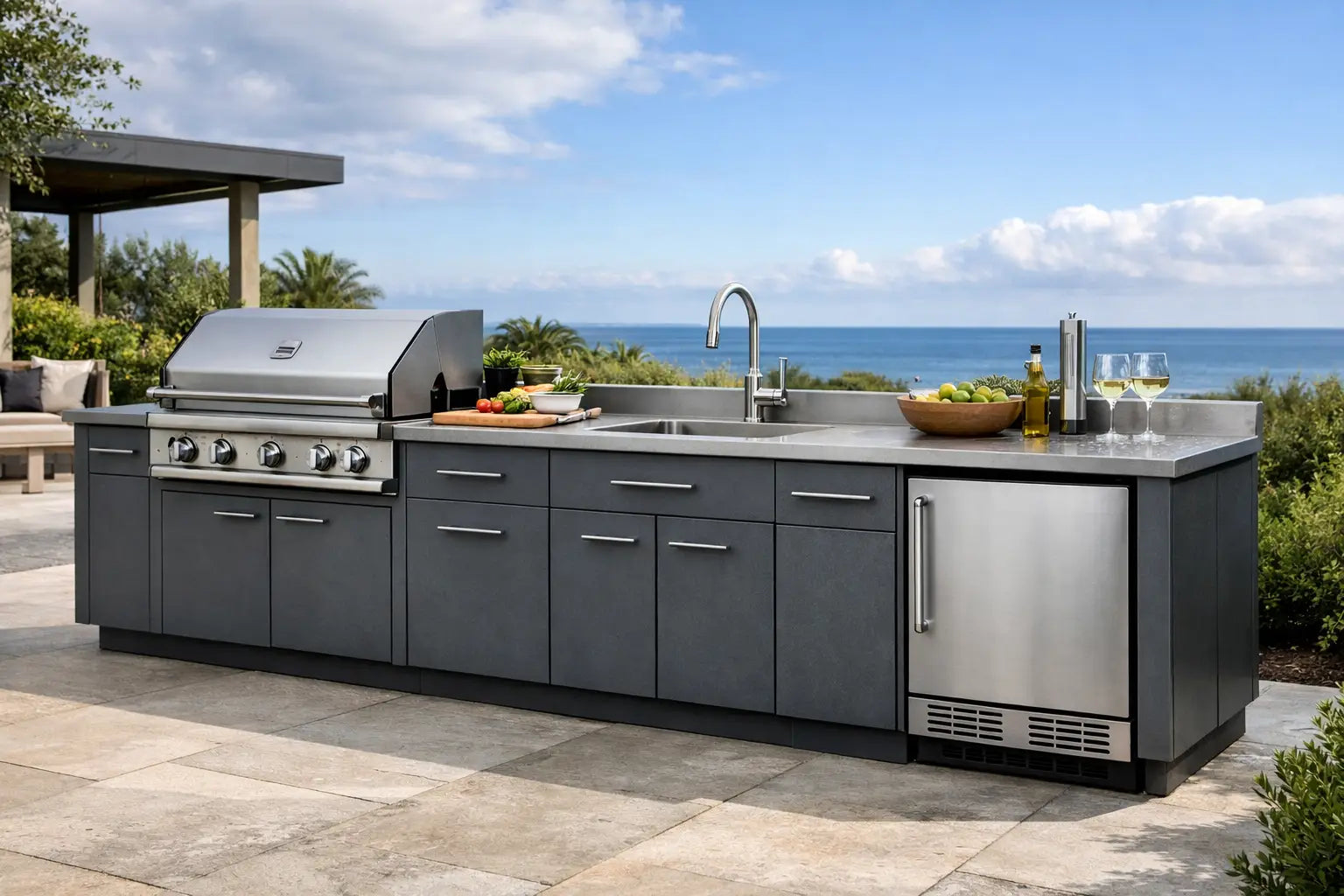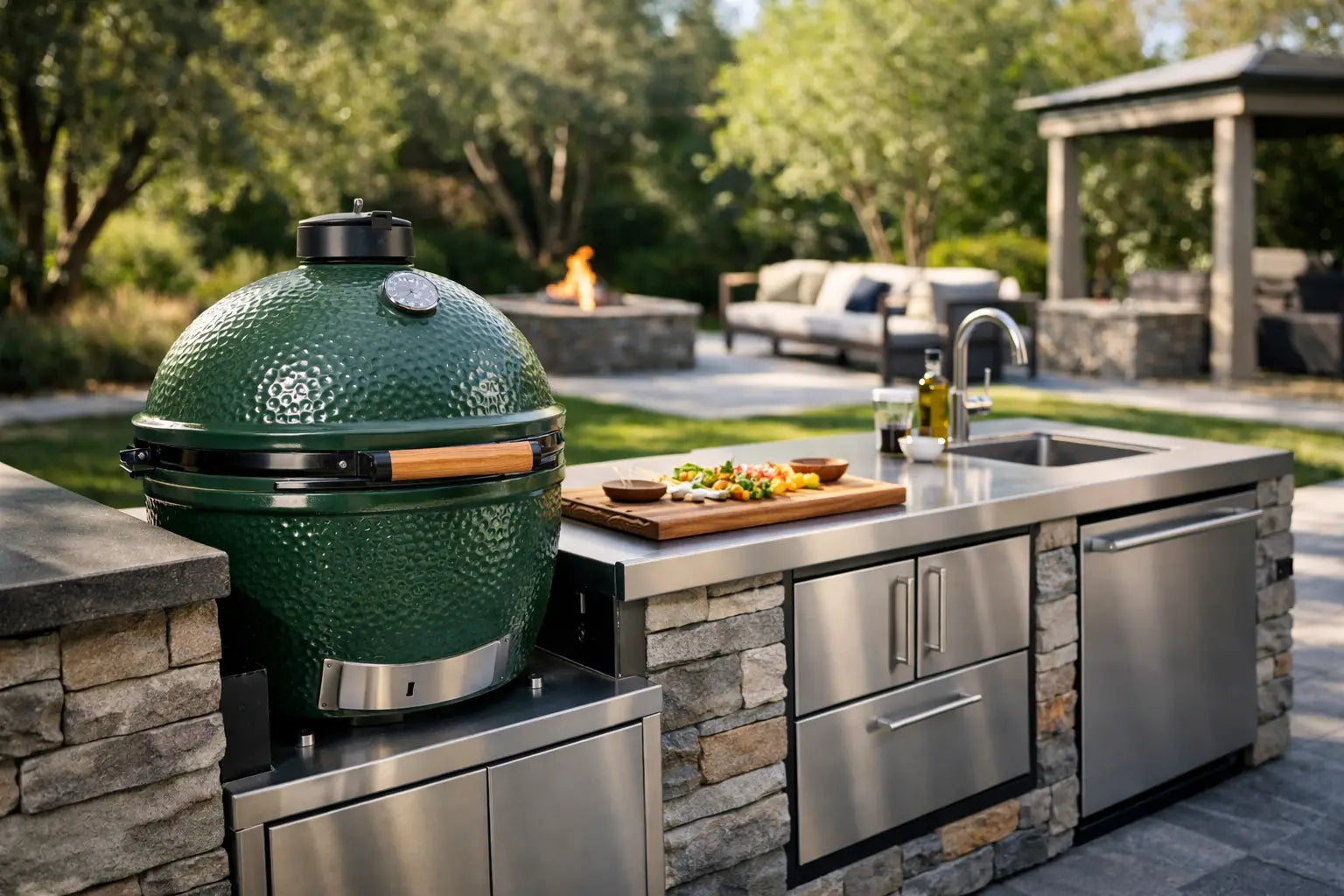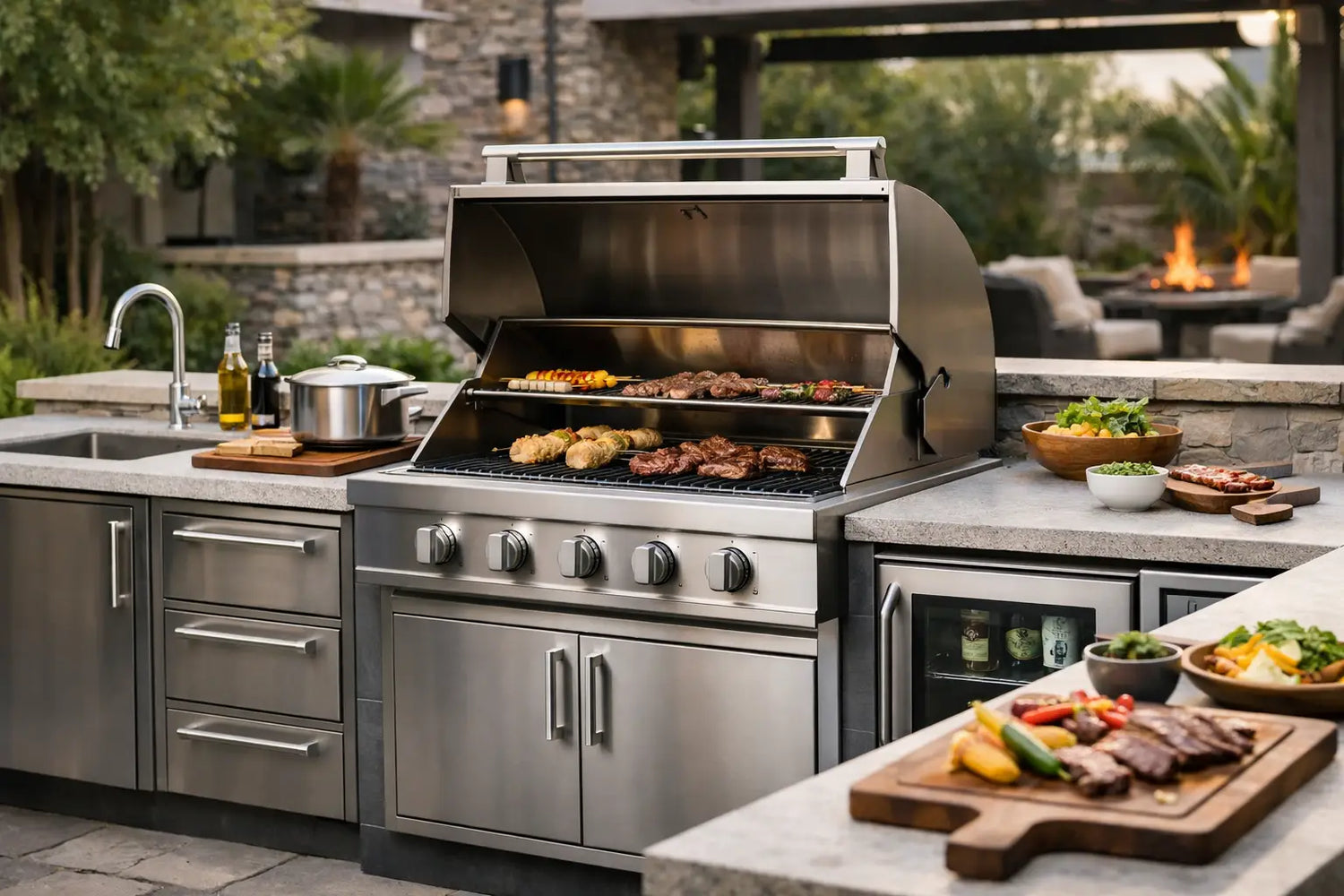
A great patio can be ruined by one bad decision - treating the grill area like an afterthought. If you are investing in a serious outdoor living space, the built in grill outdoor kitchen module is usually the point where style, performance, and practicality either come together beautifully or fall apart under poor planning.
For homeowners, architects, and hospitality buyers, this is not just about adding a grill cabinet. It is about creating a cooking zone that looks intentional, performs at a high level, and avoids the mess of a traditional custom build. The right module gives you the visual discipline of luxury design with the speed and simplicity that modern projects demand.
What a built in grill outdoor kitchen module actually does
At its best, a built in grill outdoor kitchen module is a fully engineered section of an outdoor kitchen designed to house a built-in grill and support the way people actually cook outside. That means proper dimensions, structural stability, weather-ready materials, ventilation planning, and enough surrounding workspace to make the grill useful rather than decorative.
This is where many projects go wrong. A grill alone does not create a kitchen. Once you start cooking outdoors at a higher level, you need prep space, storage, access to gas or power where required, and a layout that feels natural during service. A grill module becomes the operational center of the entire setup.
In premium projects, it also needs to look composed. The proportions matter. The finish matters. The integration with adjacent modules matters. A luxury outdoor kitchen should read like architecture, not a collection of unrelated boxes lined up against a wall.
Why modular is changing the category
Traditional built-in outdoor kitchens still appeal to buyers who want fully site-built masonry or highly customized contractor work. There is a place for that. But the trade-off is usually time, coordination risk, hidden cost, and inconsistent finishing quality.
A modular built in grill outdoor kitchen module answers those problems directly. Instead of starting with raw framing, multiple subcontractors, and a long installation timeline, you start with a pre-engineered unit designed for fast placement and clean integration. That changes the buying experience in a meaningful way.
You get predictability. You know what the finished result should look like before the project starts. You reduce installation complexity. You also avoid the familiar custom-build scenario where the grill arrives, the cutout is slightly wrong, the countertop fabricator blames the installer, and the client is left with an expensive compromise.
For high-end residential properties and hospitality environments, this matters even more. Delays are costly. Poor fit and finish are visible. And outdoor spaces are now expected to deliver the same visual standard as interior kitchens.
The biggest buying decisions happen before you pick the grill
Most buyers begin with the grill brand. That is understandable, but it is rarely the smartest starting point. The more important question is how the module will function within the full outdoor kitchen.
Start with cooking habits. If the space is primarily for weekend entertaining, a wider prep area beside the grill may matter more than adding more closed storage. If the kitchen will support frequent hosting or rental use, serviceability and durable surfaces should move higher on the list. If the property is exposed to salt air, driving rain, or strong sun, material quality is not an upgrade. It is the baseline.
Then consider placement. A grill module against a rear wall behaves differently than one installed on an open terrace or rooftop. Wind exposure, circulation space, and proximity to seating all affect the experience. A beautiful module placed in the wrong spot will still feel awkward every time the grill is used.
This is also where buyers need to think beyond visual inspiration. The best outdoor kitchens are not designed from photos alone. They are designed around movement, heat, serving flow, and durability.
Compatibility is not a detail
A premium grill module should be designed around real compatibility, not vague claims. Built-in grills vary in cutout requirements, lid clearance, ventilation needs, and utility access. If the module is not engineered for the grill platform you want, installation becomes a workaround rather than a finished solution.
That is why compatibility with established grill ecosystems matters. Whether the project calls for Napoleon, Broil King, Big Green Egg, or another major brand, the module should support proper fit, clean integration, and a professional appearance from every angle.
Materials decide whether luxury lasts
Outdoor kitchens live in conditions that punish weak materials quickly. Sun, moisture, grease, freeze-thaw cycles, and airborne debris expose every shortcut. A module may look impressive on delivery day and tired one year later if the materials are not truly exterior-grade.
This is where premium manufacturing separates itself from decorative outdoor furniture. Powder-coated metals, marine-grade components where needed, weather-resistant finishes, and properly selected countertop materials all play a role. So does engineering discipline. Doors should close cleanly. Panels should stay true. Surfaces should be easy to maintain without looking industrial.
There is no perfect material for every climate and every buyer. That is the nuance. Some finishes prioritize visual warmth, others maximize resilience. Some countertop options feel more architectural, while others are chosen because they handle heavy use with less fuss. The right answer depends on the property, the exposure, and how the kitchen will actually be used.
Design matters because the grill is always on display
The grill module is often the visual anchor of the outdoor kitchen. It draws the eye first and sets the standard for everything around it. If it looks bulky, generic, or disconnected from the rest of the layout, the whole kitchen feels less refined.
A well-designed module should frame the grill rather than fight it. The lines should be deliberate. The proportions should feel balanced. Adjacent storage, side shelves, and countertops should support the grill without making the composition feel crowded.
For luxury homes and hospitality spaces, this becomes even more important. Outdoor kitchens are no longer hidden utility zones. They are part of the property’s identity. They appear in listing photography, shape guest perception, and influence how the space is used socially.
This is one reason modular systems from design-led manufacturers are gaining ground. They offer the discipline of a unified collection, so the grill module feels like part of a complete kitchen rather than a retrofitted appliance station.
Speed is not a shortcut when the system is engineered well
Some buyers still assume faster installation means lower quality. In premium outdoor kitchens, that is often outdated thinking. Speed becomes an advantage when the module is pre-assembled, precision-built, and designed to arrive ready for placement rather than fabricated from scratch on site.
That efficiency removes friction from the project. Fewer trades are needed. Fewer variables are introduced. The end result is cleaner because more of the work happens under controlled manufacturing conditions instead of in changing weather on a job site.
For clients who want a better path than a fully custom masonry project, this is exactly the appeal. A brand like ELEEXA positions the built in grill outdoor kitchen module not as a compromise, but as a smarter luxury format - faster, more exact, and significantly easier to deliver at a high visual standard.
Who should choose a built in grill outdoor kitchen module?
This approach suits buyers who want a polished outdoor kitchen without inheriting a construction project. That includes homeowners building out patios, pool areas, rooftops, and second homes, as well as developers and hospitality teams furnishing premium properties efficiently.
It is especially compelling when time matters, contractor coordination is limited, or the project requires a dependable finish level across multiple units or locations. It also makes sense for design-conscious buyers who want customization but do not want to start from a blank sheet with every detail fabricated on site.
That said, there are cases where a completely site-built solution still fits. If the layout is highly irregular, if the design must match a very specific architectural material palette, or if local construction methods are already locked in, a custom build may still be the right route. The key is being honest about the trade-off between freedom and friction.
What to look for before you buy
The smartest buyers ask a few hard questions early. Is the module genuinely outdoor-rated, or just marketed that way? Is it pre-assembled or supplied as a flat-pack system? Is grill compatibility clearly defined? Does the design allow the module to expand into a full kitchen later? And will the finish still look premium after years of weather exposure and regular use?
You should also evaluate support around the product. Premium outdoor kitchens are major purchases. Clear specifications, configuration guidance, delivery planning, and after-sales confidence all matter. Luxury is not only about appearance. It is also about how effortlessly the product moves from specification to daily use.
The best built in grill outdoor kitchen module is not simply the one that holds your grill. It is the one that makes the entire outdoor kitchen feel resolved - visually, functionally, and structurally. When that piece is right, the rest of the space tends to fall into place.
Choose the module with the same discipline you would bring to an interior kitchen, and your outdoor space will reward you every time the lid opens.