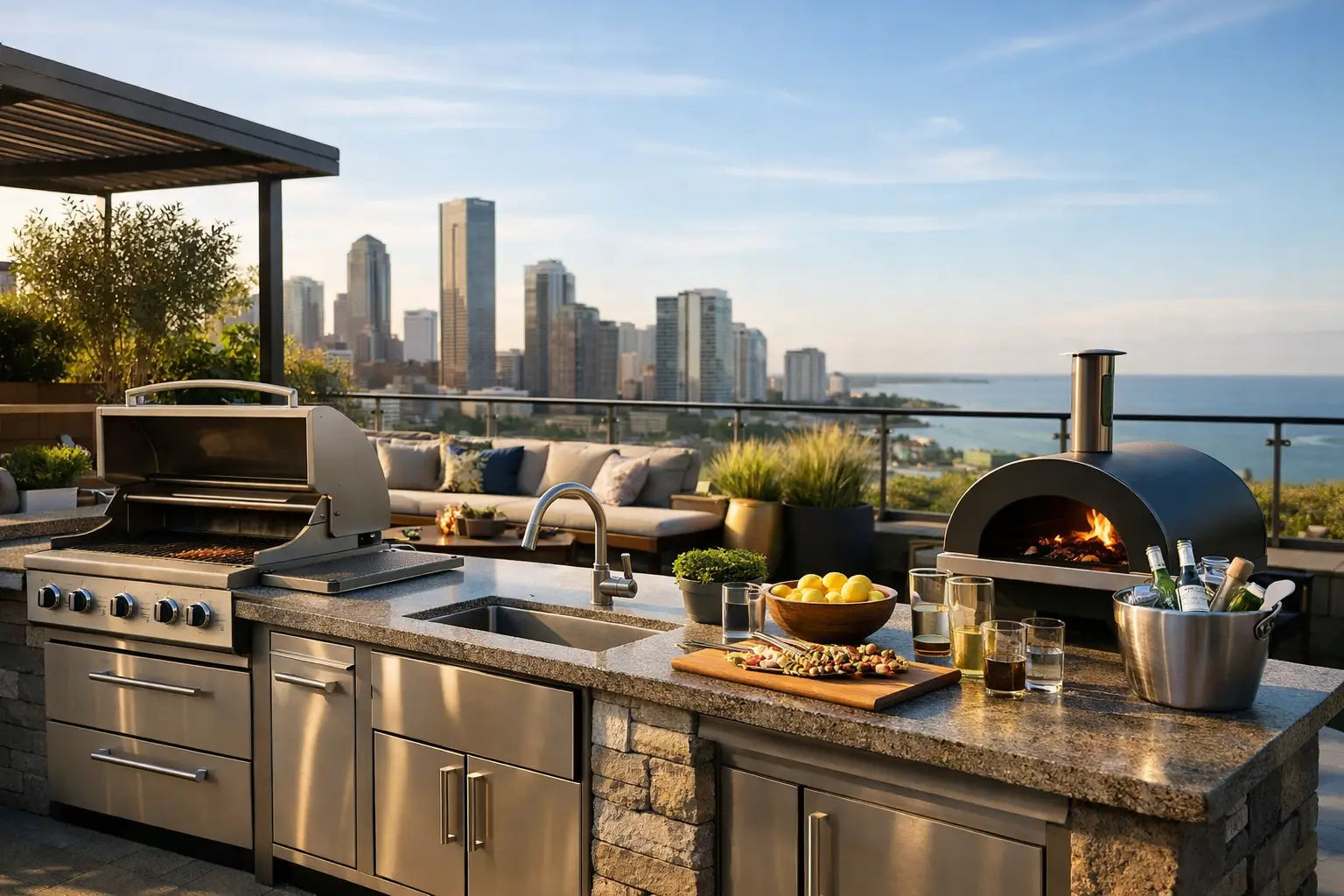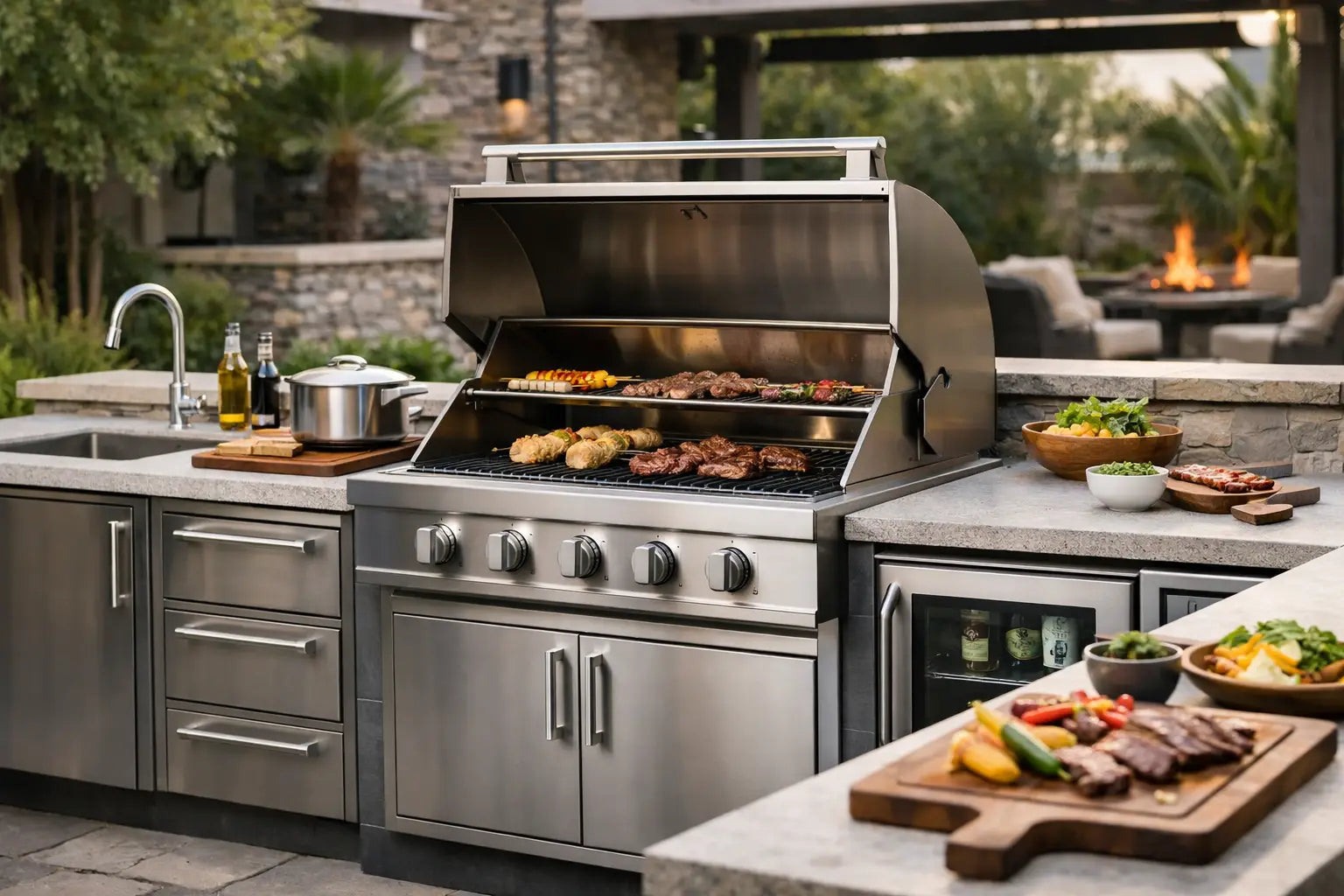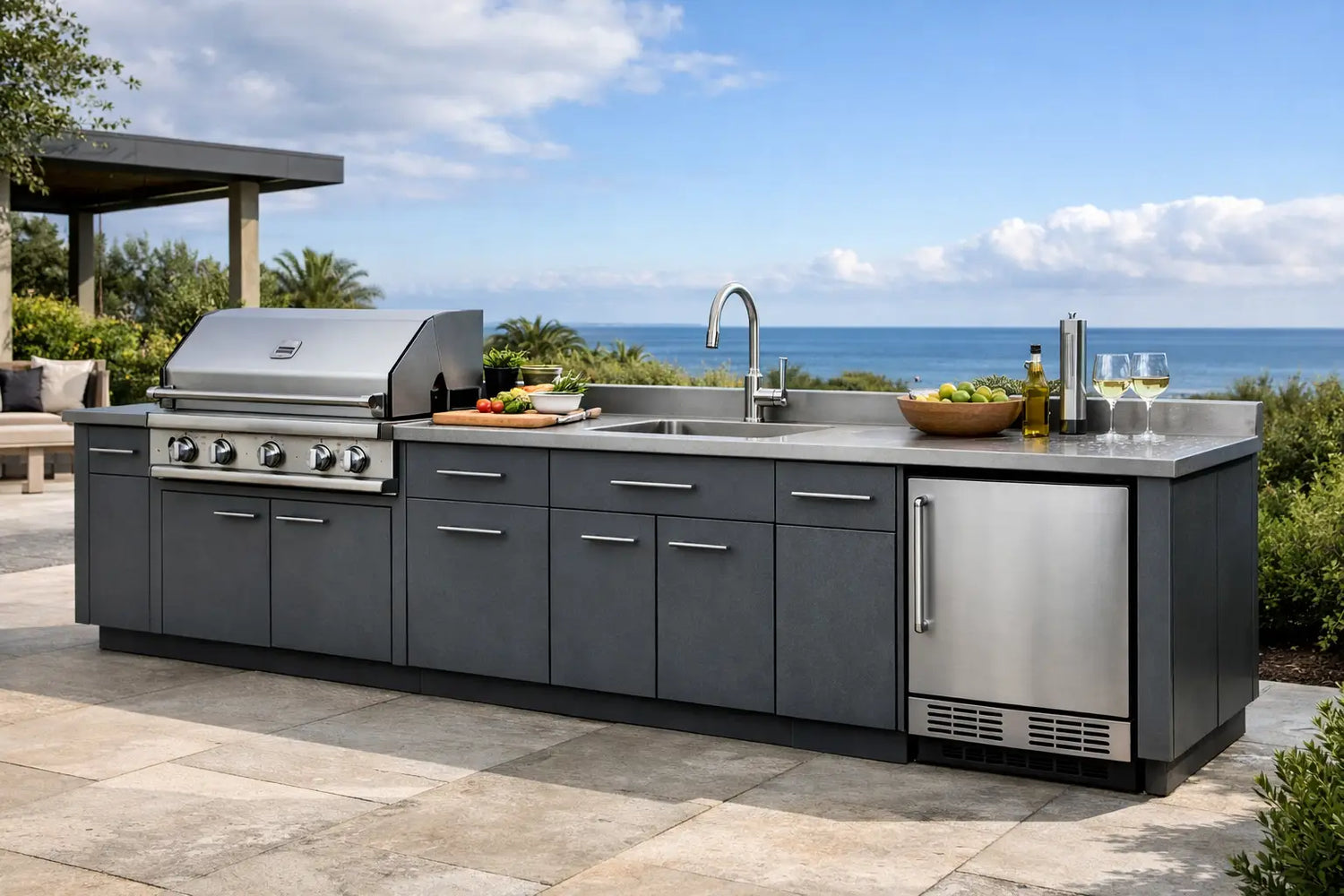
A beautiful grill setup can look impressive on day one and tired by the end of the season if the cabinetry was never built for real outdoor exposure. That is the difference weather resistant outdoor kitchen cabinets make. They are not a cosmetic upgrade. They are the structural foundation that determines whether your outdoor kitchen stays sharp through heat, rain, humidity, salt air, and daily use.
For design-conscious homeowners and commercial buyers alike, cabinets do more than hide gas lines and store tools. They define the visual language of the space, support appliances, and carry the burden of weather year after year. If the cabinet system swells, fades, corrodes, or traps moisture, the entire kitchen starts to feel compromised. In a premium outdoor setting, that is not a small issue. It is the difference between a lasting investment and an expensive rebuild.
What weather resistant outdoor kitchen cabinets really need to resist
Outdoor cabinetry faces a harsher environment than many buyers expect. Sun exposure is the obvious threat, but ultraviolet light is only one part of the equation. Moisture moves in through humidity, rain, standing water, and freeze-thaw cycles. Heat builds around grills and cooking appliances. In coastal areas, salt accelerates corrosion. Even airborne grease and routine cleaning products can wear down lower-grade finishes.
That is why true outdoor performance depends on a complete system, not a marketing label. Weather resistance is about material stability, corrosion control, finish quality, drainage, ventilation, and construction precision. A cabinet may look suitable outdoors in a showroom, but long-term performance shows up in the details you do not always notice at first glance.
The best materials for weather resistant outdoor kitchen cabinets
Material choice is where quality becomes visible over time. Some cabinet materials belong indoors, no matter how convincing the sales pitch sounds.
Marine-grade polymer is popular because it will not rot, absorb water, or rust. It performs especially well in wet climates and requires relatively little upkeep. The trade-off is aesthetic. In many systems, polymer can look more practical than architectural unless it is paired with elevated design detailing.
Powder-coated aluminum is one of the strongest premium options for modern outdoor kitchens. It is lightweight, corrosion-resistant, and structurally dependable. It also supports refined, contemporary styling that feels appropriate in luxury residential and hospitality projects. Quality matters here. Thin aluminum and weak coatings can dent, scratch, or lose their finish faster than expected, while well-engineered aluminum cabinetry holds its form and appearance exceptionally well.
Stainless steel remains a classic choice, especially around grills, because it tolerates heat and moisture effectively. But not all stainless is equal. Lower grades can show corrosion in coastal or high-humidity settings, and fingerprinting is a common frustration. Stainless can still be the right answer, especially in professional or commercial-inspired spaces, but buyers should look closely at grade, finish, and surrounding conditions.
Wood, MDF, particleboard, and standard indoor laminate should be approached with real caution outdoors. Even when treated, these materials are often vulnerable at edges, fastener points, and hidden joints. They may survive for a while in a covered patio, but "covered" does not mean climate-controlled. If longevity is the goal, these materials rarely deliver the confidence a premium project deserves.
Why cabinet construction matters as much as material
Even the best material can underperform in a poor design. Outdoor cabinets need precise fabrication and a construction method that accounts for exposure from every angle.
Welded or expertly engineered frames generally outperform loose, flat-pack style assemblies in outdoor conditions. Fewer weak points mean less movement over time. Tight tolerances also help doors and drawers stay aligned after seasonal temperature changes.
Drainage is equally important. Water will find its way into outdoor environments, whether through direct rain, cleaning, or humid air condensation. Cabinet systems should be designed so moisture does not get trapped inside base units or around hardware. Ventilation also matters, particularly near grills, sinks, refrigerators, and gas components.
The premium difference often comes down to this: better systems are designed as outdoor products from the beginning, not adapted from indoor cabinetry with a few weatherproof claims added later.
Finishes and hardware are where durability is won or lost
The finish is not just about color. It is the first line of defense against sun, moisture, grease, and abrasion. On metal cabinetry, a high-performance powder coat can provide excellent protection and a clean architectural look. But coating thickness, curing quality, and surface preparation all affect lifespan.
Hardware deserves the same scrutiny. Hinges, drawer slides, handles, and fasteners are exposed every time the kitchen is used. If they are not corrosion-resistant, failure can start early and spread quickly. Soft-close hardware may sound like a luxury feature, but in outdoor cabinetry it also signals a more refined level of engineering and user experience.
This is where premium buyers should slow down. Cabinet boxes may survive, but if the hardware deteriorates, the kitchen still feels worn. A superior outdoor kitchen is cohesive in its durability. Every touchpoint should be built to match the environment.
Weather resistant outdoor kitchen cabinets and design value
Performance is essential, but for luxury buyers, appearance is part of the value equation. Cabinets occupy most of the visual field in an outdoor kitchen. They determine whether the space feels like a true extension of the home or a bulky utility zone built around a grill.
Weather resistant outdoor kitchen cabinets should preserve not only structure, but also design intent. Clean lines, consistent panel reveals, integrated appliance cutouts, and stable finishes matter because outdoor entertaining is highly visual. The kitchen is often positioned next to a pool, terrace, rooftop lounge, or garden dining area. If the cabinetry begins to chalk, warp, stain, or discolor, the entire setting loses impact.
That is one reason modular premium systems have become so compelling. A well-made pre-assembled cabinet solution can deliver a higher level of design consistency than a site-built alternative that depends on multiple trades, inconsistent fabrication, and unpredictable installation conditions. For buyers who want speed without sacrificing aesthetics, that balance is powerful.
How to evaluate cabinets before you buy
The right cabinet choice starts with the environment. A covered urban terrace has different demands than a beachfront property or a mountain home with freeze-thaw exposure. Ask what the cabinets are made from, but also ask how they are built, coated, ventilated, and tested.
Look at door alignment, drawer movement, interior finish quality, and edge detailing. Ask whether the cabinetry arrives pre-assembled or requires field assembly. Installation complexity is not a small issue. More assembly often means more room for error, more labor, and more on-site adjustments that affect long-term performance.
Compatibility matters too. If your kitchen will include a built-in grill, kamado, sink, refrigerator, or storage accessories, the cabinet system should be designed around those integrations rather than forcing custom modifications. Precision fit leads to cleaner results and fewer future problems.
For many high-end buyers, this is where a brand like ELEEXA stands apart. The combination of fully pre-assembled modules, architectural styling, weather-resistant construction, and major grill compatibility offers a cleaner path to a luxury result without the drag of a complicated custom build.
The trade-offs buyers should understand
There is no single cabinet material or configuration that is perfect for every project. Aluminum offers an excellent blend of low maintenance, contemporary style, and corrosion resistance, but the best versions sit firmly in the premium category. Stainless steel handles heat beautifully, though its visual character and upkeep expectations are not for everyone. Polymer performs well in wet conditions, but design sophistication varies by manufacturer.
Budget is part of the equation, but so is replacement cost. Less expensive cabinets can appear attractive at purchase and far more expensive after a few years of refinishing, hardware replacement, or full reconstruction. For a space tied to entertaining, property value, and daily enjoyment, buying once usually costs less than buying twice.
Maintenance still matters
Weather resistant does not mean maintenance-free. Even high-performance cabinets benefit from routine care. Wipe down surfaces to remove grease, pollen, and salt residue. Keep drainage paths clear. Avoid harsh chemicals that can dull finishes or damage protective coatings. Check hinges and slides periodically, especially in coastal environments.
The good news is that premium outdoor cabinetry should ask for simple maintenance, not constant attention. If a cabinet system requires protective rituals just to stay presentable, it is probably not the right outdoor product to begin with.
The smartest outdoor kitchen decisions are usually the least dramatic. Choose cabinetry that is engineered for exposure, designed for the space, and refined enough to hold its presence year after year. When the cabinets are right, everything above them performs better and looks better too.