The grill is centered, the countertops look generous on paper, and the finishes are exactly right - then the first dinner party starts and everyone bottlenecks in one corner. That is how most of the top outdoor kitchen layout mistakes show up: not in drawings, but in real use. A beautiful outdoor kitchen can still feel cramped, awkward, exposed, or underpowered if the layout was treated as decoration instead of infrastructure.
In premium outdoor living, layout is what turns a cooking zone into an experience. It shapes how you move, where guests gather, how smoke travels, where prep happens, and whether the space still feels refined after years of weather exposure. The smartest designs are not just visually balanced. They are engineered around movement, utility access, appliance performance, and the way people actually entertain.
Why top outdoor kitchen layout mistakes cost more than expected
A poor layout rarely stays a design problem. It becomes a performance problem, a comfort problem, and eventually a cost problem. You may need to relocate utilities, replace materials damaged by heat or moisture, or live with a kitchen that always feels compromised.
For homeowners and hospitality buyers alike, the bigger issue is missed potential. Outdoor kitchens are premium architectural features. They should elevate the property, simplify entertaining, and feel effortless to use. When the layout is wrong, even high-end components cannot fully compensate.
1. Treating the outdoor kitchen like an indoor one
One of the most common top outdoor kitchen layout mistakes is copying an indoor kitchen plan outdoors without adjusting for exposure, circulation, and social use. Indoors, walls define movement and protect work zones. Outdoors, there are fewer boundaries, more traffic angles, and far more environmental variables.
A layout that feels efficient inside can become clumsy outside. Guests approach from the patio, pool, lawn, or terrace. Wind shifts heat and smoke. Sun changes where people want to stand. The cook is often hosting, serving, and socializing at the same time.
That means the best outdoor layouts prioritize openness and visibility more than a traditional indoor work triangle. In some spaces, a linear layout is the cleanest and most efficient solution. In others, an L-shape creates better separation between cooking and serving. It depends on the footprint, the traffic patterns, and how formal or relaxed the entertaining style will be.
2. Underestimating clearance around the grill
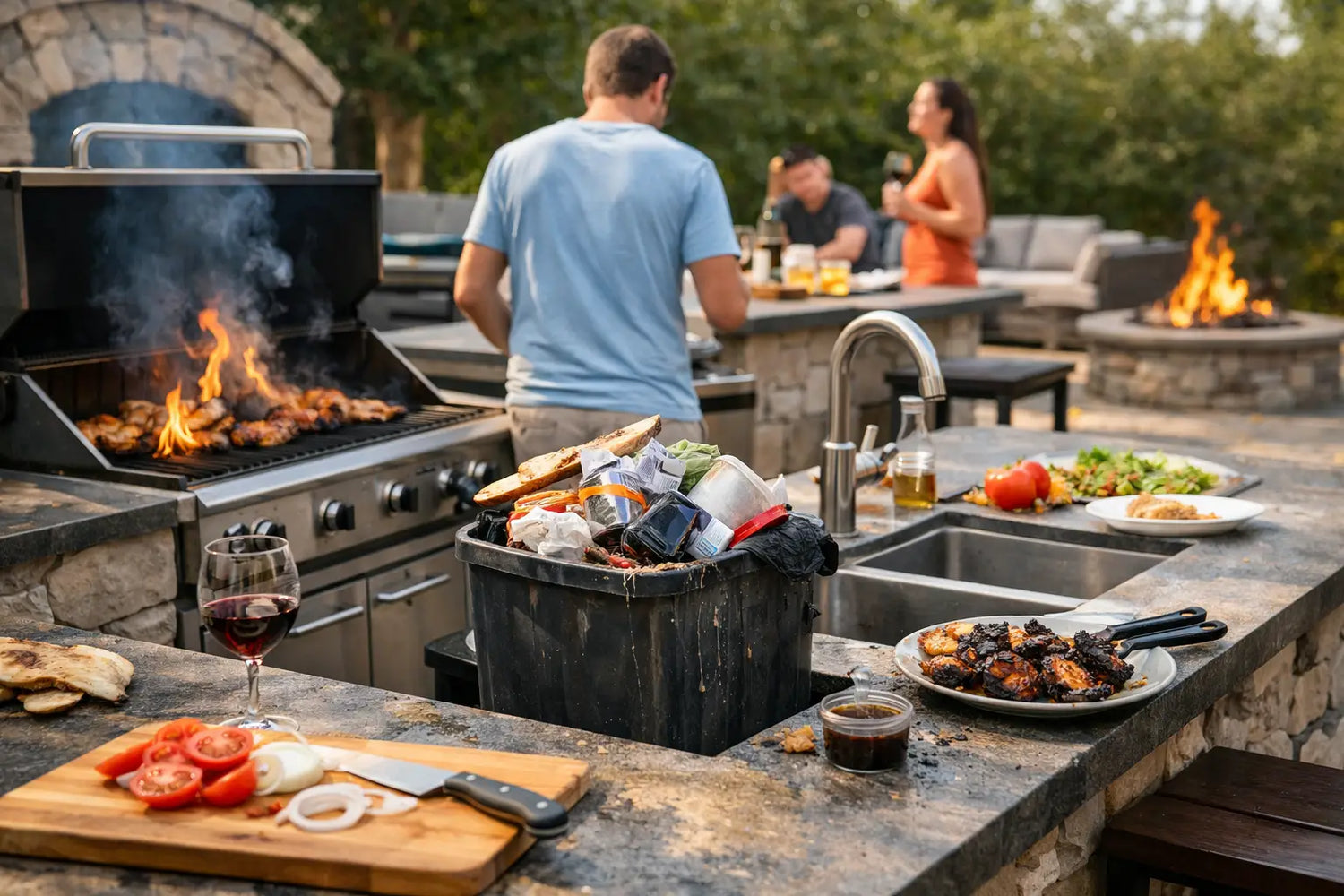
A grill may be the visual focal point, but it needs room to operate properly. Too many layouts look polished in elevation and feel cramped in real life because the grill lid cannot open comfortably, drawers are blocked by nearby seating, or two people cannot pass behind the cook.
This is where luxury design needs discipline. A narrow aisle can make a compact kitchen look sleek, but if it interrupts movement, the result is frustration. The cooking zone should feel protected without feeling boxed in.
You also need to think beyond the grill itself. Side shelves, landing space for trays, and access to refrigeration or waste storage all affect how that area functions. If every movement requires a turn, reach, or sidestep, the kitchen will never feel effortless.
What good clearance really looks like
Good clearance is not just about code or minimum dimensions. It is about allowing the kitchen to work when the grill is hot, cabinet doors are open, and people are circulating nearby. In higher-end projects, comfort spacing usually delivers better long-term value than squeezing in one more module.
3. Ignoring wind, sun, and smoke direction
This mistake is easy to miss early and impossible to ignore later. If the grill faces into prevailing wind, heat management becomes inconsistent and smoke can be pushed directly toward seating or back into the cook's face. If the prep zone sits in full afternoon sun, that elegant surface may become unpleasant to use for half the day.
Outdoor kitchens are part architecture, part environmental planning. Orientation matters. The right layout should account for climate, seasonal usage, and what time of day the space is most active.
For some properties, that means positioning the hot zone where ventilation is naturally better. For others, it means shifting seating a few feet or using a module configuration that protects workflow without trapping smoke. These decisions may seem subtle, but they define whether a kitchen feels exceptional or merely expensive.
4. Separating prep, cooking, and serving too far apart
A kitchen with plenty of square footage can still be inefficient if the work zones are disconnected. This often happens when buyers focus on symmetry or appliance count instead of practical sequence. The sink is on one end, refrigeration on the other, and the grill in the middle with too little landing space where it matters.
The outdoor cooking process is simple: store, prep, cook, plate, serve. The layout should support that rhythm. When it does, entertaining feels smooth. When it does not, the host spends the evening walking back and forth instead of enjoying the space.
This is where modular planning has a clear advantage. A well-composed system allows each function to sit where it naturally belongs, without forcing a full custom build or complex site improvisation. That balance between flexibility and discipline is often what separates premium results from costly guesswork.
5. Designing for appliances, not for people
Luxury outdoor kitchens often include premium grills, refrigerators, sinks, pizza ovens, side burners, and storage. The temptation is to keep adding. But one of the top outdoor kitchen layout mistakes is creating a lineup of impressive components without preserving space for actual living.
An outdoor kitchen is not a showroom wall. It is a social environment. People gather around it, move around it, and use it in groups. If the design fills every available inch with equipment, the space can start to feel rigid and overbuilt.
The right question is not How many appliances can fit? It is Which functions truly belong in this space? A focused layout with the right modules will usually outperform a crowded one. For many buyers, that means choosing fewer elements with better positioning, cleaner integration, and stronger visual balance.
The luxury test
If the kitchen looks complete but entertaining still requires folding tables, people hovering in walkways, or trips back inside for basic prep, the layout was not finished. Premium design should reduce friction, not relocate it.
6. Forgetting utility planning early
Gas, water, drainage, and electrical access should shape the layout from the beginning, not after the design is approved. Yet this is one of the most expensive planning errors in the category. Buyers finalize the visual arrangement first, then discover that utility runs are awkward, exposed, or costly to install.
In a conventional custom build, this can trigger delays, revisions, and avoidable site complexity. Even when the aesthetic remains intact, the project becomes heavier, slower, and more vulnerable to contractor interpretation.
A better approach is to align layout and utility strategy from day one. That does not mean compromising the design. It means making sure the design is grounded in buildable reality. For buyers who want speed, precision, and less installation friction, a pre-engineered modular system can remove much of that uncertainty while still delivering a tailored result.
7. Overlooking weather exposure at the layout stage
Materials matter, but placement matters too. A refrigerator tucked into direct sun will work harder. Storage placed where rain hits constantly will age differently than protected cabinetry. A bar overhang without shelter may look inviting and go largely unused in harsher conditions.
The mistake is assuming that weather resistance alone solves every exposure issue. Premium outdoor products should absolutely be built for the elements, but the layout should still respect those elements. Shade, drainage, wind exposure, and surface temperature all affect how enjoyable the kitchen is day to day.
This is especially relevant for rooftop spaces, coastal homes, and hospitality environments where usage expectations are high. The more demanding the setting, the more intentional the layout needs to be.
8. Choosing the wrong shape for the space
Not every backyard needs an L-shape. Not every terrace can carry an island gracefully. One of the most persistent design errors is forcing a layout type because it feels upscale, even when the footprint calls for something simpler.
A linear kitchen can be the most elegant answer for narrow patios, view-driven spaces, and projects where clean architecture matters more than bulk. An L-shape may be ideal when you want stronger zoning between cooking and serving. A U-shape can feel impressive, but only if there is enough room to avoid crowding.
The best shape is the one that makes movement feel natural and the space feel composed. For many clients, that means resisting the urge to overspecify. Sophistication often comes from clarity, not complexity.
How to avoid top outdoor kitchen layout mistakes before you buy
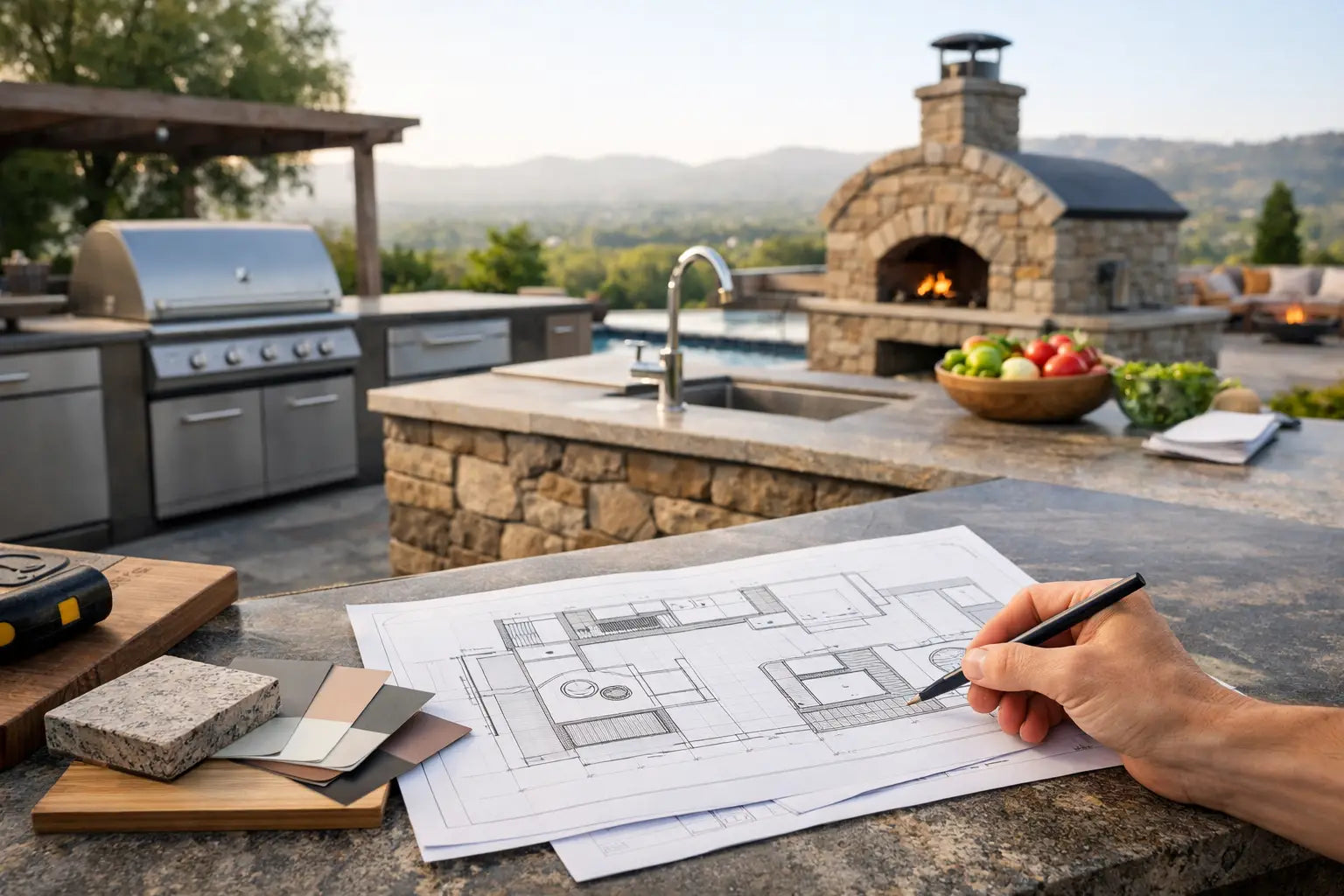
The smartest buyers pause before choosing finishes and ask harder questions. Where will guests approach from? Where does the sun sit at 6 p.m.? Will two people cook together or just one? Does the space need to serve family dinners, large parties, or hospitality turnover? Will the kitchen be used year-round or seasonally?
Those answers should guide the layout before any appliance lineup is locked in. This is where premium planning pays off. A refined outdoor kitchen should arrive with more than good looks. It should solve for flow, utility integration, weather performance, and daily ease from the start.
That is also why discerning buyers increasingly favor systems that are engineered as complete solutions rather than assembled piece by piece in the field. Brands like ELEEXA are raising the category standard by combining architectural design, pre-assembled precision, and easier installation into a format that protects both aesthetics and performance.
A great outdoor kitchen should feel intuitive on the first evening and just as convincing years later. If the layout is right, everything else has a better chance to perform like it belongs there.