A modular kitchen can look straightforward on paper, then swing wildly in price once real decisions start - layout, appliances, finish level, installation, and whether you are buying for everyday use or a showpiece entertaining space. If you are asking how much does modular kitchen cost, the honest answer is that the range is broad, but the reasons behind that range are very predictable.
For premium buyers, price is not just about cabinets and countertops. It is about how the kitchen is engineered, how quickly it can be installed, how well it handles weather and wear, and how polished the final result feels. A lower number may look attractive upfront, but if it brings site delays, pieced-together fabrication, or materials that age badly outdoors, the real cost can climb fast.
How much does modular kitchen cost in practice?
For a basic modular kitchen setup, many buyers land somewhere around $3,000 to $8,000. A more refined mid-range project often falls between $8,000 and $20,000. Once you move into premium outdoor modular kitchens with weather-resistant construction, integrated appliances, luxury finishes, and professional-grade design, budgets commonly start around $20,000 and can rise well beyond $50,000.
That range sounds dramatic because it covers very different products. A compact, entry-level module with limited customization is not competing with a fully pre-assembled outdoor kitchen designed for a villa terrace, rooftop entertaining area, or hospitality property. One is furniture with utility. The other is architecture with performance.
For that reason, the smartest way to budget is not to ask for a single average price. Ask what level of finish, speed, durability, and customization the investment is buying.
The biggest factors behind modular kitchen pricing
The first driver is size. A straight two- or three-module kitchen will naturally cost less than an L-shaped or U-shaped configuration with storage towers, prep zones, refrigeration, and bar seating integration. More footprint means more cabinetry, more countertop surface, and often more delivery and placement complexity.
Materials are the next major cost lever. Powder-coated aluminum, marine-grade components, stainless steel, compact surfaces, porcelain, and premium stone-inspired finishes all push pricing upward compared with standard panel systems. That is not simply a design choice. In outdoor environments, better materials mean less warping, less corrosion risk, and a far longer visual lifespan.
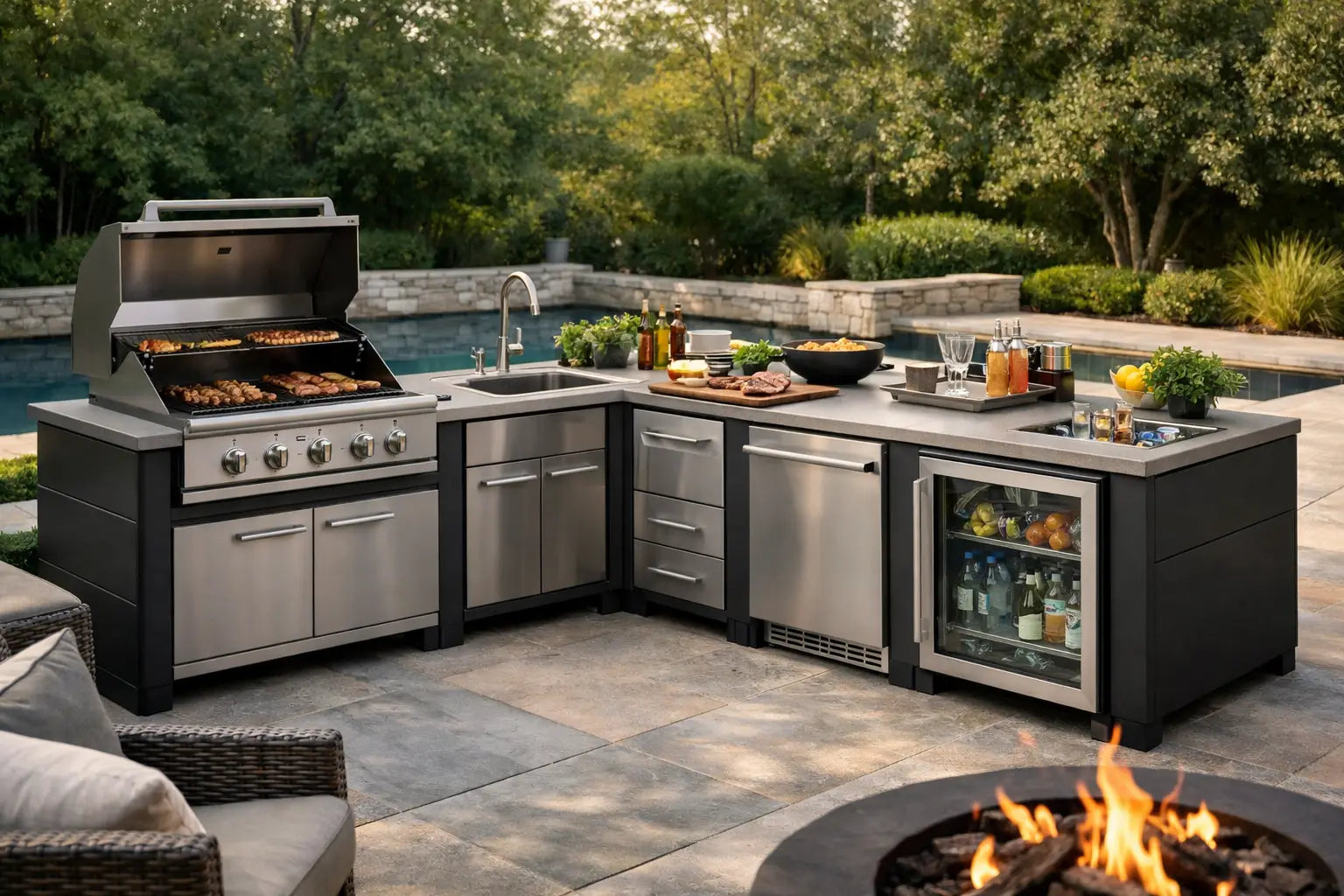
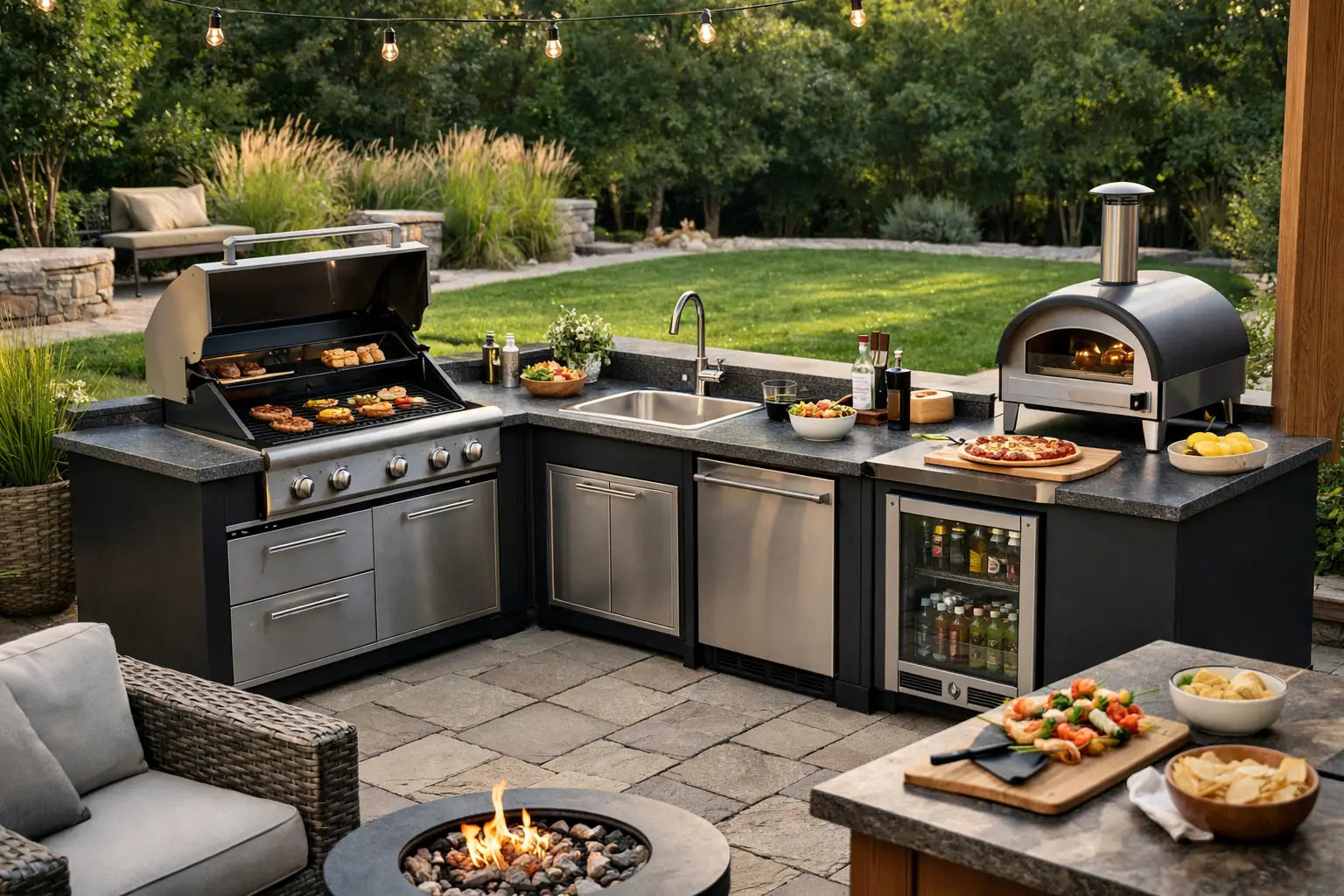
Appliances can change the total dramatically. A kitchen designed around a premium grill head, side burner, sink, beverage fridge, pizza oven, or ceramic cooker insert will cost much more than a cabinet-only setup. Brand compatibility also matters. Integrating with high-end grill ecosystems usually requires more precise engineering and cleaner detailing.
Customization is another defining factor. Standardized modular systems are generally more cost-efficient than one-off site-built kitchens, but not all modular kitchens are equally standardized. Custom color selection, specialized storage, appliance cutouts, lighting, and made-to-fit dimensions all add value and cost.
Then there is installation. This is where many buyers underestimate the difference between a true modular system and a traditional custom build. A pre-assembled, plug-and-play kitchen usually costs more at product level than a flat-pack solution, but it can save considerable time, site labor, coordination headaches, and finishing errors. For many premium homeowners and developers, that trade-off is worth it.
Why outdoor modular kitchens cost more than indoor ones
If your search is really about an outdoor project, expect pricing to sit higher than many indoor kitchen estimates you may find online. Outdoor kitchens need to survive UV exposure, moisture, temperature swings, grease, and heavy entertaining use. That demands a different class of build quality.
This is where premium systems separate themselves from generic cabinetry adapted for patios. Outdoor-rated materials, precision fabrication, drainage-aware design, and proper appliance integration all increase cost, but they also produce the clean, enduring result buyers actually want. A luxury outdoor kitchen is not just a cooking station. It is a permanent extension of the home or hospitality setting.
For affluent homeowners, that matters because replacement is expensive and disruptive. For resorts, boutique hotels, and premium rentals, it matters even more because visible deterioration affects brand perception.
What you are really paying for at each budget level
At the lower end, you are typically paying for function first. You may get modular cabinets, a simple countertop, and limited finish options. These kitchens can work well for straightforward needs, but they rarely deliver a fully integrated luxury look. Storage details may be basic, appliance support may be limited, and the installation experience may still involve more coordination than expected.
In the middle range, the value equation improves. You usually see better construction, stronger design consistency, more finish options, and cleaner appliance integration. This is often the sweet spot for buyers who want durability and visual quality without entering full bespoke territory.
At the premium end, you are paying for engineering, design confidence, and convenience. The kitchen arrives more complete, the materials are chosen for long-term outdoor performance, and the system feels intentional from every angle. This is also where the hidden savings begin to show. Fewer trades, faster installation, lower site risk, and a stronger final presentation can justify a higher ticket.
A brand such as ELEEXA is positioned in this upper tier, where the promise is not just a kitchen, but a more refined path to outdoor living - luxury design, pre-assembled delivery, and zero-assembly stress.
Hidden costs buyers often miss
The biggest surprise is usually site preparation. Even a modular kitchen needs a suitable surface, utility access, and enough clearance for delivery and positioning. If you need electrical work, gas lines, plumbing, drainage, or structural reinforcement, your budget should account for that early.
Delivery can also affect the total. Premium modules are larger, heavier, and more carefully handled than flat-packed components. White-glove logistics, crane access, or difficult site conditions may add cost, especially for rooftops or properties with restricted access.
There is also the finish around the kitchen. Buyers often focus on the module price and forget backsplashes, pergolas, bar seating, flooring transitions, ambient lighting, and adjacent dining elements. In a luxury setting, these surrounding features shape the final impression just as much as the kitchen itself.
Is modular more affordable than custom-built?
Usually, yes - but only if you compare total project cost rather than cabinet price alone.
A traditional custom-built outdoor kitchen can appear flexible, yet it often involves designers, fabricators, installers, stone specialists, appliance suppliers, and site trades working on separate timelines. That creates more opportunities for delay, revision, and budget drift. Modular systems compress much of that complexity into a finished product.
So while a premium modular kitchen may not be the cheapest line item, it can be the more efficient investment. You are buying predictability along with design.
How to budget without overbuying or underbuilding
Start with the role the kitchen will play. A compact grilling zone for occasional weekend use has very different requirements from an entertainment centerpiece for a pool terrace or hospitality venue. Once that purpose is clear, the right level of cabinetry, prep space, refrigeration, and seating integration becomes easier to define.
Next, separate must-haves from image upgrades. A premium grill, durable cabinetry, and weather-resistant countertop may be essential. Extra storage towers, specialty appliances, or dramatic finish upgrades may be optional. This keeps your budget aligned with how the space will actually be used.
Finally, think in lifecycle terms. A kitchen that installs quickly, holds its finish, and stays visually sharp for years can be the better financial decision even at a higher initial price. That is especially true when the outdoor space is meant to elevate property value, hosting quality, or guest experience.
So, how much should you expect to spend?
If you want a simple answer, expect a modular kitchen to cost anywhere from a few thousand dollars for a basic setup to $20,000 to $50,000 or more for a premium outdoor system with appliances, customization, and luxury-grade materials.
If you want the more useful answer, expect price to follow ambition. The more your project demands design integrity, fast installation, premium finishes, and true outdoor durability, the more the budget moves upward. That is not price inflation. That is the cost of getting the result right the first time.
The best modular kitchens are not bought because they are cheap. They are chosen because they remove friction, elevate the space, and deliver a level of finish that feels as considered as the home around them. When you budget with that standard in mind, the numbers become much easier to judge.