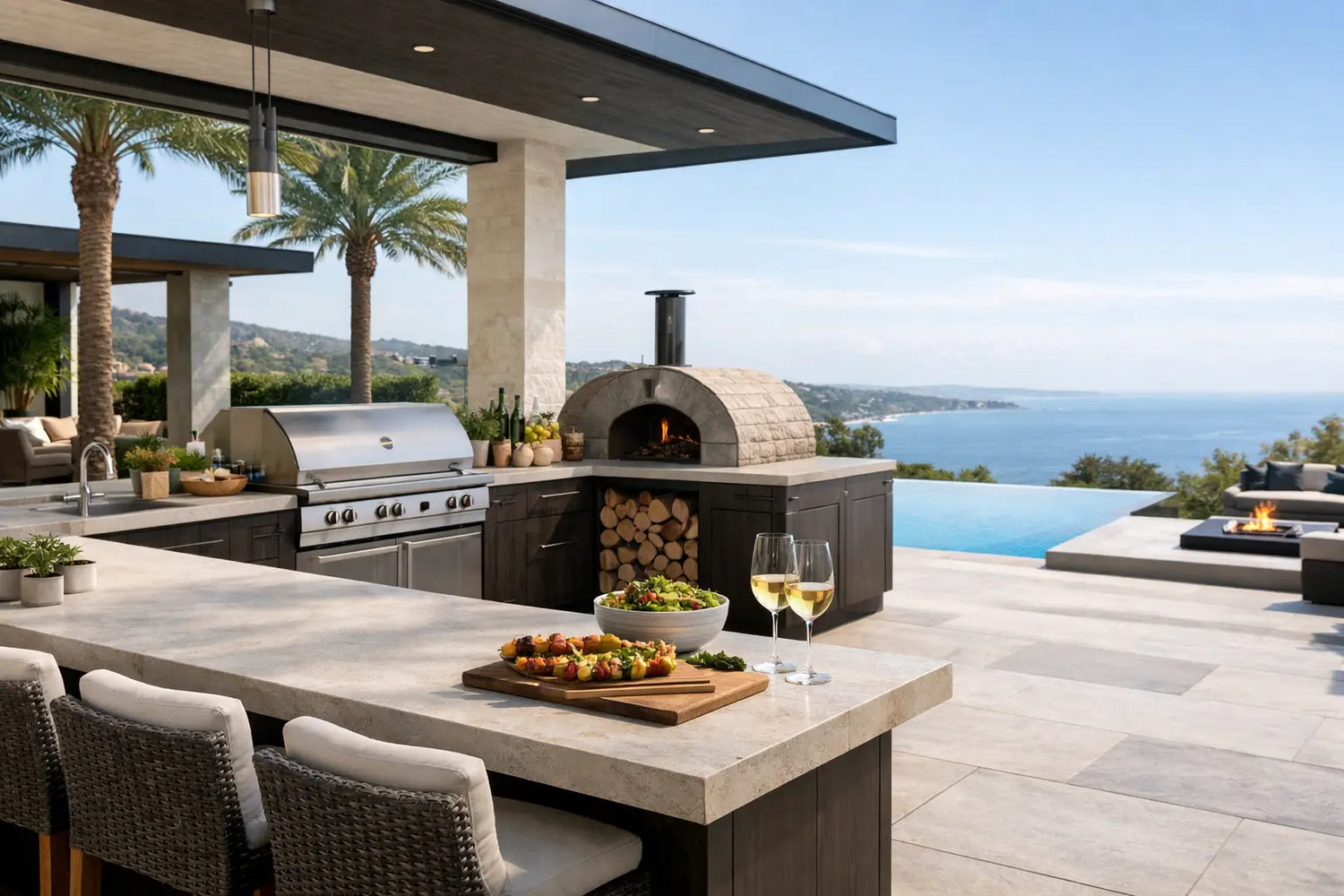
A true outdoor kitchen for luxury villa living should feel like part of the architecture, not an appliance lineup placed beside the pool. It needs to hold its own against stone facades, panoramic views, landscaped gardens, and carefully chosen outdoor furniture - while making hosting feel effortless from the first drink to the last course.
That standard changes the buying decision. The question is not simply which grill to choose. It is how to create a complete cooking, serving, and social space that performs beautifully in changing weather, supports the way you entertain, and arrives without turning your finished property into a construction site.
Start With the Villa, Not the Appliance
The most successful luxury outdoor kitchens begin with the setting. A compact courtyard calls for a different composition than a large sea-view terrace, a shaded garden pavilion, or a rooftop lounge. Before selecting finishes or equipment, study how people naturally move through the exterior: from the indoor kitchen to the terrace, from the pool to the dining area, and from seating to the view.
The kitchen should serve those movements rather than interrupt them. On a generous terrace, a linear kitchen can create a crisp architectural edge along a wall while leaving the center open for dining. On an exposed plot, positioning the kitchen beside a windbreak or under a pergola can make the grill more comfortable to use and protect guests from heat and smoke. For a villa used for large gatherings, an island arrangement may create a stronger social focal point, provided there is enough circulation space around it.
Scale matters as much as layout. An oversized kitchen can dominate an intimate garden, while a minimal grill cabinet can look underpowered beside a substantial contemporary villa. Aim for visual proportion: cabinetry lengths, countertop thicknesses, and appliance sizes should relate to nearby windows, exterior cladding, and furniture rather than exist as separate design decisions.
Design an Outdoor Kitchen for Luxury Villa Entertaining
Luxury is not defined by adding every possible feature. It is defined by choosing the right functions and placing them where they remove friction from the experience. A well-planned outdoor kitchen keeps the host present with guests instead of repeatedly walking indoors for utensils, chilled drinks, prep space, or clean-up.
Start with the cooking style. A high-performance gas grill suits fast, flexible entertaining and weeknight use. A ceramic grill offers a more ritual-led experience for slow roasting, smoking, and live-fire cooking. Some villa owners want both: a primary grill for volume and speed, plus a specialty cooking station for memorable weekend meals. Compatibility with leading grill systems such as Napoleon, Broil King, and Big Green Egg allows the kitchen to be designed around the equipment you already prefer.
Then consider what happens before and after cooking. A generous uninterrupted countertop gives the chef room to prepare and plate. Refrigerated storage keeps beverages and ingredients nearby. Enclosed cabinets keep tools, servingware, and cleaning supplies out of sight. A sink can be highly valuable for properties used frequently or for hospitality settings, but it requires water, drainage, and winterization planning. If the outdoor kitchen will mainly support occasional summer gatherings, more counter space and cold storage may deliver greater day-to-day value than a sink.
The strongest layouts separate hot, cold, and social zones. Place refrigeration where guests can access drinks without crossing the cook’s working area. Keep landing space on both sides of the grill. Position waste storage close to prep, not as an afterthought at the end of the run. These details are invisible in a glamorous render, yet they determine whether the kitchen feels composed and intuitive when ten people arrive for dinner.
Choose Materials That Earn Their Place Outdoors
Outdoor environments are demanding. Sun, humidity, salt air, frost, rain, pool chemicals, and airborne dust can all expose weak materials quickly. A luxury villa deserves finishes selected for real performance, not just for a showroom photograph.
Weather-resistant metal cabinetry is a decisive foundation because it provides structural stability, clean lines, and dependable durability. Powder-coated surfaces offer broad color possibilities and a refined, architectural finish, while stainless steel can create a more technical, professional character. The best choice depends on the home’s material palette. Dark matte cabinetry can sharpen a modern concrete-and-glass villa; warmer tones may sit more naturally beside timber, limestone, or Mediterranean plaster.
Countertops deserve equal scrutiny. They must tolerate heat, spills, UV exposure, and regular cleaning, while complementing the villa’s exterior. Porcelain and sintered stone are popular for their high-end appearance and practical resistance. Natural stone brings singular character, but some varieties require more maintenance and can be sensitive to staining or weathering. There is no universally correct answer. The right surface is the one that matches both the design brief and the owner’s appetite for care.
Do not overlook hardware, seals, ventilation, and adjustable feet. Premium outdoor kitchens succeed because the less visible components are engineered for the conditions as carefully as the front panels are styled for the camera.
Avoid the Hidden Cost of Traditional Construction
A built-in masonry kitchen can be impressive, but it is rarely the simplest route. It often requires separate decisions across cabinetry, stonework, utilities, appliances, contractors, and finishing trades. That process can extend timelines, introduce coordination gaps, and leave owners managing costly revisions when site measurements or appliance specifications change.
For a completed villa, the disruption can be especially frustrating. Dust, noise, wet trades, and multiple site visits are the opposite of the relaxed outdoor lifestyle the project is meant to create. Custom construction remains a valid choice when the design demands a one-off structural form, highly irregular dimensions, or a kitchen integrated directly into a permanent architectural feature. But it should be chosen for that reason, not by default.
Pre-assembled modular systems offer a more refined alternative for many properties. The modules arrive engineered as a complete composition, allowing faster placement, cleaner installation, and consistent finish quality. With plug-and-play planning, the focus shifts from managing a construction project to selecting a configuration that fits the space, appliance preference, and entertaining style.
ELEEXA applies this approach to luxury outdoor living with fully pre-assembled modular kitchens built to reduce installation burden without compromising architectural presence. For villa owners and project teams, that means fewer moving parts and a clearer path from specification to finished terrace.
Plan Utilities Early, Even With Modular Furniture
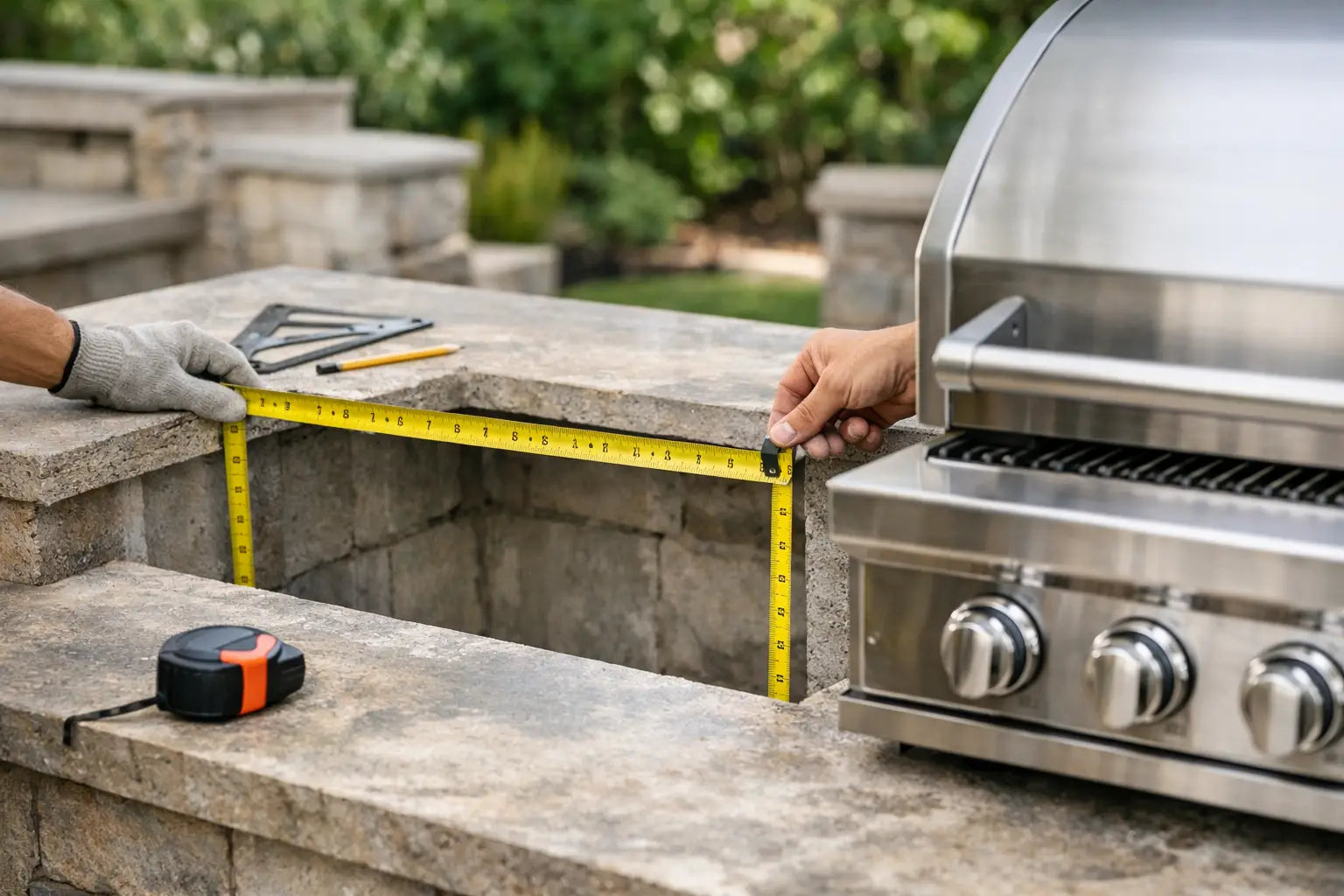
Modular does not mean utility-free. Confirm electrical capacity, gas type and routing, water supply, drainage, ventilation clearances, and local code requirements before ordering. This is where a precise site plan protects the investment.
A gas grill may require a dedicated connection or a discreet solution for bottled gas. Refrigeration needs correctly positioned power. A sink needs more than a visible faucet - drainage must be considered from the outset. In colder climates, water lines must be protected from freezing. In coastal locations, the kitchen may need a more deliberate maintenance routine to remove salt residue and preserve its finish.
Lighting deserves its own decision. Task lighting around the grill and prep surface improves safety, while low-level ambient lighting gives the space its evening character. Avoid harsh, over-bright fixtures that flatten the atmosphere. The kitchen should remain functional after sunset without competing with the villa’s landscape lighting or night views.
Make It Feel Finished, Not Merely Installed
The final layer is what turns an outdoor cooking zone into a destination. Align the kitchen’s colors and lines with the villa’s architecture. Repeat a finish from nearby doors, window frames, pergola elements, or furniture bases. Use bar seating only when it supports how guests gather; on some terraces, a separate dining table creates a more elegant rhythm and protects the view.
A cover, pergola, or overhang can extend the season, but it must be planned with heat clearance and ventilation in mind. Likewise, an outdoor kitchen should not be pushed into the darkest, least desirable corner of the property simply because utilities are nearby. The chef deserves the view too.
The most compelling villa kitchens make outdoor entertaining feel inevitable. Choose a configuration that suits the architecture, specify materials made for the climate, and insist on an installation process that respects the time and quality invested in the home. Then the terrace becomes more than a beautiful place to look at - it becomes the place everyone wants to gather.