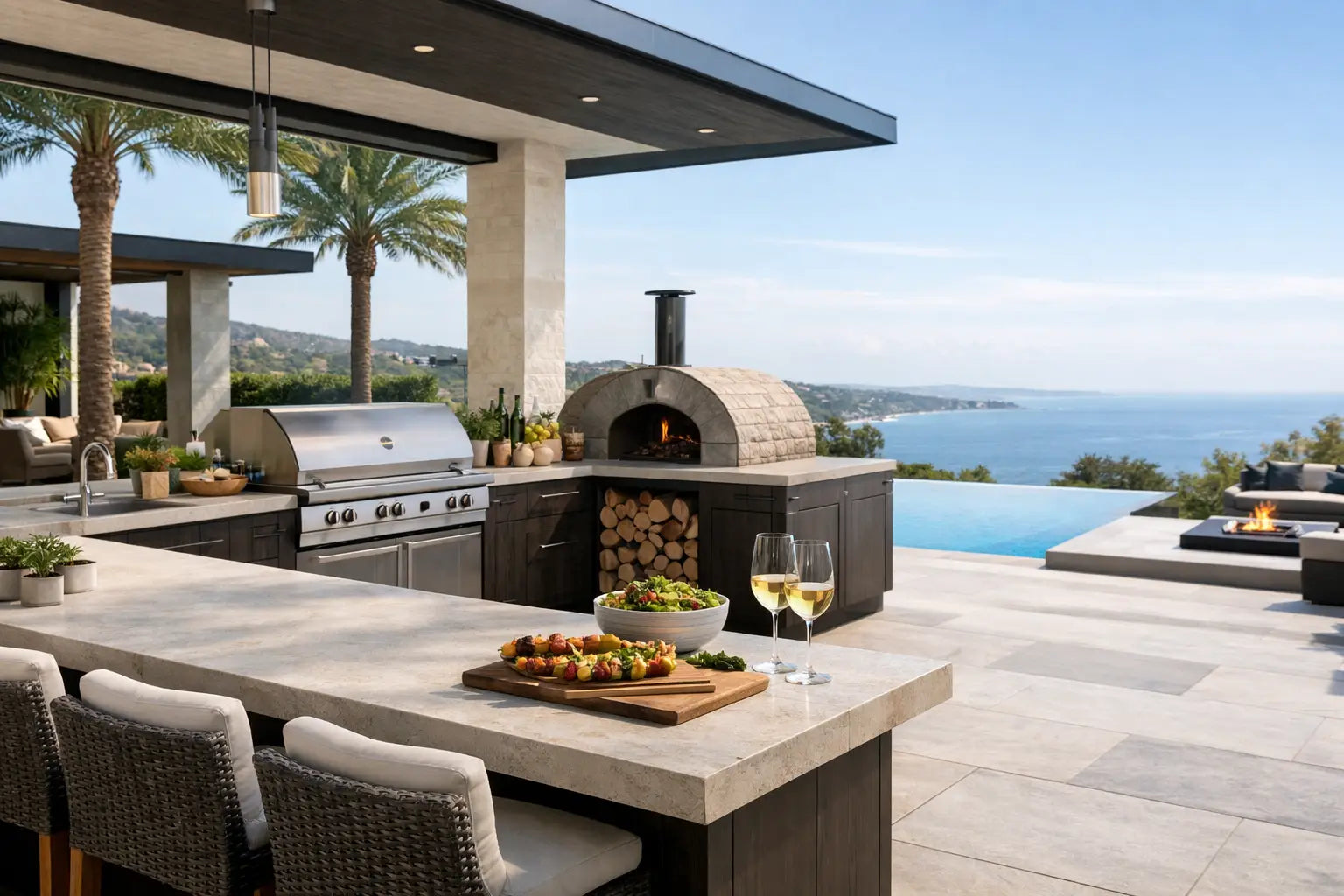
A terrace is finished. The pool is ready. The first warm-weather gathering is already on the calendar. Then the outdoor kitchen becomes the one element holding everything back. Outdoor kitchen delivery time is not a minor logistical detail in a luxury project - it determines when the space can actually be enjoyed.
For homeowners, architects, and hospitality teams, the right question is not simply, “How long does delivery take?” It is, “What has to happen before this kitchen is ready to use?” The answer changes dramatically depending on whether you choose a site-built construction project or a premium modular system designed to arrive largely complete.
What Determines Outdoor Kitchen Delivery Time?
Delivery timing has several stages: design confirmation, manufacturing or stock allocation, freight planning, arrival, placement, and final utility connection. A supplier can quote a fast transit time, yet the project can still be delayed if the kitchen has not been produced, access has not been assessed, or electrical and gas connections are unfinished.
The most accurate timeline comes from separating these stages instead of treating them as one date. A standard configuration from available inventory may move quickly once an order is confirmed. A fully customized kitchen with a specific finish, integrated grill, specialty refrigeration, or bespoke dimensions requires a production window before it enters freight planning.
Destination also matters. Local or regional deliveries are generally easier to schedule than long-distance or cross-border shipments, where freight capacity, customs requirements, and final-mile coordination add variables. For hospitality projects and large residences, delivery may also need to align with a construction program, site security procedures, and a designated receiving team.
Configuration and Customization
Customization is where luxury becomes personal, but it also needs clear decision-making. Selecting cabinet colors, countertop materials, appliance cutouts, grill compatibility, and accessories early prevents revisions that can push a production slot back.
This does not mean choosing a generic solution to save time. It means treating the configuration phase with the same precision as any architectural selection. Once dimensions, finishes, and appliances are approved, the outdoor kitchen can move forward with confidence rather than being held in a cycle of last-minute changes.
Manufacturing Versus Shipping
Manufacturing time and shipping time are not interchangeable. A kitchen may take time to build, test, protect, and prepare for transport, while its physical journey to the property may be comparatively short. Conversely, an item ready to leave the factory can face a longer transportation window when serving a remote location or coordinating a specialized delivery.
Ask for a timeline that identifies both the estimated production completion date and the delivery window. This gives you a more useful planning tool than a single broad estimate.
Why Pre-Assembled Modules Change the Timeline
Traditional outdoor kitchens are often delivered as a construction sequence rather than a finished product. Cabinets or masonry are built on site, surfaces are templated and fitted, appliances are installed separately, and multiple trades return as the work progresses. The apparent delivery date is only the beginning of the process.
A pre-assembled modular kitchen takes a different approach. Core modules are manufactured under controlled conditions, fitted before shipment, and delivered as substantial finished units. On-site work shifts from building the kitchen piece by piece to positioning it, connecting utilities, and commissioning appliances where required.
That difference can reduce disruption in a finished landscape, rooftop, or patio. There is less cutting, less uncertainty around contractor schedules, and less opportunity for one delayed trade to stop every other part of the project. For a vacation property or boutique hospitality setting, avoiding a prolonged on-site build is often as valuable as shortening the calendar.
ELEEXA designs its plug-and-play outdoor kitchens around this principle: refined architectural modules, delivered with the complexity already resolved. The objective is not merely faster transport. It is a faster path from delivery day to an outdoor space that feels complete.
The Site Must Be Ready Before the Kitchen Arrives
Even the most efficiently delivered kitchen cannot compensate for an unprepared site. Site readiness is the point where a well-managed project either stays on schedule or loses momentum.
Before confirming a delivery date, verify the final location, finished floor level, and route from the street or driveway to the installation area. Measure gates, hallways, elevators, turns, stairs, and rooftop access. A module that fits beautifully along a wall still needs a safe, realistic path to get there.
Utilities deserve the same attention. Electrical supply, gas connection where applicable, water, drainage, and ventilation requirements should be reviewed by qualified local professionals well before arrival. Appliance specifications, local codes, and site conditions determine what is needed. A grill may be integrated into the kitchen, but its final connection remains a safety-critical task that should never be improvised.
For smooth delivery, confirm these four practical points with the supplier and your project team:
- The access route has been measured, including every tight turn and level change.
- The base is level, structurally suitable, and complete before the scheduled delivery.
- Utility locations match the approved kitchen layout and appliance requirements.
- A responsible person is available to receive, inspect, and authorize placement of the shipment.
How to Compare Outdoor Kitchen Delivery Times Fairly
When comparing suppliers, be cautious with the shortest headline number. A quoted lead time can sound impressive while excluding customization, countertop fabrication, appliance availability, crating, transit, or installation. The better comparison is the realistic ready-to-enjoy date.
Request clear answers to a few specific questions. Is the quoted window from order confirmation or from production completion? Are appliances included in the stated lead time? Does delivery include placement at the intended outdoor location, or only curbside drop-off? What site conditions must be completed first? And what happens if freight timing shifts?
A quality supplier should be direct about variables rather than promising certainty where none exists. Freight schedules can change. Severe weather can affect transport. A custom appliance can become unavailable. Transparency is more valuable than an aggressive estimate that leaves no room for reality.
There is also a trade-off between highly bespoke work and speed. A fully unique, permanently built kitchen may suit a project with a long construction timeline and a dedicated contractor team. A modular premium system is often the stronger choice when design quality matters just as much as minimizing site time, coordination, and mess.
Planning the Right Order Date
For summer entertaining, do not wait until the first hot weekend to begin the conversation. Start the design and site-planning process while the outdoor area is still being landscaped or renovated. This gives you time to finalize the kitchen configuration without rushed compromises and to reserve a delivery period that supports the broader project schedule.
For architects and developers, include the outdoor kitchen in early coordination drawings. Confirm dimensions, utility points, appliance clearances, and delivery access alongside other exterior decisions. Treating the kitchen as a final decorative purchase is one of the most common reasons a polished exterior project ends with an avoidable delay.
If your property has restricted access, a rooftop setting, a narrow side passage, or a delivery window governed by building management, share that information at the first consultation. Early transparency allows the delivery approach to be designed around the property instead of forcing expensive adjustments later.
Delivery Day Should Feel Controlled, Not Chaotic
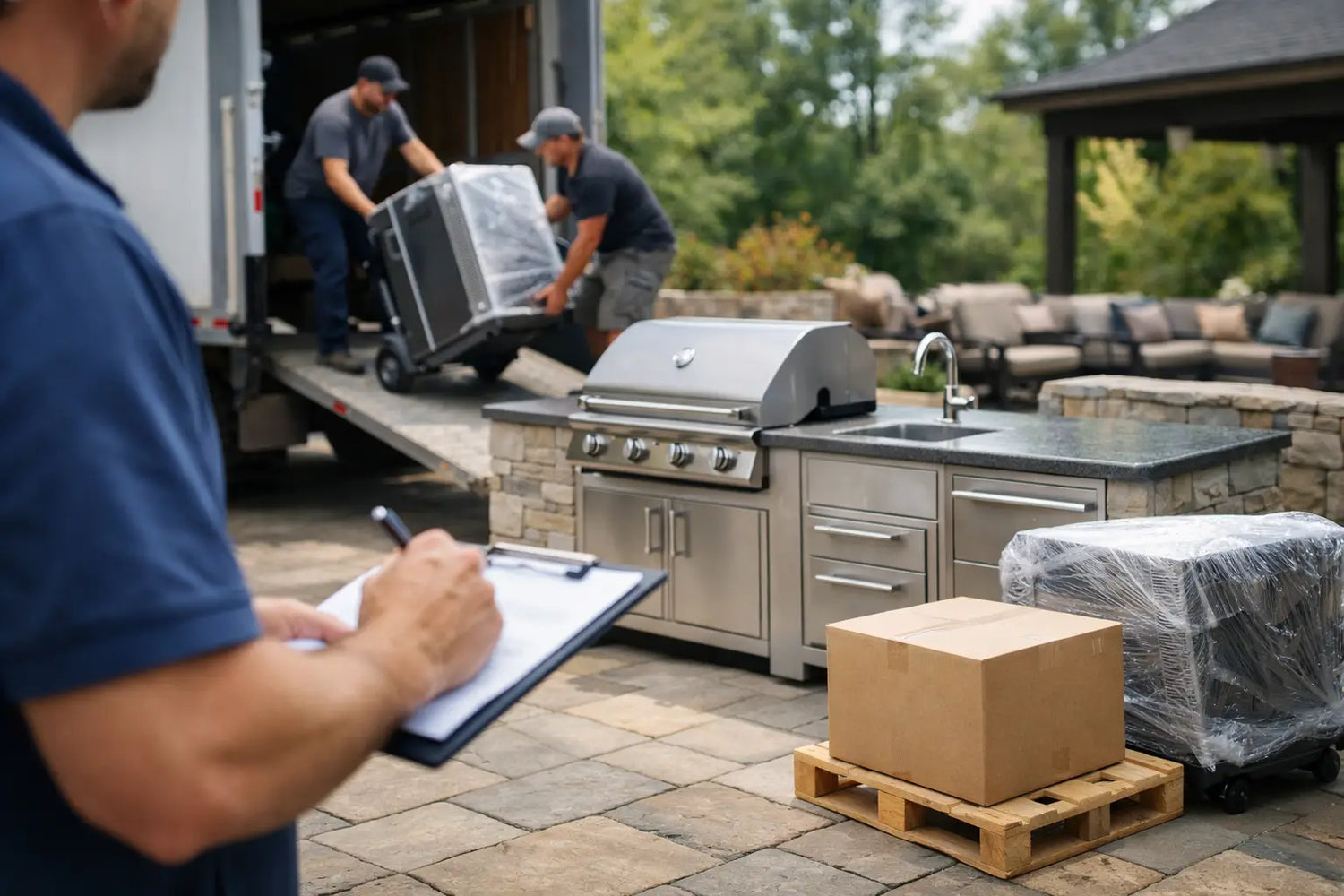
A premium outdoor kitchen deserves a delivery process that respects the property as much as the product. Clear placement instructions, protected transport, an inspected arrival, and a prepared utility plan turn delivery day into a short, controlled final step rather than another construction event.
The best outdoor kitchen delivery time is not simply the earliest possible date. It is the date when your finished modules, site, access, and connections are all ready to meet - so the first evening outdoors is spent cooking, hosting, and enjoying the space you intended to create.