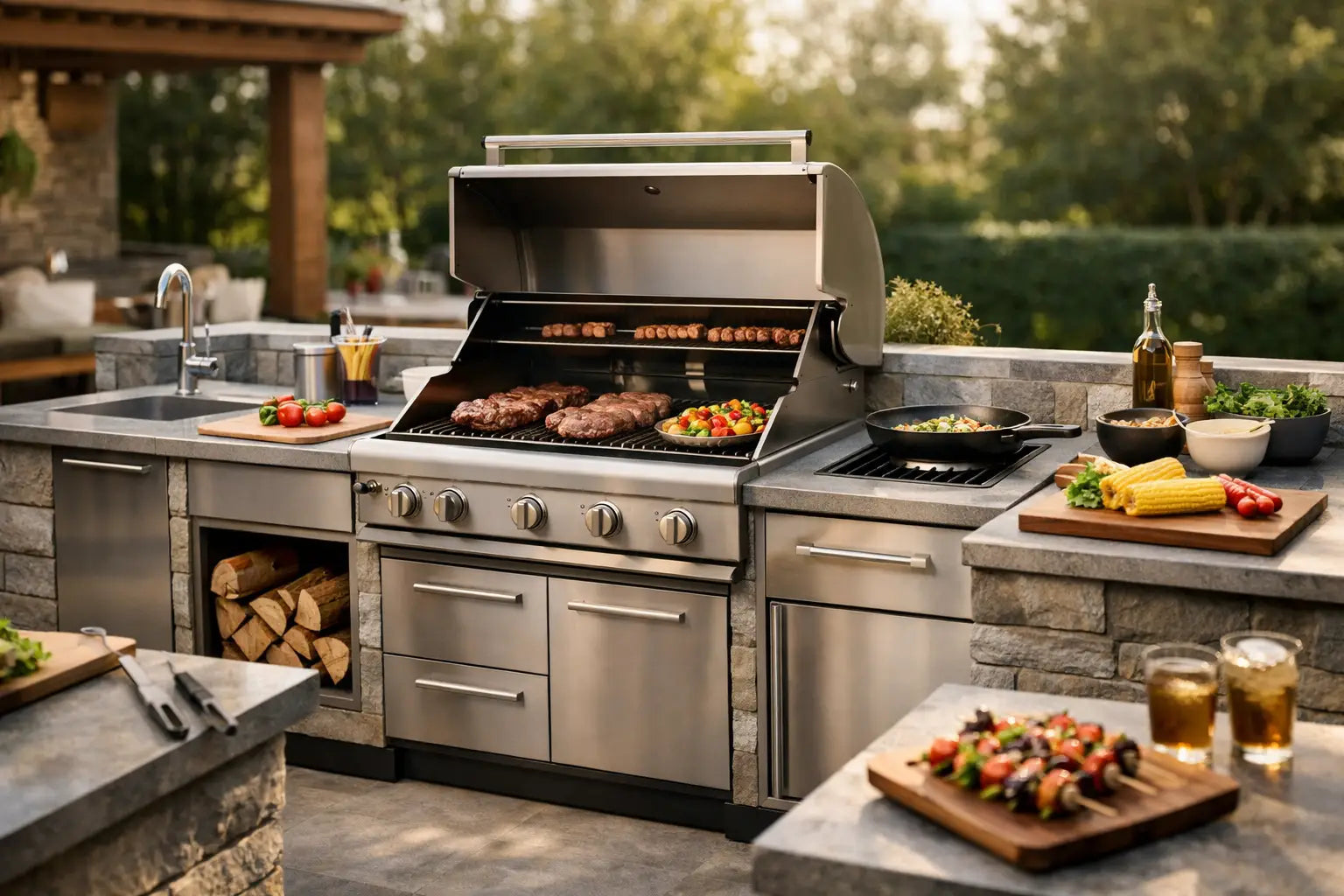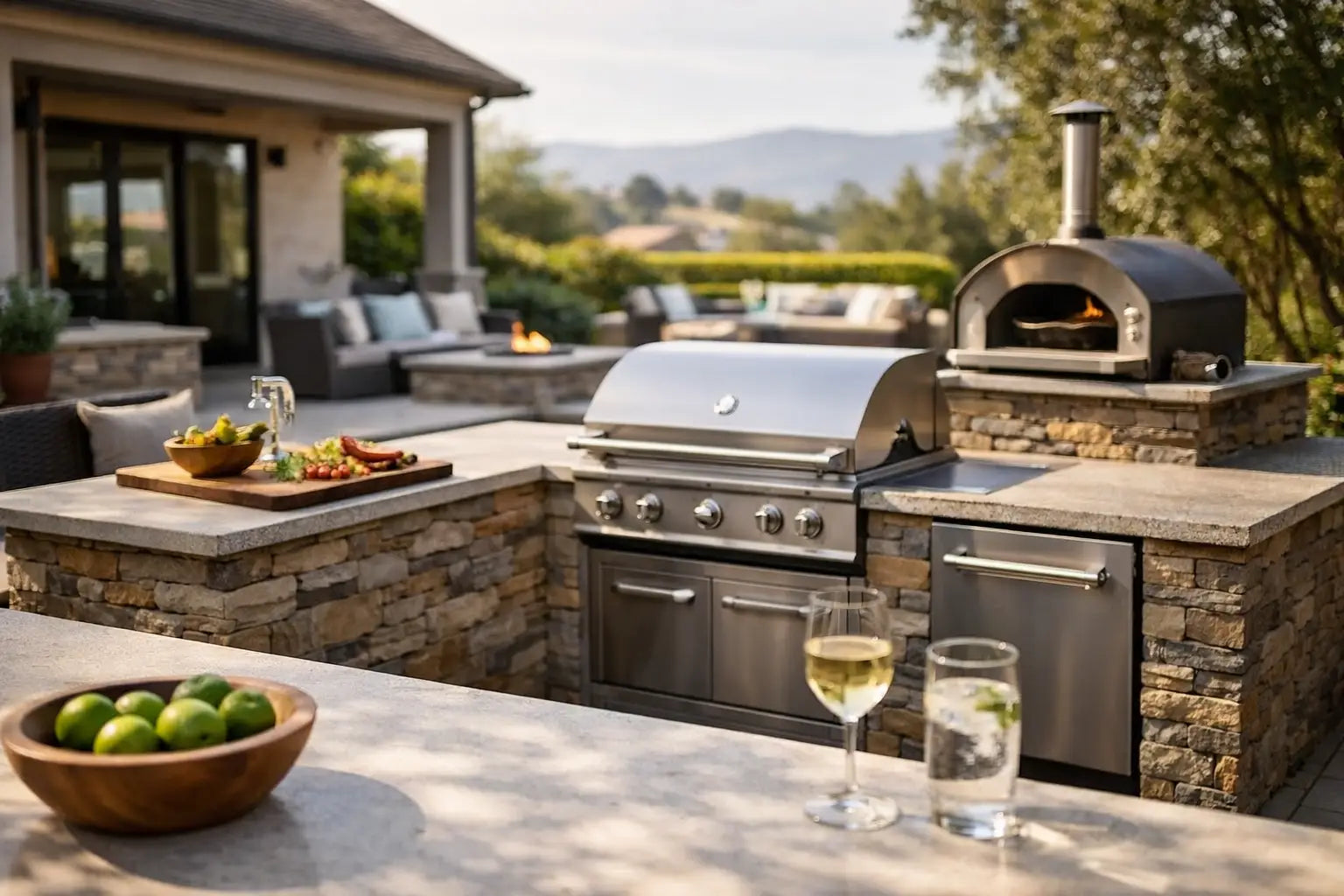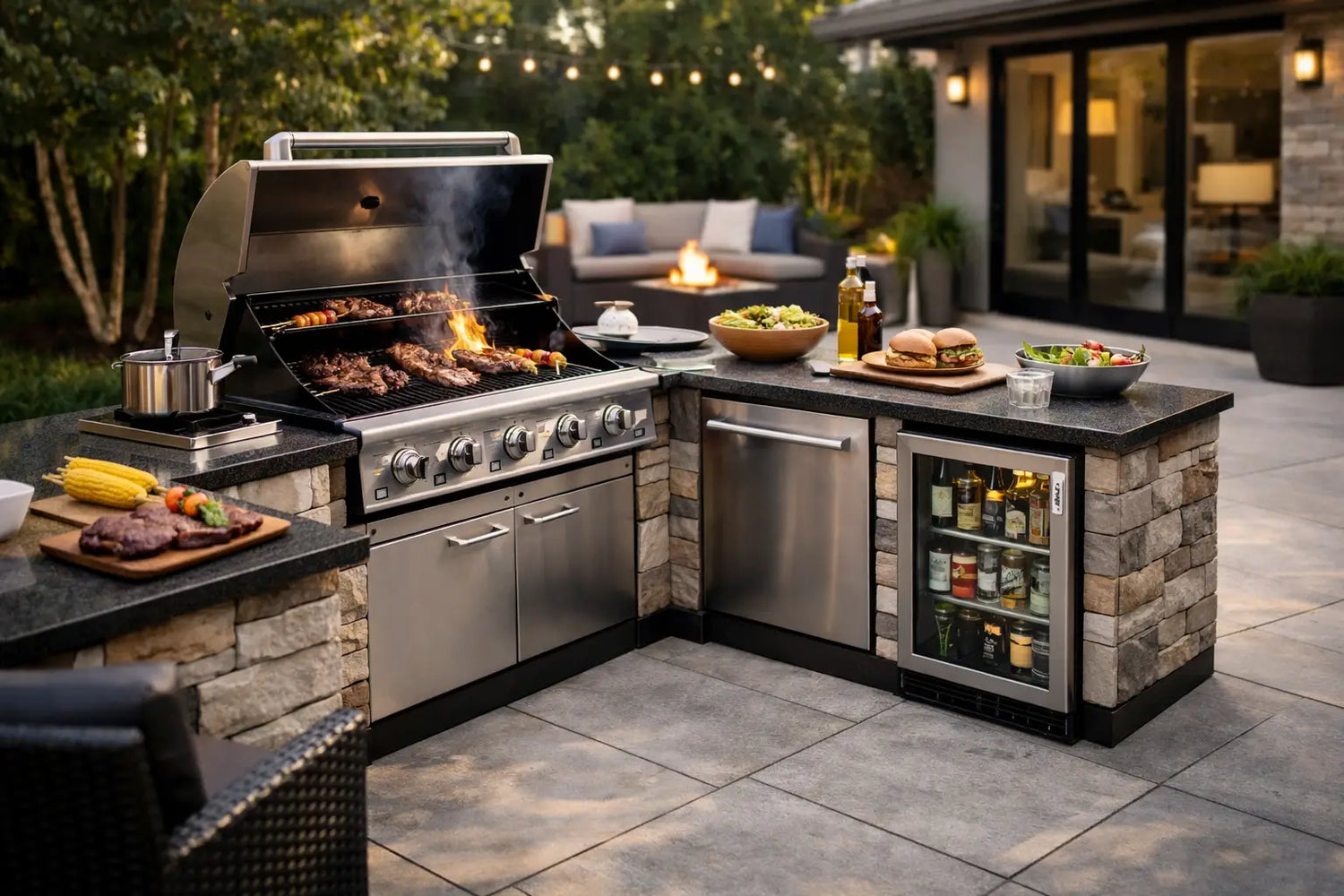
A great outdoor kitchen should feel like part of the architecture, not a grill parked beside a patio. This modular grill island review looks at what separates a premium, pre-assembled island from a basic grill cart or a contractor-built project - and whether the investment makes sense for a home designed for serious entertaining.
The short answer is that a modular grill island is worth it when you want a tailored outdoor cooking space without turning your backyard into a construction site. The best systems bring together the visual permanence of a custom kitchen with the speed, predictability, and flexibility of a finished product.
What a modular grill island actually delivers
A modular grill island is a freestanding or wall-positioned outdoor kitchen built from individual units. A typical layout may combine a grill module, storage cabinets, counter space, a refrigerator, sink, bar seating, or specialty cooking equipment. Unlike a built-in masonry island, the modules are manufactured before they arrive at your property, then positioned and connected on site.
That distinction changes the ownership experience. Traditional outdoor kitchens often involve multiple parties: a designer, mason, fabricator, electrician, plumber, countertop supplier, and appliance installer. Each handoff introduces schedule risk, cost variation, and opportunities for details to be missed. A high-end modular system consolidates much of that work into a controlled manufacturing process.
For homeowners, architects, and hospitality buyers, the appeal is clear: a polished result with far less disruption. The island arrives as a complete architectural element rather than a project that occupies the terrace for weeks.
Modular grill island review: the advantages that matter
The strongest reason to choose modular is not simply speed. It is certainty. You can see the overall proportions, finishes, storage configuration, appliance integration, and countertop before placing an order. That is especially valuable when the outdoor kitchen must complement stonework, pool decking, exterior cladding, or an established interior design language.
A faster route to a finished terrace
Pre-assembled modules remove much of the slowest work from the site. There is no need to build cabinet carcasses outdoors, wait for masonry to cure, or coordinate several trades around a countertop template. Depending on access and utility requirements, placement can be measured in hours or days rather than several weeks.
This is a decisive advantage for vacation homes, hospitality properties, and projects with fixed opening dates. It also matters for private residences where outdoor living season is limited. A kitchen that is ready for the first warm weekend has more value than one still waiting on a contractor in midsummer.
Design that looks intentional
The quality gap between a luxury modular island and an entry-level cart is substantial. A premium system uses clean cabinet lines, balanced reveals, integrated appliances, substantial worktops, and finishes selected to withstand life outdoors. It should look composed from every angle, including the back and sides if it will stand away from a wall.
Modularity does not have to mean generic. The right manufacturer offers multiple lengths, cabinet arrangements, finish options, countertop choices, and grill cutouts. This lets you create a tailored composition without paying for a fully one-off build.
Better use of outdoor space
A fixed island creates a working zone. The grill is no longer isolated from food prep, serving, cold storage, waste management, and guests. That makes cooking less fragmented, particularly when hosting six, ten, or twenty people.
The layout needs to fit how you entertain. A compact grill-and-storage arrangement may be ideal for a city terrace. A larger villa or poolside setting may justify a long counter, refrigerator, sink, bar overhang, and a second cooking appliance. More modules are not automatically better; the best island leaves enough circulation around it and avoids blocking views, doors, or pool access.
Materials decide whether luxury lasts
Outdoor kitchens live through direct sun, rain, grease, temperature changes, and repeated cleaning. A polished brochure image is not evidence of long-term quality. Materials and construction details are.
Look for weather-resistant cabinet structures, corrosion-conscious hardware, UV-stable finishes, and countertops specified for outdoor exposure. Powder-coated metal, high-quality aluminum, stainless steel components, porcelain, sintered stone, and certain engineered outdoor surfaces can all perform well when used correctly. The key is the complete system, including edges, joints, drainage, ventilation, and fasteners.
Coastal locations require extra scrutiny. Salt air accelerates corrosion, while pool environments add chemical exposure. In very hot climates, dark surfaces can become uncomfortable to touch and some countertop materials may demand more thoughtful placement. A premium manufacturer should be able to explain what is suitable for your climate rather than offering one answer for every property.
Cabinet interiors deserve attention as well. Storage should be dry, easy to clean, and practical for grilling tools, cookware, and serving pieces. Soft-close doors may sound like a minor refinement, but they contribute to the controlled, residential-quality feel buyers expect at this level.
Grill compatibility is not a detail
The grill is the heart of the island, but it is only one part of the system. Before choosing a configuration, confirm that the module is engineered for the exact grill brand and model you want. Cutout dimensions, ventilation requirements, lid clearance, access for service, and heat management must all be addressed.
This is particularly important for built-in gas grills, ceramic cookers, and power-dependent appliances. A grill that technically fits may still be inconvenient if the hood cannot open fully, the control panel is difficult to reach, or service access requires dismantling cabinetry.
Leading outdoor kitchen systems are designed around established grill ecosystems, including options from Napoleon, Broil King, and Big Green Egg. The advantage is a cleaner integration and fewer compromises than adapting a standard cabinet on site. If you already own a preferred grill, start there. If you are selecting everything at once, choose the cooking style first, then build the island around it.
Installation is simple, but not always plug-and-play in every sense
A pre-assembled island dramatically reduces installation work, but it does not eliminate site preparation. The surface must be level, structurally capable, and accessible for delivery. Large modules may require a clear path through gates, side yards, elevators, or service entrances.
Utilities also need planning. A gas grill may need a correctly sized gas line. A refrigerator requires protected electrical service. A sink needs water supply and drainage, and local codes may affect what is allowed. These are not reasons to avoid modular construction; they are reasons to address the site early, before finalizing the configuration.
Ask exactly what is included in delivery and placement, what connections require licensed local trades, and whether the island can be relocated in the future. One of modular construction's understated advantages is that it can move with a property renovation or adapt to a new terrace plan more easily than masonry.
Where the trade-offs appear
A modular grill island is not the ideal answer for every project. If you need a kitchen wrapped around irregular architecture, fitted into a highly unusual footprint, or finished with the exact stone used throughout a property, a fully custom build may offer more freedom. It can also be the better option when a local construction team is already handling extensive landscape and utility work.
Price is another consideration. A premium modular island costs more than a standalone grill and more than a basic DIY cabinet solution. Yet the honest comparison is not with the lowest-cost alternative. It is with the total cost of a refined custom kitchen: design hours, site labor, material waste, coordination, schedule delays, and the risk of inconsistent execution.
Modular systems can also have dimensional limits. The best manufacturers solve this with thoughtful module sizes and configuration choices, but buyers should review a scaled plan instead of relying on a product image. A kitchen that appears compact online can feel imposing on a narrow patio.
Who should invest in one?
A modular grill island is a strong choice for homeowners who value design discipline and want their outdoor space finished quickly. It is equally compelling for developers and hospitality operators who need repeatable quality across several properties without sacrificing a premium guest experience.
ELEEXA represents the upper end of this category: architectural outdoor kitchen modules designed to arrive pre-assembled, integrate with leading grills, and remove the uncertainty of a site-built project. That approach is particularly attractive when time, finish quality, and a clean installation matter as much as cooking performance.
Before ordering, establish your available footprint, utility locations, appliance priorities, preferred finish palette, delivery route, and entertaining habits. These decisions shape whether you need a simple linear kitchen or a more generous social hub with refrigeration, water, and bar seating.
The right grill island does more than hold an appliance. It gives every outdoor gathering a natural center - a place where cooking, conversation, and considered design belong together.