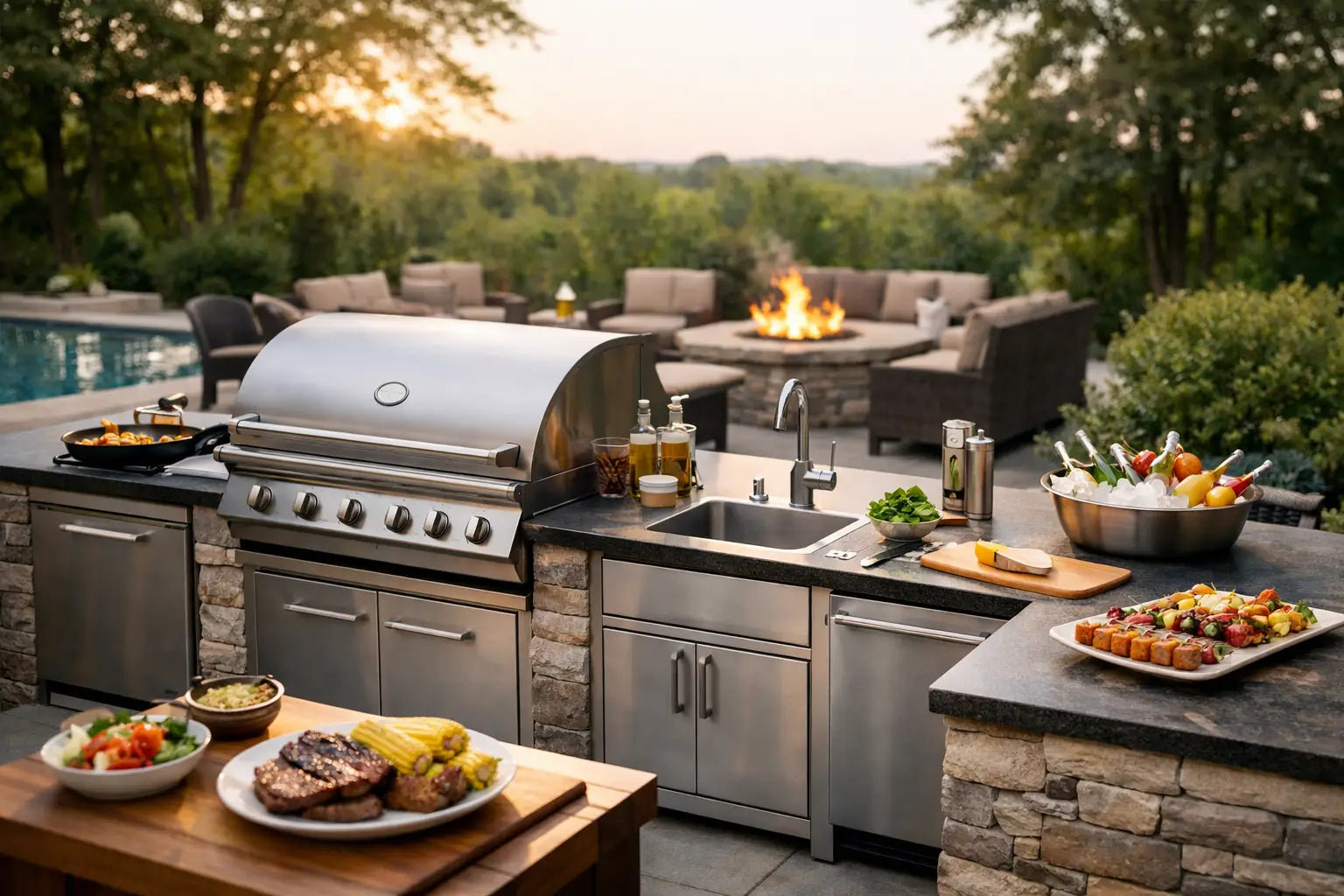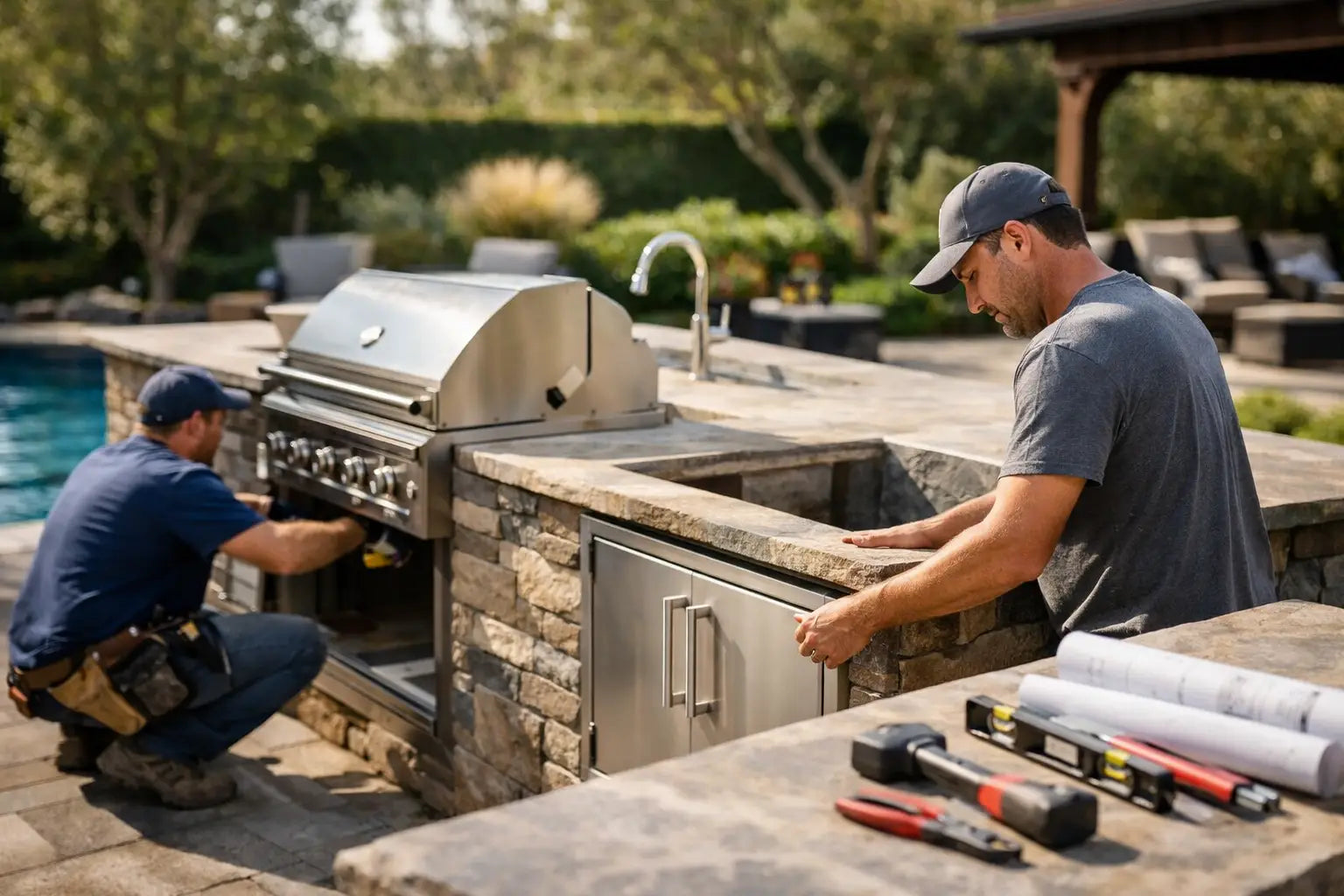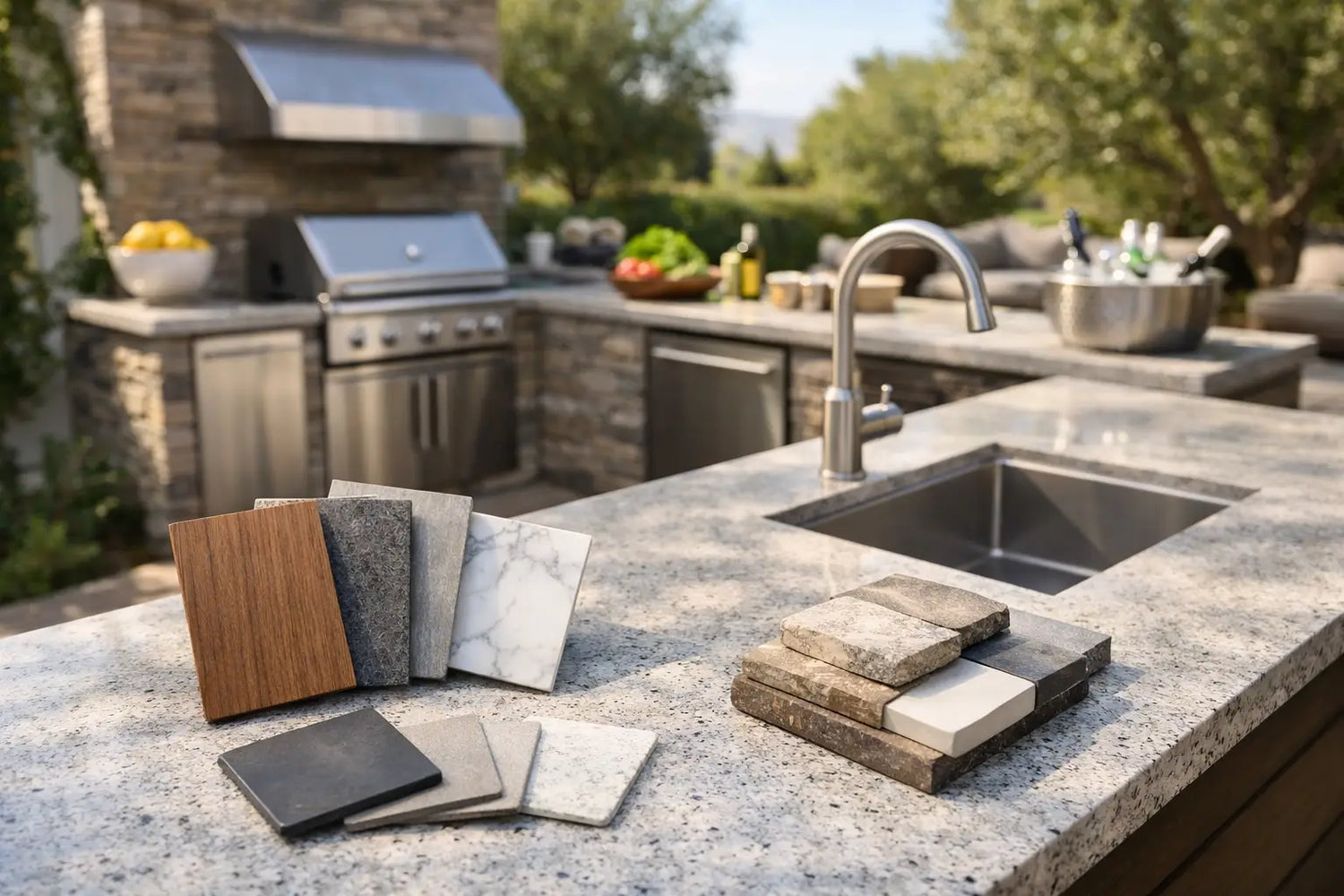
An outdoor kitchen can look exceptional on day one and disappoint by season two if the finishes were chosen for showroom appeal instead of real outdoor performance. That is the real challenge in how to choose outdoor kitchen finishes: selecting materials that still feel refined after heat, rain, UV exposure, grease, and constant use have had their say.
For a premium project, finishes are not decorative extras. They define the visual architecture of the space, the amount of maintenance it demands, and how confidently the kitchen will age. The right finish package makes the entire installation feel intentional. The wrong one creates visual noise, premature wear, and expensive corrections.
How to choose outdoor kitchen finishes starts with environment
Before comparing door textures, countertop patterns, or hardware colors, start with the setting. An outdoor kitchen in coastal Florida faces a very different reality than one on a covered patio in Arizona or a rooftop terrace in Chicago. Salt air, freeze-thaw cycles, direct sun, humidity, tree debris, and wind-driven rain all change which finishes perform best.
This is where many buyers make an avoidable mistake. They choose finishes the same way they would for an indoor kitchen, prioritizing appearance first and treating durability as a secondary feature. Outdoors, the order should reverse. The most successful spaces begin with weather resistance, then layer in aesthetics.
If your kitchen will sit fully exposed, choose finishes that are engineered for continuous environmental stress. Powder-coated metals, weather-rated cabinetry, porcelain surfaces, marine-grade stainless steel, and UV-stable components tend to justify their premium positioning because they preserve their appearance with less effort. If the kitchen is under a deep covered structure, you have more flexibility, but not immunity. Heat, grease, moisture, and temperature swings still matter.
Choose finishes as a system, not as separate samples
Luxury outdoor design rarely falls apart because one material is poor. It falls apart because every selection was made independently. A matte black frame, warm wood-look panel, polished countertop, brushed steel grill surround, and cool gray pavers can each look good alone and still feel unresolved together.
The better approach is to choose finishes as one visual system. Start with the dominant surface, usually the cabinetry or countertop. Then select a supporting finish that adds contrast without competing. Finally, choose accent details such as handles, trims, and appliance surrounds that reinforce the overall direction.
In most premium outdoor kitchens, restraint reads as confidence. Two or three material expressions are usually enough. Once you introduce too many tones and textures, the space can feel busier and less architectural.
For modern homes, a disciplined palette of graphite, stone, and brushed metal often creates the sharpest result. For warmer residential settings, taupe, sand, textured neutrals, and wood-inspired surfaces can soften the composition without sacrificing sophistication. Hospitality settings often benefit from finishes that photograph well, resist heavy wear, and remain consistent across multiple units.
Countertops need more than beauty
Countertops usually attract the most attention, which is why buyers often overemphasize pattern and underemphasize performance. In an outdoor kitchen, the countertop has to tolerate UV exposure, heat transfer, food prep, spills, and repeated cleaning. It also needs to hold its visual quality in broad daylight, not just under indoor showroom lighting.
Porcelain has become a strong choice in the premium segment because it combines a refined look with excellent resistance to heat, stains, and fading. Sintered stone also performs well for similar reasons. Natural stone can be beautiful, but it depends heavily on the specific stone and the maintenance expectations of the owner. Some stones require sealing and more careful upkeep than buyers anticipate.
Polished surfaces can look striking, but in full sun they may reveal water spots, fingerprints, and grease more quickly. Textured or matte finishes often feel more relaxed and forgiving outdoors. That does not mean glossy surfaces are wrong. It means they are better for buyers who want a more dramatic look and accept the additional maintenance that can come with it.
Cabinet finishes should balance architecture and resilience
Cabinetry covers the largest visual area of the kitchen, so its finish sets the tone immediately. It also takes abuse from weather, cleaning products, and everyday use. If the cabinetry finish chips, fades, or warps, the entire installation loses its premium character.
Powder-coated aluminum is one of the most compelling choices for modern outdoor kitchens because it offers clean lines, corrosion resistance, and excellent color stability when properly specified. It also supports the streamlined, architectural look many design-conscious buyers want. High-quality metal finishes tend to feel more precise than conventional site-built alternatives, especially when integrated into modular systems engineered for outdoor conditions.
Wood-look finishes are popular because they bring warmth to stone and metal-heavy environments. The key is choosing an outdoor-rated interpretation rather than forcing real wood into an application where exposure will constantly challenge it. Some buyers love authentic timber and are willing to maintain it. Others want the warmth of wood without the upkeep. That is where advanced weather-resistant finishes earn their value.
When thinking about cabinet color, darker tones often feel more luxurious and contemporary, but they absorb more heat in direct sun. Lighter tones can stay cooler and show less dust, though they may reveal grease splatter differently. There is no universal winner. The right choice depends on exposure, cleaning habits, and the visual relationship to the home.
Hardware, trims, and appliance surrounds matter more than most buyers expect
Small details are where premium design either sharpens or unravels. Handles, toe-kicks, trim profiles, faucet finishes, and appliance surrounds should not be chosen as afterthoughts. These elements create the visual rhythm of the kitchen.
If your grill, sink, refrigerator, and storage modules all have different metal tones, the result can feel pieced together. A more elevated approach is to coordinate stainless, black, graphite, or brushed finishes so the kitchen reads as a unified product rather than a collection of components.
This is especially important when integrating leading grill brands into a modular layout. The surrounding finishes should frame the appliance, not fight it. A well-composed kitchen makes the grill look intentionally housed. A poorly composed one makes it look inserted.
Think honestly about maintenance
One of the clearest ways to decide how to choose outdoor kitchen finishes is to ask a less glamorous question: how much maintenance do you actually want? Not what you admire in editorial photography, but what you will realistically tolerate after a long week or during peak season at a rental property.
Low-maintenance finishes are often the smarter luxury choice because they protect the experience of ownership. Surfaces that wipe clean easily, resist staining, and hide normal outdoor dust preserve the calm, polished look buyers expect from a premium installation.
If you enjoy material patina and regular upkeep, you can be more adventurous. If you want the kitchen to remain composed with minimal effort, choose finishes that are stable, forgiving, and easy to clean. There is nothing less luxurious than a space that always looks like it needs attention.
Match the finishes to the property, not just your preference
An outdoor kitchen should feel native to the architecture around it. A sharply minimalist kitchen may look extraordinary on a contemporary villa and completely out of place on a traditional stone home if the finishes are not calibrated carefully. Likewise, an overly rustic palette can weaken a sleek urban terrace.
Look at the fixed elements you cannot easily change: paving, exterior walls, window frames, pool coping, roof structure, and landscape materials. The best finish selections create continuity with those elements while still allowing the kitchen to stand out as a feature.
For high-end residential projects, the goal is often harmony with distinction. For hospitality and development projects, consistency, durability, and repeatable visual quality matter even more. This is one reason buyers increasingly favor engineered, pre-assembled outdoor kitchen systems. They offer tighter material control, more predictable finish combinations, and a far cleaner route to a premium result than improvised site-built solutions.
ELEEXA approaches finish selection the same way a serious architect approaches facade materials - as a blend of performance, proportion, and long-term visual integrity.
The smartest finish choice is the one that still looks right later
The most impressive outdoor kitchens are not the ones with the loudest materials. They are the ones that still feel current, composed, and expensive after years of sun, entertaining, and everyday use. If a finish only works in a perfect rendering or under careful staging, it is not the right finish.
Choose materials that suit your climate, support your architecture, and fit the way you actually live. When style and performance are equally considered, the result is not just an outdoor kitchen that looks luxurious. It is one that stays that way.