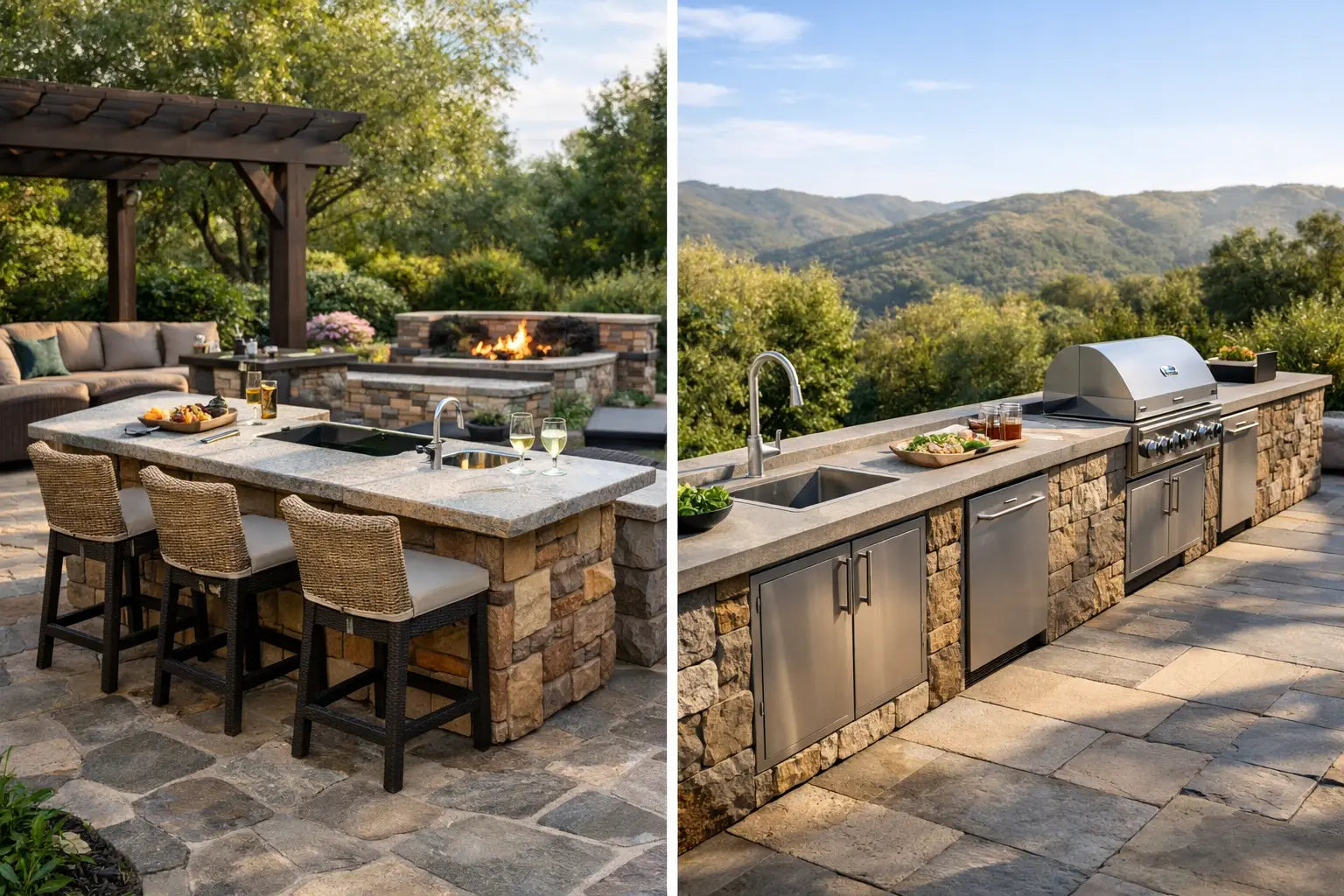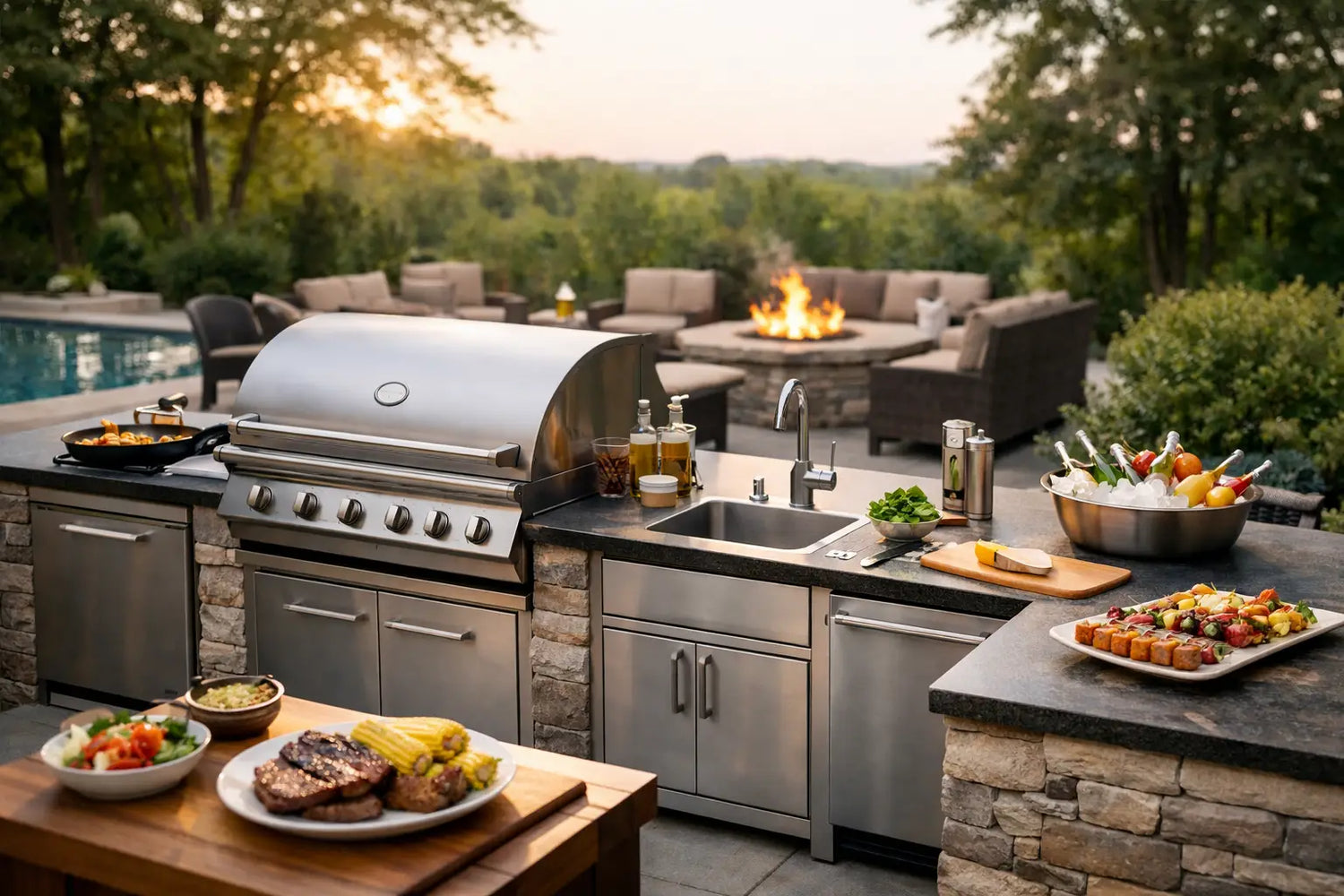
A beautiful patio loses its edge the moment the cooking setup feels temporary. A grill on wheels, a side table that never quite fits, storage that swells in the rain - it all reminds you that the space was never fully finished. A residential outdoor kitchen system changes that. It turns outdoor cooking from a workaround into a permanent, high-performance part of the home.
For homeowners investing in design, comfort, and property value, the question is not whether an outdoor kitchen is worth it. The real question is which kind of system delivers the look, function, and reliability you expect without dragging you into a long custom-build process. That is where the difference between traditional construction and a modular system becomes impossible to ignore.
What a residential outdoor kitchen system should actually solve
At the premium end of the market, buyers are not looking for a few cabinets and a grill cutout. They are solving for a bigger set of problems. They want an outdoor kitchen that looks architectural, performs like a serious cooking space, and arrives without the delays, errors, and site complications that often come with custom masonry or contractor-led builds.
A well-designed residential outdoor kitchen system should simplify three things at once. First, it should reduce installation friction. Second, it should give you meaningful design flexibility without forcing a fully bespoke construction project. Third, it should hold up in real weather over time, not just look impressive on delivery day.
That balance matters. Some solutions are inexpensive but visually underwhelming. Others look striking in renderings but become expensive, slow, and unpredictable once multiple trades get involved. Premium buyers usually care less about the cheapest route and more about avoiding compromise.
Custom build or modular system?
Custom outdoor kitchens still appeal to many homeowners because they promise total freedom. In theory, every measurement, finish, appliance opening, and utility connection can be tailored from scratch. When executed well, the result can be excellent.
The trade-off is complexity. A custom build often depends on architects, contractors, fabricators, countertop suppliers, electricians, and installers all staying aligned. Timelines stretch. Costs move. Small mistakes become expensive because everything is interconnected and site-built. If one component is delayed, the whole project can stall.
A modular residential outdoor kitchen system approaches the same goal differently. Instead of building everything from raw materials on site, the kitchen is engineered as a coordinated set of finished modules. The best systems arrive pre-assembled or close to it, with appliance compatibility, storage, work surfaces, and proportions already resolved.
That does not mean modular equals generic. In the premium category, modular means controlled quality, faster delivery, and a more predictable outcome. You still get configuration choices, appliance integration, and a polished design language, but with far less room for on-site chaos.
Why modular is gaining ground in luxury outdoor living
High-end buyers have become less patient with construction drama, and for good reason. Outdoor projects rarely happen in isolation. They are often part of a broader investment in landscaping, pools, terraces, façades, or second homes. The kitchen has to fit the design vision, but it also has to respect time.
That is why modular systems have become more compelling. A premium plug-and-play approach shortens the path from decision to finished space. It also gives homeowners and specifiers something custom builds often struggle to provide - consistency.
Factory-built modules are produced under controlled conditions. Finishes line up. Tolerances are tighter. Materials can be selected for weather exposure rather than adapted later. The result is a more refined product experience, especially for buyers who care as much about clean installation and visual precision as they do about cooking performance.
For vacation homes, rooftop terraces, hospitality settings, and busy family properties, that speed matters even more. Less time managing a project means more time actually using the space.
Key features to look for in a residential outdoor kitchen system
Not every modular kitchen deserves a premium price tag. Some are little more than outdoor cabinets grouped together. Others are designed as complete systems, where aesthetics, structure, appliance compatibility, and weather resistance work together.
Material quality should be one of your first filters. Outdoor kitchens live through sun, moisture, heat cycles, grease, and seasonal temperature swings. Powder-coated steel, marine-grade components, corrosion-resistant hardware, and durable worktops tend to outperform cheaper alternatives that chip, rust, or fade too quickly.
Appliance integration is just as important. If you already prefer a grill brand such as Napoleon, Broil King, or Big Green Egg, the kitchen should be designed to accommodate it properly. A premium system should not force awkward compromises around cutouts, ventilation, access, or proportions.
Storage deserves more attention than most buyers give it. A luxury outdoor kitchen feels finished when tools, gas bottles, serving pieces, and cleaning supplies all have a place. Good storage also improves how the kitchen looks when not in use, which matters in design-led outdoor spaces.
Finally, assess how much of the system is actually ready to install. The closer it is to fully pre-assembled, the more you avoid the hidden burden of site labor, missing parts, and installation guesswork.
Design matters as much as performance
An outdoor kitchen is now part of the architecture, not just an accessory. On a modern terrace or in a landscaped backyard, it has visual weight. It can anchor the entertaining zone, frame a pool house, or create continuity between interior and exterior living.
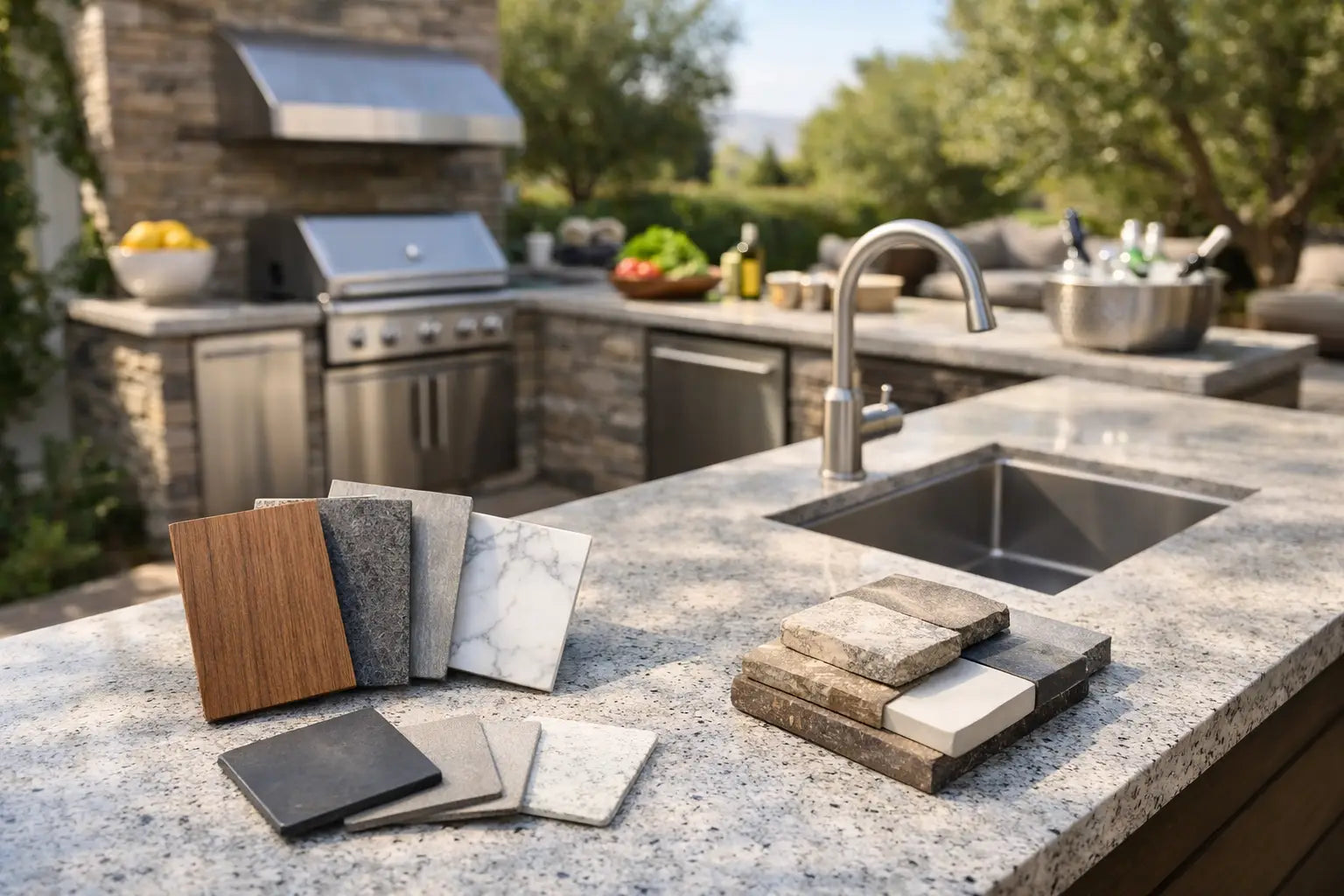
That is why design should be evaluated beyond simple finish swatches. Look at proportions, lines, handle details, countertop thickness, and how the modules sit together as a composition. Premium systems feel intentional from every angle. They do not look like utility furniture placed outdoors as an afterthought.
The best manufacturers understand that outdoor luxury is not only about statement pieces. It is about restraint, coherence, and materials that still look elevated after years of use. A kitchen should complement the home rather than compete with it.
Installation, maintenance, and the hidden cost of friction
Many buyers underestimate how much value sits in simplicity. A lower purchase price can quickly lose its appeal if installation becomes a weeks-long coordination exercise. Site preparation, utility planning, deliveries, assembly, and corrections all carry cost, even when they do not appear clearly on the first quote.
A premium residential outdoor kitchen system reduces that friction. The faster the kitchen is positioned, connected, and ready to use, the faster the project starts feeling like an upgrade rather than a construction site.
Maintenance should also be realistic. Outdoor kitchens are exposed, and even premium materials need basic care. The question is whether the surfaces are easy to clean, whether hardware is built for outdoor duty, and whether the design avoids unnecessary traps for water and debris. Durable engineering is not glamorous in a brochure, but it defines long-term satisfaction.
This is where a manufacturer like ELEEXA stands apart. The appeal is not only luxury styling. It is the combination of pre-assembled modules, appliance compatibility, weather-ready materials, and a cleaner path to ownership.
Who benefits most from this type of system?
A residential outdoor kitchen system makes the most sense for buyers who want a high-end result without commissioning a fully custom build from the ground up. That includes homeowners upgrading a primary residence, furnishing a second home, or creating a more valuable entertaining space before resale.
It is also a strong fit for architects, developers, and hospitality buyers who need design consistency across projects. In those settings, repeatability is a major advantage. A dependable system can preserve visual quality while reducing on-site complexity.
That said, there are cases where full custom still has a place. If your layout involves highly irregular dimensions, unusual structural constraints, or a one-off architectural concept that no modular platform can support, custom may still be the better route. The right decision depends on how much uniqueness you need and how much complexity you are willing to absorb.
Buying with clarity
The smartest buyers ask a simple question early: am I purchasing a kitchen, or am I purchasing a project? The two are not the same. A project comes with coordination, interpretation, and variables. A true system comes with engineering, predictability, and a far clearer finish line.
For luxury outdoor living, that distinction matters. The best spaces feel effortless once complete, but they rarely happen by accident. Choosing a residential outdoor kitchen system is really about choosing the level of control, quality, and ease you want built into the experience from day one.
A great outdoor kitchen should elevate the way you live outside, not ask you to manage months of avoidable complexity to get there.