A backyard becomes genuinely entertaining when the host is not trapped indoors preparing drinks, carrying platters, or searching for somewhere to set a hot pan. If you are considering how to upgrade backyard entertaining zone, begin with that test: can you cook, serve, sit, and stay present with your guests in one beautifully resolved outdoor setting?
The highest-performing spaces are not simply furnished patios with a grill nearby. They are designed as outdoor rooms with a clear purpose, dependable materials, and a kitchen that makes hosting feel effortless. The goal is not to fill the yard with more products. It is to create a place people naturally gather around, from a casual Sunday lunch to a late, candlelit dinner.
Start With the Way You Actually Host
Before choosing finishes or appliances, define the rhythm of your entertaining. A family that hosts relaxed weekend cookouts needs a different arrangement than a homeowner who regularly serves cocktails for 20 guests. The right layout depends on how many people you host, how food is prepared, and whether your outdoor space is used mainly in daylight, after dark, or across multiple seasons.
Think in moments rather than objects. Guests arrive and put down a drink. Someone cooks while talking. Food moves from grill to serving surface. A few people sit nearby, while others settle into a lounge area. When these moments happen without people crossing paths or disappearing indoors, the space feels considered.
A common mistake is placing the grill at the edge of the patio, then adding seating somewhere else. This creates a split experience: the cook works alone while the party happens across the yard. Center the cooking and serving zone close enough to the conversation that the person preparing the meal remains part of it.
How to Upgrade Backyard Entertaining Zone With Zones
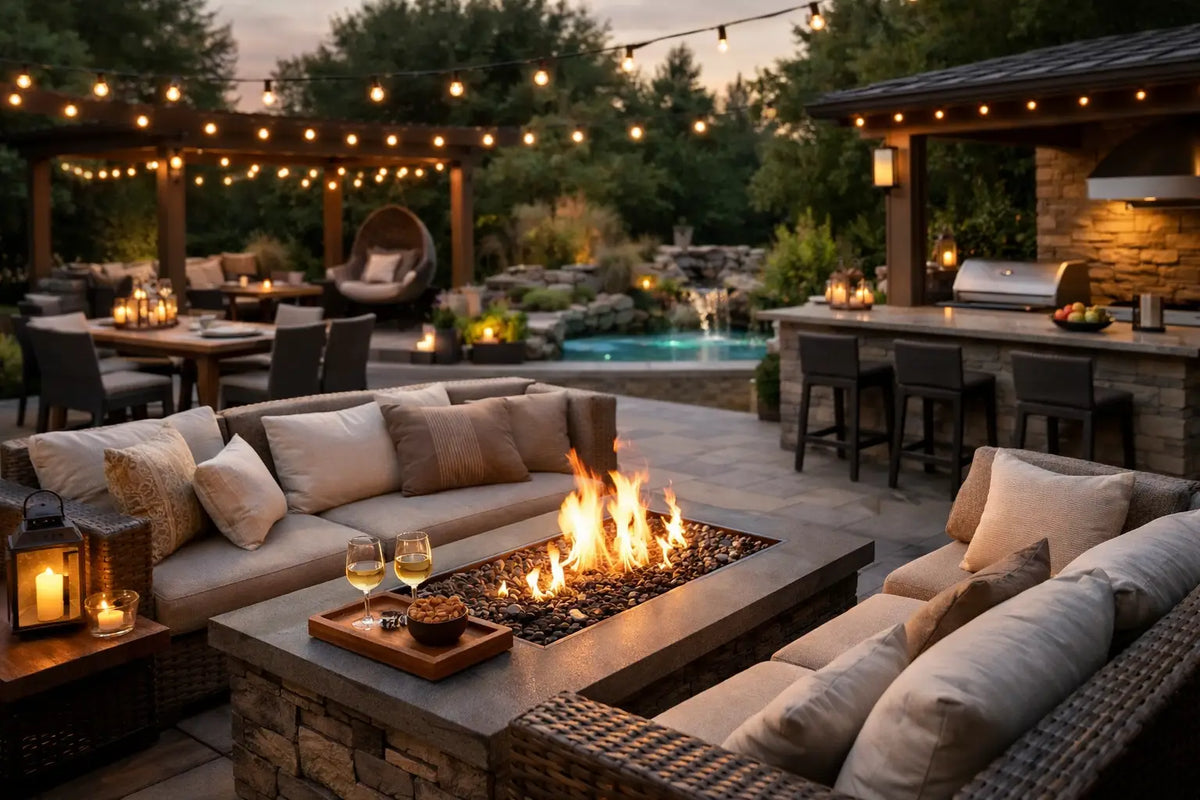
A refined backyard does not need to be oversized, but it does need structure. The most successful entertaining areas usually combine three connected zones: cooking, dining, and lounging. They should feel distinct without being isolated from one another.
Make the kitchen the operational center
The outdoor kitchen is where convenience either succeeds or fails. A standalone grill can produce excellent food, but it rarely supports a full evening of entertaining. You still need landing space, storage, waste management, and room to serve. Without them, the host repeatedly returns indoors and the outdoor experience loses momentum.
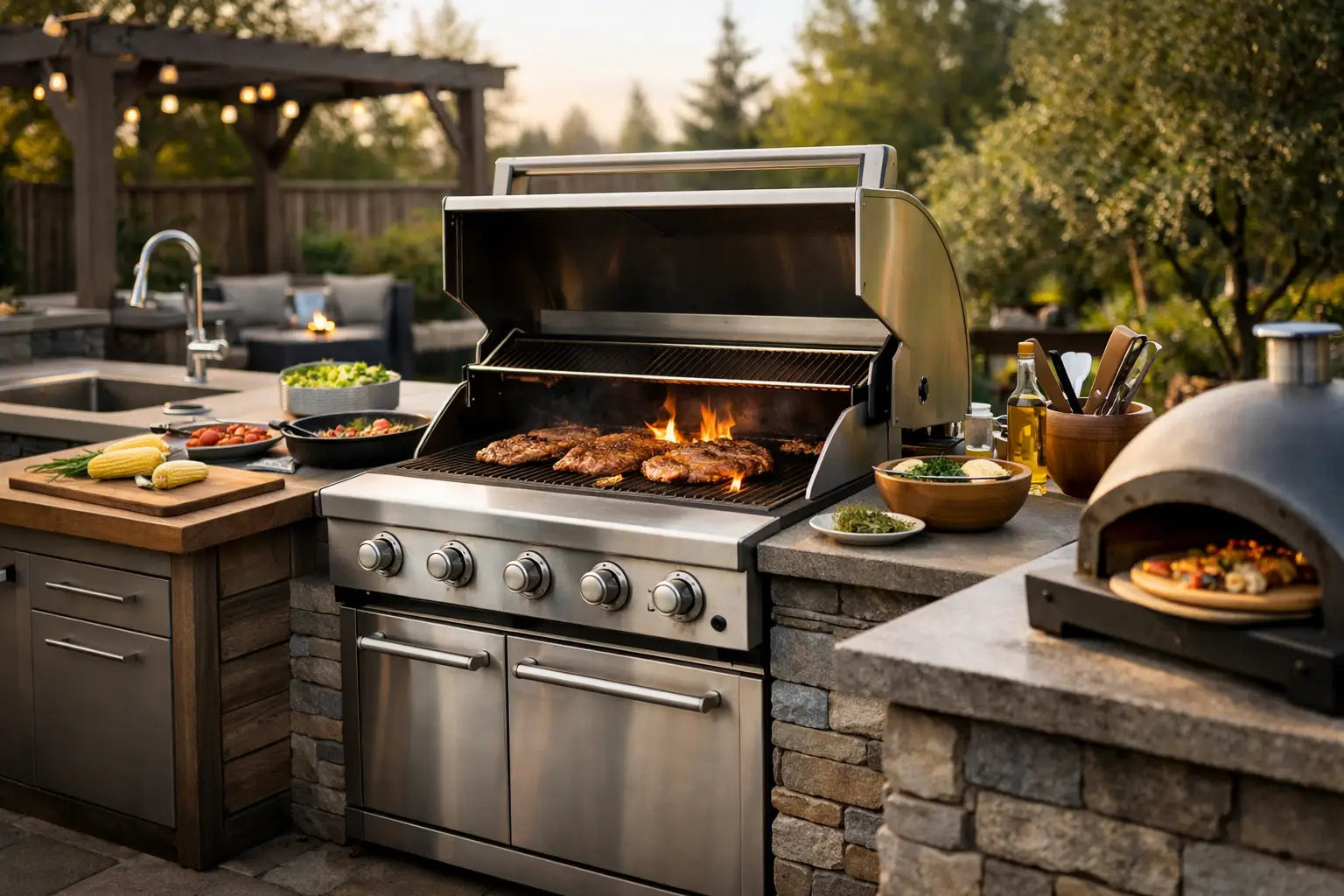
Choose a kitchen configuration based on real workflows. A compact linear run can be ideal for a terrace or smaller patio, particularly when it includes a built-in grill, preparation counter, drawers, and enclosed storage. Larger properties may benefit from an L-shaped kitchen or a freestanding island that creates a natural social edge for guests.
Pre-assembled modular systems offer a decisive advantage here. Rather than coordinating masonry, cabinetry, countertops, appliance cutouts, and multiple contractors, you can specify a complete kitchen designed to arrive ready for placement and connection. ELEEXA brings this plug-and-play approach to luxury outdoor kitchens, pairing architectural styling with compatibility for leading grill systems. The result is a more controlled route to a polished outdoor kitchen, without turning the backyard into a long construction project.
Give dining its own sense of occasion
Your dining area should sit close enough to the kitchen for easy service, but not so close that guests feel they are eating in the cooking line. Allow a comfortable circulation path between the two. This matters more than squeezing in one additional chair.
A substantial table immediately gives the space presence. Select one sized for the number of people you genuinely host, not the number you hope to host once a year. For many homes, a table for six to eight creates the right balance between intimacy and flexibility. If the setting is exposed, use materials that look better with age rather than surfaces that require constant protection.
Build a lounge that extends the evening
Dining ends, but a well-designed backyard keeps people outside. A lounge zone with deep seating, side tables, and low-level lighting gives guests somewhere to move after the meal. Position it to capture the best view, fire feature, or garden focal point.
This is also where scale matters. A few lightweight chairs can make a premium kitchen feel disconnected from the rest of the yard. Upholstered outdoor seating, substantial planters, and a properly sized rug or paving area create visual weight and make the lounge feel intentional.
Invest in Materials That Can Handle Real Weather
Outdoor entertaining zones are exposed to more than rain. They face UV light, temperature swings, grease, chlorine, pollen, salt air in coastal areas, and the practical wear of frequent use. Premium materials are not only an aesthetic decision. They protect the experience from becoming high-maintenance.
For kitchen cabinetry, look for weather-resistant construction, corrosion-resistant hardware, stable panel materials, and surfaces designed for outdoor exposure. A beautiful finish is only valuable if doors remain aligned, drawers operate smoothly, and the kitchen still looks composed after several seasons.
Countertop selection deserves the same discipline. Sintered stone, porcelain, and certain natural stones can perform exceptionally well, but the best option depends on your climate, shade conditions, and maintenance expectations. Natural stone brings character, though it may require sealing and more attentive care. Engineered surfaces often deliver greater consistency and easier upkeep. There is no universal winner, only a choice that aligns with how you plan to use the space.
Underfoot, favor materials with traction and heat performance. Pale porcelain pavers can keep a sunny terrace more comfortable, while darker stone may suit a cooler, architectural setting. Avoid choosing solely from a showroom sample. See the material outdoors, in direct light, beside your exterior walls and landscape.
Add Lighting in Layers, Not Just Overhead
A single floodlight may make the patio visible, but it does not make it inviting. Good outdoor lighting creates depth, supports safe cooking, and makes the yard feel usable long after sunset.
Start with task lighting at the grill and food-prep counter. Knives, burner controls, and serving surfaces should be clearly visible. Next, add ambient light around dining and lounge areas through wall sconces, pendants rated for exterior use, or discreet overhead fixtures. Finally, use low-level accent lighting to define steps, paths, planters, and architectural textures.
Warm color temperature generally produces the most welcoming result. Lighting should reveal faces and finishes without washing out the night sky. Dimmers and separate circuits are worth considering because a family dinner, a cocktail gathering, and a late-night cleanup each need different levels of light.
Plan for Comfort Before You Need It
The difference between a space people admire and one they use often is comfort. Shade, warmth, airflow, and privacy determine whether guests linger.
A pergola, shade sail, or well-positioned umbrella can protect the dining table during peak sun. The choice depends on the architecture and permanence you want. A pergola feels more integrated and can support lighting or retractable coverage, while umbrellas offer flexibility and a lower initial investment. In windy areas, however, temporary shade solutions may become more frustrating than useful.
For cooler evenings, consider a fire table, fireplace, or radiant heating designed for outdoor use. Place heat sources so they support the lounge or dining area without competing with circulation or cooking. For hot climates, prioritize moving air. Ceiling fans under covered structures and strategically placed landscape openings can make a noticeable difference.
Privacy should be addressed with equal care. Layered planting, architectural screens, or tall containers can soften sightlines without making the yard feel closed in. Mature-looking greenery also gives a new outdoor kitchen immediate context, helping the finished space feel established rather than newly installed.
Do Not Underestimate Utilities and Storage
Luxury is often felt in the details guests never notice. Power outlets near the kitchen make it easier to use blenders, warming equipment, speakers, and outdoor-rated refrigeration. Water access simplifies prep and cleanup. Proper drainage protects surfaces and prevents puddling around the cooking area.
Plan storage for the items that otherwise drift indoors: grill tools, serving boards, table linens, fuel accessories, cleaning supplies, and weather covers. Integrated drawers and cabinets preserve the calm, architectural look of the space while keeping essentials close at hand.
Utility planning is also where professional guidance pays for itself. Gas lines, electrical work, ventilation clearances, appliance requirements, and local codes should be resolved before the kitchen is placed. A modular kitchen can dramatically reduce installation complexity, but it still deserves a properly prepared site.
Create One Strong Visual Language
The backyard should feel like an extension of the home, not a collection of unrelated purchases. Repeat two or three key materials or colors across the kitchen, furniture, lighting, and planters. For example, a matte black kitchen frame can connect with dark window trim, charcoal cushions, and black lighting fixtures. Warm wood tones can soften stone paving and complement a modern facade.
Restraint is a luxury. Choose one standout moment, such as a sculptural kitchen island, a fireplace wall, or a dramatic dining pendant, then let the rest of the design support it. Too many competing finishes can make even expensive materials feel less considered.
The best backyard entertaining zone is not defined by how much equipment it contains. It is defined by how confidently it supports the people using it. Design the flow, invest where weather and wear demand it, and give yourself a kitchen that lets you host from the center of the occasion rather than from the sidelines.